
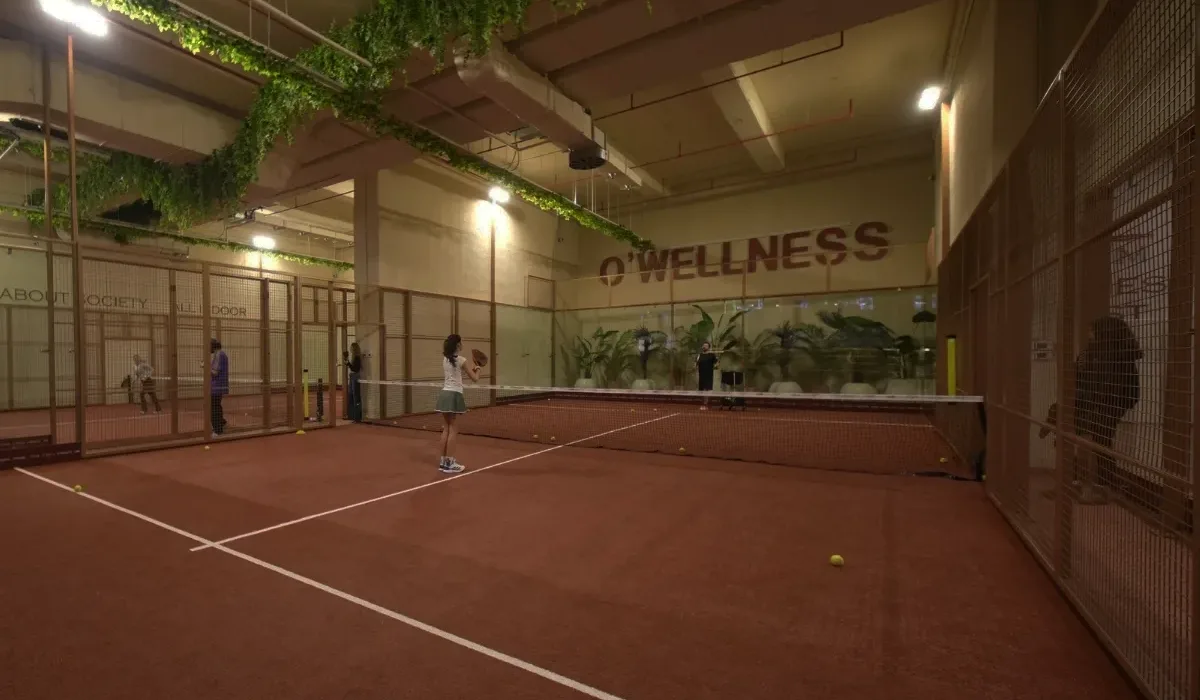
Aileyle padel, one of this sport's least discussed but most valuable aspects. Padel is one of the rare sports where players of different ages and levels can enjoy a good match on the same court: the court is small, the rules are simple, the serve is underarm and the walls keep the ball in play. This makes it possible for a 10-year-old to play with a parent, or even grandparents. In this article we cover how to set up family padel, adaptations by age group and safety notes.
Why Is Padel Suitable for Families?
- Small court: 20×10 metres; short running distances, so fitness differences matter less.
- Underhand serve: No complicated tennis serve mechanics; everyone can serve.
- Walls: The ball stays in play; even missed balls can carry on. This extends points and adds to the fun.
- Doubles play: Partner support keeps weaker players in the game too.
- Low entry threshold: You start hitting the ball within the first 15 minutes.
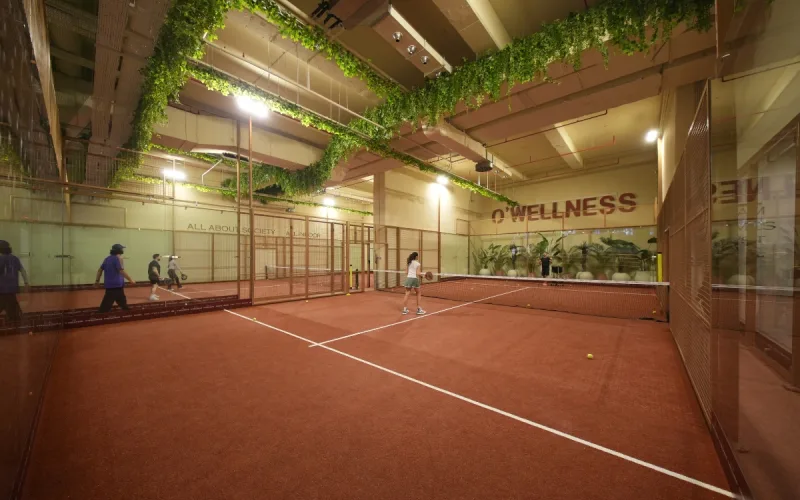
- Indoor court availability: Ankara's cold, snowy winters and hot, dry summers won't disrupt your plans, a big advantage for a family schedule.
Approach by Age Group
Ages 6-8
- Focus: Play and coordination, not teaching technique.
- Equipment: A lightweight racket sized for children; a standard racket is too heavy.
- Ball: Low-pressure or soft balls; slower and easier to control.
- Alan: Half court or a reduced area.
- Duration: 20-30 minutes; attention spans are limited.
- Format: Gamification: target-hitting and point-counting games.
- Puan: Simplified counting instead of standard scoring.
Ages 9-12
- Focus: Basic strokes and court positioning.
- Equipment: Junior racket; weight range of 300-340 grams.
- Alan: The full court can be used.
- Duration: 45-60 dakika.
- Format: Real matches; playing doubles with a parent is ideal.
- Duvar oyunu: Learning can begin at this age.
Ages 13-17
- Focus: Technical development and tactics.
- Equipment: Adult racket (lighter models); pay attention to weight and balance.
- Duration: 60-90 dakika.
- Format: Full match; family tournaments can be appealing.
- Not: Physical development is still ongoing at this age; watch out for overload and one-sided repetition.
Adults (parents)
- Even if you are technically stronger, adapting your tempo when playing with a child is essential.
- Trying to get every ball pushes the child out of the game.
- It is more productive to plan separate sessions for your own training.
Ages 50 and over (grandparents)
- With its low-impact, short-distance nature, padel can be a suitable option for this age group.
- Extend the warm-up (12-15 minutes).
- Match length can be shortened; a single set or short format.
- Avoid pushing for balls that require sudden changes of direction.
- If there is any health condition, it is important to get a doctor's approval.
Two-Generation Match: Building Teams
The most effective way to balance levels is to build balanced teams.
- Balanced pairing: The strongest player with the newest player; the other two together.
- Generation mix: One adult and one young player on each team; mixed teams instead of “parent-child” teams also vary the relationships.
- Rotation: Swap teams every set; everyone plays with everyone.
- Handikap sistemi: Give the weaker team a head-start score.
Rule Adaptations
Bending the rules in family matches makes the game more fun.
- Three serves instead of two: For beginners.
- Widen the service area: For children.
- Two-bounce rule: Allow the ball to bounce twice for very new players.
- Simplified scoring: Count 1-2-3 instead of 15-30-40; especially with small children.
- Short set: 6 oyun yerine 4 oyun.
- Golden point: A single point at every 40-40 to shorten games.
- Mandatory sharing: A rule that each player takes a set number of balls; it stops the strongest player taking them all.
Important note: these adaptations apply to friendly family matches. Standard rules apply in official tournaments.
Safety Notes
- Racket collisions: The most common type of accident in padel. Communicating with your partner (calling “mine”) is critical.
- Wrist strap: It must always be attached and in use. A racket slipping from the hand can cause serious injury.
- Eye protection: Take care in close play at the net; keep your distance in front of the net when playing with children.
- Shoes: A suitable sole pattern, for children too. Street shoes create a risk of slipping.
- Warm-up: Necessary at every age; a gamified warm-up works well with children.
- Hydration: Children warm up faster than adults; keep water breaks regular.
- Yorgunluk: Children can be shy about saying they are tired; you need to notice it from their behaviour (feet stopping, loss of focus).
- Density: Playing at an adult tempo can be too much for a child; adapt the pace.
Weekend Family Programme Examples
Option 1: Short programme (2 hours)
- 0-15 dk: Preparation and warm-up (gamified).
- 15-30 dk: Basic stroke work; gamified drills for children.
- 30-75 dk: Rotating matches; teams change every set.
- 75-90 dk: Free play or a family tournament final.
- 90-120 dk: Cool-down, stretching and a drink together.
Option 2: Half-day programme
- Morning: Family padel match (90 minutes).
- Afterwards: O’Spa Beytepe or O’Wellness Beytepe facilities (ask on WhatsApp for current information on the children's age policy).
- Midday: Lunch together.
- Afternoon: Rest or a calm activity.
Option 3: A regular family routine
- A fixed time every weekend; for example, Sunday morning at 10:00.
- A 60-90 minute match.
- Stay motivated with a monthly “family tournament”.
- Children continue their own lessons; family play is a separate activity.
How to Get Your Child to Love Padel
- Don't pressure them. A child who is dragged along won't love the sport.
- Put the game first. Leave technical correction to the coach; the parent's role is to be a partner in fun.
- Name their successes. “That shot was great” is concrete and effective.
- Normalise losing. How you react to your own losses is the strongest lesson.
- Let them win, but don't gift it. Children notice.
- Involve their friends. Having peers around boosts motivation.
- Watching professional matches: Watching matches together builds interest.
- Let them have their own equipment. A racket of their own creates a sense of belonging.
- Sign them up for a group lesson. Learning with peers is the most effective format.
Balancing Children's Lessons and Family Play
Group lessons are for the child's technical development, playing together is for family bonding; the two serve different purposes.
- Group lesson: Technical development, peer interaction, discipline. 1-2 times a week.
- Aile oyunu: Fun, bonding, game practice. Once a week.
- Parent's role: Spectator in the lesson, partner in the game. It is important not to mix the two.
- Communication with the coach: Get regular short feedback on your child's progress.
When Choosing a Facility
- Children's age policy: Is there a minimum age limit?
- Junior raket kiralama: Is child-sized equipment available?
- Children's lessons: Programmes by age group.
- Indoor court: An uninterrupted programme all year, even in Ankara's winter.
- Family membership: Discounted pack options.
- Waiting area: For family members who aren't playing.
- Changing rooms and shower facilities.
- Location: Ease of access is the factor that most affects consistency; for families in Beytepe, Çankaya, Ümitköy and Çayyolu, it is a practical address with the Ankara M2 line and the Eskişehir Yolu connection.
Result
Thanks to its small court, simple serve rule and wall play, padel is one of the rare sports where family members of different ages and levels can enjoy a good match on the same court. The key to success lies in two points: build balanced teams and don't hesitate to adapt the rules to a family match. When playing with children, remembering that the parent's role is to be a partner in fun, not a coach, strengthens both the relationship and the child's commitment to the sport. Group lessons for technical development and playing together for family bonding: separating the two serves both goals better.
If you want to organise a family match in Ankara, O’Padel Beytepe's indoor, climate-controlled courts won't disrupt your plans in a snowy winter or a hot summer. Membership is not required; you can easily book a children's and family session with our certified coaches via WhatsApp (+90 536 908 08 00). After the match, O’Spa Beytepe and the lounge are a pleasant way to round off the weekend in Çankaya.



 Padel Courts
