

Çocuklara padel öğretmek, yetişkinlere öğretmekten farklı bir dil gerektirir. Bir çocuğa “dirseğini kapat, raketi omuz hizasında tut” demek çoğu zaman karşılıksız kalır; ama aynı çocuğa “topu balonmuş gibi havada tutabilir misin?” diye sorduğunuzda gözleri parlar. Çocuklar oynayarak öğrenir, tekrar etmeyi de ancak eğlendikleri sürece sürdürürler. Bu yazıda sekiz basit oyun, bu oyunların hangi becerilere hizmet ettiği ve uygularken nelere dikkat edilmesi gerektiği anlatılıyor. Alıştırmalar hem antrenörler hem de çocukla birlikte kortta vakit geçirmek isteyen ebeveynler için uygundur.
Why a play-based approach?
A child's attention span is short and their motivation is momentary. A long technical explanation quickly loses them. Play, on the other hand, gives the child both a target and instant feedback: the ball went over or it didn't, the cup fell or it didn't. These clear results let a child see their own progress.
A play-based approach also reduces the fear of making mistakes. In a game, a missed ball is not a "failure" but the road to the next attempt. In a sport played in an enclosed, glass-walled space like padel, this sense of safety matters especially, because a ball that bounces off the glass keeps handing the child a new problem. As they learn to solve these problems without fear, they naturally grasp the rhythm of the game. Skills gained during play also settle into the body far more lastingly than rules explained during a lesson, because the child learns by doing, trying, and laughing.
Before you start: structure and safety
Setting a few ground rules before the games makes everything easier. Explain to children that the racket is used only to hit the ball, that it is held low when approaching another child, and that every game ends immediately on the "stop" command. Short, clear rules remove the need for long warnings later.
For equipment, choose light rackets suited to the child's height and strength, plus soft balls. Shoes should have non-slip soles and clothes should allow free movement. For a warm-up, two or three minutes of running, jumping, and arm circles is enough. If a child has any health concern, it is right to consult a doctor before starting the sport.
Eight game ideas
The following games can easily be made easier or harder depending on age and level:
- Balon topu: Raketle topu yukarı doğru sektirerek havada tutmaya çalışmak. Hedef, sayıyı her seferinde bir artırmaktır.
- Koni avı: Kortun karşı tarafına dizilmiş plastik bardak ya da konileri toplarla devirmek. Her devrilen bardak bir puandır.
- Duvar arkadaşı: Topu cama atıp geri dönmesini beklemek ve yakalamak. Çocuk topun nasıl sektiğini gözlemler.
- Renk komutu: Antrenör bir renk söyler, çocuk o renkteki işarete koşar. Ayak çalışması ve dikkat bir arada gelişir.
- Köprü oyunu: Ağın üzerinden topu belli bir bölgeye düşürmeye çalışmak. Hedef bölgeler hula hoplarla işaretlenebilir.
- Tek ayakta denge: Raketin üzerinde topu dengeleyerek kısa bir mesafe yürümek. Denge ve el-göz uyumu geliştirilir.
- Aynalı vuruş: İki çocuk karşılıklı durup birbirinin hareketini taklit eder. Vücut farkındalığı artar.
- Takım rallisi: Çocuklar birlikte topu en fazla kaç vuruş boyunca havada tutabileceklerini sayar. Rekabet yerine iş birliği öne çıkar.
Short water breaks between games help children catch their breath and look forward to the next one. Each game should last five to ten minutes, and the group should move on before the children get bored. Playing four or five games in a day keeps both variety and focus.
Adapting the games to level
The same game can train different skills in children of different ages. For a young child, "balloon ball" simply means hitting the ball upward, while for a more experienced one it can become rhythm work at a set height and tempo. In the cone hunt, the distance can grow, the targets can shrink, or the child can be asked to throw with their weaker hand.
What matters is challenging the child without taking away the feeling of success. A child who hits every target on the first try gets bored, and a child who hits none loses courage. The ideal balance is success in seven or eight of ten attempts, with an achievable difficulty in the rest. Coaches who watch for this balance can change the rules of a game on the spot. Adding small surprises inside a game keeps interest alive too; for example, timing it, adding bonus points, or letting the child change a rule themselves turns learning into a space for creativity.
The parent's role at home and on court
Parents can run many of these games at home or in the park. Soft ball throws against a wall, bouncing a balloon on the balcony, or target practice in the garden help reinforce what was learned on court. But exercises at home should feel like play, not training; if the child feels they are doing "homework," their interest may fade.
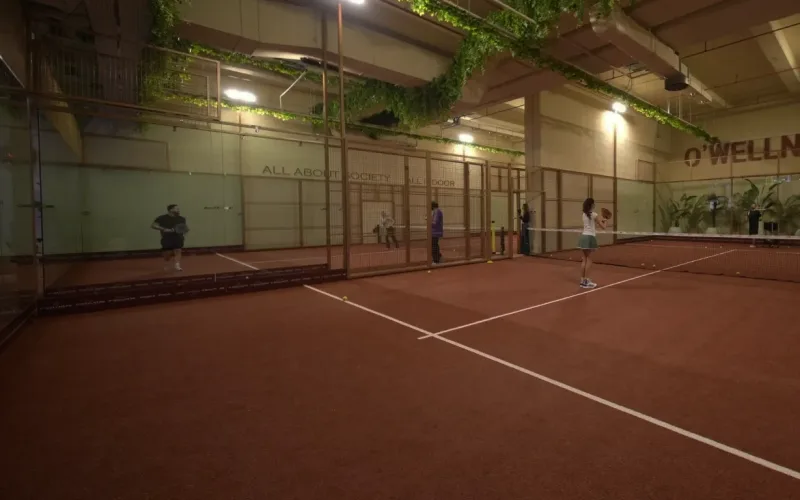
On court, the parent's job is to join in without spoiling the game. When you play beside your child, do not fight to win; know how to lose to them and celebrate their success without exaggeration. At a place with indoor courts like O'Padel Beytepe, weather is not a worry, so these small games can grow into a regular routine. Regularity does less to speed up skill than it does to help a child fall in love with the sport. Organizing a small 'family cup' for a weekend, with everyone competing in a different game, is another fun idea that strengthens bonds.
Session length and frequency
Each child's energy and interest differ, so the session should be adjusted to the child. For young children the ideal session is short and active. A lesson of thirty to forty-five minutes leaves room for both games and simple strokes without draining the child's energy or attention. A brief warm-up at the start, an intense play block in the middle, and a calming finish at the end give the child's body and mind a rhythm. Keeping this flow the same every lesson gives the child a sense of security.
Do not rush on frequency either. One or two regular sessions a week are more useful than occasional long ones. Lightening or postponing the lesson when the child is tired, hungry, or unwell protects their enthusiasm in the long run. Keeping the schedule flexible during seasonal changes, busy school weeks, and exam periods also makes families' lives easier. Remember, the goal is not to raise a fast athlete but a child who loves sport.
Frequently Asked Questions
Do these games need special equipment?
No, there is no need for an expensive setup. Plastic cups, cones, or zones marked with hula hoops are enough. What matters most is using a racket that fits the child's height and soft balls.
What if my child finds the games boring?
Shorten or change the game right away. Asking for the child's ideas and letting them add a rule also raises motivation. Boredom often means the difficulty level is not right. Games that are too easy or too hard produce the same result; watching the child is enough to find the middle ground.
When should a young child move on to real matches?
There is no fixed timetable. When the child can send the ball across in a controlled way and understands the basic rules, short matches can begin under the coach's guidance. Not rushing serves the child's love of the sport in the long run. The best sign that they are ready is when the child says on their own that they want to play a match.


 Padel Courts
