
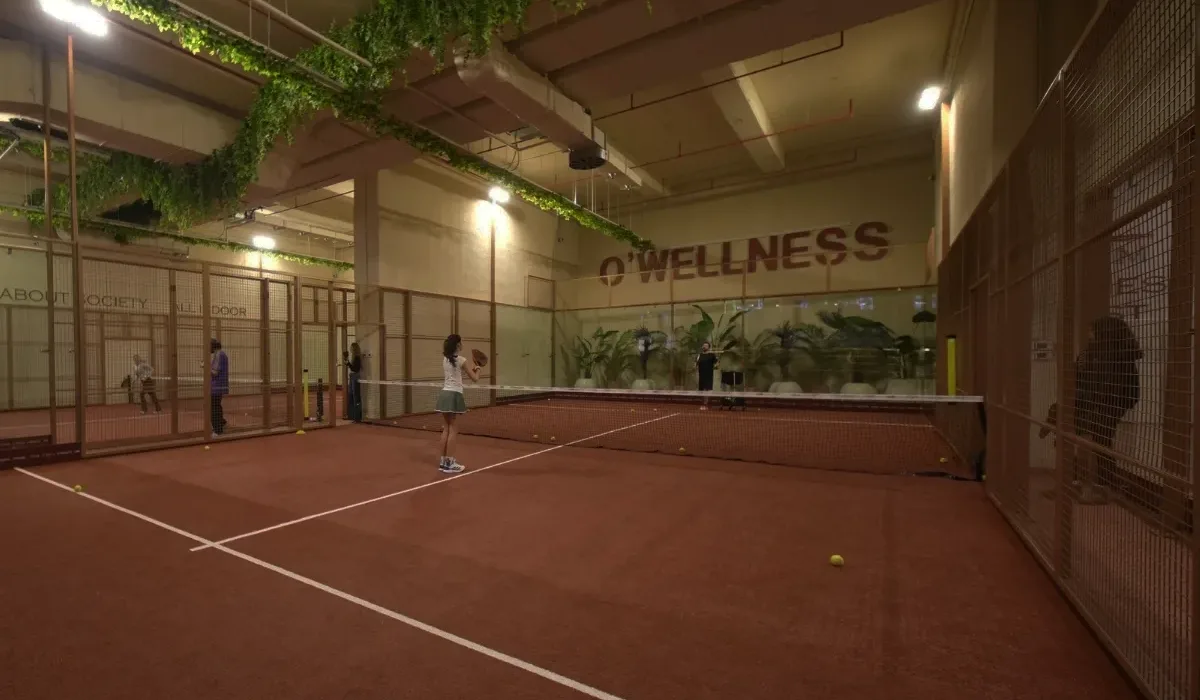
Keeping a padel training journal may sound too serious, but it is one of the simplest habits that speeds up improvement. The reason is simple: memory is selective. After a match, what stays with you is usually the final score; but if there was a recurring error pattern in that match, you can only notice it by keeping records. In this article we cover the ten items to note after a match or training session, how to do pattern analysis, and ways to keep the journal sustainable. It is also one of the habits we recommend most to the players who work with our instructors at O’Padel Beytepe.
Why Does Keeping Records Work?
- It makes patterns visible. A mistake you don't notice in a single match becomes obvious across six matches of notes.
- It creates focus. Saying “this month I'm working on my backhand” is more effective than trying to improve at random.
- It makes progress concrete. Looking back after three months is motivating.
- It makes lessons more productive. Bringing concrete data to your coach is better than saying “something isn't right.”
- It improves partner chemistry. It becomes clear which tactic works with which partner.
10 Things to Note
1. Date, duration and format
The basics. Match or training, how long it lasted, how many sets were played, and in which format (friendly, Americano, league, tournament).
2. Partner and opponents
Who you played with becomes valuable data over time. It shows which partner you work best with and which style of opponent you struggle against.
- The side your partner plays (right/left).
- The opponents' style: aggressive net player or defense-oriented?
3. Score and result
Set scores. But more important is how the score developed: did you lead early and lose, or come from behind?
4. How did you lose points?
This is the most valuable item in the journal. Lost points fall into three categories:
- Unforced error: A mistake made without being under pressure. The category you can reduce the most.
- Forced error: A mistake made as a result of the opponent's good shot.
- Opponent's winner: Points where there was not much you could do.
An approximate number is enough; don't try to keep exact statistics. A note like “I made at least 8 easy errors in this match, mostly on the backhand” does the job.
5. The shot with the most errors
- Backhand off the wall?
- Bandeja?
- Return of serve?
- Net volley?
- Lob?
This information directly determines the topic of your next lesson.
6. Court position assessment
- Were you able to get to the net position, or were you stuck at the back of the court?
- Did you move in line with your partner?
- Did gaps open up in the middle?
- Were you able to transition from defense to attack?
7. Tactical notes
- Which tactic worked?
- Which tactic did not work?
- Did you find the opponent's weak point? When?
- Did the opponent find yours?
8. Mental state
Very important but the most often skipped item.
- How quickly did you recover after a mistake?
- Did your game change on critical points (30-30, golden point)?
- How was communication with your partner?
- How did your focus level hold up over the match?
- What was your attitude when you fell behind?
9. Physical state
- Energy level: at what point in the match did it drop?
- Did your footwork deteriorate with fatigue?
- Any pain or discomfort?
- Did you warm up, and was it enough?
- How were your sleep and nutrition?
Note: recurring pain entries are an important signal. If discomfort keeps recurring in the same area, you should consult a health professional.
10. Next goal
End every entry with a single sentence: “What will I work on in the next session?”
This sentence should contain at most two topics. Example: “Waiting for the ball on the backhand off the wall, and returning to the net position after the bandeja.”
Practical Template
A simple format you can use in your phone's notes app or a small notebook:
- Date / duration / format:
- Partner / opponents:
- Score:
- Number of easy errors and on which shot most:
- Tactic that worked:
- Tactic that did not work:
- Mental note:
- Physical note:
- Next goal (max. 2 items):
Filling it in takes 3-5 minutes. It is most effective to write it right after the match, while memory is fresh.
Monthly Pattern Analysis
Individual entries are valuable, but the real benefit comes from the monthly review. At the end of the month, set aside 15 minutes and look at these questions:
- What is the most frequently repeated mistake? This is next month's main focus.
- Which shot improved? Did last month's goal hold?
- Which opponent style do I struggle against?
- Which partner do I work best with? Why?
- Is there a recurring theme in the mental notes? For example, “I can't recover after a mistake.”
- Are there warning signs in the physical notes? Recurring pain or early fatigue.
- Are my playing hours enough? How is the balance between lessons and play?
Sharing With Your Coach
The journal is the most practical tool for making lessons more productive. Instead of telling your coach “my backhand is bad,” saying the following makes a clear difference:
“In the last four matches I made 22 easy errors in total; 14 of them were on the backhand off the wall. I think I'm getting too close to the ball, but I'm not sure.”
This data lets the coach focus the lesson directly on that topic. The effect grows even more when combined with video.
Keeping the Journal Sustainable
- Keep it short. A record-keeping system that takes longer than 3-5 minutes gets abandoned.
- Use your phone's notes. It's always with you.
- You don't have to log every match. One or two entries a week produce enough data.
- Keep the template fixed. The same format makes comparison easier.
- Don't try to be perfect. Approximate numbers and short sentences are enough.
- Put the monthly review in your calendar. If this step is skipped, the records are useless.
- Add positive notes too. Keeping only a list of mistakes is demotivating.
Setting Measurable Goals
The journal lets you turn vague goals into measurable ones.
- Vague: “I want to play better.”
- Measurable: “Reduce my count of easy errors per match from 8 to 5.”
- Vague: “I should work on my bandeja.”
- Measurable: “Increase my rate of returning to the net position after the bandeja; at least 10 times in a match.”
- Vague: “I should be calmer.”
- Measurable: “Take a breath after a mistake and apply my routine; on every point.”
Combining With Video
The journal and video analysis together form the strongest combination.
- The journal tells you what went wrong.
- Video shows you why it went wrong.
- The coach teaches you how to fix it.
- The follow-up entry confirms that the fix has stuck.
Result
A padel training journal does not require keeping complex statistics, just a simple 3-5 minute entry after the match. The two most valuable items are how you lost points and the goal for the next session. The real benefit comes from the monthly review: patterns that are invisible in individual matches become clear across six matches of records. Sharing this data with your coach and combining it with video analysis noticeably speeds up your rate of improvement.
If you play padel regularly in Ankara, it is also a good idea to label your indoor-court matches in winter separately from your summer matches. If you would like to review your journal or put together a lesson plan with our instructors at O’Padel Beytepe, you can book a court and lessons in Beytepe by messaging us on WhatsApp (+90 536 908 08 00), no membership needed.


 Padel Courts
