
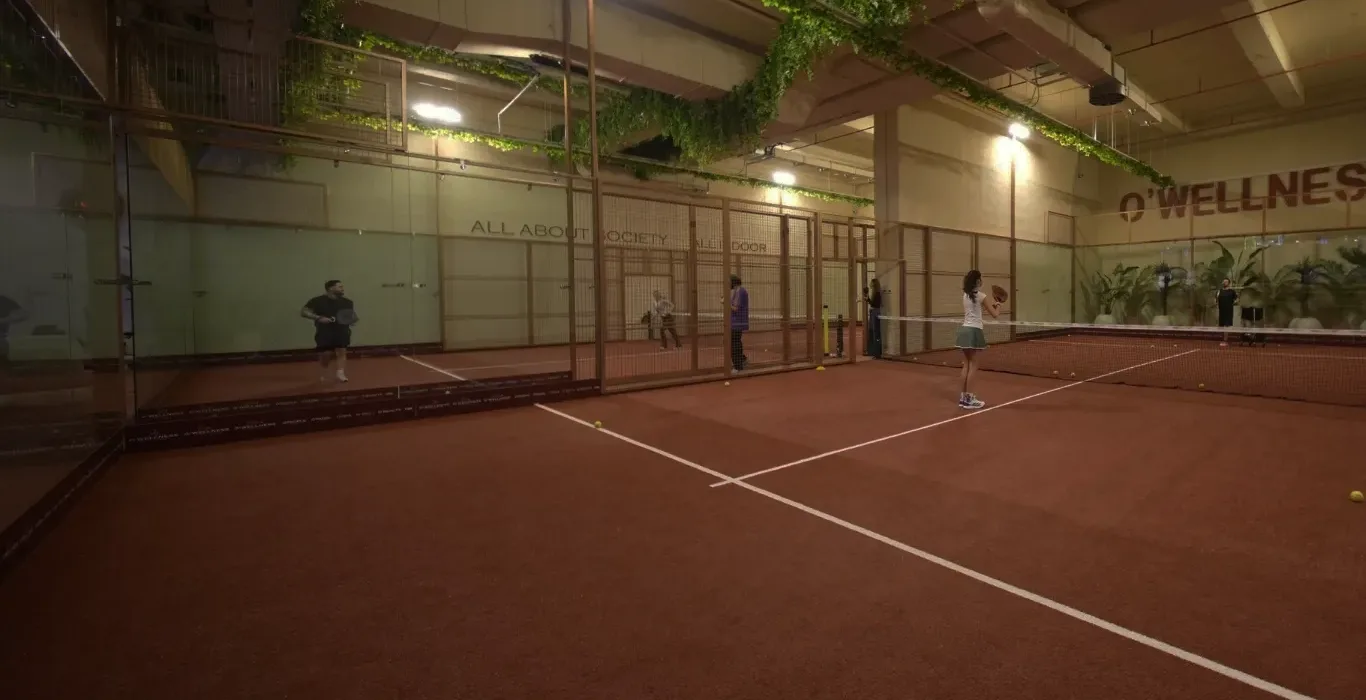
The padel forehand is the most often repeated and usually the most reliable stroke in the game. Once you settle your grip, swing mechanics and contact point, the forehand becomes both a safe option in defence and an effective weapon in attack. In this article we explain forehand technique step by step from the basics to advanced level, On the indoor courts in Beytepe, and show how to support this development.
Why is the forehand considered the cornerstone of padel?
Because the racket is small and the court is narrow in padel, most players meet a large share of balls on the forehand side. So a solid forehand technique becomes a direct determinant of overall game quality. A weak forehand both raises the risk of errors in defence and leads to loss of power and accuracy in attack.
Padel forehand a player who has learned technique well can use this stroke with confidence both from the baseline and at the net; this makes them a versatile player.
The right grip: the role of the continental grip
The most commonly recommended grip in padel is similar to the continental grip in tennis continental gripThis grip lets you hold the racket at a diagonal angle in the hand and lets you adjust the racket face quickly in both forehand and backhand strokes. Holding the grip too closed (racket face turned too far forward) or too open (turned too far back) makes stroke control harder. If you want detailed technical information about the right grip, and in our padel lessons, our coaches can give one-to-one feedback on this.
Swing mechanics: backswing, contact, follow-through
The forehand stroke can be examined in three stages:
- Backswing: Taking the racket back in a short, controlled way to the side of the body, slightly below shoulder height. In padel a more compact preparation is preferred over a big backswing as in tennis, because the court is narrow and reaction time is short.
- Contact: Contact:
- Follow-through: After the stroke, the racket completing a natural path in the target direction; stopping abruptly spoils both control and power transfer.
Contact point: the most overlooked detail
In the forehand stroke, meeting the ball right in front of the body at a point your arm can comfortably extend to gives the most efficient result for both control and power. Meeting the ball too far back (close to the side of the body) or too early (too far from the body) both lowers accuracy and reduces the stroke's power. The ideal contact point is a zone slightly in front of the leading foot, at waist-to-chest height.
Common mistakes at beginner level
The most common mistakes in forehand technique among new players are:
- Using the racket from too far back with a big swing.
- Overusing wrist movement and losing control.
- Trying to hit with only the arm without turning the trunk towards the ball.
- Neglecting to return to position after the stroke.
Most of these mistakes are corrected together with solid footwork and positioning habits; on this, footwork in padel: the split step and small steps article will be useful.
Moving to advanced level: spin and direction control
Once the basic forehand mechanics are settled, advanced players learn to consciously change the spin and direction of the ball. Adding light topspin (forward spin) makes the ball land in the opponent's court more safely and deeply. Learning to use the forehand not only for power but also for precise direction control forms the basis of advanced strokes such as the bajada and smash; for more information about bajada technique, the bajada in padel: bringing the ball down off the glass article.
The tactical link of the forehand
A strong forehand is not just a technical achievement but a tactical advantage. Being able to target your opponent's weak point with your forehand can change the course of a match. For more information on reading opponents, finding your opponent's weak spot: tactical reading in padel article.
How do you improve your forehand technique at Beytepe?
At O’Padel Beytepe's On indoor courts, stable floor and lighting conditions offer an ideal environment for repeating forehand technique consistently. Asking a partner to feed you balls at regular intervals during training and consciously focusing on grip, swing and contact point on every stroke develops your technique quickly.
If you want to examine your forehand technique in detail with a coach with video analysis support, you can join our one-to-one or semi-private lessons If you're a beginner, our 7-16 children's academy and adult beginner groups offer a suitable ground to learn basic technique correctly from scratch.
The relationship between breathing and timing in the forehand
Experienced players usually develop, without noticing, a habit of making a short, controlled exhale at the moment of contact. This prevents the muscles from tensing unnecessarily and makes the stroke smoother. Players who hit while holding their breath usually show a tenser, less controlled swing. Consciously trying to exhale at contact during training builds a useful habit that becomes automatic over time.
Two common forehand variations: flat and topspin
The flat forehand gives the ball less spin, creating a faster, lower trajectory; it is generally preferred in attacking moments. The topspin forehand adds forward spin to the ball, making it land in the opponent's court at a safer angle, passing over the net. Being able to choose between these two variations depending on the situation gives a player a richer tactical repertoire.
The importance of repetition count in forehand training
Making a technical change (for example a grip or contact point adjustment) permanent is possible through conscious repetition. Coaches generally recommend reinforcing a new technical detail with at least a few hundred repetitions; although this number looks high at first glance, it is an achievable goal within a few weeks with regular training. Being patient in this process is the key to lasting technical development.
Testing the forehand under match pressure
A forehand that looks perfect in training can behave differently under match pressure. So it makes sense to test the technical details you have newly developed first in low-pressure friendly matches, then in more competitive settings. This gradual transition keeps the technique reliable in real match conditions too.
The role of equipment in the forehand
The racket's weight, balance point and surface shape directly affect the feel of the forehand. For beginners, lighter rackets that aren't head-heavy make learning technique easier, while advanced players may prefer rackets that tune the power-control balance to their stroke style. If you are unsure about choosing the right racket, getting an opinion from a coach or court staff is helpful.
The relationship between forehand and court position
The power and accuracy of the forehand are affected not just by technique but by your court position at that moment. A forehand played close to the net needs a shorter preparation and more controlled use of power than a baseline forehand. Consciously telling these two scenarios apart makes your forehand reliable from every position on court.
Forehand development stages: a summary table
| Level | Focus | Typical difficulty |
|---|---|---|
| Beginner | Right grip and basic swing | Excessively big backswing, wrist looseness |
| Intermediate | Consistent contact point and trunk rotation | Variable stroke quality, breaking down under pressure |
| Advanced | Spin, direction control and tactical use | Taking excessive risk, neglecting variety |
Knowing these stages helps you objectively assess your current level and set your training focus correctly.
Should you develop your forehand in a group lesson or a private lesson?
Group lessons are valuable for learning the basic mechanics of the forehand and for learning by observing different players. Private lessons, with personalised feedback and video analysis, are more effective for correcting specific technical errors in a targeted way. The ideal approach for most players is a combination of the two: group lessons for basic development, one-to-one sessions for fine-tuning.
A frequently asked forehand question: how much power should I use?
New players usually try to put as much power as possible into the forehand, yet in padel control is generally worth more than raw power. Because the court is small, an overly powerful stroke often raises the risk of sending the ball out of court. A good forehand is a consistent, repeatable stroke that balances power with control; it is far more valuable than a flashy but inaccurate one.
The importance of patience when developing your forehand
When you make a technical change (for example, adjusting your grip), it is normal for your performance to dip briefly in the first few training sessions. This is a natural stage known as the “skill acquisition curve” and seen in almost every new technique-learning process. Carrying on without losing heart over this temporary dip is the key to long-term development.
Setting small goals when developing your forehand
Instead of one big goal (“the perfect forehand”), setting a small, measurable goal at each training session (“in this session I will focus on the contact point”) makes progress more concrete and motivating. This approach breaks long-term technical development into more manageable steps.
Adapting your forehand to different ball speeds
Reacting the same way to a slow ball and a fast ball does not give the right result. With slow balls you have more preparation time and can make full use of trunk rotation; with fast balls you need to shorten the backswing and make more use of the ball's own energy. This adaptation skill makes your forehand reliable against different opponents and playing styles.
Improving hand-eye coordination in the forehand
A simple but effective exercise: against a wall or your partner, just watch the ball and, before hitting, try to predict which part of the racket the ball will touch. Conscious observation exercises like this strengthen hand-eye coordination over time and make your contact point more consistent.
Shaping your forehand to its role in doubles
In doubles, the forehand side usually corresponds to a certain half of the court, and this position affects how often and in what context a player uses their forehand. For a player on the right side, the forehand usually comes into play on balls near the centre line, while for a player on the left it stands out on balls near the outer line. Knowing this positional difference lets you tailor forehand training to your own role.
Conclusion: a foundation settled with patience
The forehand is padel's most used but also most overlooked stroke; players usually focus on more “flashy” strokes and neglect the basic mechanics of the forehand. Yet a solid forehand is the ground on which all other technical and tactical development is built. If you want to lay this foundation properly on the courts at Beytepe, message us on our WhatsApp line trial lesson, .
Frequently Asked Questions
A grip similar to the continental grip in tennis is generally recommended; it lets you switch quickly between forehand and backhand.
The ideal contact point is a zone slightly in front of your leading foot, at waist-to-chest height, where your arm can extend comfortably.
Power comes not only from the arm movement but from hip and trunk rotation; trunk rotation together with a compact backswing determines the power of the stroke.
Using the racket from too far back with a big swing and trying to hit with only the arm without turning the trunk are the most common mistakes.
Yes, in one-to-one and group lessons at O'Padel Beytepe, forehand technique can be worked on step by step with video analysis.


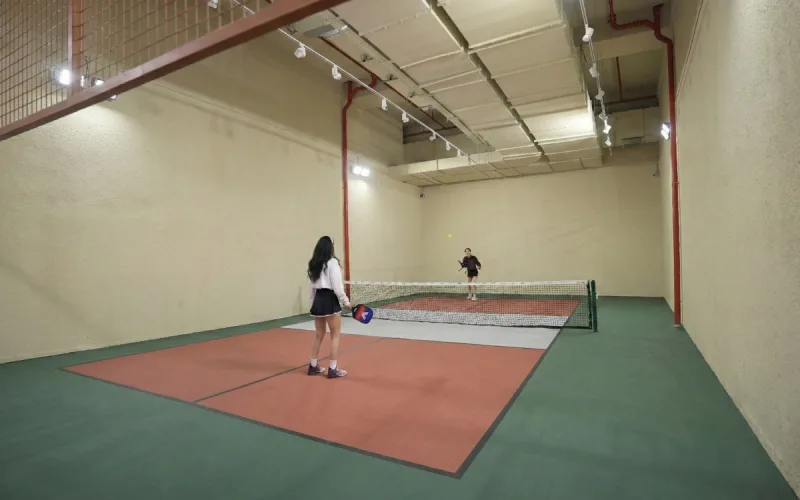


 Padel Courts
