
Padel breathing control is one of the most effective yet most overlooked tools for conserving energy in long rallies and recovering quickly between points. The right breathing techniques bring your heart rate back to normal faster, so you enter the next point better prepared, and make it easier to make decisions with the same clarity in the final stretch of a match. Players at Beytepe who consciously use this detail in high-tempo matches are able to stay energetic and mentally clear even in the third set.
In this article we explain what heart rate zones mean, which breathing techniques work, how they differ by playing style, and how you can put this knowledge into practice at Beytepe.
What are heart rate zones?
Heart rate zones are training and performance ranges defined by a percentage of maximum heart rate. Low zones (about 50-60%) represent light activity, medium zones (60-75%) represent endurance development, and high zones (75-90% and above) represent moments that demand intense, explosive effort. In padel your heart rate can climb into high zones during a long rally; being able to bring it down to medium zones in the short breaks between points lets you start the next point stronger and thinking more clearly.
Why does heart rate fluctuate so much in padel?
Padel is not a sport of continuous running; it is an intermittent activity made up of short, intense bursts with short rests in between. This structure makes heart rate rise and fall constantly throughout the match. As the match goes on, how quickly the body adapts to these fluctuations becomes an important factor in whether performance will drop.
Diaphragmatic breathing: the basic technique
Diaphragmatic breathing is the technique of breathing from the belly rather than the chest. As you breathe in deeply through your nose you should feel your belly expand, and as you breathe out slowly through your mouth you should feel it deflate. This technique calms the sympathetic nervous system (the stress response) and engages the parasympathetic system (the rest response), helping your heart rate drop faster.
A breathing routine between points
- The 4-4-6 technique: Breathe in through your nose for 4 seconds, hold for 4 seconds, breathe out slowly through your mouth for 6 seconds. The long exhale in this ratio is effective at lowering heart rate.
- Relax the shoulders: Consciously relax your shoulders as you breathe out; tension usually builds up in the shoulders and makes breathing shallow.
- Repeat the routine: Doing 2-3 breath cycles between each point gives both a physical and a mental reset.
The relationship between breathing and concentration
Irregular, shallow breathing not only increases physical fatigue but also lowers the quality of decision-making. It is harder to think clearly when the nervous system is under stress; this leads to simple positioning mistakes. Conscious breath control calms both body and mind so you can make clearer decisions throughout the match.
Managing breathing in long rallies
The tendency to hold your breath during a long rally (especially in tense moments) is a common mistake. Instead, synchronising your breath with the rhythm of your strokes, for example a short exhale at the moment of contact and a short inhale during preparation, keeps oxygen flowing and delays fatigue.
Improving breathing capacity through training
Cardiovascular endurance work (light jogging, cycling, swimming) increases general breathing capacity and improves recovery speed in padel. Regular diaphragmatic breathing practice (5 minutes a day, off court) also makes it easier to apply this technique automatically during a match. This topic also overlaps with a general functional fitness approach; for details see HYROX and padel article.
The link between breathing and recovery
After the match, breath control can also speed up recovery. Spending a few minutes on slow, deep breaths speeds the return of your heart rate to resting level and helps the stress hormone cortisol drop faster. This is a simple but very effective part of your overall post-padel recovery strategy.
Breathing strategy for different playing styles
An aggressive, net-focused player and a patient, baseline-focused (fondo) player have different breathing needs. Net play is dominated by short, explosive movements and breathing is managed mostly in short, sharp cycles; in baseline play, holding a steady rhythm over long rallies matters more. Knowing your own playing style helps you work out which breathing rhythm you need more and practise accordingly.
Differences by age and fitness level
A player with high cardiovascular fitness naturally brings their heart rate back to normal faster; this strengthens the effect of breathing techniques even more. For players whose fitness is still developing, or players over 40, breathing techniques serve as a practical tool that makes up somewhat for a lack of fitness. For more detail on this, training principles for padel players over 40 article.
Holding your breath: when is it harmful?
Holding your breath as a reflex during a heavy shot or a tense moment (an uncontrolled form of the Valsalva manoeuvre) can cause a sudden rise in blood pressure and dizziness. Rather than being completely out of breath at the moment of contact, supporting the shot with a short, controlled exhale gives a shot that is both safer and more powerful. This detail is an important point to watch especially on high-tempo smashes and critical shots at the end of long rallies.
The effect of mental calm on breathing
Breathing and state of mind affect each other: a calm mind lets you breathe more regularly, and regular breathing in turn calms the mind. Doing a few minutes of calm breathing exercises before a match can help you step onto the court less anxious and more focused. This simple preparation routine makes a difference especially in high-pressure settings like tournaments; our tournaments page you can look at the upcoming events.
Common mistake: forgetting to breathe altogether
Most players pay no attention to their breathing during a match; this leads to a shallow, fast and inefficient breathing pattern, especially in tense moments. As a simple awareness exercise, even focusing on your breath for one minute between matches can make a significant difference. If you want to consider this topic together with general training mistakes, 10 common mistakes in padel training article.
Breathing synchronisation in a group lesson
In padel played in pairs, it helps to read not only your own breathing but your partner's energy level too. When you notice your partner is out of breath, positioning yourself to leave them a bit less ground to cover on the next point lets you manage energy more efficiently as a team. This kind of awareness is a skill that develops as you play over time and strengthens communication.
How do you do it in Beytepe?
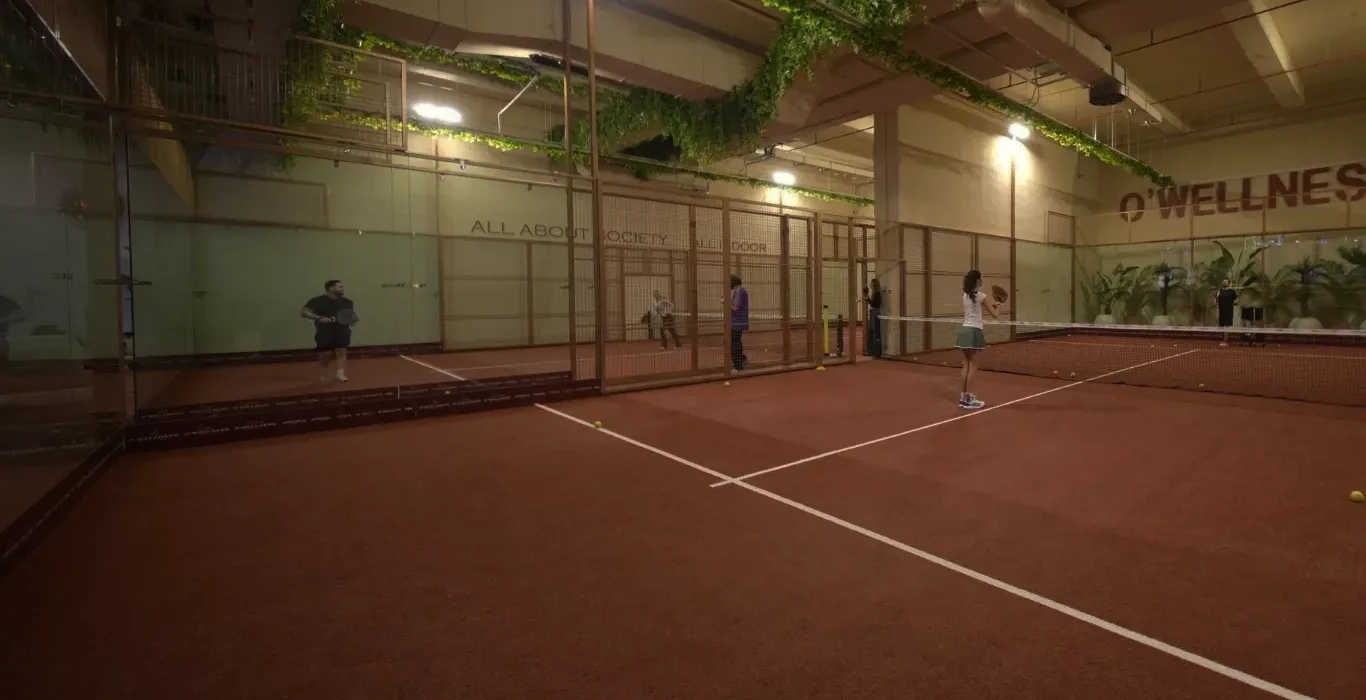
When playing on Beytepe's On indoor courts, when playing, it is easier to apply breathing techniques in a controlled environment independent of weather conditions; cold air outside can affect your breathing differently, but in an indoor court environment this variable disappears. In lessons you can ask your instructor for practical feedback on how to apply the breathing routine between points.
To speed up recovery after an intense match, take advantage of O’Spa Beytepe’s recovery services supports both physical and mental reset and lets you arrive at the next session with a clearer mind.
A breathing routine before serving
The serve is the only moment in padel that is entirely under your control. Pausing for 1-2 seconds and taking a deep breath before serving gives you a physical and mental reset. This small pause creates a natural window of opportunity for calming down and focusing, especially on important points (for example set point). Most professional players apply this routine, consciously or unconsciously.
The role of breathing in moments of stress
At a critical point, for example match point, the body's natural stress response raises heart rate and breathing rate. In this case a consciously slowed breath balances the over-activation of the sympathetic nervous system and helps you keep your hand and wrist calmer and more controlled. Most rushed shots in tense moments actually come as a result of uncontrolled breathing.
Reinforcing breathing awareness through training
It is not enough to try to remember breathing techniques only in the heat of the match; making this skill automatic requires a regular, patient training process. Doing a 5-minute breathing exercise a few times a week, before or after padel training, lets you apply the technique over time without conscious effort. Like making a stroke technique automatic, it is a skill that needs patience and repetition; over time it can be applied without thinking, like a natural reflex.
The contribution of heart-rate monitors
Wearable devices such as smartwatches or heart-rate straps let you see heart rate zones in real time during training. This data helps you objectively see when you actually reach a high zone and how long recovery takes. By tracking it over time you can learn your own recovery pattern and measure the effect of breathing techniques concretely. For example, seeing the recovery time between points shorten in matches you play at the same intensity over a month is concrete proof that both your breathing techniques and your general fitness are improving.
Testing breathing techniques at real match tempo
A breathing technique learned in a calm setting during training can feel different under real match stress. So it makes sense to try your breathing routine first in low-pressure social matches, then gradually in more competitive settings. This progression creates a natural adaptation process that lets the technique kick in automatically under pressure too.
A small habit, a big difference
Breath control is a skill anyone can practise that requires no expensive equipment or special talent. Because of this simplicity it is often overlooked; yet when practised regularly it makes a noticeable difference both in performance and in the general feeling of fatigue after a match. Trying one or two breathing routines consciously in your next padel session is the fastest way to see this difference for yourself.
Next step
Breath control is a performance tool that needs no equipment but has a big effect. Will you try a few conscious breaths between points in your next match? If you want to reinforce these techniques with an instructor in a trial lesson at Beytepe, you can reach us on our WhatsApp line.
Frequently Asked Questions
They are ranges defined by a percentage of maximum heart rate, representing different effort levels; in padel, recovery between points is about moving between these zones.
It is a technique of breathing from the belly instead of the chest, done by feeling your belly expand as you breathe in deeply through your nose and deflate as you breathe out through your mouth.
2-3 breath cycles are usually enough to balance your heart rate and collect your mind.
Yes, irregular breathing both increases physical fatigue and lowers decision-making quality; controlled breathing supports both areas.
Yes, in our lessons the instructors can give practical feedback on a breathing routine between points.




 Padel Courts
