
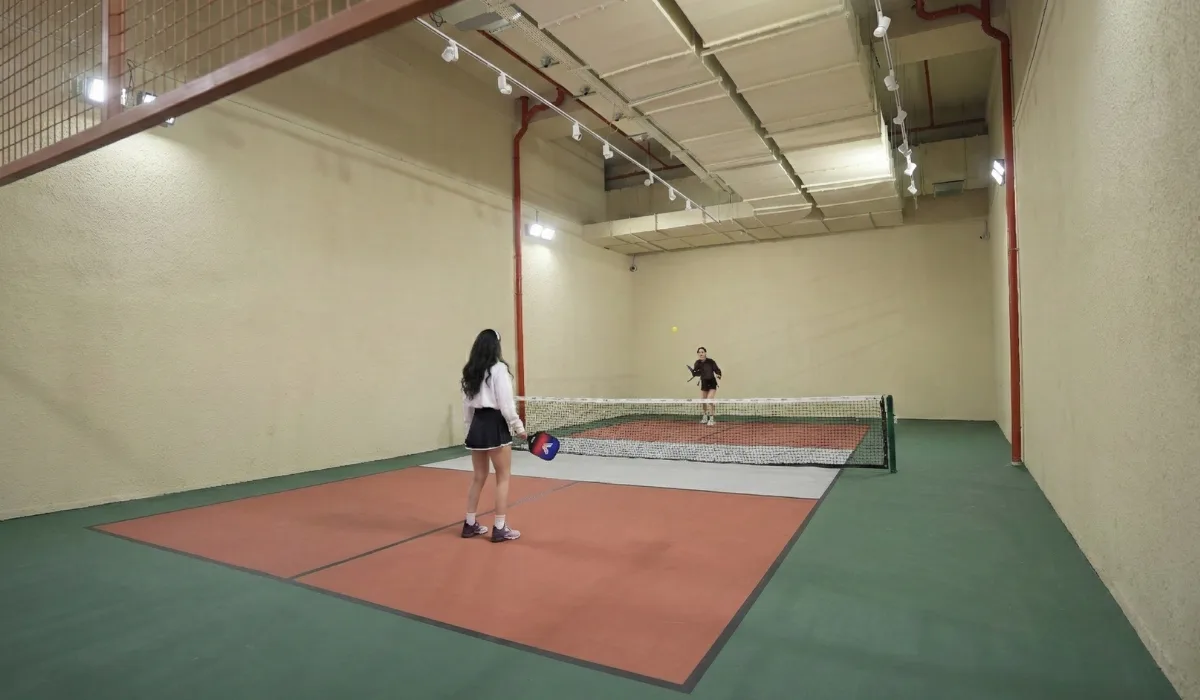
Weekly programme for padel playersis determined not just by how many times you play, but by the strength, conditioning and recovery components added alongside the game. A player who plays four matches a week but does no strength work will, at a certain point, hit both a plateau in improvement and a rise in injury risk. In this article we cover weekly programme templates for different playing frequencies, how to balance the components and how to manage busy periods. The article offers general training information; working with a coach is recommended for personalised programming.
The Five Components of the Programme
- 1. Matches and playing time: The main source of technical and tactical development.
- 2. Technical lessons: Correcting faulty patterns.
- 3. Strength training: Performance and injury prevention.
- 4. Conditioning and mobility: Endurance, speed and mobility.
- 5. Recovery: Sleep, nutrition, heat treatments, massage.
When the fifth component is skipped, the other four lose their effectiveness too.
Template 1: 2 Games a Week (Social Player)
For those short on time who play padel for enjoyment.
- Monday: Strength training, full body (45-50 minutes) + shoulder programme.
- Wednesday: Padel match (90 minutes), including warm-up.
- Friday: Strength training or conditioning (40 minutes).
- Saturday: Padel match or group lesson.
- Sunday: Mobility routine (15 minutes) or a walk.
- Every day: 10 minutes of mobility; especially if you work at a desk.
Template 2: 3 Games a Week (Regular Player)
The most common profile; a player who wants to improve but has no tournament goal.
- Monday: Lower-body strength (squat, lateral lunge, hip bridge, core) + mobility.
- Tuesday: Padel group lesson (technique-focused).
- Wednesday: Upper-body strength (pull-dominant) + shoulder and wrist programme.
- Thursday: Rest or light mobility + sauna.
- Friday: Padel match.
- Saturday: Padel match or Americano night.
- Sunday: Active rest: walking, swimming or yin yoga.
Template 3: 4-5 Games a Week (Competitive Player)
For those playing league or tournaments. At this volume, recovery management becomes critical.
- Monday: Strength training (heavy, lower-body focused) + core.
- Tuesday: Padel match + 10 minutes of mobility.
- Wednesday: Padel technique lesson + conditioning (intervals).
- Thursday: Strength training (upper body, pull-dominant) + shoulder programme.
- Friday: Light padel or rest + sauna.
- Saturday: Match or tournament.
- Sunday: Match or league; followed by active recovery.
At this volume, two things in particular should be monitored: shoulder load (weekly smash count) and total court hours. Going beyond 5 matches a week exceeds the recovery capacity of most amateur players.
Template 4: Tournament Week
The week before a tournament reduces volume and prioritises freshness.
- Monday: Light strength (60% of normal load’s), short.
- Tuesday: Short technical session (45 minutes), low intensity.
- Wednesday: Rest + mobility.
- Thursday: Light match or short technical work; to keep the feel.
- Friday: Rest; equipment check, sleep as a priority.
- Saturday-Sunday: Tournament.
In tournament week, don’t try a new racket, new shoes or a new nutrition strategy.
Strength Training: Priorities for Padel
Lower body
- Squats and variations: Foundational strength.
- Lateral lunge and cossack squat: For padel’s lateral movement demands.
- Split squat: Single-leg strength and balance.
- Romanian deadlift: Posterior chain.
- Banded side walks and clamshells: Gluteus medius.
- Calf raises: Ankle strength.
Upper body
- Rows: Pulling volume should be kept above pushing volume.
- Lat pulldown or pull-ups.
- Face pulls and band pull-aparts: Shoulder balance.
- External rotation: Rotator cuff.
- Scapular push-ups: Serratus anterior.
- Wrist and forearm work.
Core and rotation
- Pallof press: Anti-rotation.
- Side plank: Lateral stability.
- Dead bug: Pelvic control.
- Medicine ball rotational throw: Power transfer.
Conditioning: Padel’s Energy Profile
Padel is a sport in which short, intense efforts are repeated with short rests. A point usually lasts 10-30 seconds; there is 15-25 seconds of rest between points.
This profile calls for interval-weighted conditioning work.
- Short intervals: 15-20 seconds at high intensity, 20-30 seconds rest. 10-12 repetitions.
- Running with changes of direction: Shuttle runs, cone drills.
- Aerobic base: Once a week, 30-40 minutes at a steady pace (swimming, cycling, running). Supports recovery capacity.
- Plyometrics: Lateral jumps, box jumps; with gradual progression.
- Foot speed: Speed ladder drills.
Recovery: The Invisible Half of the Programme
- Sleep: 7-9 hours. The most decisive element of recovery.
- Protein: 1.6-2 grams per kilogram per day, spread across meals.
- Hydration: On an indoor court, sweating builds up unnoticed.
- Sauna: 10-15 minutes after the match; muscle relaxation and a soothing close.
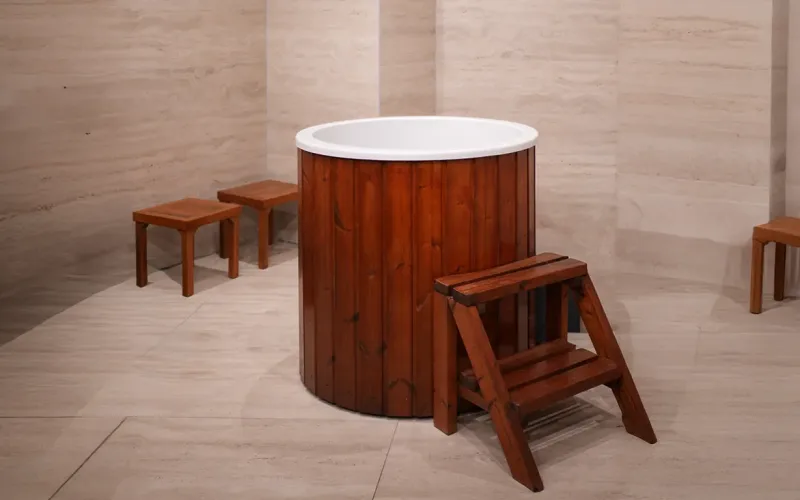
- Cold plunge: For a sense of recovery on heavy tournament days; but if muscle growth is your goal, it makes sense to delay it right after heavy strength training.
- Massage: Every two weeks or once a month; it should be placed on a rest day.
- Mobility: 10 minutes a day; hips, shoulders and thoracic area.
- Rest day: At least one full day a week.
Signs of Overload
- Your resting pulse in the morning running above your usual.
- Deterioration in sleep quality.
- A marked drop in motivation to play.
- Early breakdown of footwork.
- Recurring shoulder, elbow or groin discomfort.
- A drop in reaction speed and decision quality.
- Frequent upper respiratory tract infections.
When several of these signs appear together, the right response is not more training but a light week that cuts weekly volume by 30-40 percent.
Periodisation: The Year-Round Structure
- Preparation period (8-12 weeks): High strength volume, moderate number of matches. Emphasis on technical work.
- Competition period: Weighted towards matches and tournaments; strength at a maintenance level (2 short sessions a week).
- Transition period (2-4 weeks): Low volume, different activities; mental and physical recovery.
- Light weeks: Every 4-6 weeks, a week with reduced volume.
If Time Is Limited: The Minimum Effective Programme
If you can’t spare more than 4 hours a week in total:
- 2 matches (3 hours): The source of technical and tactical development.
- 1 strength session (45 minutes): Full body; squat, row, lateral lunge, shoulder programme, core.
- 10 minutes of mobility daily: Hips and shoulders.
- 10-minute warm-up before matches: Non-negotiable.
This structure is the minimum package covering both progress and basic injury prevention.
Result
A good padel week isn’t made up of match time alone: matches and lessons provide technical-tactical development, strength training provides performance and injury prevention, interval conditioning provides the game’s energy profile, and recovery makes all of it stick. For someone playing twice a week, one strength session and daily mobility offer an adequate framework; for those playing four to five matches a week, recovery management becomes the most critical part of the programme. Spotting overload signals early and applying a light week every 4-6 weeks is the most practical way to keep playing without interruption in the long run.
If you want to put your weekly programme into practice in Ankara, at O’Padel Beytepe the indoor, climate-controlled courts, post-match recovery with O’Spa Beytepe and strength work at O’Wellness Beytepe are all in the same complex. Membership is not required; for court and time information, WhatsApp +90 536 908 08 00.


 Padel Courts
