

Padel tempo controlis the skill of consciously managing the pace of the match, including the moments of slowing down and sudden acceleration. In padel, hitting hard all the time is often not the most effective strategy; the real power lies in knowing when to change the rhythm.
In this post we cover why slow play is sometimes the most aggressive weapon, how to choose your moments of sudden acceleration, and how you can develop this mental-tactical skill on Beytepe’s courts.
Why is tempo such an important concept in padel?
The padel court's small size and the glass keeping the ball in play offer a setting well suited to long, patient rallies. In this setting a player who keeps trying to hit hard makes more errors and also gives the opponent the chance to read the rhythm. Tempo control means reversing this dynamic by consciously choosing when to slow down and keep the ball in play and when to suddenly speed up and surprise the opponent.
This skill requires mental discipline as much as technique; because natural instinct usually pushes you to react to every ball with the same intensity.
Slow play: patient rallies and wearing down your opponent
Playing at a slow tempo means keeping the ball in play with high, controlled, deep shots (lobs, controlled flat shots). This approach makes the opponent impatient; many players lose patience in long rallies and try a risky shot and make an error. A slow tempo also wears the opponent down physically, because long rallies require constant running and positioning.
Players who use this strategy usually adopt a style of play that trusts their own patience and physical endurance and waits for the opponent to make mistakes rather than making them.
Sudden acceleration: catching the right moment
Suddenly speeding up in the middle of a slow rally - a hard smash, a sharp volley or an unexpected flat shot - is the most effective way to catch the opponent unprepared. The reason this acceleration works is that the opponent has got used to the rhythm and can't react quickly enough to the sudden change. But trying this acceleration on every ball makes it lose its effect; the real power comes from using it rarely and at the right moments.
To catch the right moment you need to read the opponent's position and readiness; if the opponent is far from the net or in an unbalanced position, a sudden acceleration usually works best.
Combining tempo changes: a sample scenario
| Rally stage | Suggested tempo |
|---|---|
| Start of the rally | Controlled, medium tempo |
| Opponent is starting to get impatient | Slow it down, add depth and height |
| Opponent sent a weak, unbalanced ball | Try a finish with sudden acceleration |
| Opponent is ready and balanced | Keep the tempo, don't try a risky shot |
This table offers a starting framework; in real matches you need to make these decisions within seconds, and that is a matter of intuition built through repetition.
The link between tempo control and reading your opponent
Effective tempo control is impossible without reading the opponent correctly. Watching the opponent's breathing, foot positioning and racket preparation gives valuable clues about when to stay patient and when to speed up. This observation skill develops with experience and over time turns from conscious analysis into automatic intuition.
Combining tempo control with net play
Tempo control is closely linked to net play. Using tempo changes while building pressure at the net disrupts the opponent's volley response. For more detail on this you can take a look at see our padel volley technique article . Similarly, slowing the tempo with a lob and then trying a sudden smash is an effective combination that joins the two techniques; on this, our padel lob article offers more information.
Common mistakes in tempo control
- Reacting to every ball with the same intensity: This lets the opponent read you easily.
- Trying to play fast all the time: This raises your error rate and tires you out physically.
- Choosing the moment to accelerate too late or too early: Accelerations made without correctly reading the opponent's position usually fail.
Developing tempo control in Beytepe
In padel lessons in Beytepe, instructors help students develop this skill by deliberately sending balls at different tempos. By training regularly on our indoor courts you can become a player who can switch between slow and fast tempo with ease.
If you want to test this skill in a real competitive setting, our monthly Americano tournaments offers a chance to practise tempo control against opponents with different styles of play.
Mental discipline: staying patient
The hardest part of tempo control is mental discipline, not technique. Staying patient during a long rally isn't easy, especially when the opponent keeps building pressure. The most effective way to develop this discipline is to make a habit of sticking to a particular plan within the match; for example, simple rules like “keep the first three shots controlled, speed up on the fourth if there's an opening” make decision-making easier.
Turning tempo into a lasting weapon
Tempo control is one of the least visible but most effective weapons in padel. By working regularly on Beytepe’s courts, you can make the rhythm of the match depend on you rather than on your opponent. To get started, reach us on our WhatsApp line you can request a trial lesson.
Setting the tempo on serve and return
Tempo control doesn't start in the middle of the rally but with the serve. A slow, controlled serve sets a calm tone from the very first moment of the match, while a strong, fast serve aims to put the opponent under pressure straight away. The player returning makes a similar choice: they can lower the tempo with a deep lob or start an early acceleration with an aggressive shot. These first decisions largely determine the overall character of the rally that follows; for more on return strategies, see our padel return strategies article .
Managing tempo by set and by match
Tempo control should be considered not just for a single rally but across a set or the whole match. Some players deliberately play slow and patient at the start of the match, observing the opponent's style, and then start making a difference with sudden accelerations towards the middle. Others prefer the opposite: playing fast and with pressure at the start to put the opponent under early pressure, then slowing the tempo and minimising errors once they have the advantage. Discovering which approach suits your own style of play becomes clear with experience.
Physical fitness and sustaining tempo
To use tempo changes effectively you need a certain level of physical fitness; sustaining slow, long rallies in particular requires endurance. Playing padel regularly already improves cardiovascular endurance, but doing short-duration high-intensity training one or two days a week lets you react in moments of sudden acceleration without losing power. This physical preparation is a basic element that carries tempo control from theory to practice.
Adjusting tempo against different opponent profiles
Not every opponent reacts to the same tempo strategy in the same way. Against an opponent who likes to play impatiently and aggressively, a slow tempo is usually very effective, because this type of player tends to get bored in long rallies and make errors. Against an opponent who plays patiently and defensively, sudden accelerations and surprise shots can be more valuable, because this type of player adapts more slowly to tempo changes. Quickly assessing your opponent's style of play in the first few minutes of the match helps you choose the right tempo strategy early.
Seeing your tempo habits through video analysis
When you watch your own matches, you may notice that you play at the same tempo without realising; many players get stuck at a single speed unconsciously. Seeing this repeating pattern is the first step towards increasing tempo variety. On this, in our padel match analysis article you can find how to watch your own match systematically.
A shared sense of tempo in doubles
In doubles, tempo control is not one player's decision but the pair's shared decision. If one player tries a sudden acceleration and their partner is caught unprepared, the advantage can go to waste. Good pairs stay in sync on tempo by giving short signals such as “let's slow it down a bit” or “now's the time to speed up” before the match or during breaks. This communication becomes natural by playing with the same partner over the long term.
Testing tempo control in a tournament
Tempo control is easy to understand in theory but a hard skill to apply under real match pressure. Beytepe Padel League applying this strategy against different opponent profiles in season-long events such as these both boosts your confidence and clarifies which tempo approach feels more natural for you. The tension of a competitive setting requires you to make tempo decisions much faster than in training; this truly tests your skill.
Teaching the concept of tempo to young players
In the 7-16 age kids' academy, the concept of tempo is usually taught through simple games; for example, rules like “first hit five controlled shots, then one hard shot” let children experience tempo change in a concrete and fun way. The tempo awareness gained at this early age forms the foundation for making more complex tactical decisions later on.
The relationship between tempo control and breathing rhythm
Breathing rhythm is an often overlooked dimension of tempo control. A player who breathes fast and irregularly naturally tends to play more rushed shots; a player who breathes calmly and regularly can make more controlled decisions within the rally. Trying to consciously slow your breathing when the rally speeds up is a simple but effective way to turn the tempo in your favour, both physically and mentally.
Beytepe's indoor court advantage: consistency in tempo work
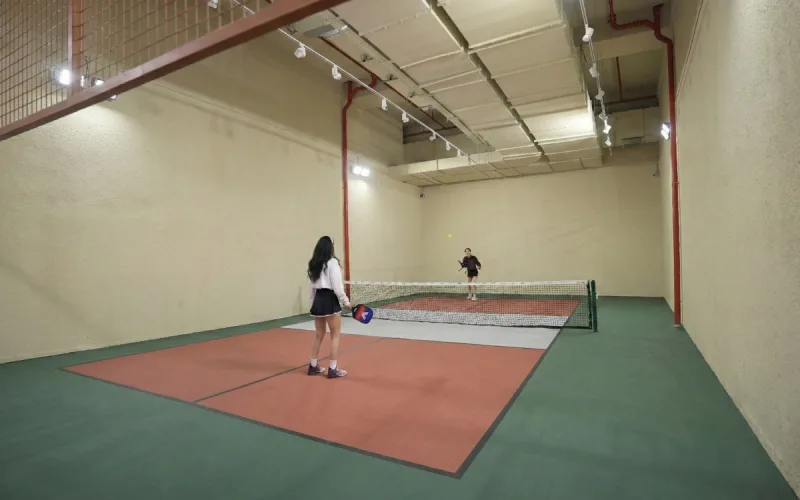
On outdoor courts in Ankara, wind can affect ball speed and so a player's natural sense of tempo. On Beytepe’s indoor, climate-controlled courts this variable is removed, so the tempo-control techniques you learn work the same way in every training session and are internalised faster. This consistent environment is a big advantage for tempo control, a newly learned skill that needs fine-tuning. In the end, tempo is one of the quietest but most effective weapons in padel; a player who uses it skilfully wins the match through their own mental control rather than their opponent's physical strength. You can start building this control step by step with an instructor on Beytepe’s courts today. In time you'll notice that your opponent is no longer setting your pace; you are directing theirs.
Frequently Asked Questions
It is the skill of consciously managing the pace of the match, including the moments of slowing down and sudden acceleration; it means knowing when to change the rhythm instead of hitting hard all the time.
Long, patient rallies make the opponent impatient and tire them physically; this increases the chance of the opponent making a mistake.
A sudden acceleration when your opponent is off balance or far from the net gives the most effective result; used too often, it loses its effect.
In padel lessons, instructors can help you develop this skill by deliberately sending balls at different tempos; the indoor courts offer a consistent training environment.
Using changes of tempo while building pressure at the net disrupts the opponent's volley reaction and makes it easier for you to take the initiative.


 Padel Courts
