

Most amateur and social padel tournaments have no court referee; players manage their own matches. This is called “self-refereeing” and is based on sportsmanship and commonly accepted rules.
This system also applies at Beytepe’s monthly Americano tournaments and social match sessions; so knowing the basic self-refereeing rules keeps matches flowing smoothly and prevents unnecessary arguments.
What is self-refereeing and why is it necessary?
Self-refereeing means players make on-court decisions (such as whether the ball is in or out, let situations and score keeping) among themselves, based on the principle of honesty. In a fast-paced sport like padel, usually played socially, assigning a referee to every match is not practically possible.
For this system to work, all players need to know the basic rules and adopt the habit of giving the benefit of the doubt to the opponent in doubtful situations. This fits the spirit of the sport and keeps matches going without tension.
How is the let rule applied?
In padel, if the ball touches the net during a serve and lands in the correct service area, a “let” is called and the serve is replayed. This works similarly to the rules of tennis. Because a let can usually be noticed clearly and audibly, the side who sees it should call it immediately, and the other side should trust that call.
The ball hitting the glass or wall during a rally and staying in play is a different matter; this is based on padel's own glass play rules and should not be confused with a let.
Line calls: in or out?
The call on whether a ball touched the line is generally made by the player who saw that point best. A ball that touches the line is always counted as “in”. In case of doubt, giving the call to the opponent is the basic principle of both sportsmanship and the self-refereeing system.
Communication is critical here: the player making the call should state “in” or “out” clearly and quickly, avoiding an attitude that invites argument. In matches with constant line disputes, it helps for the two pairs to sit down briefly and agree on a common approach.
Score keeping and managing disputes
Keeping the score correctly is also an important part of the self-refereeing system. Saying the score out loud at the end of every point makes sure both pairs are on the same score. If a dispute arises, the pairs briefly discuss what is correct and try to reach a joint conclusion; in cases that can't be resolved, the disputed point is usually replayed.
The most practical way to minimise such disputes is to clearly confirm the score at every important moment (especially at set scores or critical points).
Sportsmanship: the cornerstone of self-refereeing
The self-refereeing system depends entirely on the honesty of the participants. Deliberately interpreting a doubtful ball in your own favour may win you a point in the short term, but in the long term it damages your playing partners' trust and hurts your reputation within the community.
When playing on Beytepe's padel community culture article, this sport is built on a strong social fabric; sportsmanship is one of the most important elements keeping that fabric intact.
Self-refereeing tips for beginners
Self-refereeing can feel confusing at first for players new to padel. That's why going over the basic rules with a padel lesson coach before joining your first tournament will boost your confidence on court.
- Always call doubtful balls in the opponent's favour.
- State your calls clearly and quickly out loud.
- Confirm the score out loud at the end of every point.
- In a dispute, look for a quick compromise instead of arguing.
Self-refereeing in practice at Beytepe
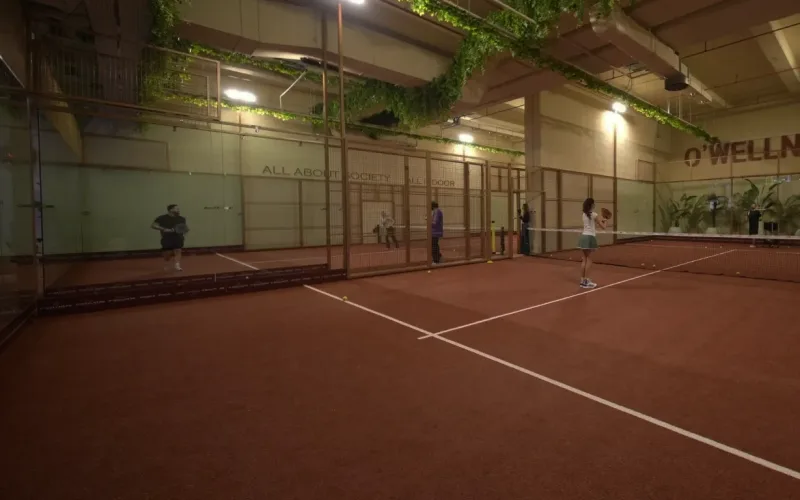
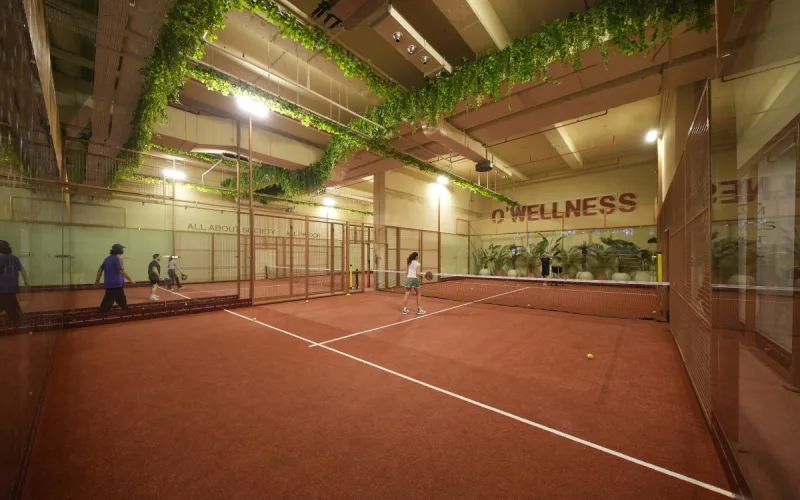
Beytepe's indoor padel courts this system works smoothly in most social tournaments held; because the majority of participants are regular players who know each other. This familiarity naturally increases the reliability of the self-refereeing system.
In official federation tournaments, refereed systems can also be applied; we covered this difference in more detail in our Turkish Padel Federation and official tournaments article.
Preventive habits to avoid tough disputes
Some disputes can be avoided entirely with a few precautions taken before the match starts. For example, briefly recalling the line rules and let situations before the match begins prevents arguments that might arise later on.
Another useful habit is confirming the score out loud at the end of every point. This simple step almost entirely eliminates “what point were we on” arguments later in the match.
The maturity self-refereeing adds to the game
The self-refereeing system demands not only technical knowledge from players but also emotional maturity. A fair call made at a critical moment may look like a lost point in the short term, but in the long term it increases the player's standing and trustworthiness within the club.
This maturity shows up not only in tournaments but also in everyday social matches; being known as an honest and fair player in Beytepe’s regular playing groups is also the key to being invited more and building a wider playing network in the long run.
Other situations that cause confusion
Questions such as whether a ball that bounces off obstacles around the court (like a door or a post) counts as valid, or whether a player touched the net, are also common points of dispute in amateur matches. In such cases, the general rule is that a player touching the net or the opponent's area counts as a fault.
Knowing such special cases in advance makes it easier to make sound, quick decisions during a match. One of the most practical ways to clarify the rules is to give a short rules reminder to the players you will be playing with before the tournament.
Spreading a self-refereeing culture in the club
The strength of a club's self-refereeing culture is reinforced when experienced players pass these rules on to newcomers through exemplary behaviour. Experienced players who play regularly in Beytepe naturally pass this sportsmanship ethos on to newly joined players.
Keeping this culture alive keeps tournaments and social matches enjoyable and trustworthy in the long run; it is also an important element that sets the padel experience in Beytepe apart from other clubs.
Communication techniques that reduce tension in self-refereeing
Instead of raising your voice in a disputed moment, speaking calmly and clearly lets the other side listen to you without becoming defensive. Using conciliatory language such as “I think it was in, but if I'm not sure, let's replay it” can ease tension instantly.
This communication skill develops with experience over time; for new players, observing such situations in the first few tournaments offers a useful learning opportunity for shaping your own style of reacting.
The bridge between federation rules and self-refereeing
The rules applied in the self-refereeing system are fundamentally based on the federation's official rulebook; the only difference is that the people applying the rules are the players themselves, not a referee. That's why learning the official rules directly strengthens your self-refereeing skills too.
If you want to learn more about where the rules come from, our article on the federation and official tournaments will give you a general framework.
Common practical situations in self-refereeing
Questions such as whether a ball went out on the serve, or whether a ball coming off the back glass was played according to the rules, are among the points that confuse new players the most. In such cases the general rule is that the ball is allowed to bounce only once before crossing into the opponent's area, and that a ball rebounding off your own back glass is part of the game.
Working through such special cases with your coach using examples in a lesson lets you make the right call without hesitation when you face them on court.
The value self-refereeing adds to the tournament experience
Ultimately, self-refereeing is one of the things that make padel not just a sport but a social experience built on mutual trust. Playing in a club environment that applies this system properly offers a more enjoyable and fairer competitive atmosphere.
Experiencing this value at Beytepe’s tournaments is one of the most concrete ways to experience the social side of the sport as much as its technical side.
A short rules summary for new players
For people new to padel, the most practical approach is not to memorise a few basic rules but to know a few common scenarios: the serve is replayed on a let, a ball touching the line counts as in, doubtful calls go in the opponent's favour, and touching the net is a fault. Going on court with these few basics lets you handle most disputed moments with ease.
As you gain experience over time, your knowledge of rarer situations will develop naturally; there is no need to rush this process.
Learning from experienced players about self-refereeing
Sharing a court with experienced players who play regularly in Beytepe is one of the most natural ways to learn self-refereeing by observation. Watching how these players resolve disputed moments calmly and fairly can guide you in shaping your own approach.
In time you too will be in a position to pass this experience on to newcomers; this is a lovely example of how club culture is passed down from generation to generation, from player to player.
The balance between self-refereeing and competition
Some players may think self-refereeing weakens competition; in fact the opposite is true. Fair and honest self-refereeing makes competition truly meaningful, because the results reflect real performance rather than rigged calls.
This balance is one of the main reasons Beytepe’s tournaments are both fun and sporting in the full sense.
One last note on self-refereeing
Self-refereeing skill develops over time, just like stroke technique. It is perfectly normal to hesitate in your first few matches or to misjudge some calls; what matters is not compromising on honesty and calm along the way.
Every new tournament in Beytepe offers an opportunity to develop this skill; over time your confidence both as a player and as your own “referee” will grow. This confidence also shows positively in your performance on court.
A short summary
Self-refereeing rests on a few basic principles, from the let rule to line calls, from score keeping to dispute resolution: give the benefit of the doubt to your opponent, speak clearly and calmly, confirm the score regularly. These few principles keep Beytepe’s social tournaments smooth and fair and strengthen the sport's trust-based social structure; this way every participant feels they are in a fair environment.
Next step
Self-refereeing is a natural extension of padel's social, trust-based nature. If you'd like to clarify the rules before joining the next social tournament in Beytepe, you can reach us on our WhatsApp line or reinforce the basics with a trial lesson.
Frequently Asked Questions
If, during a serve, the ball passes over the net and lands correctly in the opposite service area but has touched the net, a let is called and the serve is replayed.
A ball that touches the line counts as in; the side that saw it best (usually the player closer to the ball) makes the call, and in case of doubt, sportsmanship requires interpreting it in the opponent's favour.
The two pairs talk briefly and try to reach a joint decision; if no agreement is reached, the point is usually replayed.
Self-refereeing is used in most social and in-club tournaments; referees may be present at official federation tournaments. For up-to-date format information, you can ask us on our WhatsApp line.



 Padel Courts
