
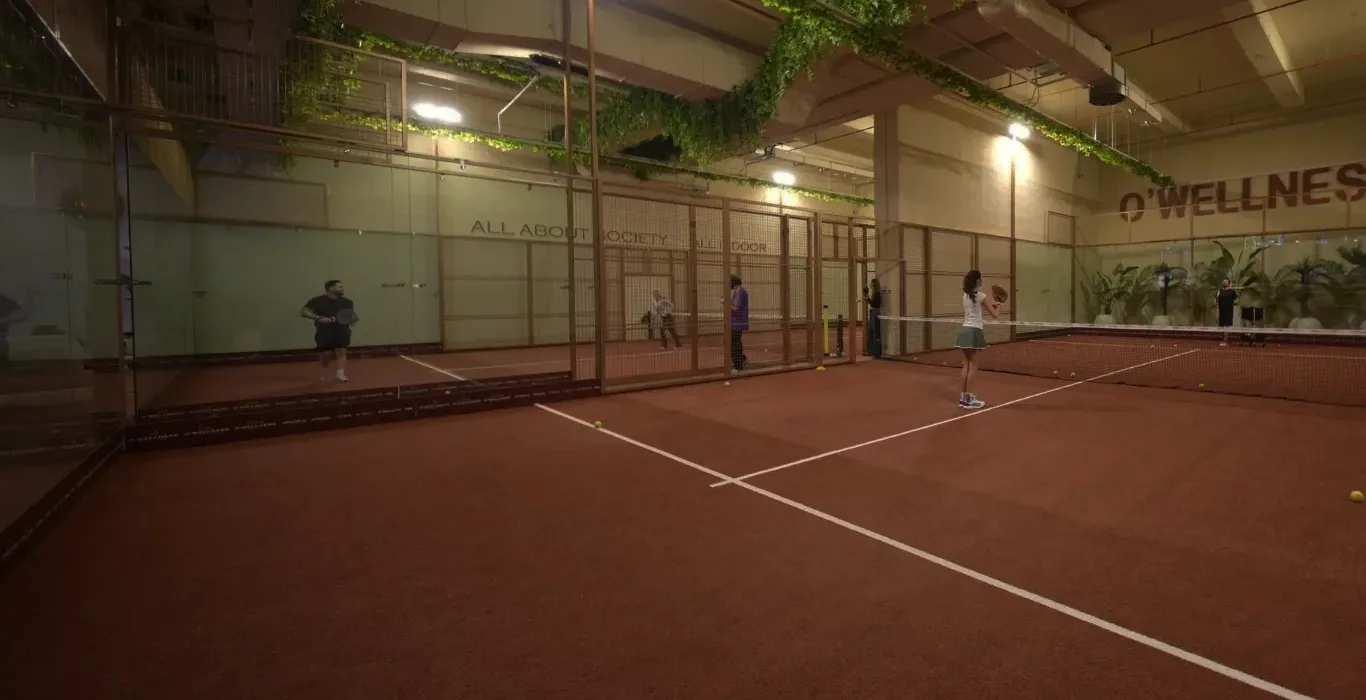
Losing in a padel tournament is a natural and unavoidable part of the sport; even the best players lose regularly. What matters is how you handle the loss: if you can analyse the match and learn from it, even a loss becomes part of your development.
In this post we cover the emotional reaction after losing, how to move on from it in a healthy way, and how to prepare for the next tournament in Beytepe.
Why does losing feel so hard?
Because padel is played in pairs, the feeling of loss can sometimes weigh heavier than in individual sports; thinking that you have let your partner down adds an extra burden. Also, in a tournament format the opponent is clear and the result is definite, so the loss confronts you in a very concrete way.
This emotional reaction is completely normal; the brain perceiving loss as a threat in a competitive environment is a reflex that can even be explained evolutionarily. What matters is accepting this first reaction and building a healthy assessment on top of it. No one, including professional players, is entirely immune to this feeling; the difference shows in how quickly and how constructively they can cope with it.
The first half hour after the match: what not to do
Wrong comments or harsh self-criticism made right after a lost match only add to the emotional load instead of being a real analysis. In this early stage, avoiding harsh accusations towards your partner or yourself is the easiest way to protect the relationship and your motivation.
Instead, staying quiet for a few minutes, breathing and waiting for the feeling to pass sets up healthier ground for the analysis that follows.
How to do a constructive analysis
When reviewing the match, it helps to ask concrete questions free of emotion:
- At which moments did your opponent keep putting you under pressure?
- At which moments did your strongest shots not work?
- At which points did communication with your partner break down?
- In which part of the match did you feel physically tired?
Your answers to these questions become concrete topics you can work on with your coach in your next padel lesson If a video analysis option is available, rewatching the match lets you see the technical facts rather than an emotional interpretation.
Protecting your relationship with your partner
After a loss, taking mutual responsibility is important to keep your relationship with your partner intact. Instead of sentences like “We would have won if you hadn't done that”, an approach like “Next time let's try this together” protects team spirit. The fact that padel is a doubles sport should encourage shared learning rather than individual failure.
This approach is especially important in Beytepe Padel League -style season-long competitions, for anyone who wants to build a long-term partnership.
Mental recovery techniques
A few practical methods work for mental recovery after a loss. A short walk or light stretching helps lower cortisol levels and calm you down. Framing the loss as a “data point” rather than a “failure” lets you go into the next match with less pressure.
When playing on Beytepe's In the recovery area, using options such as the sauna or contrast therapy can be a practical complement that speeds up both physical and mental recovery.
Preparing for the next tournament
Turning the lessons from the tournament you lost into a concrete training plan is the most valuable step. For example, if you struggled at the net, you can focus on this in the following week in a private lesson or group training. If physical endurance was the issue, you may need to review your rest and nutrition routine between matches.
The monthly Americano tournamentsheld in Beytepe offer an ideal intermediate step for testing what you have learned in a low-pressure setting; you can try yourself in this format before entering a big tournament.
Losing well is a skill too
Even among professional players, being able to handle a loss maturely is considered an important part of long-term success. Players who accept and analyse a loss instead of denying it or making excuses show steadier improvement over time. Applying this approach after every tournament in Beytepe makes you not just a better player but a more resilient opponent.
Keeping a loss journal for long-term improvement
Some experienced players keep short notes after every tournament: which opponent styles they struggled against, which shots they need to improve, at which moments they panicked. This simple habit lets you see recurring weak points over time; a mistake that seems random in a single match can turn into a clear area for improvement after a few tournaments.
Sharing this journal with your coach helps lessons progress in a more targeted way; instead of general practice, the focus can be on exactly the scenarios that challenge you.
The benefit of analysing your opponent
After a lost match, it can be instructive to look not only at your own performance but also at your opponent's style of play. Did the opponent keep pulling you to the net, or did they wait patiently at the back? These observations help you build a different strategy when you face the same opponent or someone with a similar style.
In season-long competitions such as the Beytepe Padel League, the chance of meeting the same opponents again is high, so this analysis becomes especially valuable.
How losing contributes to tournament culture
As the number of players who handle losing maturely within a community grows, tournament culture also develops in a healthy direction. Respect for the opponent, sportsmanship and mutual congratulations improve the experience of both winner and loser. The tournament community in Beytepe embracing this culture lets everyone compete more comfortably and enjoyably in the long run.
Telling physical fatigue from mental fatigue
Sometimes the reason for losing a match is not technical at all but entirely physical or mental fatigue. On a long tournament day, back-to-back matches lower not only muscle freshness but also decision-making speed. In this case, interpreting the loss as a technical shortcoming would be wrong; the real issue is rest and energy management.
Drinking enough water between matches, keeping your blood sugar balanced with light snacks, and, if possible, taking a short rest break lets you start the next match feeling fresher. In our pre-match nutrition guide we covered this topic in more detail.
How young players perceive loss
The experience of losing requires a different sensitivity in children and young players. For players aged 7-16, a loss can sometimes turn into disproportionate disappointment. Here the approach of parents and coaches is decisive; language that focuses on effort and improvement rather than the result keeps the child's relationship with sport healthy in the long run.
At Beytepe’s kids' academy, this approach is supported with short, constructive feedback after tournaments; the aim is for the child to see a loss not as a threat but as a learning opportunity.
What players who turn losses into wins have in common
When you study players who show steady long-term improvement, one common trait stands out: they see a loss not as a personal shortcoming but as a temporary result. This outlook lets them go into the next match with less anxiety and more curiosity. They make it a habit to take at least one concrete lesson from every match they lose.
Developing this mindset takes time, but the regular tournament and social match environment in Beytepe offers constant opportunities to practise it; every week means a new match, a new learning opportunity.
Managing expectations: setting realistic goals
The size of the disappointment from a loss is usually directly proportional to the goal you set going into the tournament. Instead of a rigid goal like “I absolutely must win”, setting a process-focused goal like “today I'll focus on improving my net game” lets you feel satisfaction even when the result doesn't go as expected.
This approach is especially important in competitions such as the university cup are useful in highly motivated but also high-pressure competitions; building a framework focused on improvement rather than results reduces the pressure.
Building a development plan with your coach
If you notice you keep losing for similar reasons, talking to a coach speeds up the process instead of trying to solve it alone. In Beytepe’s one-to-one or semi-private lessons, the coach directly observing your game and suggesting pinpoint solutions gives much more effective results than general practice.
Because regular lessons improve not only technique but also tactical decision-making, they help you feel better prepared when you face similar situations in future tournaments.
Resting after a loss and moving on to the next match
In tournaments where matches are played back to back on the same day, you may have to go into a new match right after a loss. A short “reset routine” helps in this transition: a few deep breaths, relaxing your shoulders and a brief mental preparation for the next opponent. Not carrying the feeling of the previous match into the next is the most practical way to protect your performance.
On tournament days in Beytepe, during the short breaks between matches, in the lounge area finding a quiet corner and taking a few minutes for yourself can make this reset easier.
The team captain's role: leadership after a loss
If you are part of a team playing inter-club matches, when you lose it is not only your own reaction but also the team captain's approach that is decisive for morale. A good captain manages the process of analysing the loss using blame-free, solution-focused language; we covered this topic in more detail in our team captain guide .
The ranking system and the real impact of a single loss
In season-long competitions such as the Beytepe Padel League, a single lost match may not affect your overall ranking as dramatically as you think. Because scoring systems are usually based on the average of multiple matches, one bad performance becomes a detail that can be made up over the rest of the season. Knowing this logic keeps you from experiencing exaggerated disappointment after a single loss; we explained this topic in more detail in our padel league ranking systems article.
Quick summary: the mindset that makes a loss valuable
Losing isn't a pleasant feeling, but when handled properly it becomes one of the most reliable sources of improvement. Accepting the emotional reaction, doing a constructive analysis, protecting your relationship with your partner and drawing up a concrete development plan; these four steps offer a simple but effective framework you can apply after every loss.
The power of sharing a loss within the community
Instead of keeping a lost match to yourself, sharing it with other players courtside or with in the lounge area other participants you know can be more relieving than you think. Almost every player has a similar story of loss; this sharing reminds you that a loss is not really an experience lived alone.
Next step
Losing is not the end of the tournament but the start of your next step of improvement. If you want to prepare for the next tournament in Beytepe or take a lesson on something you feel is lacking, you can reach us on our WhatsApp line; handled properly, every loss turns into a concrete opportunity that makes you a stronger opponent in the next match, and over time this outlook becomes one of the most valuable mental assets you carry onto the court.
Frequently Asked Questions
First wait for the emotional reaction to pass, then analyse the match with concrete questions; identifying the moments you struggled in clarifies the focus of your next training session.
Using language that takes shared responsibility and focuses on the next match, instead of accusatory statements, protects team spirit and the relationship.
A short walk, light stretching or recovery options speed up mental recovery; seeing the loss as a data point reduces the pressure.
Rewatching the match lets you see the technical facts rather than an in-the-moment emotional interpretation; with your coach you can identify concrete areas to work on from this footage.
Monthly Americano tournaments offer a suitable intermediate step for trying out what you have learned in a low-pressure setting.




 Padel Courts
