
Returning from injury in padelis the period in which the most common repeat mistake is made when people rush. Going back to your normal programme as soon as the pain goes away means loading tissue that has not healed, and it markedly increases the risk of re-injury. In this article we cover the staged structure of returning to the court after an injury, the criteria to meet at each stage and approaches that reduce the risk of recurrence.
Important warning: This article offers a general framework. Every injury is different, and your return process must be planned under the supervision of the physician or physiotherapist who is assessing you. The stages below are a general roadmap that can be used once you have specialist approval; they are not a diagnosis or treatment recommendation.
Why a Staged Return?
- Tissue healing continues after the pain has gone. Being pain-free does not mean the tissue is ready to carry full load.
- Loss of strength and control: During a period of inactivity, muscle strength and neuromuscular control decline.
- Compensation patterns: The body develops different movement patterns to avoid pain; if these are not corrected, they lead to new problems.
- The confidence factor: Mental readiness is as important as physical readiness.
- Gradual loading: Tissue needs time to readapt.
The Five Stages of the Return Process
Stage 1: Pain management and basic movement
Goal: Bringing pain under control and regaining basic range of motion.
- Following the treatment plan set by the specialist.
- Pain-free range-of-motion work.
- Isometric strength work (with specialist approval).
- Keeping unaffected areas training; for example, with a shoulder injury, lower-body training can continue.
- Court: None.
Progression criterion: Being pain-free in daily activities and regaining full range of motion.
Stage 2: Regaining strength
Goal: Bringing the strength of the affected area close to the level of the opposite side.
- Gradual resistance work.
- Side-to-side comparison: the affected side should be at least 80-90 percent of the unaffected side.
- Eccentric work (as directed by the specialist).
- Core and surrounding-area strengthening.
- Low-impact cardio: swimming, cycling.
- Court: None, or only very light movement.
Progression criterion: Reduced strength asymmetry and being pain-free in loaded movements.
Stage 3: Neuromuscular control and movement patterns
Goal: Safely rebuilding movement patterns.
- Balance and proprioception work.
- Multidirectional movement: side step, crossover step, backward step.
- Controlled change-of-direction drills.
- Shadow play (padel movement patterns without a ball).
- Gradual introduction of plyometric work.
- Court: Shadow play and light movement drills.
Progression criterion: Symmetry in single-leg balance tests and being pain-free in controlled changes of direction.
Stage 4: Sport-specific loading
Goal: Gradually regaining padel-specific movements.
- Week 1: Controlled ball feeding; forehand and backhand only, at half power, 20-25 minutes.
- Week 2: Wall work, short rallies; light serving motion, 30-35 minutes.
- Week 3: Net volleys and controlled play; no smashes, 40 minutes.
- Week 4: Bandeja and serve at close to full power; short match trials, 45-50 minutes.
Assess at the end of each week: is there pain, and did swelling or discomfort appear the next day?
Progression criterion: Being able to perform sport-specific movements at full power without pain.
Stage 5: Return to matches
Goal: A gradual return to competitive play.
- Week 1: A single-set friendly match against a low-tempo opponent.
- Week 2: A two-set friendly match.
- Week 3: A match at normal tempo.
- Week 4 and beyond: Return to tournament or league matches.
At this stage, at least one day of rest should be left between matches.
Readiness Criteria
To move past each stage, a subjective “I feel fine” is not enough. Objective criteria:
- Pain: Being pain-free during and after movement.
- Range of motion: Symmetrical with the opposite side.
- Strength: At least 90 percent of the opposite side.
- Functional tests: Symmetry in tests such as single-leg hop distance and balance time.
- Swelling: No swelling after activity.
- Next-day response: The most important indicator. If there is pain or swelling the next day, the load was too high.
- Mental confidence: Trusting your movement; hesitation creates compensation patterns.
Common Padel-Specific Injury Areas and Return Notes
Shoulder
- Overhead shots (smash, bandeja, víbora) are added last.
- The rotator cuff and scapular control programme should be completed before returning.
- Gradual introduction of the serving motion; half power first, then full power.
Groin / adductor
- Lateral movement is the most critical load; it should be added gradually.
- Adductor strength work (such as the Copenhagen plank) is needed before returning.
- Lateral preparation must be part of the warm-up.
Knee
- Changes of direction and sudden stops should be added gradually.
- Gluteus medius strength should be assessed before returning.
- Checking landing technique is important.
Ankle
- Proprioceptive training is a standard approach to reducing the risk of recurrence.
- Balance work should be at the centre of the return programme.
- Footwear choice and lateral support are important.
Elbow (conditions similar to tennis elbow)
- Grip thickness and racket weight should be reviewed.
- Eccentric forearm work under specialist guidance.
- Check your hitting technique; use torso rotation instead of hitting with the arm.
Reducing the Risk of Recurrence
- Find the cause. Injury is rarely a coincidence: overload, technical error, equipment mismatch or lack of strength.
- Fix the weakness. The preventive programme should continue after you return; going back to the pre-injury programme leads to the same result.
- Extend the warm-up. 12-15 minutes, including sport-specific movements.
- Manage load increases. Weekly volume should not increase by more than 10-15 percent.
- Review your equipment. Racket weight and balance, grip thickness, condition of your shoes.
- Check your technique. Do a video analysis session with a coach.
- Take recovery seriously. Sleep, nutrition, rest days.
- Listen to early signals. Acting at the stage of mild discomfort is better than a full injury.
What You Can Do During an Injury
Don't treat the time you can't be on court as completely lost.
- Train the unaffected areas. Lower body with a shoulder injury, upper body with a knee injury.
- Build tactical knowledge. Watch professional matches, analyse your own recordings.
- Mental work. Breathing work, routine planning.
- Deepen your knowledge of the rules and the game.
- Close mobility gaps. A good opportunity for this often-neglected area.
- Improve your nutrition and sleep patterns.
The Mental Dimension
One of the least talked about but most decisive aspects of returning from injury is loss of confidence.
- Hesitation is dangerous. Not fully trusting a movement creates compensation patterns and a risk of new injury.
- Gradual exposure. Repeating the movement you fear under controlled conditions builds confidence.
- Manage expectations. In your first matches you won't be at your old level; this is normal.
- Patience. Returning early usually results in a longer total time out.
- Support. Staying in touch with your coach and physiotherapist makes the process easier.
Result
In padel, returning from injury is complete not when the pain goes away but when objective criteria are met: symmetrical range of motion, strength at least 90 percent of the opposite side, balance in functional tests and, most importantly, no next-day reaction after activity. A five-stage structure (pain management, strength, neuromuscular control, sport-specific loading, return to matches) makes the process manageable. The key to reducing the risk of recurrence is finding the cause of the injury and continuing the preventive programme after you return. This whole process must be planned under the supervision of a healthcare professional who is assessing you.
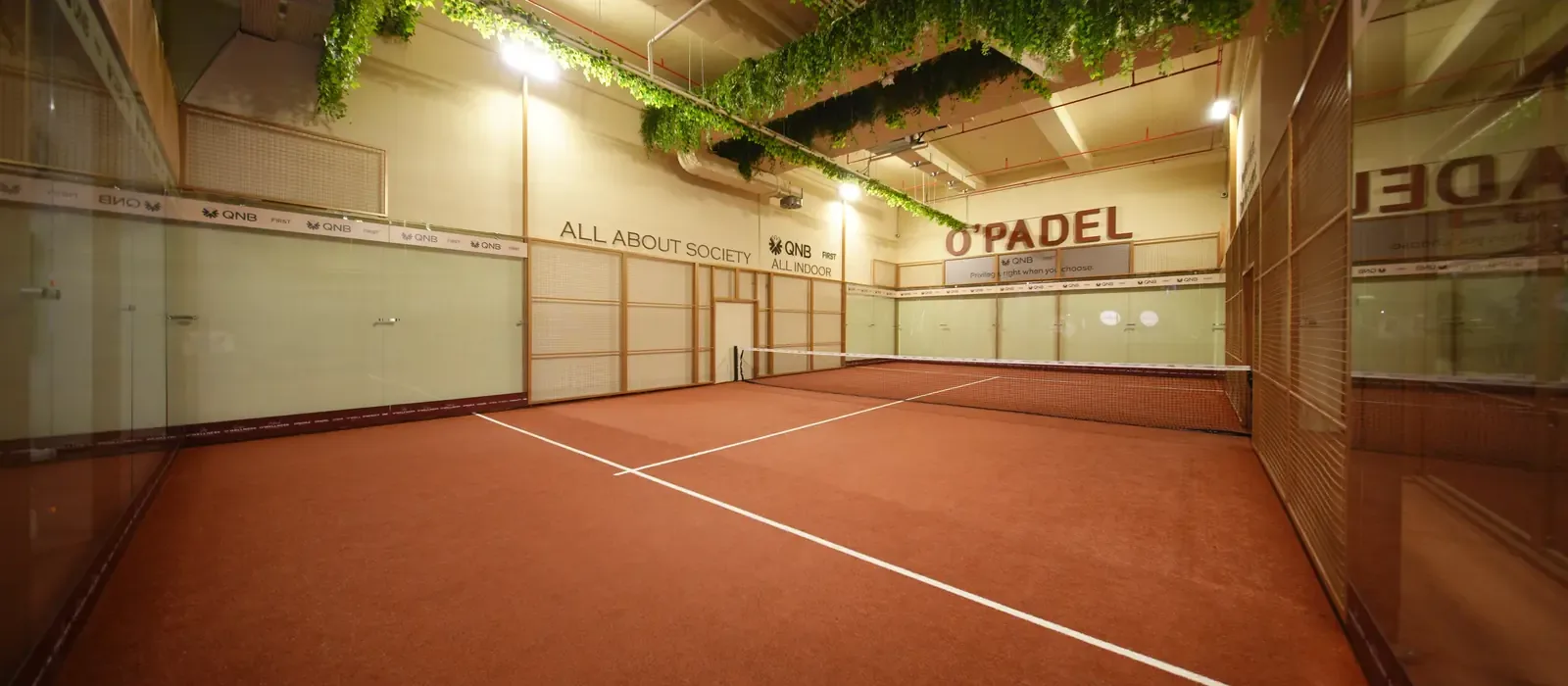
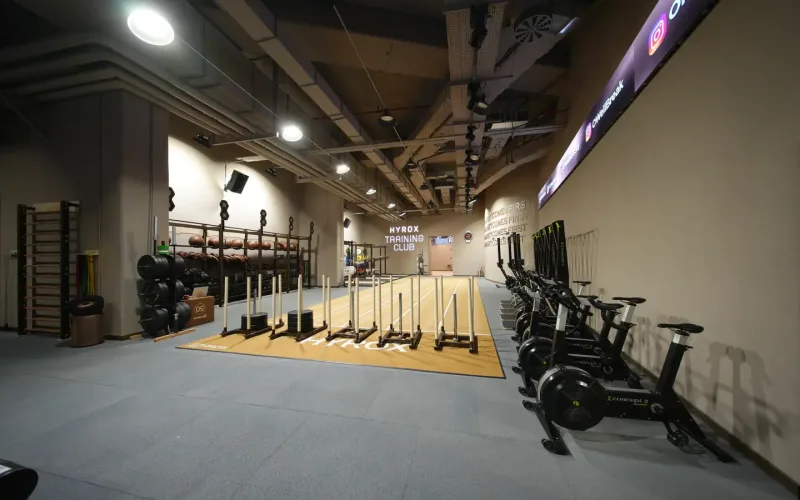
Once your specialist clears you to return to the court, O’Padel Beytepe's indoor, climate-controlled courts offer a controlled environment for your staged return programme, even in Ankara's cold winter months. Membership is not required; message us on WhatsApp (+90 536 908 08 00) to plan your first session with our certified coaches. For post-match recovery, O’Spa Beytepe and the O’Wellness Beytepe fitness area are in the same complex.



 Padel Courts
