

Building a company padel teamis one of the most effective ways to turn corporate sports events from a one-off organisation into a regular employee habit. A tournament gives you a nice day; a team builds a community that lasts all year. This is also why companies along the Eskişehir Yolu and Çankaya axis in Ankara are turning to padel: low organisational burden, high participation, easy to sustain.
Why Padel Suits a Corporate Team
In-company sports clubs are usually built on football or basketball and run into the same problems after a few months: eleven people don't get together, the injury rate is high, level differences ruin the game. Padel is markedly different on these three points:
- Four people are enough. The minimum squad needed for a match is extremely small; finding participants is much easier.
- Level differences are tolerated. An experienced player and a new one can have an enjoyable match on the same court.
- A wide age range. A 25-year-old engineer and a 50-year-old executive can play in the same match.
- Low learning threshold. Someone who has never played a racket sport joins the game in the first session; this removes the biggest psychological barrier to participation.
- Hierarchy flattens on court. A natural setting emerges for communication between departments and levels.
Steps to Building the Team
1. Gauging interest
The first step is a short internal survey. Three questions are enough: Have you played padel? Can you set aside an hour a week? Which day and time suit you? Twenty to thirty responses give more than enough information to sketch the skeleton of the programme.
2. An introduction session
Running a trial event before forming the team seriously raises the conversion rate. Most employees who have never played arrive assuming “I can't do this” and are rallying forty minutes later. This session naturally identifies the team's core squad.
3. A fixed day and time
The one thing that kills corporate sports groups is uncertainty. Asking “who's available?” afresh every week breaks up the group in three weeks. By contrast, the sentence “padel every Wednesday at 19:00” opens a permanent slot in the calendar. Arranging the booking with the club on a seasonal basis provides this stability.
4. Appointing a person in charge
Every successful company team has a coordinator. The job isn't complicated: gathering the weekly squad, confirming the booking and bringing newcomers into the group. Giving this role to one person prevents the situation where everyone is responsible and nobody is looking after it.
5. A communication channel
A simple message group is enough. The weekly squad, the reserve list and short announcements circulate in it. The reserve list is especially important: it prevents the session going to waste if someone cancels at the last minute.
Managing Level Differences
The biggest practical problem for corporate teams is the distribution of levels. On one side are former tennis players, on the other people holding a racket for the first time in their lives. There are a few ways to manage this:
- Set up two tracks: Two separate sessions, a beginner group and a match group. Each group plays at its own pace.
- Balanced pairing: Build the squad so that each team has one experienced and one developing player.
- Americano format: A format where partners change round by round balances level differences statistically and nobody's evening is spoiled.
- A shared starter lesson: A basic technique session once a month for newcomers lifts the group's overall level.
In-Team League and Tournament Structure
Most groups that play regularly for a while start looking for a competition format on their own. A few structures that work:
Department league
Each department fields one or two pairs, and weekly matches are played through the season. A league table enlivens internal communication. A two-to-three-month season with eight to ten pairs is easy to set up.
Before a monthly Americano
One evening a month, a social tournament in which everyone who takes part plays. Level doesn't matter, the result is secondary, and the main aim is participation. It's the easiest entry point for getting new employees into the group.
Quarterly corporate tournament
A bigger event held every three months. Employees who wish can join with their partners or family members. This format turns the sports event into a company culture event at the same time.
Logistics and Scheduling Details
- Choice of time: After work, the 18:30-20:30 window gives the highest participation. Lunch-break sessions work for teams whose office is close.
- Transport: The Beytepe location is close to the Eskişehir Yolu and Çankaya axis; carpooling naturally fits the four-player match structure.
- Equipment: Clarifying the option of renting rackets for beginners from the start removes a barrier to participation.
- Showers and changing: Letting employees who play after work know the facilities in advance is a practical detail.
- Budget model: Models in which the company covers the court fee fully or partly increase participation; continuity is harder in groups left entirely to the employees' own budget.
What Is the Corporate Payoff?
The effects a company padel team creates go beyond the sporting benefits:
- Cross-department communication: Teams that would never normally meet come together on the same court.
- New-hire integration: The fastest way for someone who has just started a job to join the group.
- A habit of regular movement: A weekly routine instead of one sports event a year.
- Less event workload: The HR team doesn't have to organise from scratch every time; the structure runs by itself.
- Voluntary participation: Unlike mandatory team events, people come of their own accord.
What to Watch in the First Three Months
Most newly formed teams are enthusiastic in the first six weeks, then decline. The practices that prevent this are clear:
- Confirm the weekly squad at least two days in advance
- Keep the participant pool at six to eight people, not four
- Make one session a month a social format
- Make progress visible: even a simple league table raises motivation
- Give newcomers an experienced partner to play alongside in their first session
Building a company padel team is not a complicated organisational job. An introduction session, a fixed day, a coordinator and a message group; that is the whole structure. A group that keeps going regularly for three months usually turns into a self-running community. Planning a trial session on the courts at Beytepe could be the most practical first step in this process.
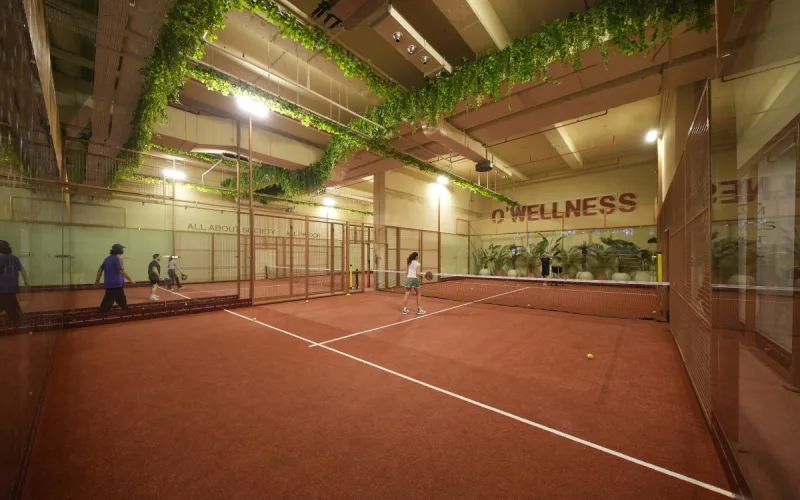


 Padel Courts
