
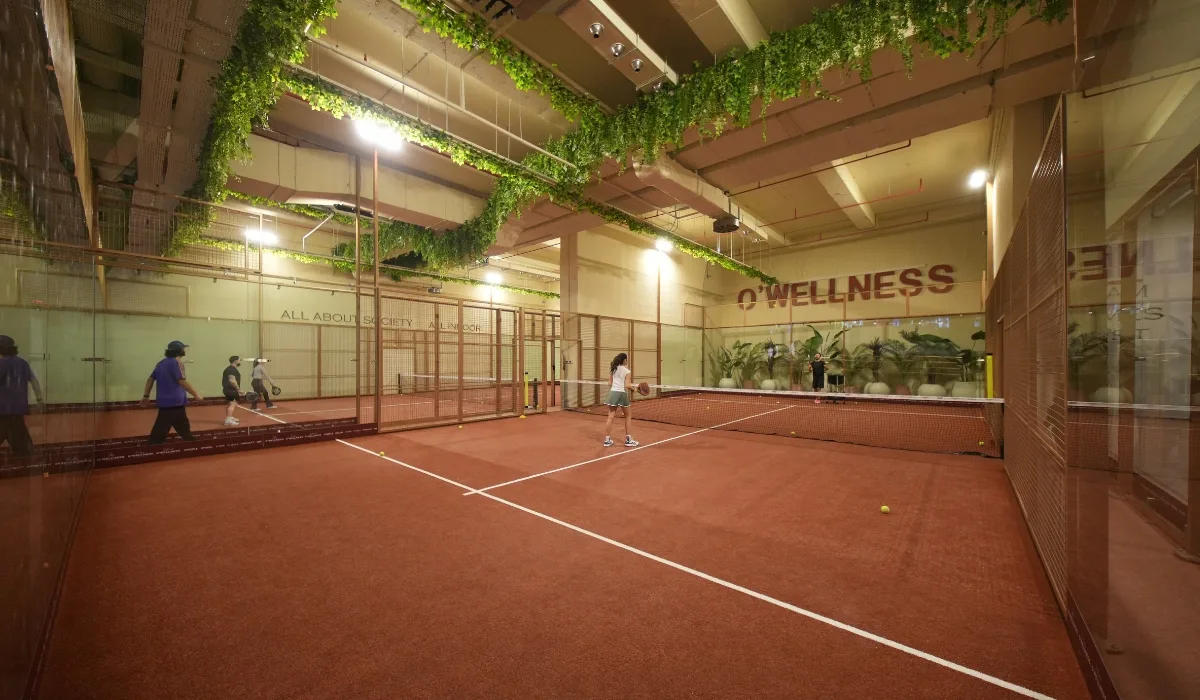
Among Çankaya kids' sports options, what you're looking for at the weekend should be a safe, fun environment suited to your child's age. With its low-impact nature, small court area and the social side of the game, padel is a good candidate for the 7-16 age group. At Beytepe the kids' academy and family sessions meet this need. In this article we compare weekend sports options, explain padel's contribution to child development and a practical weekend plan at Beytepe.
Weekend sport for kids: why does it matter?
Weekday school, lessons and homework limit children's active time. Organisations such as the World Health Organization recommend an average of at least 60 minutes of moderate-to-vigorous physical activity a day for children and adolescents. Weekends are one of the best opportunities to hit this target; but screen time often gets in the way of movement.
Weekend sport has three basic benefits. The first is physical: muscle and bone development, coordination and endurance. The second is social: new friendships, teamwork and communication. The third is emotional: reduced stress, confidence and discipline. When these three combine, sport becomes a lasting habit in the child's life.
The question families share is this: which sport should I choose? The answer varies with the child's interest, temperament and the family's logistics. There's no single right answer, but there are criteria to look at when choosing.
Weekend sports options in Çankaya: a comparison
In and around Çankaya there are many options for children such as swimming, gymnastics, football, basketball, tennis, dance and martial arts. Each has strengths and weaknesses. The table below offers a general comparison; it can vary with each child and facility.
| Sport | Strength | Point to watch |
|---|---|---|
| Swimming | Whole body, low impact | Pool hours and hygiene planning |
| Football / basketball | Team spirit, socialising | Crowded groups, collision risk |
| Tennis | Individual development, focus | Slow progress at first, weather on outdoor courts |
| Gymnastics / dance | Flexibility, rhythm, coordination | Needs discipline and regular attendance |
| Padel | Quick enjoyment, doubles play, indoor court | Getting used to the racket, equipment |
Because padel is learned faster than tennis, children can manage to get the ball over to the opponent from the first session. This feeling of success raises motivation; the dropout rate can fall. Moreover, thanks to the indoor court, training isn't disrupted even on Ankara's cold, windy weekend mornings.
How does padel contribute to child development?
Padel combines the coordination advantage of racket sports with wall play. By following both the ball's and the wall's movement, the child develops hand-eye coordination, reaction time and spatial awareness. These are skills that help not only in sport but in daily life.
A small court means short-distance movement with frequent changes of direction. This movement pattern contributes to agility and balance. Grip and shot mechanics support fine motor skills. Being a doubles game triggers social skills such as communication with a teammate, patience and sharing; the pressure of taking responsibility alone is reduced.
It's also necessary to take into account that children's attention span is limited. When padel sessions are structured with 60 minute lengths and game-focused sections, interest stays lively. The coach's explanations are kept short, practice dominates, and game and competition elements are added.
The kids' academy at Beytepe: the weekend flow
Kids' academy It is designed for ages 7-16. There are beginner, intermediate and advanced levels; the child is placed in a group according to level. One of the one-to-one, semi-private and group lesson formats can be chosen. A group lesson (1:4) suits new friendships, while one-to-one suits fast progress or special needs.
You can picture the weekend flow like this: a kids' academy lesson on Saturday or Sunday morning; at the same time parents have a coffee in the lounge, work or play their own session. The lesson ends, the child has a light snack and the family moves on together to the rest of the day.
Weekend courts open at 08:00. A calm environment in the early hours is beneficial for the child's focus; busier afternoon sessions appeal to children who want to socialise. For time preference you can ask about availability on WhatsApp. For an overview of the topic, the weekend programme for families may be useful.
A family session: the power of playing together
Playing on the same court as your child both strengthens the parent-child bond and positively affects the child's view of sport. The goal in family sessions is not to win but to have fun together. Rules can be flexed to the child's level: letting the ball bounce once is allowed, score may not be kept, and you can even count how many balls you can rally in “cooperation” mode.
Simple games for a family session:
- **Shared rally:** The goal is how many times you can pass the ball; solidarity instead of competition.
- **Wall game:** Hitting the ball at the wall first and taking it back; shows beginners how the wall works.
- **Target shots:** Trying to place the ball on markers set in certain areas of the court.
- **Role swap:** The child becomes the coach and the parent the student; this helps the child reinforce what they've learned.
Pickleball is also a good alternative for families; slightly calmer-paced than padel. Pickleball for families article explains this option in detail; indoor pickleball courts and there is paddle rental too.
Expectations by age group: 7-9, 10-12 and 13-16
The kids' academy's wide age range requires different approaches for different developmental stages. In the 7-9 age group the priority is joy of movement: getting to know the ball and racket, balance, simple coordination games. Technical detail stays in the background at this stage; having sessions that are mostly play makes it easier for the child to love the sport. Since children's attention span is short at this age, splitting activities into short blocks is the most effective method.
In the 10-12 age group, motor skills develop quickly. This period is ideal for teaching basic shots like the forehand, backhand and serve with the right grip and footwork. The child can now understand simple tactics: making room for their partner, sending the ball into the gap, reading the ball that comes off the wall. Mini tournaments and paired matches introduce a sense of competition in a healthy way.
In the 13-16 age group, adolescence, growth spurts and changes in body composition need attention. Coordination can be temporarily disrupted; it's important to be patient with the child and avoid pressure. At this age strength and endurance work can be increased, and tactical depth and match play come to the fore. Advanced shots like the bandeja and víbora can also come up at this stage. Depending on level, as a next step tournament experience can raise the child's motivation.
Balancing school, sleep and sport
When planning weekend sport, the child's sleep and eating routine also need to be considered. For school-age children nine to eleven hours of sleep a day is generally recommended. Not leaving Thursday and Friday nights to a late hour for a Saturday morning 08:00 session protects the child's energy and attention.
For nutrition, instead of a heavy meal, a light, carbohydrate-based meal one to two hours before the session can be preferred; such as a banana, oats or wholegrain bread. Drinking water during and after the session is a must. In Ankara's dry air children notice thirst late; having a water bottle with the child is a good habit. For general information on hydration, see hydration in padel .
During exam periods, reducing the number of sessions rather than dropping sport is often a healthier approach. Sport is one of the effective ways to manage exam stress; even one session a week can reduce the child's tension.
A weekend family day: a sample flow
A Saturday family day at Beytepe might look like this. At 09:30 the child's academy lesson starts; the parent has a coffee in the lounge. At 10:30 the lesson ends, the child has a light snack. At 11:00 you play a 60 minute mini session as a family. At 12:00 a healthy lunch in the lounge, then the rest of the day is free.
This flow makes sport for the child not a “punishment” but a “family ritual”. The parent being active in sport too provides the child with a strong role model. Parents who want to can take their own lesson separately, matching it to the same time as the kids' academy to use time efficiently. Because it's in the same complex, during the child's lesson the parent can also do fitness or pilates at O’Wellness Beytepe; this option makes the weekend plan even more flexible.
Alternatively, for a rainy or cold weekend, an indoor, climate-controlled court is ideal; kids play without getting cold outside. For general suggestions for cold days, Our article on winter sports alternatives in Ankara article.
There is also the friendship dimension. Children often continue sport with their friends; being signed up to the same group as a classmate or neighbour can reduce the chance of dropping out. Two or three friends coming together to a trial lesson makes the first session more comfortable and lets the children motivate each other. For groups, you can ask about times and quotas on the WhatsApp line.
It's also possible to take special days like birthdays into sport; planning a fun event on court with children's friends can be a healthy alternative to classic parties. For details, see padel birthday and special occasion organisation .
Safety and motivation tips for parents
Safety in children's sport starts with checking equipment and environment first. Non-slip sports shoes, comfortable clothes and plenty of water are the first three needs. Warming up matters for children too; light jogging, skipping or mobility games reduce injury risk.
On the motivation side, pressure needs to be avoided. Pressure to win can make it harder for the child to love the sport. Celebrating small successes, preferring the question “what did you learn today” to “who did you beat” and giving the child a choice increases continuity in the long term. Regular communication between coach and parent also lets you follow the child's progress together.
For recovery after court, a child-friendly cafe setting in the lounge is enough. Healthy snacks and protein smoothie options can be an enjoyable part of the weekend routine. On the Lounge page you can get information about the menu.
How do you do it in Beytepe?
Taking the first step for the weekend is very easy:
- Write your child's age and sports background to our WhatsApp line; ask for a suitable group and time suggestion.
- Ask about the trial lesson option; you'll see in a single session whether your child likes the sport.
- During the lesson you can wait in the lounge or play your own session.
- For weekend court bookings, the padel courts page check availability; you can plan a family session with the kids.
- In addition, trying padel and pickleball on the same day can be a fun change of pace for kids.
No membership is required; free cancellation up to 24 hours in advance gives families with children peace of mind if plans change.
Conclusion: turn the weekend into an active ritual
Çankaya has plenty of weekend sports options for kids, but padel stands out for how quickly it is learned, its social nature and its indoor courts. At Beytepe, the kids' academy and family sessions let parents spend time in the same venue too. For a trial lesson, reach us on our WhatsApp line or contact page you can message us.
Frequently Asked Questions
With its low-impact nature, smaller court and doubles format, it is a suitable sport for ages 7–16. There are beginner, intermediate and advanced groups depending on level.
The academy is for children aged 7–16. Your child's level is determined in a trial lesson.
Yes, there is a trial lesson. You can request one on WhatsApp to see your child’s interest in the sport and level in a single session.
At weekends the courts open at 08:00 and serve until midnight (00:00). You can ask about availability for children’s lesson times on WhatsApp.
You can have a coffee in the lounge area, work on the Wi-Fi, or play your own session.
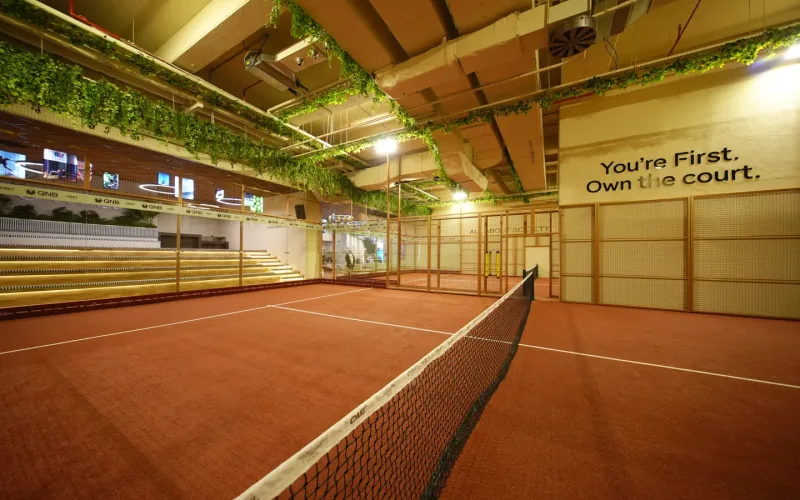



 Padel Courts
