

When choosing a kids’ padel racket, the most important criterion is not age, but height and grip strength: models of 38 cm for ages 6-8, 43-48 cm for ages 9-11, and 50-58 cm for ages 12 and up are generally the right starting point. A light weight and round shape ensure control and a low risk of injury in the early period. At the 7-16 padel academy at Beytepe, we approach racket choice with the same logic.
Adult rackets are both heavy and too long for children; this puts unnecessary load on the wrist and elbow and leads to the wrong stroke technique being learned. That is why the junior segment should be thought of not as a scaled-down copy of an adult racket but as a separate category designed specifically for a child’s physique.
Length and weight table by age
The table below summarises the general approach most manufacturers use in their junior ranges. The exact limits may vary by a few centimetres from one manufacturer to another, but the logic is the same: as age increases, length and weight gradually approach adult measurements.
| Age Group | Recommended Length | Weight Range | Shape |
|---|---|---|---|
| Ages 6-8 | ~38 cm | 220-260 g | Round |
| Ages 9-11 | 43-48 cm | 240-300 g | Between round / teardrop |
| Ages 12-14 | 50-56 cm | 300-340 g | Teardrop |
| Ages 15-16 | 58 cm (close to adult size) | 340-365 g | Teardrop / diamond (if advanced) |
This table is a starting point; the final decision should be made according to the child’s ease of grip and comfort on court. In our padel lessons, the coaches observe how the child holds the racket in the first few sessions and, if necessary, steer them to a size up or down.
Why shape matters: round or teardrop?
Round-shaped rackets have a wide sweet spot; this makes it easier for a beginner child to make contact with the ball. The teardrop shape narrows the sweet spot slightly and increases power potential, so it can be preferred after age 11-12 if technique is developed. The diamond shape is power-oriented and is almost never recommended at junior level, because it leaves little margin for control and can reinforce incorrect stroke technique.
From what we observe on our courts at Beytepe, children who start with a round-shaped racket experience far less frustration in the first months; because even if the ball does not hit the middle of the racket, it can still get a reasonable bounce. This directly affects motivation and the desire to keep coming to lessons.
Material and hardness: why EVA foam is preferred
Almost all junior rackets use an EVA (ethylene vinyl acetate) foam core; this material is softer than high-density foam and allows the ball more contact time (dwell time). The result is a hitting experience that is more controllable and feels less “hard” for the child. Rigid rackets with a carbon fibre surface produce power but transmit more vibration to the wrist and elbow; this is risky for a child of growing age.
That is why seeking “maximum performance” in a child’s racket is the wrong goal. The right goal is to find the balance that will teach technique correctly, reduce injury risk and keep the game fun.
Grip diameter and handling comfort
Adult rackets have a standard handle diameter, while junior models have thinner handles; this lets small hands grip the racket fully. A racket whose handle feels too thick strains the child’s wrist unnecessarily and can cause the racket to slip from the hand during a shot. During the trial, be sure to check whether your child can grip the racket comfortably; the fingers should wrap naturally around the handle with no feeling of strain.
How to try a junior racket at Beytepe
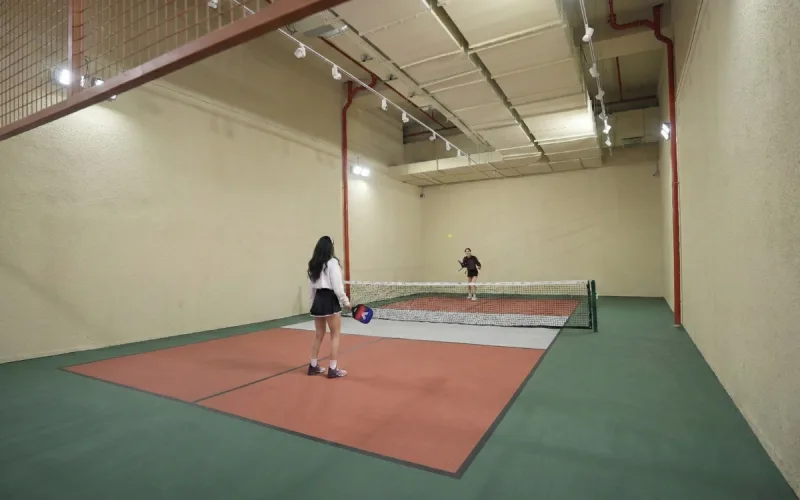
For a family just starting out, the most practical route is to try before buying. At Beytepe’s indoor padel courts there is a junior racket rental option; this way your child can try rackets of different lengths and weights in a real playing environment. This is a far healthier decision process than trying a racket straight out of the box on court for the first time.
Ages 7-16 children's academy in lessons, our coaches usually recommend using a rental racket during the first month. During this time enough data is gathered on the child’s playing style, grip habits and physical development; a permanent racket purchase after this observation will be more accurate.
A practical checklist when buying
- Is the racket length right for the child’s height and age?
- Is the shape round (ideal for beginners)?
- Is the weight at a level the arm can swing for 45-60 minutes without tiring?
- Is the handle diameter thin enough for the hand to grip comfortably?
- Does it have a wrist strap, and is it adequate for safety?
For budget-conscious families, a second option is to keep renting and only invest once you are sure the child has really taken to the game. For a more detailed decision framework on this, rent or buy .
Beyond the right racket: clothing and accessories
Another detail as important as the racket is clothing the child can move comfortably in on an indoor court. Breathable fabrics and trainers with the right sole structure directly affect performance and comfort; we have covered this topic in in our padel clothing guide in detail. A few small but effective accessories can also make a difference; you can find products such as wristbands and sunglasses in this article .
Ankara’s climate and the indoor court advantage
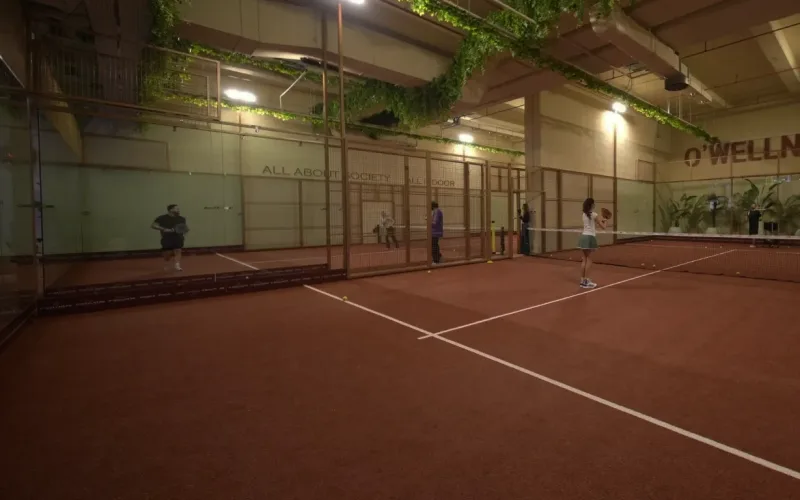
In Ankara, winter temperatures and wind make regular training with children on an outdoor court difficult. Because the climate-controlled indoor courts at Beytepe offer a constant temperature and wind-free environment all year round, the child’s technical development is not interrupted. This continuity is especially valuable for settling the racket habit; a child constantly playing in different conditions may not be able to use even the right racket effectively.
Thanks to our proximity to the Hacettepe Beytepe Campus, Bilkent and Ümitköy, getting here is also easy for families; this makes it sustainable to attend lessons regularly and therefore to keep up racket and technical development.
Junior racket development roadmap: from age 6 to 16
Over a child’s padel journey, they are generally expected to go through three to four different racket sizes. A child who starts with a 38 cm racket at ages 6-8 moves to a 43-48 cm model at ages 9-11, a 50-56 cm model at 12-14 and finally a racket close to adult size at 15-16. Each of these transitions depends not only on growth in height but also on technical maturity; so age alone should not be decisive, and how comfortably the child plays with the current racket should also be taken into account.
Through a pro coach’s eyes: the most common racket selection mistake
The mistake our academy coaches at Beytepe see most often is families buying a racket the child can “grow into”. Although this looks like a short-term saving, it can lead to the child playing for months with the wrong technique using a racket unsuited to their current age. Once the wrong technique sets in, correcting it later takes far more time and effort than learning it right from the start. So instead of the short-term “buy a size up” logic, starting with a racket that fits the current age exactly and replacing it when needed is a far healthier investment.
Why balance should be handled differently for children
In adult rackets, the difference between head-heavy and head-light models is a matter of conscious choice; for children, the situation is a little different. In the younger age group, almost all junior rackets are made handle-heavy or balanced, because the aim is not power but being able to control the racket comfortably. A head-heavy racket can unnecessarily strain the child’s wrist and forearm at an early age; this both delays technical development and can lead to fatigue complaints in the long term.
Make sure your child can lift and lower the racket easily and bring it quickly back to the ready position after a shot. This simple observation is the most practical way to tell whether the racket’s balance point suits the child.
How training frequency affects racket choice
For a child who plays once a week, an entry-level junior racket is more than enough; what matters here is the right length and light weight. However, for a child who attends the academy programme two or three times a week and is heading towards tournaments and competitions such as the university cup events like these, a mid-range junior racket can better withstand the increased training load. Here too, the coach’s observation should be decisive; parents deciding on their own with a “the more expensive the better” logic is not recommended.
String tension and vibration sensitivity in young athletes
Padel rackets do not have adjustable string tension as in tennis; the racket consists of a single-piece surface. However, core density serves a function similar to string tension in tennis: a softer core provides more “delayed” contact, while a harder core offers faster but less forgiving contact. Because the bone and joint structure of children of growing age is not yet fully mature, vibration from hard-core rackets can affect the elbow and wrist more than in adults. That is why choosing a soft-to-medium core in children’s rackets also makes sense for long-term joint health.
The importance of using the right ball with the racket
For children, it is not just the racket but also the ball used that matters. A ball at standard adult pressure can bounce too hard for children and make control difficult; so some academies train at beginner level with low-pressure or foam balls. In the kids’ academy at Beytepe, different ball options are used by age group, optimising both safety and learning speed. For those curious about the characteristics of different brands and types of balls, see our padel ball brand comparison is worth a look.
The role of the right equipment in sustaining motivation
A child’s motivation to keep playing sport depends largely on how enjoyable the first few weeks are. A child playing with the wrong size or an overly heavy racket can quickly interpret the frustration of failing to hit the ball as “this sport is not for me”. Yet a child who successfully makes their first few shots with a right-sized racket gains confidence and shows a desire to keep coming to lessons. This psychological effect is as important as technical accuracy and is an often overlooked benefit of choosing the right equipment.
Frequently asked practical questions for parents
Many parents consider buying a racket “a size up” because of the child’s growth rate; but this approach usually backfires. A racket that is too big spoils the child’s technique and lowers motivation by making the game harder. Instead, starting with a racket suited to current age and height and reassessing between six months and a year is a far healthier approach.
Another frequent question is whether siblings can share a racket. This can work if the age gap is no more than a year or two and the height difference is small; but if there is a marked difference in racket length and weight, it is better for technical development for each child to play with a racket suited to their own size.
Conclusion: the right size, the right shape, the right timing
Choosing a padel racket for a child comes down to where the right length, light weight, round shape and comfortable grip meet. The best approach is to try rental models on the courts at Beytepe before buying and to trust the observation of the academy coaches. To book a trial lesson for your child or to learn about junior racket rental options, you can reach us via our WhatsApp line.
Frequently Asked Questions
Racket purchase is determined by height and grip strength rather than age; you can generally start with 38 cm junior models from age 6. For a definite decision, we recommend taking a trial lesson with a rental racket first.
For beginner children, the round shape provides easier control thanks to its wide sweet spot. The teardrop shape can be considered after age 11-12 if technique is developed.
No, adult rackets are both too heavy and too long; they put unnecessary load on the wrist and elbow and can lead to bad technique habits.
Yes, on our indoor courts there is a junior racket rental option in different lengths and weights; it is ideal for trying before you buy.
Models with an EVA foam core are generally more suitable for children than rigid carbon-heavy models, as they offer softer contact and less vibration.



 Padel Courts
