

A good padel bagshould have a thermal compartment that protects your racket from heat and impact, a separate ventilated pocket for shoes, and organised compartments for balls and small accessories. Inside, you should have a racket, spare balls, an overgrip, a towel, a water bottle, a spare T-shirt and a basic first aid kit. The right bag and the right list stop every small item forgotten on court from ruining your match.
At O’Padel Beytepe, everyone's bag is different, from the player who comes before work for the 07:00 session to the student who runs over from university for an evening league match. But the shared logic of a well-prepared bag is the same: protect, organise, reach quickly.
Types of padel bag: backpack or racket bag?
Padel bags fall basically into three types. Which one you choose depends on how many rackets you carry, how you get to the court and your post-match plan.
Padel backpack
This is a compact model, carried on the back, that takes one or two rackets. It is ideal for those who come by public transport or scooter, or walk straight from campus to the court. Most students coming from the Hacettepe Beytepe Campus prefer this type; models with a laptop compartment make the transition between lessons and matches easier.
Racket bag (paletero)
In Spanish paletero these bags are rectangular models carried on the shoulder or in the hand, usually with two or three main compartments. Almost all brands such as Bullpadel, Head, Adidas, Nox and Babolat make this format. They suit those carrying two or more rackets and those who want to pack all their equipment in a single bag on tournament day.
Sports bag + racket cover
Some players carry the racket only in its cover and put everything else in a general sports bag. It is a budget-friendly solution, but without thermal protection it is risky in winter months and when left in the car.
| Bag type | Racket capacity | Who it suits | Watch for |
|---|---|---|---|
| Backpack | 1–2 | Student, public transport user | Should have a shoe compartment |
| Paletero | 2–4 | Regular player, tournament player | Look for a thermal compartment |
| Sports bag + cover | 1 | Beginner, budget-focused | Weak heat protection |
Features a padel bag should have
The technical details of the bag matter as much as brand and design. Check this list before buying:
- Thermal (heat-insulated) racket compartment: The EVA or FOAM core of padel rackets is sensitive to extreme heat and cold. In Ankara, night-time temperatures drop below zero in winter, while in summer the inside of a car can exceed 50 degrees. A thermal compartment softens these extremes.
- Ventilated shoe compartment: Separates sweaty shoes from clean clothes and limits odour.
- Moisture-proof base: Protects the contents in the changing room or on a wet floor.
- Small-item pockets: Separate zipped compartments for keys, phone, overgrips and tape.
- Padded shoulder strap: Especially for those with a long walking distance.
- Durable zips: The first part of a bag to fail is usually the zip.
We explained why the thermal compartment matters in our racket care guide in more detail: heat changes alter the stiffness of the core and in the long run spoil the racket's feel.
Padel bag checklist: what should you have on court?
The contents of the bag vary with the level you play at and session length, but the list below is a solid start for most players.
Core equipment
- Racket: If you play regularly, a second racket is essential in tournaments.
- Balls: A sealed, pressurised tube of new balls. Padel balls lose pressure once opened; we explained how long they last in our choosing padel balls article for more.
- Spare overgrip: At least one; a grip that slips mid-match is a serious problem.
- Padel shoes: If you arrived at the court in your own shoes, a separate pair with a sole suited to the surface.
Comfort and sweat management
- Small microfibre towel
- Wristband and, if needed, a hair band
- Spare T-shirt and socks
- A sweat-wicking top layer (for warming up in winter)
Nutrition and hydration
- A water bottle of at least 750 ml; electrolyte tablets for long matches
- Quick carbohydrates such as a banana, dates or an energy bar
In Ankara's dry climate it's easy not to notice the fluid you lose through sweat. It is important to drink without waiting to feel thirsty.
Small first aid kit
- Plasters and blister tape (against blisters)
- Elastic bandage or kinesio tape
- Your personal medication (asthma inhaler, etc.)
- A small tube of lip balm
Personal items
- Slippers and shower items (if you will use the spa after the match)
- A laundry bag for dirty clothes
- Phone, headphones, card
Bag organisation according to your post-match plan
In the O’Wellness Beytepe complex, padel is often only part of the day. If you plan a sauna or cold plunge at O’Spa Beytepe after the match, then coffee in the lounge, you need to prepare your bag accordingly.
In this case split the bag into two sections: court equipment on one side, clean clothes, slippers and a towel on the other. Add a separate waterproof pouch for a wet swimsuit or towel. Players who use our recovery area mostly also carry a thin second towel; one for the court, one for after the shower.
If you are curious about why post-match recovery matters so much, our Beytepe recovery ritual article .
Locker organisation and club practice at Beytepe
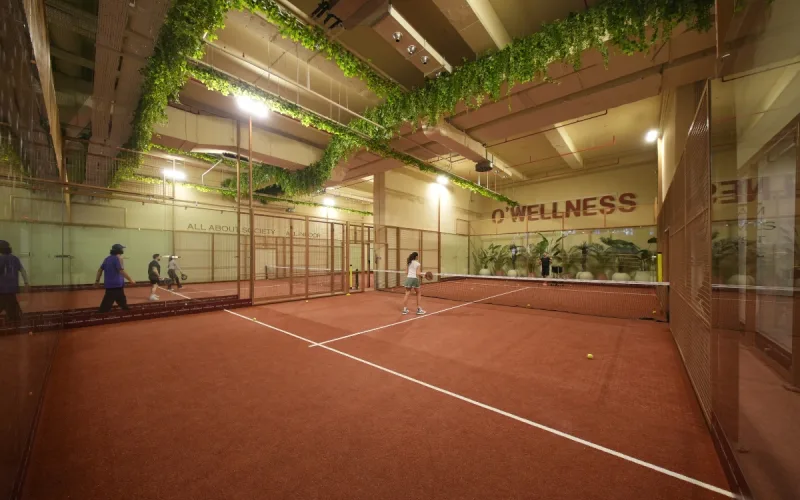
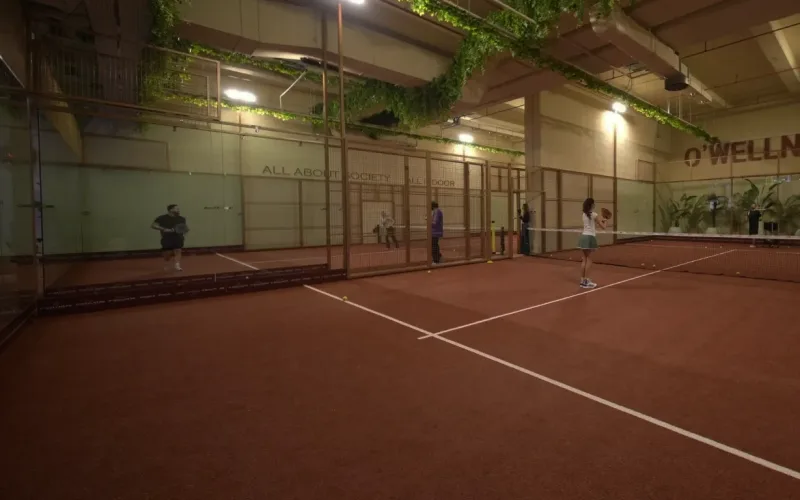
The club has changing rooms and lockers, so you don't need to carry the whole bag to the side of the court. Leaving your valuables in the locker and going onto the court with only your racket, balls, towel and water both keeps the court tidy and stops balls coming off the glass from hitting the bag.
A few tips for on-court order:
- Leave your bag and water bottle near the entry area in the corner of the court, where they won't narrow the playing area.
- Silence your phone; a phone ringing during play disturbs both you and your opponents.
- Keep spare balls in the bag; extra balls rolling around on court create an injury risk.
- At the end of the session, don't forget to put empty bottles and used overgrips in the bin.
This simple routine is court etiquette also important for this reason: players of the next session should be able to step onto a clean court on time.
What should be in the bag if you rent your racket?
Even if you haven't bought your own racket yet, it still makes sense to prepare a bag. The racket rental option offered when because you can rent a racket and balls, the basic list gets even simpler: shoes, towel, water, a spare T-shirt and a wristband. It makes sense to spend the first few months with a rental racket and decide after seeing which shape and weight suit you; on this, our rent-or-buy guide .
If you're coming for your first lesson, our padel lessons your coach will also remind you on WhatsApp what to bring beforehand. For the general list, our first padel lesson preparation article is a good start.
Common mistakes when choosing a padel bag
- Buying too big a bag: For someone playing with a single racket, a four-racket paletero is unnecessary weight and bulk.
- Not caring about the thermal compartment: Leaving a carbon and EVA-core racket in a car in only a thin cover can permanently affect the racket's stiffness balance.
- Putting shoes in the same compartment as clothes: Odour and dirt spread through the whole bag in no time.
- Closing the bag without drying it: Damp towels and clothes breed bacteria and odour in the bag. When you get home, always empty the bag and leave it open.
- Looking only at appearance: Zip quality, stitching strength and strap comfort should come before colour or logo.
Bag contents by season
Even if you play on an indoor, air-conditioned court, the change of seasons in Ankara affects the contents of the bag. In winter, because you walk in the cold outside on the way to the court, a warm-up layer, beanie and gloves go in the bag; a light top is essential to prepare muscles for a match that starts cold. How to warm up Our 12-minute warm-up routine we explained.
In summer, extra water, electrolytes and a second spare T-shirt come to the fore. In spring and autumn, a thin windbreaker is useful against Ankara's sudden temperature changes.
Bag by level: beginner, regular player, tournament player
The contents of your bag grow with your game. The three profiles below can help you work out what you need.
Beginner (first 3 months)
If you play once or twice a week, mostly take lessons and rent a racket, a small backpack is enough. Your priority should be the right shoes, water and a towel. At this stage, instead of buying an expensive paletero, it makes far more sense to put your budget into quality padel shoes; grip on the floor directly affects both performance and injury risk.
Regular player (2–4 sessions a week)
You have your own racket and maybe join Americano nights. Now it's time for a backpack with a thermal compartment or a two-racket paletero. Adding a pack of spare overgrips, kinesio tape and a tube of new balls to the bag ends the “who's bringing the balls today” debate.
Tournament player
If you will play three or four matches in a day, the bag turns into a small logistics centre. Two identical rackets (so you can swap instantly if one breaks or an overgrip slips), at least two spare T-shirts, light snacks to eat between matches, electrolytes and a wet towel for cooling should be on the list. More about the rules and categories on our tournaments page for more.
Bag cleaning and care
The bag is a shell that protects your equipment, but it needs care itself. After every match take out wet items, leave the shoe compartment open and dry the bag in a ventilated place that gets no sunlight. Wiping the inner lining with a damp cloth once a month and putting bicarbonate or an odour-absorbing sachet in the shoe compartment prevents bad smells.
If sand or dust builds up in the zips, clean it with a dry brush; forcing a stuck zip makes the teeth slip. When a tear starts in the fabric it can be fixed early with stitching; if you wait, the whole compartment becomes unusable.
Choosing a bag by budget: entry, mid, premium segment
The padel bag price range is wide; the right choice depends on how often you play and how many rackets you need to carry.
| Segment | Typical features | Who is it for? |
|---|---|---|
| Entry level | Single racket compartment, simple shoe pocket, standard fabric | Players who play a few times a month and use rental rackets |
| Mid-range | 2 racket compartments, thermal lining, separate shoe and wet-clothes pocket | Players who play regularly 1-3 times a week |
| Premium | 3+ rackets, advanced thermal protection, many organised compartments, durable zip system | Tournament players, those who rotate multiple rackets |
It is generally not necessary for a beginner to invest in a premium bag; after you decide you like the sport, it makes more sense to upgrade according to your needs.
Extra checklist for travel and tournament days
If you are going to an out-of-town tournament you need to add more to your bag than for a normal session: a spare set of clothes, a small first aid kit, electrolyte tablets, a charger and your tournament registration document. If you travel by plane, carrying the racket in cabin baggage is the safest way to protect it from hard knocks.
Short summary
A good padel bag starts with a thermal compartment protecting your racket, a ventilated pocket separating the shoes and organised small compartments. Inside there should be a racket, balls, a spare overgrip, towel, water, spare clothes and a basic health kit. If you have a post-match spa and lounge plan, splitting your bag into two sections accordingly makes life easier.
Once your bag is ready, there is only one thing left: reserve your place on the indoor courts at Beytepe. reach us on our WhatsApp line you can book, or if you're trying it for the first time you can request a trial lesson.
Frequently Asked Questions
Not essential, but very useful. A thermal compartment protects the racket's EVA or foam core from extreme heat and cold; considering Ankara's harsh winters and hot cars in summer, it extends the racket's life.
Paletero is a term of Spanish origin and refers to a rectangular padel bag that can carry several rackets. It usually has a thermal racket compartment and a separate shoe pocket.
A racket, new balls, a spare overgrip, a towel, water, a spare T-shirt and socks, a wristband and a basic first aid kit with plasters. If you use a rental racket the list simplifies down to shoes, a towel and water.
Yes, the club has changing rooms and lockers. We recommend leaving your valuables in the locker and going onto the court with only your racket, balls, towel and water.
At first a small sports bag is enough; you can rent a racket and balls at the court. When you buy your own racket, it makes sense to move to a padel bag with a thermal compartment.



 Padel Courts
