

Proper padel shoeshould have a reinforced structure that supports your foot in lateral movements, a sole pattern suited to the surface you play on and sufficient cushioning. Playing in general sports shoes or tennis shoes both limits your performance and raises the risk of ankle sprains.
In this article we explain the key features to look for in padel shoes, the sole types and how to make the best choice for the indoor court surface at Beytepe.
Ankle sprains in padel are one of the most common types of injury; the main reason is the sudden changes of direction the sport demands and the frequent lateral steps made near the net. The right shoe doesn't eliminate this risk completely, but it reduces it significantly. So it should have a place on your equipment list as high a priority as the racket.
Why Do You Need Special Padel Shoes?
Padel is a sport that demands frequent, sudden changes of direction, lateral slides and quick stops. Because running shoes are designed for forward-and-back movement, their lateral support is weak and they can leave the ankle unstable in sudden changes of direction. Although tennis shoes are close to padel shoes, because of the different surface friction of a padel court and more frequent crouching movements, specially designed padel shoes are the more suitable choice.
Sole Types: Herringbone, Omni, Clay
The sole pattern of padel shoes falls into three main categories depending on the surface you play on:
- Herringbone sole: The most widely used pattern on synthetic turf and hard surfaces, balancing multidirectional movement with slip prevention. It is the general-purpose sole preferred on most padel courts.
- Omni sole: A multi-surface, durable sole type that can be used both on hard surfaces and synthetic turf. It is a flexible option for those who play at different facilities.
- Clay sole: Finer and with a denser pattern, designed to prevent slipping on clay courts; not recommended on synthetic turf padel courts.
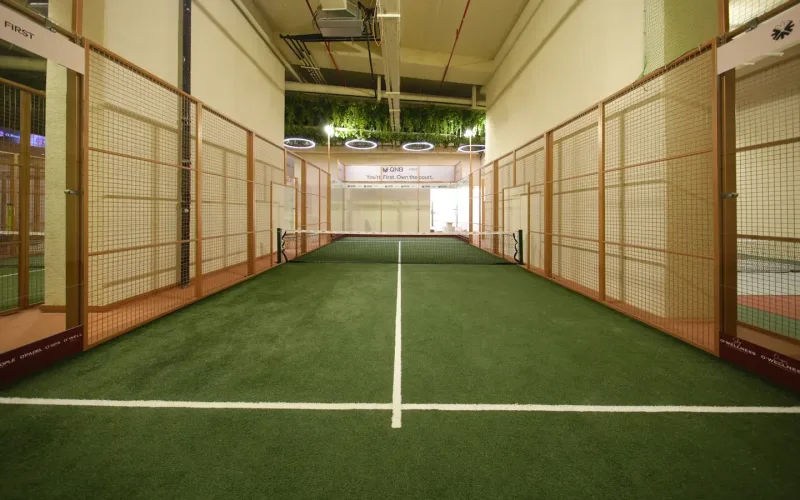
Because the courts at Beytepe have a synthetic turf surface, shoes with a herringbone or omni sole pattern are the best choice.
The Relationship Between Indoor Court Surface and Shoes
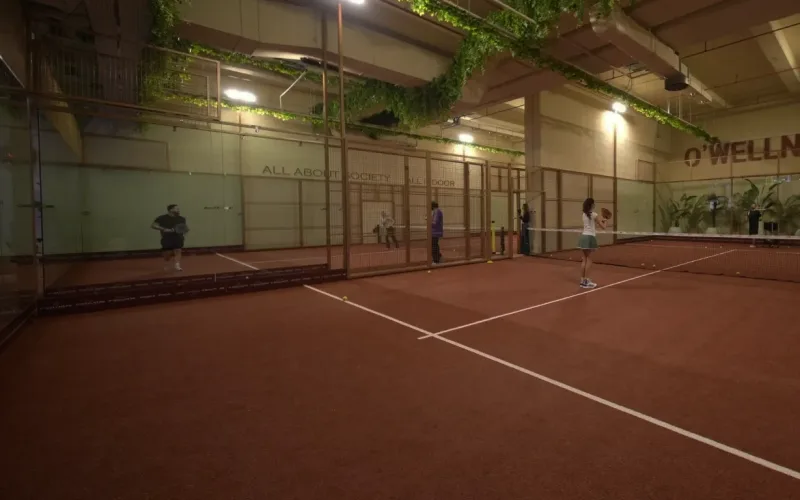
O’Padel Beytepe's indoor, air-conditioned courts are covered with a synthetic turf surface. Because this surface isn't affected by outdoor humidity and temperature swings, its friction coefficient is consistent all year. This consistency, when the right sole pattern is chosen, keeps the shoe's performance predictable through the season too.
On outdoor courts the risk of slipping rises on damp surfaces after rain, while on indoor courts this risk is largely removed. Even so, choosing the right sole pattern is needed to give optimum grip in sudden stops and turns.
The fact that the court surface at the Beytepe facility is fixed and consistent also makes shoe sole wear predictable. While changeable weather on outdoor courts can speed up sole wear, in a closed, controlled environment a shoe's performance stays stable for longer. This forms another dimension of the indoor court advantage, for both budget and safety.
Cushioning and Support: The Key to Joint Health
The frequently repeated crouching, jumping and sudden stops in padel put significant load on the knee and ankle joints. A good padel shoe should have enough cushioning in the heel and forefoot and a reinforced side structure to support the ankle in lateral movement.
Insufficient cushioning can lead in the long run to overloading in the knee and hip joints. For players who play more than once a week in particular, this detail should be seen not as an ordinary preference but as a health investment.
Knowing your own foot structure is the first step to choosing the right shoe. Your answers to questions like whether you have flat feet or high arches and whether you've had an ankle injury in the past determine which model and support level will suit you. If you're unsure, getting a foot analysis at a sports shop can be a useful starting point.
Ankle Support: Low or Mid-Cut?
Padel shoes are usually made with a low or mid-cut ankle. A low cut offers more freedom of movement, while a mid cut adds extra stability to the ankle. For players who have had an ankle sprain before, mid-cut models or using an additional ankle brace can reduce the risk of recurring injury.
This choice depends entirely on personal history; players with a healthy ankle generally move more comfortably in low-cut models because these models don't restrict the foot's natural movement.
Breathability and Indoor Court Comfort
When playing on indoor courts, even though you aren't affected by outdoor conditions, the body keeps warming up and the feet sweat. Shoes with an upper made of mesh material increase breathability and keep your feet comfortable in long sessions. This is a detail not to be overlooked for players training weekly, especially at a facility like Beytepe where regular play goes on all year.
Choosing the Right Size and Fit
A padel shoe should be chosen in a comfortable fit, not very different from your normal shoe size, in a way that prevents the foot sliding forward during sudden stops. A size that's too big can cause slipping inside the shoe, while one that's too narrow can cause squeezing of the toes and toenail injuries. When trying on in the shop it is recommended to have about a thumb's width of space between your toe and the end of the shoe.
Differences Between Women's and Men's Models
Women's padel shoes generally have a narrower last and a slightly lighter body; this reflects the anatomical difference in average foot structure. But this is not a requirement; women with wide feet can choose men's models, and men with narrow feet can choose women's models. What matters is to decide not by the label but by your foot's real width and support needs.
Balancing Budget and Quality
Padel shoe prices vary over a wide range. Avoiding very low-priced, general-purpose sports shoes is important, especially in terms of cushioning and lateral support. Mid-range models that a well-known sports shoe brand makes specifically for padel offer enough performance and durability for most hobby players; premium models make more of a difference for competitive players who play more than once a week.
Common Mistakes
- Trying to play padel in running shoes: lack of lateral support raises the risk of ankle sprains.
- Playing on a synthetic turf court in shoes with a clay sole: creates grip imbalance.
- Carrying on playing in badly worn shoes with a flattened sole pattern: raises the risk of slipping.
- Choosing shoes only by looks, not checking the sole type.
For more comprehensive information about ankle sprains and other common padel injuries, in our article on padel injuries and how to prevent them .
The Indirect Effect on the Knees and Hips
Shoe choice affects not only the ankle but also, through the logic of the kinetic chain, the knee and hip joints indirectly. Insufficient cushioning or the wrong sole pattern can cause the knee and hip to compensate more for instability in the ankle. Over time this compensation can lead to problems that seem unrelated to the foot, such as knee pain or hip tightness.
So for players with recurring knee or hip discomfort, it can be helpful to review their shoe choice and, if needed, consult a physiotherapist.
Supporting Foot and Leg Health with Recovery
As much as choosing the right shoes, taking care of recovery of the foot and leg muscles after a match is also important. O’Spa Beytepe offers recovery services among them, contrast therapy and sports massage can help reduce tension in the foot and calf muscles, especially after intense sessions with long periods on your feet.
Equipment Harmony: Shoes, Racket and Clothing
Choosing the right shoes should be thought of as part of your overall equipment strategy. We covered racket choice guide on how to choose a padel racket ; when shoes and racket are chosen right together, both your performance and your injury risk are at an optimum level.
Practical Advice for Choosing Shoes at Beytepe
If you're just starting padel, you can play in the sports shoes you have in your first few sessions, but when you decide to play regularly, investing in a padel shoe improves both your performance and your safety. If you're just starting padel lessons, players who take part can make this decision more consciously by getting a shoe recommendation from their coaches.
Because the variety of padel shoes in Ankara can be limited, when shopping online you must check the sole type (herringbone or omni) and the surface compatibility in the product description.
A proper warm-up routine before a match is as important as shoe choice in reducing injury risk; we covered this topic in our padel warm-up routine article .
Choosing Shoes for Young Players
Choosing shoes for children and young players in their growing years needs a slightly different approach. Because foot structure is still developing, more flexible models that still offer enough support should be preferred over overly stiff or rigid shoes. For young people in O’Padel Beytepe's 7-16 academy programme, it is recommended to measure the feet at regular intervals and update the size to suit growth; playing in a size that's too small both spoils comfort and can cause toenail injuries.
Shoe Care and Lifespan
The sole of a padel shoe flattens over time and its grip capacity decreases. For a regular player, shoe life generally varies between six months and a year; this may be shorter depending on play frequency and surface type. When the sole pattern has noticeably flattened or the side support structure has lost its flexibility, replacing the shoe is the simplest way to prevent injury risk.
Finally, when you get a new pair of shoes, instead of heading straight into an intense match in the first session, it is recommended to break the shoes in over a few training sessions. This both lets your foot adapt to the new fit and lets you notice any incompatibility in a calm training setting rather than before an intense tournament.
Conclusion: Shoes, an Invisible but Critical Decision
Although the racket is the first thing that comes to mind with padel equipment, shoe choice is at least as decisive as the racket for performance and health. A sole pattern suited to the indoor court surface, sufficient cushioning and the right size choice both strengthen your game and protect your ankle and knee health.
If you want an opinion from our coaches on shoes and general equipment during a trial lesson reach us on our WhatsApp line .
Frequently Asked Questions
Although possible for a short time, it isn't recommended; tennis shoes are designed for different surface friction than padel and their lateral support isn't as optimised as that of dedicated padel shoes.
It is the most widely used sole type on synthetic turf and hard surfaces, resembling a herringbone pattern and balancing multidirectional movement with slip prevention.
Because the courts are covered with a synthetic turf surface, shoes with a herringbone or omni sole pattern are the best choice.
For a regular player it generally varies between six months and a year; replacing them is recommended when the sole pattern has flattened.
You should choose a size that is neither too narrow nor too big, leaving about a thumb's width of space between your toe and the end of the shoe.



 Padel Courts
