
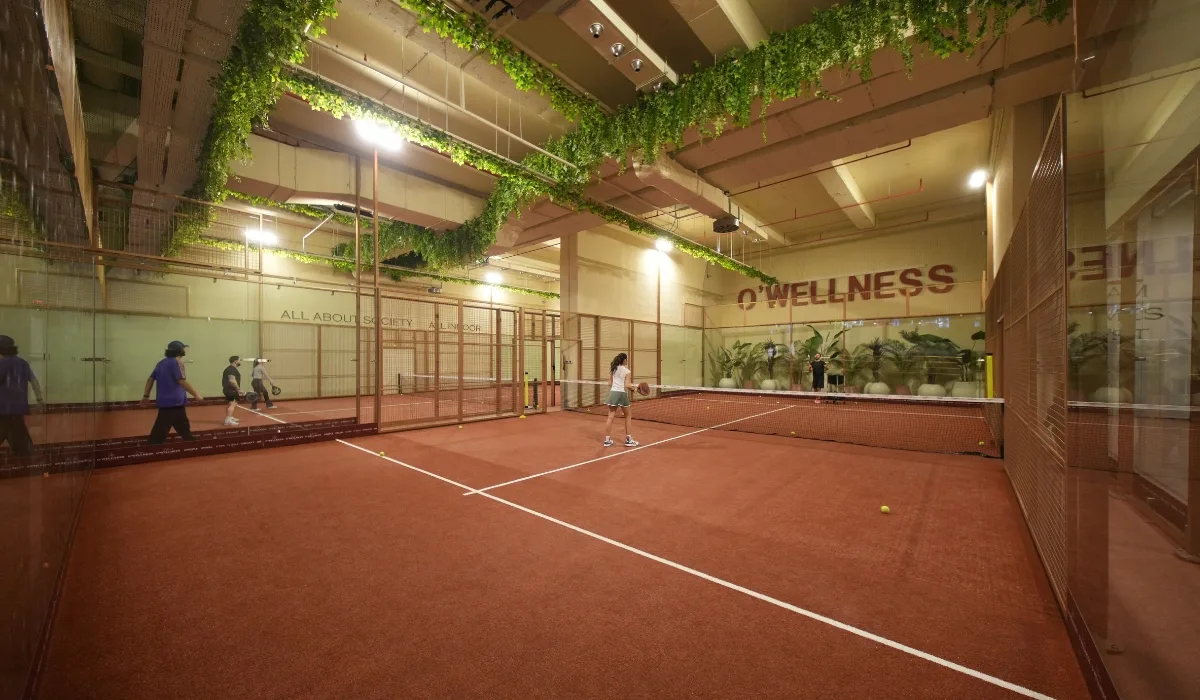
Rough padel racket surfaces increase spin production by creating more friction at the moment of contact with the ball; smooth surfaces provide a more controlled, flat contact with less friction. This difference is especially noticeable in spin-heavy shots such as the víbora and bandeja. This is exactly one of the topics our players in Beytepe’ ask about most when choosing a racket.
The racket surface usually consists of a textured coating applied over carbon fibre or fibreglass. The depth and pattern of this texture (sometimes also called “rugosidad”) determines how much the ball is “caught” and spun on the racket face.
How does a rough surface work?
A rough surface creates more friction force during the contact time between the ball and the racket. This friction increases the capacity to put spin on the ball; it's an advantage especially for players who want to change the ball's trajectory in the víbora serve or slice shots. Rough surfaces can also give the player an extra feeling of control by “holding” the ball on the racket a little longer.
But this advantage comes at a cost: rough textures wear over time. Frequent use, especially hard shots and rubbing against the wall, flattens the texture and loses spin performance.
How does a smooth surface work?
Smooth-surfaced rackets create less friction; this gives a cleaner, more predictable contact with the ball. For power-focused players and those who prefer flat, fast shots the smooth surface is an advantage because the ball moves quickly off the surface without “catching”. This surface type also tends to wear less, so the racket's performance life can be slightly longer than with a spin-focused surface.
Which player profile should prefer which surface?
| Player profile | Recommended surface | Why |
|---|---|---|
| Beginner | Medium-rough / balanced | Both control and ease of learning |
| Spin-focused, technical player | Rough | Advantage in shots like the víbora and bandeja |
| Power-focused, flat-hitting player | Smooth | Clean contact, predictable trajectory |
| Net-focused, control-oriented player | Medium-rough | Balance and sensitivity on volleys |
This table offers general guidance; many mid- and upper-range rackets adopt a “balanced texture” approach that combines the two worlds. In Beytepe’s padel lessons, our coaches can guide you on which surface type will suit better by observing the player's stroke style.
Surface wear: when will you notice it?
The surface of a rough racket begins to turn shiny and its texture to flatten over time. At this point you may notice you produce less spin with the same stroke technique. Surface wear doesn't end the racket's structural life but changes its performance character; so it's useful for players who play regularly to check the racket surface by eye periodically.
When buying a second-hand racket it's also important to assess the degree of surface wear; we covered this topic in second-hand padel racket guide .
The relationship between surface and ball brand
The effect of surface texture is also tied to the felt quality of the ball used. A new, fuzzy ball produces more spin with a rough surface, while a worn ball gives less spin regardless of surface type. You can look into this relationship and the characteristics of different ball brands in our padel ball brands comparison .
Considering it together with racket thickness
Surface texture should be considered not alone but together with the racket's thickness (usually the 38 mm standard); because thickness determines bounce hardness, while surface determines the amount of friction. You can find how these two factors together affect your game in our racket thickness article .
The chance to try different surfaces in Beytepe
The most practical way to decide which surface type suits you is to try different models in a real playing environment. At Beytepe’s indoor padel courts racket rental option, you can try rough and smooth-surfaced models back to back and feel the difference directly. This experience is especially valuable before a purchase decision.
Practical tips for choosing a surface
- If you have a spin-focused style of play (if you often use the víbora and bandeja), try a rough surface.
- If you prefer strong, flat shots, consider smooth-surfaced models.
- If you're just starting, begin with a balanced/medium-rough surface and clarify your preference over time.
- Check surface wear regularly; a drop in performance usually comes from here.
The right surface choice is part of a holistic equipment strategy together with racket thickness and ball brand; for beginners, you can also take a look at our starter set budget article which considers all these elements together.
One last realistic view on surface choice
For most players at amateur level, the difference in surface texture is much less noticeable than at professional level; so instead of turning surface choice into an exaggerated performance matter, it is healthier to treat it as a matter of general preference. The real performance gain comes from regular training, correct technique and consistent playing practice; surface choice is a thin layer added on top of this foundation.
New technologies and surface developments
Manufacturers continue to introduce small improvements in surface texture and coating technology every year; some brands are now developing special coatings that repel moisture to stay dry and keep friction for longer. Although such innovations don't completely remove the traditional rough/smooth distinction, they offer extra options for players seeking a middle way. When researching new models, it can be useful to consider models with such current coating technologies too.
One last practical reminder on surfaces
The most important point to remember when clarifying your surface preference is that no surface type will make up for technical shortcomings. A rough surface doesn't automatically produce spin without correct stroke technique; it only makes a difference when combined with correct technique. So the healthiest approach is to see surface choice not as a replacement for your effort to improve your basic technique but as an element that complements it.
Is there a seasonal difference in surface preference?
The performance of surface texture is affected more by court conditions than by the season; however in transition periods when humidity changes (for example early autumn) some players may feel a slight difference. Because Beytepe’s indoor, climate-controlled environment largely removes these seasonal swings, players here experience surface performance similarly through the year. This consistency is a valuable advantage, especially for players who train regularly and want to track their technical development.
The interaction between surface and balance
A racket with a rough surface but a head-light balance keeps manoeuvrability high while retaining its capacity to produce spin; this combination appeals to players who play actively at the net. On the other hand, a rough-surfaced, head-heavy racket gives an advantage in back-court play focused on both spin and power. Taking the racket's overall balance structure into account when deciding your surface preference allows a far more holistic decision process than looking at the surface alone.
Care habits that slow surface wear
Avoiding hitting the racket hard against the wall or floor is the simplest measure for extending surface life. Some players have a habit of getting angry during warm-up and smashing the racket on the ground; this behaviour damages both the surface and the core over time. Also, leaving the racket in direct sunlight or in an extremely hot car can cause the surface coating to crack early. Putting the racket in its original cover after use is also a simple way to protect the surface from dust and scratches.
Is surface perception different for right-handed and left-handed players?
The physical effect of surface texture is independent of handedness; however left-handed players' positioning habits on court (usually the left lane) and the typical shot angles in that lane can lead some players to feel certain surface types as more “compatible”. This is a purely individual experience and not a generalisable rule; the healthiest approach is to try a few different surface types in your own position and observe which feels more comfortable.
Surface preference by shot type: drive, bandeja, víbora
Different shot types benefit from surface texture in different ways. When playing a dejada (soft, cutting shot), a rough surface makes it easier to give the ball the low, controlled bounce you want. When playing a bandeja, a medium-rough surface offers a combination of power and light spin. For high-spin serves or smashes such as the víbora, a maximally rough surface is preferred to put as much spin on the ball as possible. By thinking about which shots you use more often in your own game, you can steer your surface choice accordingly.
Surface pattern types: dots, lines and mixed textures
Manufacturers make rough surfaces with different patterns; some models use small dots (dimples), others fine lines or mixed geometric patterns. Dot-patterned surfaces generally give a more non-directional, balanced friction, while line-patterned surfaces can produce more spin at a particular stroke angle. Although this detail doesn't make a noticeable difference for most amateur players, it can be a subtle point of preference in racket choice for advanced and tournament players.
Surface texture and rule compliance
The FIP also sets certain limits on the texture depth and pattern of the racket surface; surfaces with extremely deep grooves or aggressive patterns may not be approved in official tournaments. So it's important for players planning to take part in tournaments to check whether the racket is FIP-approved before buying. Beytepe’s At our tournaments rackets in use meeting this standard provides a fair competitive environment.
The benefit of testing a surface with a coach
Assessing on your own whether a surface type suits you can sometimes be hard because you may confuse shortcomings in your own technique with the racket's characteristics. In Beytepe’s private lessons coaches can help you make an objective comparison by having you repeat the same shot with rackets of different surface types. A guided trial like this gives a much faster and more reliable result than experimenting on your own.
The process of breaking in a new racket's surface
Some players notice that a newly bought racket doesn't give the spin performance they expected in the first few sessions; this is usually because a thin manufacturing coating on the racket surface hasn't fully “opened up” yet. After a few sessions of regular use this feeling usually clears and the racket's true character emerges. So instead of judging a new racket in the first session and immediately deciding “this isn't right for me”, it's healthier to try it for at least 3-4 sessions.
How does surface performance change in humid air?
In high-humidity environments, the ball surface can absorb a little moisture, and this can slightly change the friction coefficient. Because humidity levels are kept controlled on Beytepe’s indoor, climate-controlled courts, such swings are minimal; this keeps surface performance more consistent through the season. Players on outdoor courts may feel this difference more clearly, especially on humid mornings.
Conclusion: your surface choice should reflect your playing style
Rough surfaces give spin, smooth surfaces give control and clean contact; there is no definitive “better” between the two, only suitability to your style of play. On the courts in Beytepe’ you can try different surface types to clarify your own preference, then make a racket investment that fits that preference.
Frequently Asked Questions
It makes producing spin easier by increasing friction between the ball and racket; it gives an advantage especially in shots such as the víbora and bandeja.
For power-focused players who prefer flat, fast shots, a smooth surface offers a cleaner and more predictable contact.
Yes, rough surfaces in particular flatten with frequent use and spin performance decreases over time.
Starting with a balanced, medium-rough surface is generally the most suitable choice in terms of both control and ease of learning.
Yes, with the racket rental option on our indoor courts you can try rough and smooth-surfaced models in comparison.



 Padel Courts
