

The risk of padel injury is low but not zero: the most common problems are padel elbow (lateral epicondylitis), ankle sprains, shoulder impingement, calf strains and back pain. Most of these injuries come from insufficient warm-up, wrong technique and sudden increases in load; that is, they can be prevented with the right preparation.
Padel is known as a “safe” racket sport because it involves shorter sprints and less serving load than tennis. Still, overuse injuries can show up quickly in new players who play often in a short time, especially those playing three or four matches a week. Below you'll find the eight most common padel injuries, their causes and practical ways to prevent them.
Why do padel injuries happen?
Most movements in padel are short, explosive and involve changes of direction. Running to the net, backing off, half turns while waiting for a ball coming off the glass; all of them put repeated load on the joints and tendons. In one match you do a split step hundreds of times and raise your arm above your head dozens of times.
Behind an injury there are usually three factors present together:
- Load error: Going from playing once a week to suddenly four matches. Tendons adapt more slowly than muscles.
- Technique error: Hitting from the wrist, taking the volley with the arm instead of the body, opening the shoulder early on the smash.
- Equipment error: A head-heavy (diamond-shaped) racket that is heavy on your arm, shoes with a sole unsuited to the surface, or balls that have lost pressure.
Ankara's dry air should also be taken into account. When humidity is low it is harder to notice fluid loss, and mild dehydration can trigger muscle cramps and fatigue-related loss of coordination. Although Beytepe’s indoor, climate-controlled courts reduce temperature swings, drinking water regularly throughout the match is a must.
The 8 most common padel injuries
1. Padel elbow (lateral epicondylitis)
Also known as tennis elbow, this condition is an overuse problem at the tendon attachment of the forearm extensor muscles on the outer part of the elbow. Backhand volleys played by snapping the wrist, a stiff racket, a very thin grip and late contact are the most typical causes. The symptom is a stabbing pain felt on the outside of the elbow when lifting a cup or shaking hands.
To prevent it, learn to keep the wrist stable and produce the shot through shoulder-trunk rotation. If your arm is sensitive, prefer a softer EVA-foam, round, lighter racket. Be sure to check out our guide to preventing and rehabilitating padel elbow where we cover the topic in depth.
2. Ankle sprain
This is the most sudden and most frequent acute injury in padel. It usually occurs when the foot rolls outward during lateral movement or when you step on your partner's foot. On sand-filled artificial turf, a running shoe with the wrong sole raises the risk because it gives no lateral support.
Use a padel shoe with a herringbone or mixed sole and strong lateral support. Single-leg balance work and calf strength develop proprioception. If you've had a sprain before, an ankle support may make sense in the first weeks.
3. Shoulder impingement and rotator cuff strain
Overhead shots such as the bandeja, víbora and smash put repeated load on the shoulder. If shoulder blade control is weak and the thoracic spine is stiff, the shoulder joint tries to compensate for movement. The result is pain when raising the arm to the side and discomfort when lying down at night.
External rotation with a resistance band, face pulls and shoulder blade stabilisation exercises done twice a week provide enough protection. In our guide to protecting your shoulder when smashing we walk through these exercises step by step.
4. Calf strain and “tennis leg”
Especially in players over 35, on a sudden move up to the net you may feel a tearing sensation in the inner head of the calf (medial gastrocnemius) and a pain as if someone kicked you from behind. Explosive starts on cold muscle and insufficient calf strength are the main causes.
5. Achilles tendinopathy
Constantly standing on tiptoe and frequent split steps tire the Achilles tendon. Heel stiffness and pain on the first steps in the morning is the classic symptom. Eccentric calf exercises (heel drops on a step) are among the best protective methods.
6. Knee problems: patellar tendinopathy and meniscus
Low volleys and constant crouching in glass defence put load on the patellar tendon at the front of the knee. The foot catching on the floor while turning can strain the meniscus. Strong hip and quadriceps muscles distribute the load on the knee.
7. Back pain
Padel is a rotational sport. When rotation doesn't come from the hips and thoracic spine, the lower back is forced to rotate too much. It's common in players who sit for long periods at work and come straight to court in the evening. Core strength and hip mobility are decisive here.
8. Eye and face impacts
Rare but can be serious. A hard ball coming from very close range at a player standing at the net, or a partner's racket, can cause injury. Keeping the racket ready at eye level at the net and setting up clear “mine / yours” communication with your partner is the simplest form of protection.
Injury, area and prevention summary
| Injury | Typical cause | Key prevention |
|---|---|---|
| Padel elbow | Hitting from the wrist, stiff racket | Technique correction, soft racket, forearm strength |
| Ankle sprain | Lateral movement, wrong shoes | Padel shoes, balance work |
| Shoulder impingement | Repeated overhead shots | Rotator cuff and shoulder blade exercises |
| Calf strain | Sprinting on cold muscle | Dynamic warm-up, calf strength |
| Achilles tendinopathy | Sudden load increase | Eccentric exercise, gradual load |
| Knee problems | Deep crouching, turning | Hip and quadriceps strength |
| Back pain | Insufficient rotation | Core and thoracic mobility |
| Eye/face impact | Being unprepared at the net | Racket-ready position, communication |
The foundation of padel injury prevention: the warm-up protocol
Arriving at the court, hitting two or three forehands and starting the match is the best-known invitation to injury. A good warm-up raises body temperature, gets the joint fluid moving and prepares the nervous system for quick reactions. 10-12 minutes is enough.
- General activation (3 min): Light jogging, side steps, cross steps, backward running.
- Dynamic mobility (3 min): Hip openers, walking lunges and trunk rotation, arm circles, wrist circles.
- Activation (2 min): External rotation with a band, glute bridge, calf raises.
- Padel-specific (3-4 min): Volleys from short range, then groundstrokes from the baseline, and finally a few controlled bandejas and smashes.
For a detailed, minute-by-minute version, you can look at our 12-minute pre-match warm-up routine article. It's more correct to leave static stretching for after the match rather than before.
Technique, equipment and load management
A warm-up alone isn't enough. The three factors that reduce injury risk the most in the long term are the following.
Correct technique
A flexible but controlled wrist with the continental grip, power generated through trunk rotation and the ball caught out in front noticeably reduce load on the elbow and shoulder. Once wrong technique becomes a habit it is hard to correct. That's why working with a coach in the first months protects not just your game but your joints. In our padel lessons in Beytepe you can see your stroke mechanics concretely with video analysis.
Suitable equipment
- At beginner and intermediate level, a round or teardrop-shaped, low-balance racket.
- A grip of a thickness suited to your hand size; if needed, thicken it with an overgrip.
- Padel shoes with a sole suited to the surface and strong lateral support.
- Balls that haven't lost pressure; dead balls demand more power on the shot.
Gradual load increase
A good rule is not to increase your weekly playing time by more than roughly 10-20 percent from one week to the next. If you're just starting, spend the first month with two sessions a week and add a third as your body adapts. If you've played intensely two days in a row, dedicate the third day to active rest.
What to do when an injury happens?
In an acute injury (a sprain, sudden calf pain), stop playing immediately. Protection, reducing load and controlled cold application in the first 48 hours are generally recommended; but if there's swelling, bruising or you can't put weight on it, be sure to see a doctor or a sports physiotherapist.
In overuse injuries, “playing on through the pain” is the most common mistake. If pain goes above 3 on a 0-10 scale or increases the next morning, it's time to reduce load. Turning to pain-free movements instead of complete rest often speeds up healing. Don't rush when you return; our guide to returning to padel safely after injury walks through this process stage by stage.
Remember: this article is for general information. In the case of a personal injury, consult a healthcare professional for diagnosis and treatment.
Who is at higher risk?
Not every player steps on court with the same risk. Players coming from tennis or squash grasp stroke mechanics quickly but often bring a wrist-hitting habit with them. In this group padel elbow and forearm strains are more common; because the padel ball has lower pressure and the short racket doesn't reward wrist movement.
Adults who return to an active life with padel after a long break from sport run into calf, Achilles and ankle problems the most. Although muscle strength recovers in a few weeks, tendon adaptation can take months. In the early period when motivation is high, the urge to “play every day” is risky for exactly this reason.
In young players who play very often, shoulder loading stands out. As the number of smashes rises and recovery time shortens, the rotator cuff tires. There is also good news for players over forty: with regular strength work, injury risk in this age group can be managed noticeably. our guide to padel for the over-50s contains age-specific tips on this.
Whichever group you see yourself in, prioritise your prevention strategy accordingly. In the next section you'll see how to turn this strategy into a concrete weekly plan with the facilities in Beytepe’.
How do you play injury-free padel in Beytepe?
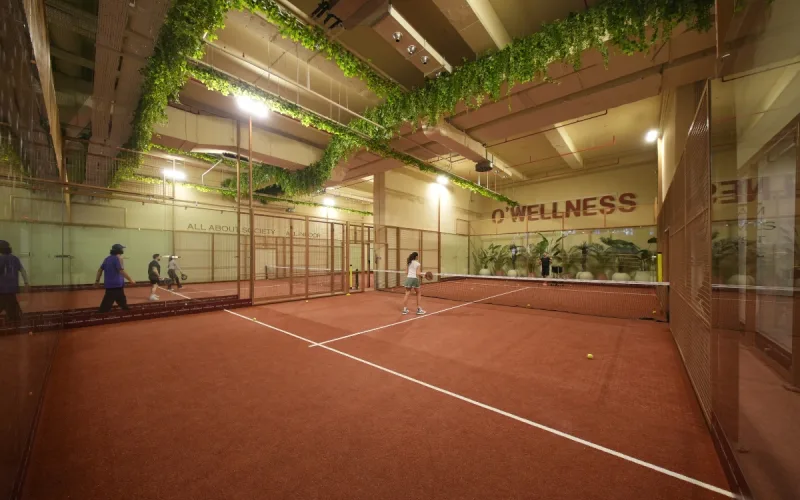
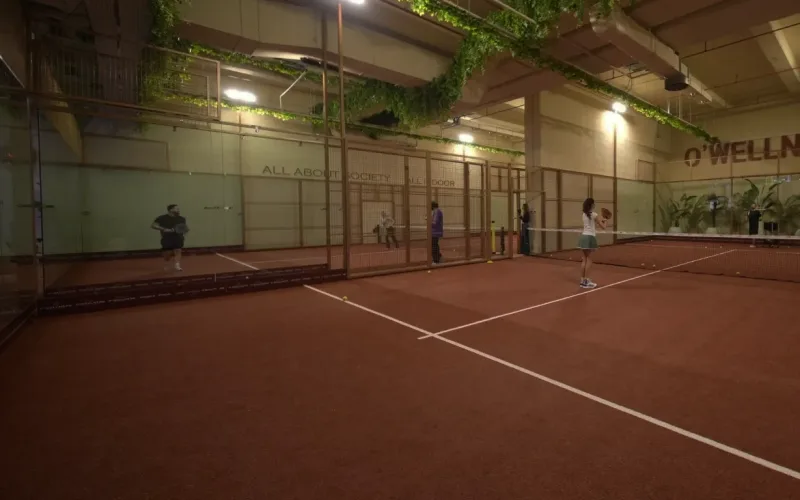
Because O’Padel Beytepe sits inside the O’Wellness Beytepe complex, you can build every link of the injury prevention chain under one roof. A practical weekly plan might look like this:
- 2 padel sessions: Beytepe's indoor padel courts 60 or 90 minutes of play, each time with a 10-12 minute warm-up.
- 1 strength session: Work focused on hips, core, calves and shoulders at O’Wellness Beytepe’. Reformer pilates is a lovely complement for balance and control.
- 1 recovery visit: After the match Sauna, cold plunge or sports massage at O’Spa Beytepe’ to reduce muscle tension.
On Ankara's cold winter evenings, playing outdoors on cold muscle makes calf and Achilles injuries easier. This is one advantage of the climate-controlled indoor court: body temperature stays more stable and the warm-up is more effective. For players coming from Hacettepe Beytepe Campus, Çayyolu or Ümitköy, a quick warm-up after work, a match and a short recovery routine fit easily into an evening.
If you're just starting, let your first goal be to play with the right technique and without injury. Performance follows. For a trial lesson or court booking, reach us on our WhatsApp line you can message us; we usually reply within a few minutes.
Short summary
Elbow, ankle and shoulder top the list of padel injuries; almost all are preventable within the triangle of warm-up, technique, equipment and load management. When you add a weekly strength session and regular recovery to your game, you both stay healthy for longer and play better. In Beytepe’, using the court, coach, gym and spa together makes it easier to strike this balance.
Frequently Asked Questions
Overuse-related padel elbow (lateral epicondylitis) and acute ankle sprains are the most common injuries. Shoulder impingement and calf strains are also common, especially in players who play often and those over 35.
Learn to keep the wrist stable and produce power from trunk rotation, choose a soft, light racket suited to your arm and do forearm strength exercises. If pain has started, reduce your playing load and consult a specialist.
A 10-12 minute dynamic warm-up is enough: light jogging and side steps, dynamic mobility, short activation exercises and finally a padel-specific warm-up starting with volleys from short range.
If the pain is mild and does not increase during play, you can continue with reduced load; but if it goes above 3 out of 10 or increases the next day, you should take a break. If there is swelling or you can't put weight on it, see a health professional.
A climate-controlled indoor court prevents muscles from staying cold, especially in Ankara's cold winters, and makes warming up more efficient. Still, a warm-up alone is not enough without proper technique and load management.



 Padel Courts
