

Padel elbow, called lateral epicondylitis in medical terms, is inflammation of the tendons on the outer part of the elbow as a result of excessive, repeated loading. Stroke technique, racket choice and loading the arm without warming up are the three most common causes of this problem. With the right precautions and regular strengthening exercises it can both be prevented and largely healed.
As in every racket sport, in padel the elbow is the last link that transfers the force produced by the arm and wrist to the ball. In this article we explain step by step why epicondylitis occurs, which habits raise the risk, and what you can do in both the prevention and rehabilitation stages.
What is padel elbow and why does it happen?
On the outer side of the elbow are the tendons that attach the forearm muscles to the elbow bone. When these tendons face constant repeated impact and vibration, micro-tears form; the body responds with inflammation and pain appears. In padel, a sudden, repeated load builds up on the wrist and elbow, especially when meeting the rebound of balls hitting the hard floor and glass wall.
This load is different from a single tennis stroke because the padel racket is perforated and has a filled (EVA foam) construction; its shock-absorbing property varies from racket model to racket model. Using a hard, low-flex racket or gripping the racket too tightly causes vibration to be transferred directly to the elbow.
Technique and equipment mistakes that raise the risk
- Wrist-dominant strokes: Trying to meet the ball with just the wrist instead of the arm puts disproportionate load on the elbow tendons.
- Late contact: Meeting the ball far behind the body in an unbalanced position increases vibration.
- Unsuitable racket weight: A racket heavier than your level or too stiff strains the elbow, especially in beginners.
- Starting without warming up: The first hard strokes made with cold muscles happen when the tendon's elasticity is low.
- Excessive and sudden loading: Playing several matches back to back after a long break doesn't respect the tissue's recovery time.
Ankara's dry climate and cold winters also affect muscle and tendon elasticity. Playing on Beytepe's indoor, air-conditioned padel courts removes the negative effect that sudden temperature drops outside have on the muscles; still, you should never skip the warm-up whatever the court temperature.
Prevention: warm-up, technique and racket choice
The most effective way to prevent epicondylitis is to tackle the problem on three fronts at once: the warm-up routine, correct stroke mechanics and equipment suited to you.
Warm-up routine
Spending the first 8-10 minutes of court time on light cardio, shoulder and wrist circles and forearm stretches increases blood flow to the tendon. Dynamic stretches targeting the forearm extensor muscles (the muscles that lift the wrist) in particular prepare the tissue before moving on to hard strokes.
Stroke technique
Meeting the ball close to the body, in a balanced stance and with arm-trunk coordination, spreads the load not just to the elbow but across the whole kinetic chain (leg, hip, trunk, shoulder, elbow, wrist). In padel lessons, working with an instructor is the fastest way to notice and correct these faulty habits early.
Racket choice
For beginners and those with a sensitive elbow, rackets with a softer surface, a rounder shape and medium weight are generally recommended. You can try a few different models among the club's rental rackets and compare which gives a vibration feel that suits your hand and stroke style better.
Rehabilitation: what to do when the pain starts
When you feel mild pain, the first rule is not to cut the load completely but to reduce it. Temporarily limiting the hard strokes that trigger the pain, applying ice and gradually strengthening the tendon with the exercises below brings noticeable improvement within a few weeks in most cases.
Eccentric wrist exercises
The most widely supported approach in epicondylitis rehabilitation is eccentric exercises (where the muscle contracts while lengthening) for the extensor muscles. Slowly lowering the wrist with a light dumbbell reloads the tendon in a controlled way and speeds healing.
Forearm stretching and soft tissue work
Forearm stretches held for 20-30 seconds each time, several times a day, maintain tendon elasticity. Soft tissue massage with a physiotherapist or self-myofascial release (foam roller, ball) also contributes to the healing process.
Return to progressive load
When the pain has clearly decreased, the return to court should be gradual: first light-tempo rallying, then short matches, and finally full-intensity play. Wanting to speed up this transition and suddenly going back to your old intensity is the most common cause of the problem coming back.
How to play at Beytepe while protecting your elbow health
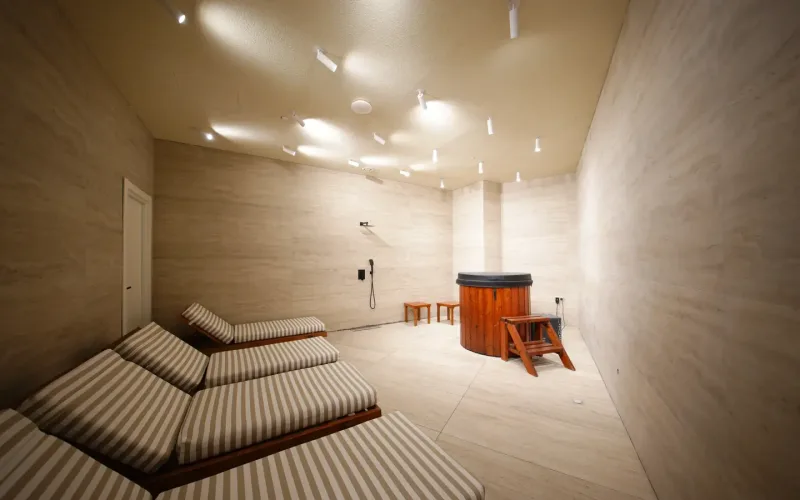
When you play on O’Padel Beytepe's indoor courts, weather conditions stop being a variable; this makes it easier to apply a regular warm-up routine with the same discipline every session. If your elbow pain continues or recurs, in the same complex O’Spa Beytepe recovery services contrast therapy and sports massage are complementary options that support the recovery process.
For technique-related pain, the most lasting solution is correcting stroke mechanics under an instructor's supervision. At Beytepe, in one-to-one padel lessons having your stroke examined with video analysis both improves your performance and builds a technical habit that protects your elbow. If you want to improve your general fitness and grip strength, padel performance with personal training (PT) support we covered this topic in more depth in our article.
If the pain is severe, continues at night, or affects daily movements (lifting a cup, opening a door), you need to see a sports doctor or an orthopaedist; this is the safest way to prevent permanent tissue damage.
Common mistakes and the right approach
| Mistake | The right approach |
|---|---|
| Starting hard strokes without warming up | Starting with an 8-10 minute dynamic warm-up |
| Carrying on playing intensely despite pain | Reducing the load and moving to eccentric exercises |
| Gripping the racket too tightly | Hitting with a loose but controlled grip |
| Playing with the wrong racket stiffness | Trying a level-appropriate racket with a softer surface |
The link between nutrition and tendon health
Tendon tissue repair is supported not only by exercise but by nutrition. Adequate protein intake, foods that contribute to collagen synthesis (foods containing vitamin C, bone broth and the like) and adequate water intake help the tendon maintain its elasticity and durability. Reducing consumption of highly processed foods that feed chronic inflammation can also contribute positively to the overall healing process.
This nutrition approach does not cure epicondylitis on its own, but when applied together with exercise and technique correction it is a complementary element that supports the healing process.
The role of grip strength and forearm balance
Having both the extensor (lifting the wrist) and flexor (pulling the wrist down) groups of the forearm muscles evenly strong lets the load on the elbow joint be distributed more symmetrically. Focusing only on increasing grip strength and neglecting the opposing muscle group can lead to imbalance and a higher risk of epicondylitis.
A daily 5-minute routine with a simple grip ball or stress ball increases the overall endurance of the forearm muscles. Small but regular habits like this can make a big difference in protecting elbow health in the long run.
Prevention strategy for players of different levels
In new players the risk of epicondylitis usually comes from technical errors, while in advanced players it comes from overloading. So the prevention strategy should differ by level: for beginners the priority is learning correct stroke mechanics, while for experienced players the priority is load management and regular strengthening.
The common point for both groups is never skipping the warm-up and not ignoring even a slight discomfort in the elbow. Early intervention is the most reliable way to stop epicondylitis from becoming chronic.
If you want to address your elbow health together with your overall physical development, padel training programme: a 3-day-a-week development plan and mobility for padel you can take a look at our articles.
The relationship between racket string tension and the elbow
As much as the hole structure and the stiffness of the filling material, the overall structural stiffness of the racket used also determines vibration. Very stiff rackets made mostly of carbon fibre transmit more power but also pass more vibration to the arm. Rackets with a more flexible, fibreglass-heavy construction sacrifice some power but absorb vibration better. For players with a sensitive elbow, this second group is generally a safer starting point.
Why increasing training load gradually matters
Approaches such as the “ten percent rule”, often emphasised in sports medicine, recommend not increasing weekly training load too quickly. A player who plays twice one week and suddenly starts playing five times the next creates a load increase that exceeds the tissue's rate of adaptation. Increasing load gradually is one of the most basic prevention strategies for both epicondylitis and other overuse injuries.
A practical checklist for regular players at Beytepe
- Do you warm up for at least 8 minutes before every session?
- Is your racket's stiffness suited to your level and elbow sensitivity?
- Have you suddenly increased your weekly playing frequency in the last month?
- Have you added forearm strengthening exercises to your routine?
- Are you ignoring a slight elbow discomfort and carrying on playing?
Your answers to these questions can clarify your current risk level and which area you should prioritise.
The advantage of working with a physiotherapist
In a chronic or recurring case of epicondylitis, exercises done on your own may not be enough. A physiotherapist can examine the specific load on the tendon with ultrasound or manual assessment and set an eccentric loading protocol specific to you. This professional approach is far more effective than waiting for it to resolve on its own, especially for pain that has continued for more than 6-8 weeks.
Weekly progress tracking is usually done during physiotherapy; pain level, strength measurements and range of motion are assessed at regular intervals, and whether the program is working is monitored with concrete data.
A suggested elbow-friendly pre-match routine
A simple routine you can start 15 minutes before your court booking in the complex's warm-up area: 3-4 minutes of light walking or skipping, then arm circles and wrist stretches, and finally shadow-swing rehearsals with a light racket. This short but consistent routine prepares the elbow tissue for hard strokes gradually and significantly narrows the risk window in the first minutes of a match.
A frequently asked question: should you change hands or technique?
Some players think of switching the racket to the other hand when they have chronic elbow pain; but this is only a temporary solution that moves the problem to the other arm. The lasting solution is to fix the root cause of the pain (technique, equipment, load management). Identifying this root cause together with your coach is a far more sustainable approach in the long run.
Quick summary: an elbow-friendly habit map
Never skipping the warm-up, choosing your racket according to your level and elbow sensitivity, strengthening your forearm muscles evenly and increasing your load gradually; when these four habits come together you see that padel elbow becomes a largely preventable problem. Adding these habits to your routine gradually over a few weeks rather than all at once makes it easier for them to become permanent.
Padel elbow is a problem that can be largely prevented with the right knowledge and consistent habits. The next step is to put this knowledge into practice on court: at Beytepe you can take a trial lesson to have your stroke technique checked and, if needed, ask your instructor for an elbow-friendly racket suggestion. For booking and details you can reach us on our WhatsApp line.
Frequently Asked Questions
In mild cases, noticeable improvement is seen within 2-4 weeks with load reduction and eccentric exercises. Chronic cases can take a few months; that is why it is important to intervene in the first days of pain.
With mild discomfort you can keep playing at reduced intensity, but with sharp or increasing pain you need to leave the court and prioritise rest and rehabilitation.
Rackets with a softer surface, a round shape and medium weight generally absorb vibration better. You can try a few models at the club and find the one that suits your hand best.
Epicondylitis straps can reduce pain by easing tension on the tendon, but they are not a treatment on their own; they should be used together with exercise and technique correction.
Yes, in padel lessons the coaches can review your stroke technique, and the recovery services at O'Spa Beytepe can support your recovery process.



 Padel Courts
