
An effective A padel training programspreads three days a week in a balanced way across court work, physical training and recovery. Although just playing matches brings technical progress, without accompanying strength and mobility work progress slows at a certain point. In this article we offer a concrete plan spread over 3 days a week that you can do at Beytepe.
Most amateur players devote their available time only to booking a court and neglect physical preparation. Yet the right work done off court raises the productivity of every session on court. Below you can see step by step how to build this balance.
Why isn't just playing on court enough?
Playing matches develops tactical understanding and ball feel, but doesn't systematically strengthen specific muscle groups. For example, a movement pattern that loads the same direction often can leave the muscles on the opposite side weak and, over time, lead to imbalance and so to injury risk.
So supporting court work with targeted strength and mobility training is the most reliable way to protect both performance and health.
The three pillars of the weekly program
A balanced padel program is made up of three main components:
- Court training: Technique, tactics and match-tempo work.
- Physical training: Strength, explosiveness, mobility and balance work.
- Recovery: The muscles repairing and getting ready for the next session.
These three components complement each other; neglecting one lowers the productivity of the other two.
A sample 3-day week program
| Day | Focus | Content |
|---|---|---|
| Day 1 | Court + Technique | Lesson or match, stroke technique and tactical work |
| Day 2 | Strength + Explosiveness | Squats, lunges, plyometric movements, core stability |
| Day 3 | Court + Mobility | Match or Americano, with a mobility routine before/after |
Putting at least one day of physical training between two court days both gives the muscles time to repair and lets the technical habits gained so far consolidate.
Day 1: Court and technical work
On the first court day of the week the aim is to focus on technical details. At Beytepe, padel lessons, working in one-to-one (1:1) or semi-private (1:2) format makes this day most productive; because coach feedback brings much faster progress than playing on your own. Examining your strokes with the video analysis option makes clear which technical points to focus on.
Day 2: Strength and explosiveness
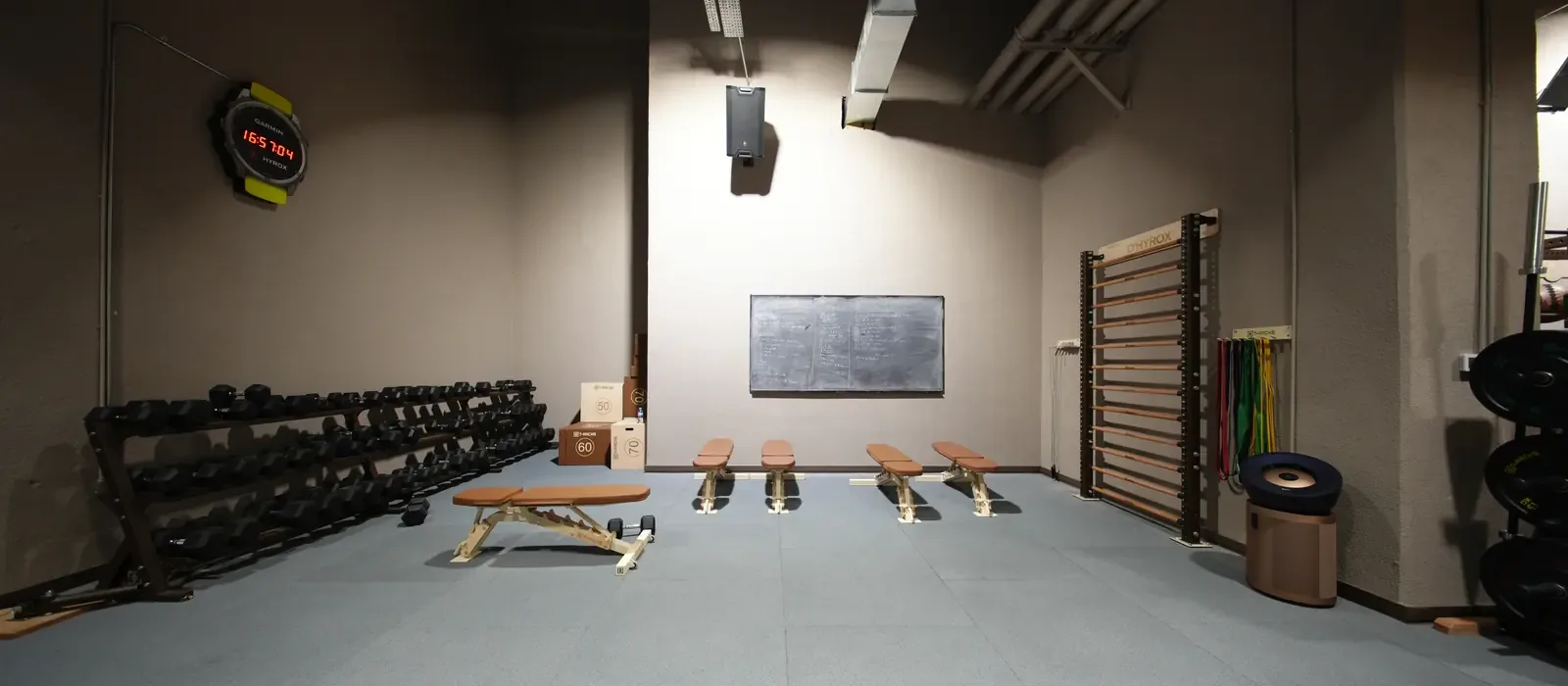
This day is spent off court, in the fitness area of O’Wellness Beytepe. Basic strength movements like squats and lunges, followed by light plyometric work, develop leg power and change-of-direction speed. This topic leg training for padel: squats, lunges and plyometrics our article.
Core and balance work should also be added as part of this day; pilates reformer sessions a complementary option that meets this need.
Day 3: Court and mobility
On the last court day of the week, the aim is to apply what you've learned at match tempo. O’Padel Beytepe's monthly Americano tournaments offers an ideal format for this day; by playing short matches against different opponents you test both technical and tactical development. A short routine focused on hip and thoracic spine mobility before and after the match supports both performance and joint health; for details in our article on mobility for padel: hips and thoracic spine see our article.
Recovery: the invisible but critical fourth component
The main factor determining the productivity of an intense three-day program is the quality of recovery between days. Sleep, nutrition and active recovery methods let the muscles repair and be ready for the next session.
As part of the O’Padel complex at Beytepe, at O’Spa Beytepe options such as the sauna, steam room, cold plunge and sports massage can help reduce muscle fatigue, especially after intense strength and court days. Court + recovery packages are a practical option for those who want to combine these two components in a single visit.
Personalising the program: the role of PT support
The plan above offers a general framework, but everyone's starting level, injury history and goals differ. A personal training (PT) programmecan adapt this general framework to your measurements and needs; especially when determining the content of strength day, a coach's supervision is valuable for both safety and productivity.
How do you update the program during the season?
If you are preparing for a tournament or the Beytepe Padel League, the program's emphasis should change over time: in the early period strength and endurance can come to the fore, while as the tournament approaches, court tempo and tactical work should gain weight. We covered this gradual approach more systematically in our article on periodisation in padel training: season planning in our article.
Putting this program into practice at Beytepe
Ankara's cold winters, which make training outdoors difficult, are removed at Beytepe's indoor, air-conditioned padel courts which makes it possible to keep the weekly program going all year without interruption. Having the court, fitness area and recovery services together in the same complex lets you follow the three-day plan in a single location, without extra wasted time.
How do you progress the program over time?
The 3-day-a-week program is not a fixed mould but a framework that should progress with your development over time. A player who focuses on technique and basic strength in the first few weeks can, a few months later, add explosiveness and more advanced technical work to strength day. Reviewing this progression regularly gives continuous improvement without hitting a plateau.
A condensed alternative for those short on time
Not everyone may have time to set aside 3 full days a week. In this case an alternative of 2 court days and 1 day of a short but intense 30-40 minute strength-mobility combination also works. What matters is that, whatever the format, none of the technical, physical and recovery components is completely neglected.
How do you measure the program's effect?
To track progress you can use simple measures: less fatigue in matches, an increased success rate in net duels, or increasing weight and reps in squat and lunge movements. Reviewing these measures every few weeks shows concretely whether the program is working and makes it easier to adjust when needed.
Integrating sleep and nutrition into the program
However well a weekly training program is designed, insufficient sleep or unbalanced nutrition greatly reduces its effect. Muscle repair largely takes place during sleep; so getting enough sleep after intense strength or court days is one of the program's “invisible” but most critical parts.
Balancing group lessons with individual work
Your weekly program can include both group lessons and individual court time. While group lessons are valuable for meeting different playing styles and for social motivation, individual work offers a more suitable setting for focusing on a specific technique. Keeping both in balance in your weekly program supports both your progress and your motivation.
Adapting the program to family or work load
For players with a busy work or family schedule it may not always be possible to set aside 3 full days a week. In this case, shortening the days (for example a 45-minute court session and 20 minutes of strength work) while keeping the frequency can be a more sustainable approach than long but infrequent sessions.
Realistic expectations in the first month of the program
When starting a new training program, the first few weeks are usually an adaptation period; as muscles get used to the new movement, mild fatigue and sometimes temporary performance fluctuations are normal. Real, lasting progress generally starts to be felt clearly after 4-6 weeks. Staying patient in this period matters so you don't quit the program early.
Supporting the program with a training log
Keeping a short note of a few sentences after each session (what you worked on, how you felt, which technical detail stood out) builds a valuable progress record over time. Looking back after a few months, this log both becomes a source of motivation and makes clear which methods work better for you.
The social side of the program
A group or training partner you play with regularly raises your motivation to stick with the program. Sharing your weekly routine with players with similar goals in the O’Padel community at Beytepe offers a satisfying experience both socially and athletically.
Reviewing the program seasonally
In summer months your court frequency may change because of outdoor activities and holidays; in these periods, rather than dropping the program completely, carrying on by, for example, cutting to 2 days and keeping up the strength work lets you get back to where you left off faster at the end of the season. In winter, thanks to Beytepe's indoor courts, the program can continue uninterrupted.
The program's flexibility: a framework, not a fixed mould
This three-day structure is not a prescription but a framework. According to your personal goals (for example preparing for a tournament, just gaining fitness or improving technique) you can change the content and emphasis of the days. What matters is that none of the court, strength and recovery components is completely overlooked.
Quick summary: the first step to putting the program into practice
Instead of jumping straight into a complicated plan, marking a single court day, a single strength day and a rest day in your calendar for next week is a sufficient start. This small step can turn into a full weekly routine over time.
Supporting the program with measurable goals
Instead of a general “I want to improve” goal, setting a concrete and measurable goal such as “reduce my net errors within 6 weeks” clarifies which parts of your weekly program you should give more weight. This clarity both keeps your motivation and lets you assess your progress objectively.
When does the program need changing?
If after applying the same program for a few weeks progress slows or a particular exercise now feels easy, it may be time to update the program's difficulty level or focus. Making this adjustment regularly keeps long-term progress sustainable.
Enriching the program with family and friends
Including your partner, child or a friend in some sessions turns the program from a purely individual obligation into a shared activity. This social dimension can be a strong factor in keeping long-term motivation and also fits the family-friendly nature of O’Padel Beytepe.
Final note: seeing the program as a personal contract
Seeing your weekly program as a simple but serious promise to yourself raises your discipline in following it. Marking your court booking and your strength session in your calendar with equal importance makes both equally non-negotiable appointments.
Seeing the program's long-term return
This 3-day-a-week structure may look like an ordinary program at first glance; but when followed without a break for a few months it creates a cumulative effect on both technical and physical development. This cumulative effect shows that the real gain is not individual sessions but consistency.
Talking to an instructor about your current level and goals before starting the program helps shape the plan for you personally. You can start with a trial lesson at Beytepe and then begin balancing your weekly routine between court, strength and recovery. For details you can reach us on our WhatsApp line.
Frequently Asked Questions
For amateur and intermediate players, 3 days a week is a suitable frequency that brings clear progress when court and physical training are distributed in balance.
A strength day placed with at least one day's gap between two court days both gives time for muscle repair and keeps the program balanced.
For beginners, the first weeks should focus on technique and basic fitness; the intensity of strength training should be increased gradually.
Recovery doesn't have to be a separate day of the program, but including elements such as sleep, nutrition and, when needed, sports massage directly affects recovery quality.
Yes, with a personal training (PT) programme, the strength and mobility part of the weekly plan can be adapted to your level and goals.


 Padel Courts
