
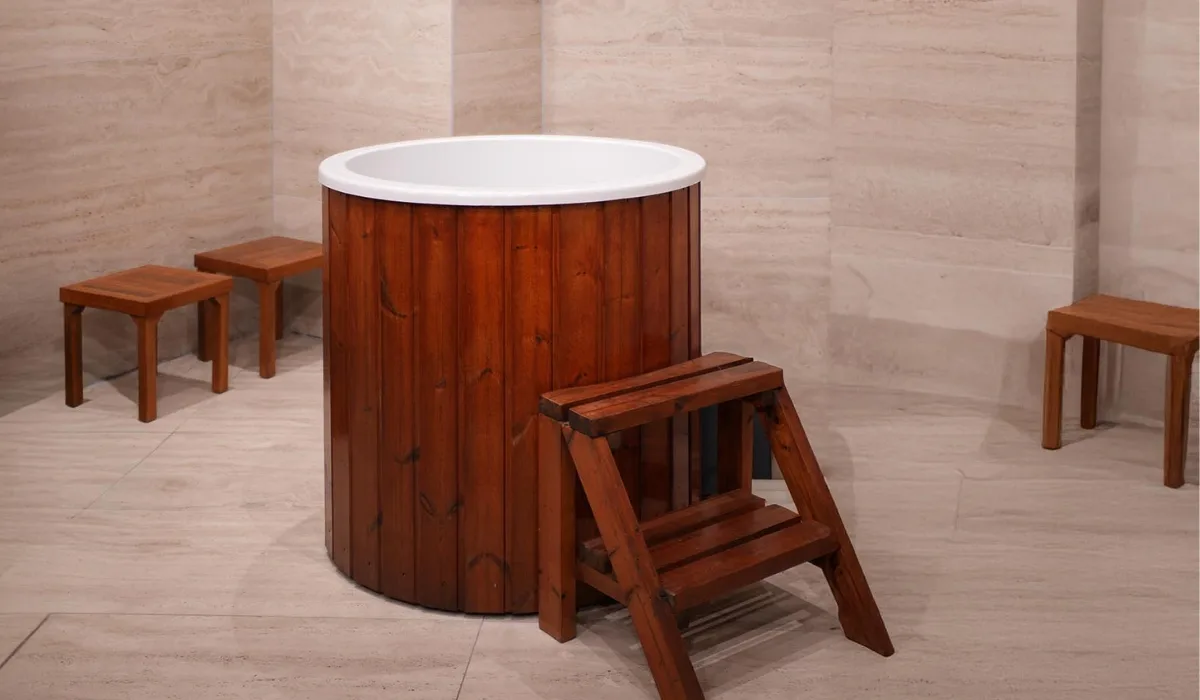
Cryotherapy and cold plunge are both methods aimed at supporting muscle recovery through cold exposure; cryotherapy involves brief exposure to air at very low temperatures, while a cold plunge works by immersion in cold water. Which is better for padel players varies depending on accessibility, duration and personal preference.
In this article, we will compare how the two methods work, how they differ, and which option is more practical after padel in Beytepe.
The rise of cold therapy in sport
The popularity of cold therapy among athletes has accelerated in recent years especially through posts by professional athletes. But the idea of the ice bath is actually not new; athletes have used cold-water immersion for decades to reduce muscle soreness.
Cryotherapy chambers, as a more modern technology, offer the same principle (cold exposure) in a more controlled and brief format. Both are based on the same basic idea: cold is a powerful physiological stimulus that affects circulation and the inflammatory response.
What is cryotherapy and how does it work?
Cryotherapy usually involves brief exposure of 2-3 minutes to extremely cold air between -100°C and -140°C inside a special chamber. This short but intense cold exposure quickly lowers the skin’s surface temperature and triggers a series of physiological responses in the body.
The body responds to this sudden cooling by constricting blood vessels (vasoconstriction); when you step out of the chamber, the vessels dilate quickly and blood flow picks up. This cycle is put forward as a mechanism aimed at reducing inflammation and muscle tension.
Known effects and limits of cryotherapy
Cryotherapy is often reported to temporarily reduce the perception of pain and create a general feeling of freshness. However, there is still debate in the scientific literature about how long this effect lasts and to what extent it reduces muscle damage; so it is more realistic to see cryotherapy not as a miracle solution but as a supportive tool.
Its short duration is an advantage that makes cryotherapy easy to add to a daily routine; however, the need for special equipment stands out as a disadvantage that limits access.
What is a cold plunge and how does it work?
A cold plunge usually involves immersion in cold water, typically between 10-15°C, for a few minutes. It is longer (2-10 minutes) than cryotherapy but works at a less extreme temperature.
Because water is a much better conductor of heat than air, a cold plunge cools the body more deeply and more slowly than cryotherapy. This triggers the constriction-dilation cycle of the blood vessels at a different speed and intensity.
Known effects and limits of the cold plunge
The full-body immersion of a cold plunge offers a longer cold exposure than cryotherapy; for some users this can create a deeper feeling of relaxation. In addition, being still in the water also means a short rest break.
On the other hand, full immersion in cold water can be a more challenging experience than cryotherapy for some people; discomfort may be more pronounced on the first try and the getting-used-to period may take a bit longer.
Key differences between the two methods
| Feature | Cryotherapy | Cold Plunge |
|---|---|---|
| Environment | Dry, extremely cold air | Cold water |
| Temperature | -100°C to -140°C | 10-15°C |
| Duration | 2-3 minutes | 2-10 minutes |
| Equipment needed | Special chamber, expert supervision | Cold water pool |
| Accessibility | More limited, requires a specialised facility | Relatively more widespread |
Although both methods serve a similar purpose (reviving circulation, reducing inflammation), they differ markedly in how they are applied and how easy they are to access.
Using cold therapy during tournament periods
For players who play several matches in a row in a tournament week, cold therapy can be considered a quick recovery tool in the limited time between matches. Because of its short duration, cryotherapy may be more practical in such busy schedules.
However, the fatigue that comes with tournament stress requires not only physical but also mental management; on this topic, our tournament day recovery guide offers a more comprehensive view.
Which muscle groups benefit most?
For the leg, hip and calf muscles that tire most in padel, the cold plunge, which offers full-body immersion, provides direct and even cold exposure to these areas. Although cryotherapy also covers the whole body, its effect may remain slightly more superficial because air is not as effective a conductor of heat as water.
For upper-body areas such as the shoulders and elbows, both methods may offer a similar benefit; it is hard to name a particular advantage for these areas.
Which is better after padel?
In a sport like padel, with sudden changes of direction and repetitive movements, both methods can be useful in reducing muscle tension. However, with full-body immersion in water, the cold plunge may offer a more direct effect, especially in targeting fatigue in the leg and hip area.
Cryotherapy, on the other hand, may be a more practical option for some players because it can be done in less time and does not get the skin wet. In terms of access, most sports facilities can offer a cold plunge more easily than cryotherapy, because a cold water pool is enough instead of a special chamber.
Is there a difference for female and male players?
The body’s response to cold therapy depends on individual physiology, body fat percentage and general tolerance to cold rather than on gender. So instead of recommending a different protocol for female or male players, it is a better approach for everyone to adjust duration and frequency to their own comfort.
Including players who take part in women’s and mixed tournaments in Beytepe, recovery needs are shaped largely by playing intensity and personal recovery speed.
A comparison in terms of time management
Because of its short duration, cryotherapy can be fitted in like a quick break in the middle of a busy day; a 2-3 minute session fits easily into the daily schedule. A cold plunge, on the other hand, takes a little longer (especially when the time to get in and adjust is included), so it should be thought of as an activity that needs time set aside.
This difference may make cryotherapy more attractive for people with busy daily schedules, and the cold plunge more attractive for those who can set aside time for recovery at a more relaxed pace. In both cases, doing the session not the next day but, if possible, right after the match lets you take advantage of the recovery effect while it is freshest.
A comparison of cost and access
Because cryotherapy chambers require special equipment and expert supervision, they are usually found in a more limited number of facilities and the cost per session can be higher than for a cold plunge. A cold plunge, which requires relatively simpler infrastructure, is offered more widely in spa and wellness centres.
When playing on Beytepe's O’Spa Beytepe area has a cold plunge; this makes it possible to try this method right after a padel session, without a separate appointment or extra cost.
The mental effect of cold therapy
Cold exposure involves not only a physical but also a mental challenge; controlling the body’s natural response to sudden cold requires a kind of mental discipline. Many users describe the sense of freshness and clarity they feel after getting through this brief challenge as an important benefit.
This mental component makes it possible to consider cold therapy not just as a physical recovery tool but also as a kind of mental training; its support for mental resilience in padel can also be considered in this light. This connection on padel and stress management also matches the mental benefits we discussed.
Safety and what to watch for
- Heart conditions: Sudden cold exposure can affect heart rate and blood pressure; people with heart conditions should consult their doctor first.
- Gradual adaptation: Starting with short durations in the first attempts makes it easier for the body to get used to the cold.
- Breathing control: Fast, uncontrolled breathing is common on sudden entry into cold water; focusing on calm, deep breathing helps manage this reaction.
- Overuse: Long cold exposure every day can in some cases negatively affect the muscle adaptation process, so it is recommended to limit it to a few times a week.
How often should it be used?
A cold therapy session done 2-3 times a week, especially after intense match or training days, is a sufficient and sustainable frequency for most recreational players. It is not necessary to do it every day; it is also important to give the body time for its own natural repair process.
This frequency can be increased in tournament weeks; but even then, you should closely watch your body’s response and avoid overdoing it.
Hot-cold combination: Contrast therapy
When both cold methods are combined with a sauna or steam room, an approach called contrast therapy emerges. Transitions between hot and cold can further revive circulation by triggering rapid constriction and dilation of the blood vessels.
For more information on this topic, see our steam room benefits article and our recovery ritual guide .
Personal preference: Discovering by trying
In conclusion, both cryotherapy and cold plunge can create different levels of relaxation in different people. A method that helps one person a lot may not feel as effective for another; this depends entirely on individual physiology and preference.
So rather than championing one definitive method, the best approach is to try the option you have access to a few times and observe your own body’s response. Since Beytepe has a cold plunge, you can start with this option and build your own routine over time.
Which option should you try in Beytepe?
If you have never tried cold therapy before, your court session , starting right afterwards with the cold plunge at O’Spa Beytepe offers a more accessible and gradual entry point than cryotherapy. Over time, you can observe your body’s response and adjust the duration and frequency to suit yourself. For those who want to take a trial lesson, our padel lessons page also shows the available times.
If you want to make your recovery routine more holistic, the 2 padel + 1 spa formula; if you want to plan recovery during tournament periods, see our tournament day recovery article .
There is no definitive “better” option between cryotherapy and cold plunge; both serve a similar purpose through different mechanisms. To try the cold plunge in Beytepe and build your own recovery routine, you can reach us on our WhatsApp line. Over time you will notice which method feels better for you and shape your recovery routine accordingly.
Frequently Asked Questions
They serve a similar purpose (reviving circulation, reducing muscle tension) but work through different mechanisms. Cryotherapy uses dry, extremely cold air, while a cold plunge uses cold water.
It is generally done for 2-10 minutes. Beginners are advised to start with very short durations (30-60 seconds) and increase gradually.
In terms of access, the cold plunge is generally more widespread and practical; cryotherapy requires special equipment and expert supervision.
People with heart conditions or extreme cold sensitivity should consult their doctor first. For healthy individuals, gradual and moderate use is generally considered safe.
Yes, there is a cold plunge at the O'Spa Beytepe area; it can be used right after your court session, within the same complex.


 Padel Courts
