
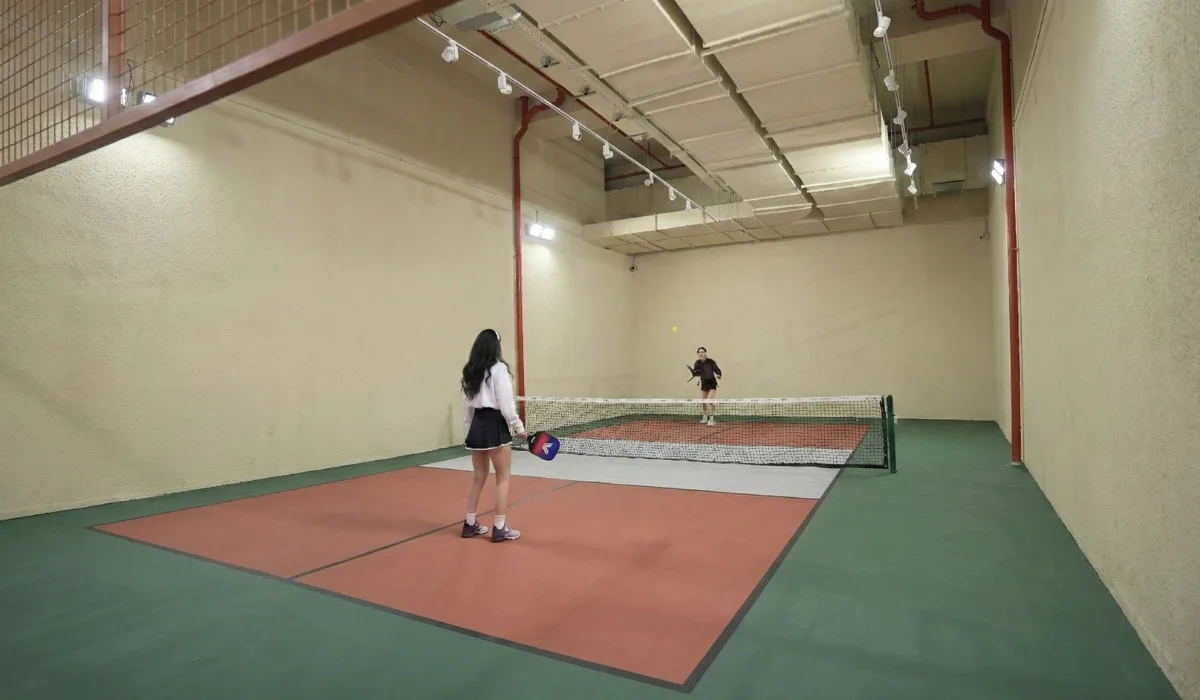
The list of frequently asked padel questions shows that every new player starts from the same place: standing in front of the court wondering "How is this played, can I do it?" We collected the questions asked by guests stepping onto the courts of O'Padel Beytepe for the first time and answered each briefly, clearly and honestly. Imagine you are gathering information about padel from scratch; this article will give you a quick map. You can also look at other guides on our site for more detailed topics, but the basics you need to take the first step are here.
Basic questions about the game and the court
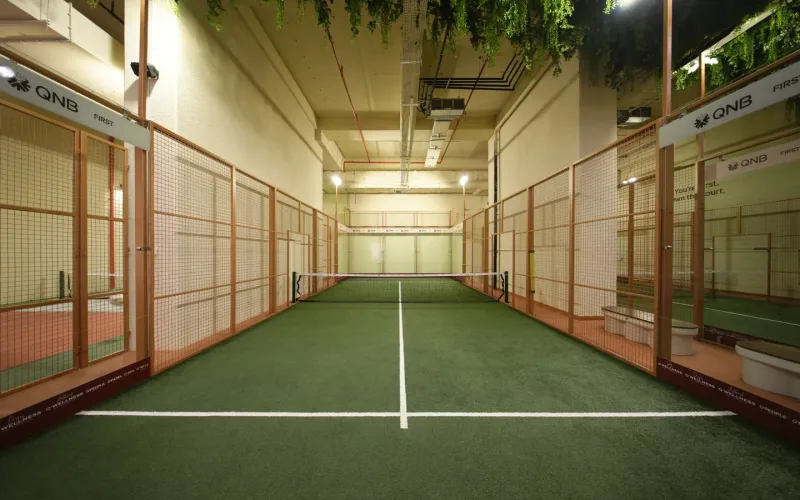
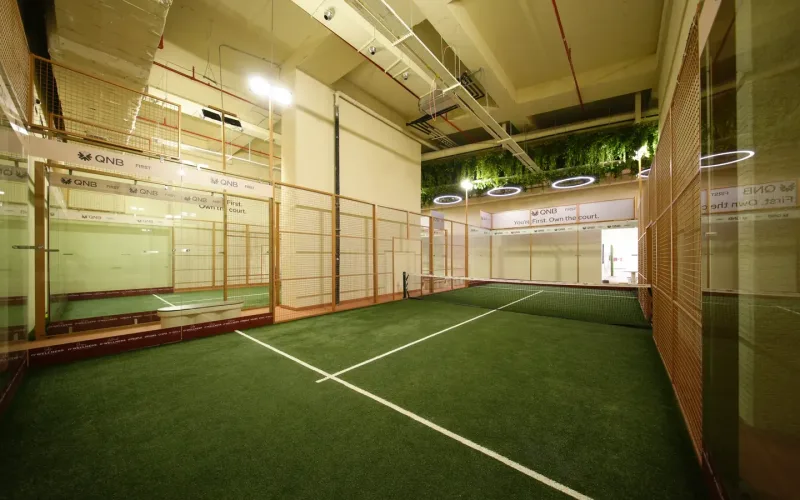
What is padel and how many people play? Padel is a racket sport that sits somewhere between tennis and squash, usually played in pairs by four people. The game is played on a court enclosed by glass and mesh and balls can stay in play by bouncing off the walls. Because these walls allow long rallies and second chances, even beginners enjoy it.
How big is the court? The court is markedly smaller than a tennis court, which makes movement easier and the rhythm more social. Playing indoors lets you plan regardless of weather conditions. The indoor courts at O'Padel Beytepe are therefore suitable for regular play all year round.
What do you need to start?
- Do I need to know tennis? No. A tennis or other racket sport background helps but is not required; many people rally from the first day.
- Do I need to buy a racket? In the first trials equipment can usually be used on site; ask in advance about the options available. When you decide to play regularly, choosing a racket suited to your level makes sense.
- What should I wear? Comfortable sportswear and shoes that grip sandy surfaces, flat-soled or suited to padel, are enough.
- Is there an age limit? Padel appeals to a wide audience from children to older ages; still, if you have doubts about your health, consult a doctor.
These answers are general information; before deciding on a regular programme it is very useful to talk to a coach about your own goals and physical condition.
The learning process and difficulty
Is padel hard? Padel is relatively easy to learn and takes time to master. Getting the ball across in the first hour and grasping the basic strokes and simple strategy within a few weeks is possible. The difficulty is more about finding the right position and reading the ball off the wall; this develops with practice.
Is taking lessons necessary? It is not mandatory, but learning the right grip, footwork and basic tactics from the start makes a big difference before bad habits settle. A few lessons with a coach are a good investment for fast progress and for reducing injury risk. You can learn about lesson options at O'Padel Beytepe on site or through the contact channels.
Matching, partners and the social side
What if I have no partner? Because padel is a doubles sport this is one of the most common worries. In clubs and community events, matching formats such as Americano-style rotation games make meeting new people easy. Many players find their partner this way.
Will I feel embarrassed if my level is low? Level matching is common in padel communities and beginners are generally welcomed warmly. Everyone once hit their first ball wrong, so being at beginner level is not an obstacle but a normal stage. Let your goal be both learning and enjoying.
Health, fitness and safety
Can I play if my fitness is low? Yes; the tempo of the rally can be adjusted to your level. Still, if you have not exercised for a long time or have a known health problem, consult a doctor before starting. Warm-up, gradual loading and enough water are the basis of a safe start.
What is the injury risk? As in any sport, strains and problems linked to sudden movements can occur in padel. Proper warm-up, suitable shoes and technical education reduce this risk noticeably. Knowing your own limits and not ignoring pain is the most important rule.
Basic rules in brief
How is the serve made and how is the score counted? The serve is made underhand, below waist height, after the ball bounces once on the floor. Scoring follows a 15-30-40 pattern similar to tennis, although depending on the club and tournament different practices such as the golden point can be used instead of advantage. You do not need to memorise all these details at the start; they settle easily as the game flows.
How do I use the wall? If the ball hits the wall after bouncing on the opponent's side, play continues. On your own side you can hit the ball coming off the wall after one bounce on the floor. Learning the detail of these rules by practising with your coach in the first lessons is much easier than reading them.
What an indoor court brings
On an indoor court, factors such as wind, rain and sun do not spoil the game. Ball behaviour is more predictable, the light is constant and scheduling becomes easy. For beginner-level players this stable environment makes it easier to focus on stroke technique and reading the ball. Regular players can continue their training without breaking rhythm even as the seasons change.
Alongside this, sounds echo in an indoor court and air movement is limited, so drinking water and making time for a warm-up are even more important. A small water bottle and towel are enough equipment for your first day.
Booking, tournaments and community
How is a court booked and can I join tournaments? For court booking, the club's current methods and contact channels are used; asking about details in advance is best. Tournaments and events are organised in different categories by level, so beginners have a chance to compete too. Joining community events is also a good way to get practice and to meet people.
There are a few more small tips to make your first day easier: be early on court so there is time to warm up, share your level with opponents before the first points, and do not be too hard on yourself when you make mistakes. Most mistakes in padel are part of the natural learning process. When the match is over, what counts is not the score but how many times you smiled on court.
Finally, the most important criterion when choosing a sport is sustainability. Thanks to its social structure and the fun of play, padel is one of the rare sports that achieves this. Many new players notice they are on court far more often than they planned.
So what to do next? We suggest a simple plan: make your first trial with friends, take a couple of lessons, then set a regular time and join a level-matched event. Over time you will find your own rhythm and favourite shots.
If you still have a question in mind, do not hesitate to ask. The O'Padel Beytepe team and community are happy to help everyone who is new. See you on court.


 Padel Courts
