
Improving padel fitness is most effectively done with interval training that suits the nature of the sport: short, high-intensity bursts and short rest periods. Padel matches follow exactly this rhythm; intense rallies of a few seconds, then short breaks during the serve or ball change. In this article we explain interval training methods suited to this rhythm, court drills, and how to support VO2 max development.
Many players who play regularly on the indoor courts at Beytepe try to build fitness just by playing matches; but a structured interval program makes this improvement much faster and measurable.
Why is padel an interval-based sport?
A padel rally generally lasts from a few seconds to 20-30 seconds; it is followed by a short rest during serve preparation or ball collection. This structure makes the sport resemble an intermittent high-intensity activity more than a classic endurance run. So your fitness training also needs to be structured to suit this rhythm.
Although cardiovascular training based on running at the same pace is useful, it does not fully simulate the cycle of sudden acceleration and deceleration that padel demands. That is why interval training stands out as a particularly effective method for padel players.
How do you structure HIIT-based interval training?
High-intensity interval training (HIIT) is a method that combines short periods of maximum effort with short rests. A typical HIIT set for padel might consist of a 20-30 second high-tempo movement (sprint, side-step, jump) followed by 15-20 seconds of active rest. This cycle is repeated 8-12 times to complete a set.
A program like this, done 2-3 times a week, brings a noticeable improvement within a few weeks in recovery speed and end-of-match fatigue level. What matters is to increase effort intensity rather than shortening rest times; this triggers VO2 max development more effectively.
What is VO2 max and why does it matter?
VO2 max is a measure of capacity that expresses the maximum amount of oxygen the body can use per unit of time. A high VO2 max lets you tire later in long matches and make explosive movements even at the end of rallies. Interval training is one of the methods most often recommended in the scientific literature for improving VO2 max.
Balancing anaerobic and aerobic capacity
Padel is a hybrid sport that uses both the anaerobic (short, intense) and aerobic (long, moderate-pace) energy systems. During a rally the anaerobic system kicks in, while over the whole duration of the match aerobic capacity supports recovery. That is why a fitness program needs to target both systems.
A player who focuses only on anaerobic training may be strong in short rallies but tire quickly at the end of long matches. Conversely, someone who does only aerobic training may fall short in the explosive movements within a rally. A balanced interval program aims to develop both capacities together.
Examples of drills you can do on court
Doing fitness training directly on the court is both more fun and a better match for the sport's real movement patterns. For example, doing quick transitions with side-steps across the width of the court simulates the lateral movements used often in a match.
Another effective drill is a quick retreat from the net to the baseline and approaching the net again; this develops the ability to react to a lob and get back into attacking position. Repeating drills like these in 20-30 second blocks with short rests supports both technical and fitness development at the same time.
Agility and change-of-direction work
In padel, fitness is not only endurance but also the capacity for quick changes of direction. Drills using a ladder and cones are particularly effective here; if you want to include these drills in your fitness program, our agility training guide .
The role of warm-up and recovery in a fitness program
Starting an intense interval session with cold muscles seriously increases the risk of injury. That is why a dynamic warm-up should be done before every fitness session; on this, our 12-minute warm-up guide offers a practical framework.
Recovery after training is at least as important as the training itself. Returning the muscles to normal with static stretching and low-tempo movement helps you arrive more ready for the next session. For a detailed program, see our cool-down and stretching guide .
How to apply the principle of progressive overload to padel fitness
For fitness to keep improving, the body should not keep facing the same load, and difficulty needs to be raised gradually over time. This principle is called progressive overload and it applies to padel fitness programs too. A player who starts in the first weeks with 20 seconds of effort – 20 seconds of rest can, a few weeks later, increase difficulty by lengthening the effort time and shortening the rest.
Making this increase too quickly brings the risk of excessive fatigue and injury. So making a small increase every 2-3 weeks gives safe and sustainable progress. Paying attention to the signals your body gives (excessive tiredness, prolonged muscle soreness, worsening sleep quality) helps you decide when to raise intensity and when to hold it steady.
Heart-rate tracking and measuring effort intensity
For interval training to be effective, you need to work at truly high intensity in the effort periods. Using a heart-rate monitor or smartwatch can help you see whether you reach 80-90% of your maximum heart rate. This kind of tracking offers useful feedback, especially for new players who cannot judge their own effort accurately. Over time, you learn which effort level feels “high intensity” to you and can calibrate your effort correctly even without a device.
If you are not tracking your heart rate, the talk test can also be a simple indicator: if you cannot speak more than a few words during a high-intensity interval, it is a sign you are working at the right intensity. In rest periods, a noticeable drop in your heart rate shows that your recovery capacity is improving.
Weekly program suggestion
| Day | Focus | Duration |
|---|---|---|
| Monday | HIIT intervals (sprint + active rest) | 25-30 min |
| Wednesday | Court drills (side-step, net-to-baseline transitions) | 30-40 min |
| Friday | Match pace + light intervals | 60-90 min |
This program is a starting point; you can raise or lower the intensity according to your own level and current fitness. What matters is consistency; a program done regularly two or three times a week gives much better results than scattered but frequent training.
Common mistakes: what to avoid in a fitness program
One of the traps players starting a fitness program often fall into is trying to do every session at maximum intensity. Although this approach seems motivating in the short term, it leaves too little recovery time and raises the risk of overtraining. Leaving at least one rest or low-intensity day in the weekly program is necessary for long-term progress.
Another common mistake is focusing only on cardiovascular training and neglecting strength and flexibility work. In padel, lower-body strength is needed for explosive movements and joint flexibility for sudden stops; so a balanced program should include cardiovascular, strength and flexibility elements together.
How core and lower-body strength contribute to fitness
Fitness is not limited to cardiovascular capacity; a strong core also supports endurance by reducing energy loss in rotational movements. On this, our core training guideoffers complementary exercises you can add to your fitness program.
A weak core can cause your stroke technique to break down and energy to be used inefficiently as fatigue builds. So not limiting your fitness program to cardiovascular work alone gives more stable performance in the long run.
The benefit of keeping a training log
Players who take their fitness program seriously generally keep a simple training log: which day, what type of training, how many sets, how much rest and overall feeling of fatigue. When you look back after a few months, this record lets you see progress concretely and keeps motivation high.
The log also helps you notice which types of training suit you better and on which days you feel more tired. This information lets you personalise the program to your own body over time.
How do you do fitness training at Beytepe?
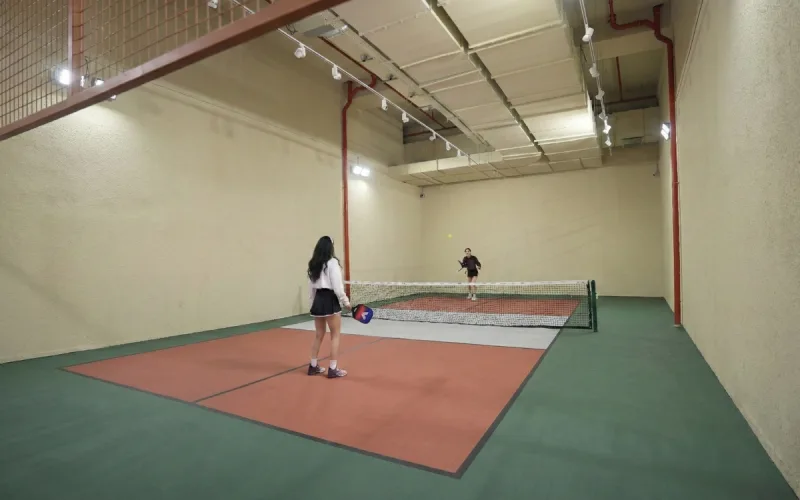
Beytepe's indoor padel courtslets you do regular fitness training all year round, regardless of weather conditions. By booking a court for training purposes, you can do the drills described above on your own or with a coach.
If you want to progress with a structured program, padel lessons, you can request fitness-focused sessions and ask the coach to build an interval program suited to your personal level. Given Ankara’s dry and changeable climate, the indoor court environment is a big advantage for sustaining regular programs like this.
The effect of nutrition and rest on fitness
When following an intense interval program, nutrition and sleep quality must not be neglected. A light, carbohydrate-based meal before training supports energy levels, while protein intake after training speeds up muscle recovery. Insufficient sleep both lowers performance and raises the risk of injury.
Water intake is also an invisible but critical part of a fitness program; especially in Ankara’s dry air, failing to adequately replace fluid lost through sweat can lead to a drop in performance and cramps. Drinking water regularly before, during and after training reduces this risk.
In place of a conclusion: how do you track your fitness?
The most practical way to track fitness progress is to observe your end-of-match fatigue and your recovery time over time. If after a few weeks of regular interval training you notice you feel energetic even in the third set, that is the most concrete sign the program is working.
If you want to assess your current level before starting a fitness program, you can get an opinion from the coaches at Beytepe and plan a suitable session on our WhatsApp line. As your fitness improves, you will notice you stay energetic both in Americano events and in seasonal league matches even in the last set; this will be the most concrete reward of the whole program. Fitness development is a process that takes time; those who stay patient and consistent start to feel a lasting difference within a few months, both in match performance and in daily energy levels.
Another area where you can put the energy you gain after completing a fitness program to use is recovery services; after an intense interval session, a sauna or contrast therapy can speed up your recovery.
Frequently Asked Questions
Interval sessions 2-3 times a week, done separately from match days, are a sufficient and sustainable frequency for fitness gains.
It is recommended to start with a low number of reps (6-8 sets) and increase the number of sets and the intensity over time according to how your body adapts.
Yes, a high VO2 max is one of the core physiological capacities that lets you stay energetic in long rallies and even in the third set.
Yes, interval training based on sprints and active rest can also be done off court; however, drills on court simulate the sport's movement patterns better.
Not recommended; starting high-intensity movement with cold muscles raises the risk of injury, so a dynamic warm-up should always be prioritised.


 Padel Courts
