
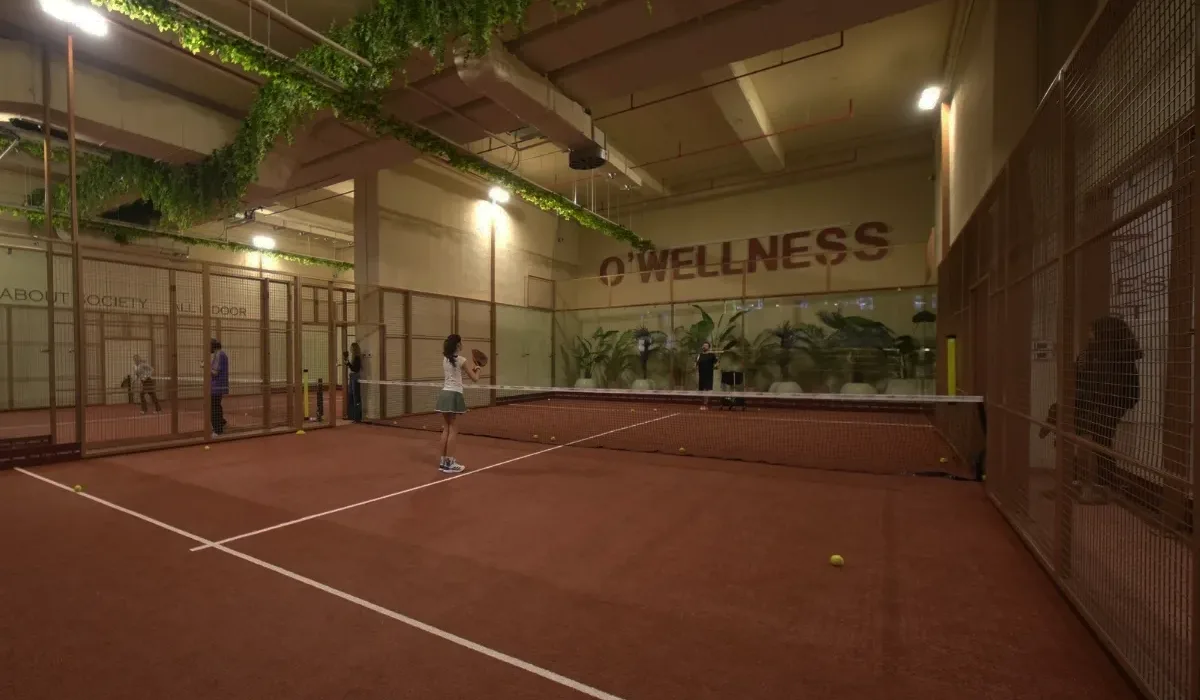
Padel right and left side roles describe how a pair splits the court and gives each player a different job: the left-side player (the revés side) usually takes the aggressive role, finishing points and hitting more smashes and víboras; the right-side player (the drive side) takes the stabilizing role, building points, avoiding errors and controlling the rhythm. Short answer: the left side demands power and decisiveness, the right side patience and consistency. Which side suits you depends on your strongest shots, your temperament and your partner's profile.
In this post, as the O’Padel Beytepe coaching team, we share the real jobs of the two roles, the shots each side needs, the special case of left-handed players and a practical test list you can use to find the side that suits you. The post, padel tactics guide expands on strategy number 5 in our series.
Summary
- The left-side player takes the high balls down the middle and finishes points with smashes and víboras; more risk, more responsibility.
- The right-side player covers the straight lane and builds the point with volleys and deep balls; fewer errors, more patience.
- With two right-handed players, the forehand down the middle belongs to the left player, so the left side usually takes the middle.
- A left-handed player usually plays on the right side so that both players' forehands meet in the middle.
- Side choice isn't permanent; it can change depending on your partner and opponents, but staying on the same side for a whole season speeds up your development.
Why do the sides carry different roles in padel?
When two right-handed players share the court, a simple geometry emerges: the right-side player's forehand faces the side glass and their backhand faces the middle; the left-side player's forehand faces the middle and their backhand faces the side glass. Balls coming down the middle, especially high ones, most naturally fall to the left player's forehand. That's why the left player hits most of the smashes and víboras down the middle, and the finishing role falls to them.
The right player, on the other hand, meets balls in the middle with their backhand; since the backhand smash is a rare and difficult shot in padel, the right player isn't expected to attack high balls down the middle. Their job is to cover the straight lane, direct low balls with volleys and build the point so the left player can finish it. This division of labor isn't a written rule; it's a natural result of the court's geometry.
Serve position also affects the roles. On the serving team, the non-serving player waits at the net; when the right player serves, the left player is ready to cover the middle, and when the left player serves, the right player covers the straight lane. Where the two players line up as they move to the net after the serve determines the first volley decision.
There's also a scoring effect. When returning serve, the first point (0-0) and the third point (such as 30-15) are played on the right side, while the second and fourth points come to the left. Some of the critical points of a set are returned on the left side, which also puts the responsibility of deciding under pressure on the left player. For managing critical points, see padel match management .
Left-side player: the finisher
The left player's main job is to finish the point. They meet high balls coming down the middle and to their side with a smash, bandeja or víbora. At the net they stand closer to the middle of the court; in fact, in most pairs the left player owns the middle and the right player shifts a step toward the side. Aggressive returns and lob decisions on the return of serve are mostly expected from them.
This role carries more visibility and more risk. The left player tends to be the one who finishes the most points in a match, but also the one who makes the most errors. A good left player can tell which high ball calls for a smash and which for a bandeja; a poor left player tries to finish every high ball and hands the point back. The tactical side of this distinction is covered in our padel attacking tactics article.
Shots you need on the left side
- Smash and víbora: the tools for finishing high balls down the middle.
- Bandeja: the shot that holds your position on a lob you can't finish.
- Backhand volley: used often on the side-glass side.
- Backhand off the glass: on defense, balls coming off the side and back glass arrive on your backhand.
- Decision speed: not a technique, but the left side's most important “shot.”
Right-side player: the builder
The right player's main job is to avoid errors and build the point. They cover the straight lane, push opponents back with forehand volleys and control the rhythm of the rally with deep, high balls. They direct low balls in the middle with backhand volleys but leave high balls in the middle to the left player. The patience to keep working the opposing pair's weak side is also usually expected from the right player.
This role is less visible, but the pair's stability depends on it. When the right player makes few errors, the left player can take risks; when the right player starts making mistakes, the left player also leans into more risk and the pair falls apart. At club level, a good right player is the one who wins the match “without doing anything.” For ways to find the opponent's weak side, our scouting your opponents in padel article is like a right player's handbook.
Shots you need on the right side
- Forehand volley: sending balls from the straight lane deep.
- Backhand volley (middle): directing low balls down the middle.
- Forehand off the glass and lob: the shots that start the transition on defense.
- Chiquita: the right side's short-ball weapon.
- Consistency: the right side's real “shot” is not making errors.
| Criterion | Left side | Right side |
|---|---|---|
| Main job | Finishing the point | Building the point |
| High ball down the middle | Takes it (forehand) | Leaves it (backhand) |
| Risk level | High | Low |
| Key shots | Smash, víbora, bandeja | Forehand volley, lob, chiquita |
| Key trait | Decision speed, power | Patience, consistency |
| Return of serve | 2nd and 4th points | 1st and 3rd points |
Rather than guessing which side you are better on, it is smarter to measure. On our courts in Beytepe, switch sides across two different sets and compare your error and finishing counts.
How do the roles change with a left-handed player?
If the pair includes a left-hander, the geometry flips. When the left-handed player plays on the right side, their forehand faces the middle; when their right-handed partner plays on the left, that partner's forehand also faces the middle. The result: two forehands meet in the middle, and every high ball down the middle falls to someone's forehand smash. This is the biggest advantage of lefty-righty pairs, and it's why left-handers mostly play on the right side.
There's a downside too: both backhands face the side glass, so both players defend balls going wide with their backhand. The “who takes it” decision in the middle also gets more complicated, since both forehands are eager. In these pairs, agreeing on a middle-ball rule before the match matters even more; our whose ball is it down the middle article has separate rules for the left-handed case. If both players are left-handed, the geometry is fully mirrored: the left-handed “left” player now becomes the finisher on the right side.
Which side suits you? An 8-question test
Answer the questions below honestly. If you answer mostly A, the left side looks like a better fit; if mostly B, the right side. The result isn't definitive, but it works as a starting point.
- When a high ball comes, is your first reflex A) to finish it, or B) to put it back in a controlled way?
- Is your smash A) a reliable weapon, or B) a shot that's still developing?
- In long rallies, do you A) get impatient, or B) feel comfortable?
- When you make an error, do you A) want to make up for it right away on the next ball, or B) play the next ball safe?
- Is your backhand A) comfortable off the glass, or B) noticeably weaker than your forehand?
- Is your partner A) a patient, consistent player, or B) an aggressive finisher?
- Under pressure (30-30, golden point), would you A) want to take the ball, or B) prefer to leave it to your partner?
- In a match, do you care more about A) finishing more points, or B) making fewer errors?
Your test result should also be interpreted in light of your partner. If most of your answers are A but your partner is also a typical finisher, one of you has to learn the right side. In that case, the player with the better backhand volley who stays more patient in long rallies usually moves to the right. In padel, a pair of two finishers loses more matches than a pair of two builders, because builders at least don't make errors.
You need to verify your test result on the court. Our suggestion is simple: in a practice match, play one set on the right and one on the left, and count the points you finish and the unforced errors you make in each set. The numbers are usually more honest than the test. A level assessment with a coach also includes a clear recommendation on your side; in our padel lessons program, this assessment is done in the first sessions.
Common mistakes when choosing a side
The first mistake is the stronger player automatically moving to the left. If the stronger player is also a patient builder and their partner has a good smash, doing the opposite makes the pair stronger. The side is decided not by the question “who's better” but by “who does which job better.”
The second mistake is switching sides every match. A side's shot angles, glass reading and positioning reflexes become automatic over time; a player who keeps switching stays slow on both. Staying on the same side for a season (e.g., an 8-week league period) speeds up your development; the level league on our tournaments and leagues page is well suited to this kind of continuity.
There are also times when switching sides makes sense: if the opposing pair is clearly targeting one side and your player on that side is struggling, you can try a switch between sets. But this is an in-match tactical move, not a permanent choice.
The third mistake is both players trying to be the finisher. In these pairs, balls down the middle go unclaimed and nobody builds the point. The fourth mistake is the right player seeing themselves as “second”; the right side isn't a support role but a different specialist role, and in good pairs both roles carry equal value. How the pair can set up this balance verbally is covered in padel partner communication .
Result
The right-side and left-side roles in padel are the natural division of labour that court geometry gives a pair: one builds, the other finishes. Which side suits you is determined not by your ability alone but by the balance you build with your partner. The most consistent pairs we see in the level league matches in Beytepe are made up not of the two strongest players but of the two players who know their roles most clearly. At your next training session in Beytepe, play two sets on different sides, compare the numbers and make your decision on court; for a court, just message us on WhatsApp: +90 536 908 08 00.
Frequently Asked Questions
With two right-handed players, the left-side player's forehand faces the middle of the court. Since high balls down the middle naturally fall to their forehand, they hit most of the smashes and víboras.
Usually the right side. That way the left-hander's forehand faces the middle and meets their right-handed partner's forehand there; every high ball down the middle turns into a forehand smash.
No. The side is decided not by 'who's better' but by 'who does which job better.' If the stronger player is a patient builder and their partner has a reliable smash, doing the opposite strengthens the pair.
During the trial phase, switching set by set is useful; once you've decided, staying on the same side for at least one league period, meaning a few months, makes your reflexes automatic. A player who keeps switching stays slow on both sides.


 Padel Courts
