

Padel tournament preparation is a process that starts at least two weeks before match day and ties technique, fitness, tactics, nutrition and mental focus into a single plan. In short: preparing for a tournament means planning the 4–6 matches you'll play that day as if they were one long match. Players who organize their training, sleep and meals with this mindset can beat even technically stronger opponents on tournament day.
This guide explains step by step the 14-day plan and match day routine the O’Padel Beytepe coaching team has built by observing many players at Americano, Mexicano, level league and club tournaments. Whether you are preparing for your first Americano at level 2.5 or aiming for a club tournament final in the 5.0 group, the structure is the same; only the intensity changes.
Summary
- Tournament prep starts 14 days out: the first week is for load, the second week for tapering (reducing load).
- Unlike a single match, tournament day is a 4–6 match endurance test; energy management matters more than technique.
- The core rules: a main meal 3 hours before play, plus 20–30 g of carbohydrates and 400–600 ml of fluid between matches.
- At least 3 joint training sessions with your partner and a one-page game plan eliminate indecision on tournament day.
- Sleep is the most critical performance variable over the last 3 nights; the two nights before the last one matter more than the final night.
Why Is Tournament Prep Different from Regular Training?
In a weekly court session you play 60–90 minutes and go home. At a tournament, you may need to play 6–8 short matches in an Americano format, or 3–5 three-set matches in a club tournament. Total court time easily exceeds 4 hours. That is a completely different demand on muscular endurance, decision quality and attention span.
The second difference is the variety of opponents. In your weekly matches you usually play with the same 3–4 people and know their habits. At a tournament, you face a different style, a different serve and a different pace every match. That's why tournament prep doesn't just mean “more training” but “more varied opponents and a clearer plan.”
The third difference is pressure. The scoreboard, friends watching and ranking points make the same shot harder. As we detail in our tournament psychology article, players who don't simulate pressure during preparation struggle in the first set on tournament day.
14-Day Padel Tournament Prep Plan
The plan below is designed for a club player who can get on court 3–4 times a week. If you have less time, keep the court sessions and shorten the gym work. The principle is simple: build up in the first week, freshen up in the second.
Week 1: Load and Variety (Days 14–8)
This week volume is high and intensity moderate. The goal is to broaden your decision-making repertoire by playing different opponents and to solidify your physical base.
- Day 14: 90 min on court with your partner. First 30 min of drills (volley–lob–bandeja cycle), last 60 min of scored sets. Then a 10-min cool-down.
- Day 13: Gym: lower-body strength (goblet squat, lateral lunge, Romanian deadlift) + core rotation. 45 min.
- Day 12: Beytepe Americano evening (WhatsApp for the current calendar). 6–7 short matches with different partners; you experience the tournament rhythm first-hand.
- Day 11: Active rest: 30 min of swimming or walking, mobility routine.
- Day 10: Tactics session with your partner: serve–return formations, the middle-ball rule, moving forward after a lob. 75 min.
- Day 9: Gym: plyometric and reactive work (skater jump, cone shuffle), 30 min. Then 15 min of light court time.
- Day 8: A Beytepe weekend Americano or a 2-set match with friends. Take notes on opponent analysis.
Week 2: Taper and Clarity (Days 7–1)
Cut volume by about 40 percent and maintain intensity. No learning new techniques this week; just sharpen what you have. Let your body recover and your mind absorb the plan.
- Day 7: 60 min on court. Short, high-tempo points. Note the shot patterns that win you points.
- Day 6: Gym: light strength (60 percent load), mobility. 35 min.
- Day 5: 45 min with your partner. Only serve, return and the first three shots. Write your game plan together.
- Day 4: Full rest. Focus on sleep hygiene; cut screen time.
- Day 3: 40 min of light hitting + 10 min of footwork. Pack your tournament bag.
- Day 2: 20–30 min of very light rallying, or no court at all. Plan your match-day meals.
- Day 1: Rest. A short walk, stretching, an early night. Check the tournament schedule and court numbers.
| Component | Week 1 (Load) | Week 2 (Taper) |
|---|---|---|
| Court sessions | 4 sessions, ~5 hours total | 3 sessions, ~2.5 hours total |
| Strength training | 2 sessions, moderate-to-high load | 1 session, light load |
| Scored matches | 2 (including Americano) | 1 short, high-tempo |
| New technique | Minor adjustments | None |
| Sleep target | 7-8 hours | 8+ hours, last 3 nights critical |
| Mental work | Observe opponents' styles | Visualize your game plan |
The Six Components of Preparation
The six components below fill in the 14-day framework. Each requires a small plan of its own; applied together, they leave no surprises on tournament day.
Technical Prep: The Wrong Time to Learn a New Shot
Trying to learn the víbora two weeks before a tournament is the most common mistake we see. A new shot is the first thing abandoned under pressure; working on it during prep is a waste of both time and confidence. Instead, focus on three things.
Your 90 percent shots: Bandeja, block volley, defense off the back glass and the lob. These four shots decide most tournament points. Dedicate the first 20 minutes of every session to them. If you're planning a private lesson, ask your coach to measure your consistency on these four shots.
Serve and return: Every tournament point starts with these two. Your serve should land in more than 85 percent of the time; the first goal of the return is not to win the point but to push your opponents off the net. Practice this for a week while keeping count.
Pressure simulation: Start training sets from 30-30 and golden point situations. Let your brain get used to these scores. The Americano nights at Beytepe are a perfect laboratory for this: every match is short, every point is valuable.
Physical Prep: A Body That Can Handle a 5-Match Day
The physical demands of padel are short explosive movements, sudden changes of direction and a constant slight crouch. On tournament day you repeat this load for 4–5 hours. Your conditioning program should be designed around that reality.
Order of priority
- Lower-body endurance: High-rep squat variations, lateral lunges, calf raises. When your legs are gone, footwork breaks down first, then technique.
- Core rotational power: The source of your bandeja and smash. Pallof press, medicine ball rotational throw.
- Shoulder health: Rotator cuff external rotation, band pull-aparts. Prevents the toll of playing high balls all day.
- Ankle and knee prep: Single-leg balance, controlled landing drills.
Having a short movement and flexibility assessment done in the fitness and conditioning area of O’Wellness Beytepe 10 days before the tournament lets you catch hidden asymmetries early. For a detailed programme, recovery and wellness services page.
Tactical Prep: A One-Page Game Plan with Your Partner
The biggest time-waster on tournament day is the “what are we doing?” debate between points. The way to prevent it is to write a one-page plan during prep. The plan has three parts.
- Default formation: Who plays right, who plays left? What's the serving order? Who takes the middle ball? These rules should be settled before the match, not argued about during it.
- Plan A: How do we win on a good day? For example, “take the net with a lob, hold position with the bandeja, speed up when the opponent struggles off the back glass.”
- Plan B: What changes if Plan A isn't working? Usually it's a simplification like “slow the tempo, more lobs, target the middle lane.”
Write this plan at your Day 5 session and reread it on Day 3. Keep it in your bag on tournament day; reading two sentences between sets can change the course of the whole match. For partner chemistry, our 4-week pair preparation plan offers a longer roadmap.
Nutrition and Hydration: From 14 Days Out to Match Time
You don't need a special diet during prep; what you need is consistency. Slightly increase your carbohydrate intake over the last three days and cut back on high-fiber and gas-producing foods. Don't try a new supplement or an unfamiliar food during tournament week.
Match-day meal timing
- 3 hours before the first match: Oats, banana, eggs or whole-grain bread + cheese. About 400–600 kcal; low fat, high carbs.
- 45–60 min before the first match: A small snack: banana, rice cakes, dates.
- Between matches (20–40 min breaks): 20–30 g of fast carbs (banana, gel, dried fruit) + 400–600 ml of water or an electrolyte drink.
- Long break (60+ min): A light sandwich or rice; avoid heavy, greasy food.
- Within 60 min after the tournament: A protein + carbohydrate combination; it kick-starts recovery.
Air temperature is kept constant on Beytepe’s climate-controlled indoor courts (you notice this in Ankara’s dry summer), but sweat loss is still significant over a heavy run of matches. As a rule, if you lose more than 2 percent of your body weight when weighed after each match, you need to increase your fluid intake. Keep caffeine at the dose you are used to; trying an energy drink for the first time on tournament day is a classic mistake.
Sleep and Mental Prep
Sleeping badly from excitement the night before a tournament is normal and doesn't affect performance as much as you'd think. Nights 2 and 3 are what count. Plan to sleep 8 hours on those nights like it's a training session: go to bed at the same time, keep the room cool and dark, and put screens away 90 min before bed.
You don't need complex techniques for mental prep. Three simple tools are enough:
- Visualisation: For the last three days, spend 5 minutes a day playing out Plan A from your game plan on court in your mind. Especially picture the serve return moment.
- Between-point routine: Do the same thing after every point: exhale, look at your racket, make eye contact with your partner, get into position. Make this automatic in practice.
- Acceptance statement: “There will be bad points today; what matters is the next point.” A player who internalizes this sentence before the tournament recovers much faster after losing a set.
Tournament Bag: Checklist for the Last 48 Hours
Pack your bag the day before so you're not searching for anything in the morning. The essentials:
- Main racket + backup racket (ideally the same model)
- 2 spare overgrips, wristband, towel
- 2 T-shirts, 1 spare pair of shorts, 2 pairs of socks
- Padel shoes (with soles suited to sand-filled turf) + slides
- 1 liter of water + electrolyte tablets, 3–4 bananas or bars
- Game plan sheet, pen
- Tape, pain-relief cream, bandages
- Light cardigan or jacket (so your muscles don't cool down between matches)
If you are coming to Beytepe for the first time, you can get current information on parking and changing rooms on WhatsApp; since the complex has showers and changing facilities, no separate preparation is needed. For the full list, our tournament bag guide .
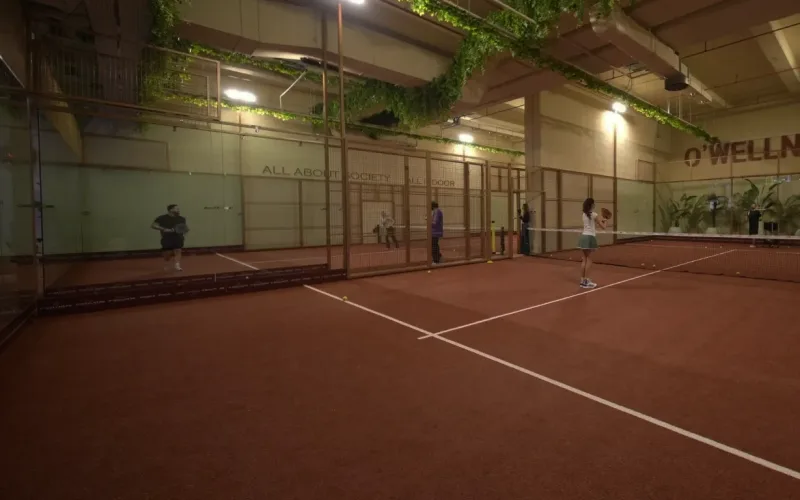
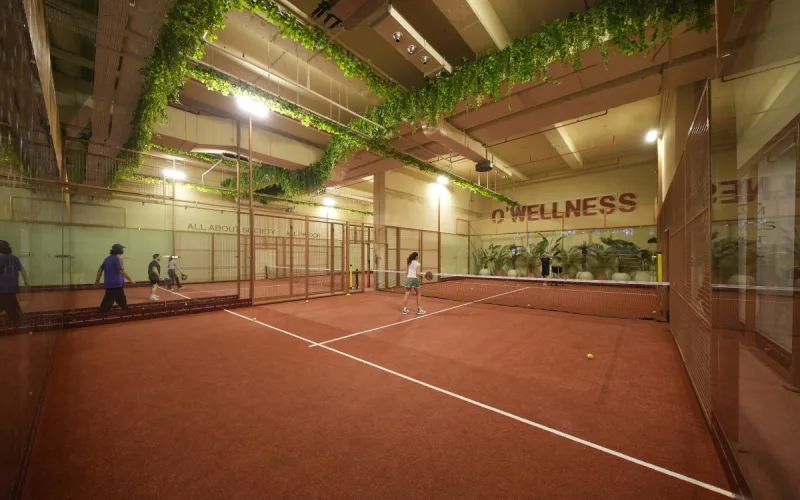
It is time to get on court and put the preparation plan into action. Book a training slot with your partner now on the climate-controlled courts at Ankara Beytepe.
Match-Day Routine: Hour by Hour
The flow below is an example for a club tournament with a first match at 10:00. Shift the times to fit your own schedule.
| Time | What to Do | Why |
|---|---|---|
| 06:45 | Wake up, 500 ml of water | Replace fluids lost overnight |
| 07:00 | Main breakfast | Digestion needs 3 hours |
| 08:30 | Head out | Allow for traffic; rushing means cortisol |
| 09:00 | Check-in, court and schedule check | Court number, match order, opponents' names |
| 09:15 | General warm-up: 5 min jog, dynamic stretching | Raise heart rate and joint temperature |
| 09:30 | 15 min hitting warm-up on court | Volley, lob, bandeja, serve, in that order |
| 09:50 | Review the plan with your partner, 2 sentences | Clarity, not debate |
| 10:00 | Match 1 | First 3 points: keep it in, take no risks |
| Between matches | Water, carbs, short walk, plan note | Sitting down and cooling off is the biggest trap |
| Before the next match | 5-min mini warm-up | Muscles cool down in 20 min |
What Not to Do Between Matches
Sitting for long periods, eating heavily, getting lost in social media and analyzing the previous match point by point. The lesson from a match you lost is one sentence; write it down and let it go. The lesson from a match you won is also one sentence; write that down and let it go too. For detailed between-match management, our tournament match-day guide has been prepared as a separate article.
Format Guide: Which Tournament Are You Preparing For?
The preparation plan needs fine-tuning for the format you will take part in. The main formats at O’Padel Beytepe and the preparation emphasis:
- Americano: Each match is 16–24 points, and partners rotate constantly. Prep focus: quick adaptation, communication with different partners, a short warm-up. Americano guide.
- Mexicano: Dynamic matchmaking based on points; each round, your opponents' level gets closer to yours. Prep focus: consistency under pressure. Mexicano guide.
- 8-week level league: One match a week, four level groups, promotion and relegation. Prep focus: weekly rhythm, long-term conditioning. League anatomy.
- Monthly club tournament (women's/men's/mixed): 3–5 matches with sets in a single day. The 14-day plan in this article was designed specifically for this format.
If you're not sure which group or category to sign up for, level assessment process first pin down where you stand on the 1.0–7.0 scale. Playing in the wrong level group wipes out the entire effect of your preparation.
Scouting Opponents: A 3-Minute Read on Tournament Day
At a tournament you usually don't know your opponents in advance, but the warm-up and the first few points give you enough data. During the warm-up, look for three things: Do they make more errors on the backhand or the forehand side? On high balls, do they go for the smash or the bandeja? Are they more comfortable at the net or at the back of the court? These three observations are enough to add two sentences to Plan A in your game plan.
In the first four points, test which player on the opposing team is weaker: a short lob and a ball down the middle lane. Once you find the weaker player, play 70 percent of the points to them; but playing exclusively to one person gives the stronger player time to cover and get into the match. Keep wearing down the stronger player too by playing 30 percent of the points to them. Changes of pace (a slow lob one point, a fast chiquita the next) keep opponents from finding a rhythm, and this saves energy in the later matches of the tournament.
Between sets, do a 30-second review with your partner: Is the plan working, what did each opponent do, what are we changing? Keep the decision to one sentence and test it for the first four points of the second set. Pairs who constantly change their plan play worse than pairs with no plan at all.
7 Common Prep Mistakes
- Using a new racket or new shoes during tournament week.
- Doing “a little more training” on the last day and tiring out your legs.
- Entering a tournament without ever having played with your partner.
- Skipping breakfast and running out of energy in the first match.
- Sitting down and cooling off between matches, then starting the second match with stiff muscles.
- Completely changing the plan after losing the first set.
- Skipping post-tournament recovery and walking around sore for a week.
After the Tournament: Prep for the Next One Starts Now
When the tournament ends, the first 48 hours are the first days of the next tournament. A light walk, a protein-rich meal, plenty of sleep and contrast therapy (sauna–cold plunge) quickly reduce muscle damage. O’Spa Beytepe is right next door for this. For the detailed protocol, our 48-hour recovery guide .
Then set aside an hour to review your tournament notes: Which shots held up under pressure? Which opponent style gave you trouble? Did your nutrition timing work? These notes become the first item in your next 14-day plan.
How Prep Differs by Level
The same 14-day skeleton applies to everyone, but the emphasis shifts with level. Thinking in terms of the common 1.0–7.0 level scale:
1.5–2.5: Your first tournament experience
At this level, 70 percent of preparation is mental and logistical. Know the rules, learn to keep score, understand how partner rotation works in an Americano. There's one technical goal: keep the ball in. Conditioning work is light; the real goal is getting used to the tournament-day environment. Our article on your first padel tournament offers a separate roadmap for this level.
3.0–4.0: The club player's leap
Here the difference comes from tactical clarity. Most 3.5 players are technically good enough; what makes them lose is indecision and positioning errors. During prep, concentrate on your game plan, the middle-ball rule and the discipline of taking the net after a lob. In conditioning, lower-body endurance is the priority; if your legs are gone by the fourth match, technical knowledge won't help.
4.5 and above: Marginal gains
Everyone in this group plays well; the difference is made by taper quality, sleep discipline, between-match management and opponent scouting. Add video analysis to your prep: watch short clips from your last two Americanos and identify which type of opponent you lose points against. Nutrition timing is no longer a recommendation; it's a requirement.
How Does Prep Differ for League Play and Americano?
A 14-day intensive plan makes sense for a one-day club tournament. But in longer formats like the 8-week level league, you can't taper like this every week. The principle for league prep is: fix your weekly match day, go easy the day before, recover the day after, and keep your normal training rhythm for the remaining 3–4 days of the week. A player who maintains the same rhythm for eight weeks will be noticeably fresher than their opponents in the final weeks of the league.
Americano, on the other hand, is a weekly social event; it doesn't require special prep, but two rules help. First, don't do a heavy gym session before an Americano; 6–8 short matches are more tiring than you'd think. Second, treat every Americano as a tournament rehearsal: the ability to communicate quickly with different partners pays off directly in the mixed category at club tournaments.
If you’re wondering how to spread all these formats across a year, our season planning guide explains which months to load up and which to rest. For registration processes, check out our step-by-step registration guide.
Result
Padel tournament preparation is not a secret formula; it is the sum of simple things done in the right order over two weeks. Load, freshen up, plan, fuel, sleep and automate your match day routine. At O’Padel Beytepe, inside the O’Wellness Beytepe complex in Ankara Beytepe, Americanos, Mexicano evenings, the level league and club tournaments offer regular opportunities to test this plan under real match pressure. Check out the tournament and league calendar, pick the format that suits your level and start your first 14-day plan today.
Frequently Asked Questions
The ideal is 14 days. In the first week you increase training volume and variety of opponents; in the second week you cut the load by about 40 percent (taper) and freshen up. If you have less time, at least keep the last 3 days light and focus on sleep.
About 3 hours before your first match, a carb-heavy, low-fat meal: oats, banana, eggs or whole-grain bread and cheese. You can add a small snack (banana, dates) 45–60 minutes before the match. Trying a new food or supplement for the first time on tournament day is not recommended.
The effect of a single bad night is smaller than people think. What matters is your sleep 2 and 3 nights before the tournament. If you aim for 8 hours on those nights and cut screen time, sleeping little from excitement on the last night won't seriously affect your performance.
At club tournaments, breaks usually run 20–60 minutes. During them, take in 400–600 ml of fluid and 20–30 grams of fast carbs, avoid sitting and cooling down, walk lightly and do a mini warm-up 5 minutes before the next match. Instead of analyzing the previous match point by point, a one-sentence note is enough.
At least 3 joint training sessions are recommended: one with scored sets, one tactics-focused (serve formation, middle-ball rule) and one short and high-tempo. Write a one-page game plan during these sessions; on tournament day that plan eliminates debate.


 Padel Courts
