
A university club padel partnership means a student community setting up a working arrangement with a facility for regular court time, training days and tournament organisation. While sports clubs at campuses such as Hacettepe, Bilkent and METU (ODTÜ) are growing in Ankara, padel is a strong candidate to become one of their most popular branches. This article explains step by step what kind of partnership you can set up for padel at Beytepe if you are a university club officer or member. For campaign and terms details you need to speak via our WhatsApp line; we don't make up figures here.
Why is padel attractive for university clubs?
Campus sports clubs generally have limited budgets, fluctuating membership and a structure that swings with the academic calendar. Padel fits this structure for several reasons:
- **Social structure:** Four-player games naturally bring club members closer together; it's easier for new members to bond.
- **Fast learning:** Compared with sports like tennis or badminton, getting into the game in the first session is quicker; events can be held without losing beginners.
- **Cost sharing:** A court is hired for an hour and shared by four people; a natural advantage for student budgets.
- **Easy to organise:** Americano and short tournament formats can be easily added to the club's event calendar.
- **Club identity:** Elements such as team kits, an in-club league and inter-campus cups strengthen club belonging.
That's why padel can be not just a sports branch but also a tool for club management to retain members and build community. Our article that details the cost side for students, student-friendly padel , can be useful when planning the club budget.
Beytepe's proximity to campuses
O’Padel Beytepe is very close to the Hacettepe Beytepe Campus. It is also a short distance from areas where students and young professionals live in large numbers, such as Bilkent, Ümitköy and Çayyolu. For club members coming from METU (ODTÜ), access via Eskişehir Yolu is also possible. This geographic advantage reduces the transport difficulty for club events; planning a session around the end of classes becomes much more realistic.
For a detailed transport guide, you can read our articles Getting here from the Hacettepe Beytepe Campus and padel for METU (ODTÜ) students . We also covered the Hacettepe students' proximity to the campus separately under padel for Hacettepe students .
Partnership models: what can a club get, what can it give?
Every club's needs are different. So rather than a single package, it makes sense to talk through a few models. The table below summarises the general types of partnership that can be set up between a club and a padel facility. Scope, campaigns and terms are clarified during the discussion.
| Model | Benefit for the club | Benefit for the facility |
|---|---|---|
| Regular court time | A fixed weekly training day; easy planning for members | Predictable occupancy |
| Training days | A beginner workshop with a coach, video analysis | Gaining new players |
| In-club tournament | Member loyalty, a social event | Event activity |
| Inter-campus cup | Competition and visibility | Community awareness |
| Joint content | Club visibility on social media | Brand awareness |
Each row in this table can be discussed separately. Matters such as club discounts and special packages are determined according to the facility's current policies; exact terms are communicated via WhatsApp.
Training days: the first step with club members
The easiest starting point for a club partnership is a training day. A few hours' workshop where coaches meet members serves both promotion and training. You can structure the scope like this:
- **Introduction (15 min):** The rules of padel, court size and using the wall. The logic of four-player play.
- **Basic shots (30-40 min):** Forehand, backhand, moving to the volley, the ball rebounding off the wall.
- **Mini matches (30 min):** Rotating, short games. The aim isn't to win but to play the ball.
- **Review and Q&A (15 min):** Coach feedback, next steps for the club.
Holding the training day on a weekend morning or in quiet periods of the academic calendar increases participation. You may need to split into groups by members' level; you can look at the formats offered for beginner, intermediate and advanced levels on the padel lessons page.
Tournaments and cups: living club rivalry on court
Inter-university cups in Ankara are one of the strongest platforms for clubs to gain visibility. For a general overview of such tournaments featuring Hacettepe, Bilkent and METU (ODTÜ) teams, we recommend the article the inter-university padel cup . The tournament calendar and formats are listed on on the tournaments page .
To prepare for a tournament as a club:
- Set your number of teams and quota early; hold in-club trials.
- Create level-based groups; a category that includes beginners creates a non-results-driven atmosphere.
- Arrange regular court time for training sessions.
- Create visibility with kits and club colours.
- After the tournament, boost your social media visibility with a short “thank you and photos” post.
The same logic applies to in-club leagues. A seasonal league format creates commitment that lasts over a term; the article how a seasonal league works summarises this structure.
A practical checklist for club officers
Preparing before going to a partnership meeting speeds up the result. Have answers to these questions:
- How many active members does the club have, and on average how many take part in events?
- How many hours of court time a week do you need, and which days and times suit you?
- Do you want a training day, a tournament or regular training?
- Is the budget per term, or financed by membership dues?
- Are you considering working together on social media and promotion?
When you share these answers on WhatsApp, a suggestion that fits your needs is prepared much faster. We usually reply within 5 minutes; for a detailed club partnership discussion, though, preparing a structured plan may take time.
A sample club year that fits the academic calendar
A university club's year is generally shaped by the autumn and spring terms; midterm and final weeks lower participation, while the start of term increases the flow of new members. Building padel activities around this rhythm is far more efficient. The example below offers just an idea; you can adapt it to your club's calendar.
- **Start of term (September-October):** An introduction day and a format close to a free trial; the best time to invite new members onto the court.
- **Mid-term:** Regular weekly training and an in-club mini league; reduce the number of sessions in midterm weeks.
- **After finals:** A social Americano event and an end-of-term tournament; a chance to unwind after stressful weeks.
- **Spring term:** Preparation for the inter-campus cup, a second training day and a farewell event for new graduates.
This rhythm increases the club's member retention rate. Because people commit to a club not only for events but for a regular social circle. Organising at least one “first-timers” event every term keeps the club constantly renewing itself.
Safety, equipment and first-experience notes
At a crowded club event, if the number of first-time padel players is high, safety and order become a priority. Four people play on court at any moment; extra players wait for rotation in the waiting area. Planning the waiting area and rotation in advance ensures both that the court is used efficiently and that everyone knows their turn.
For equipment, renting rackets and balls is a big convenience for beginner events; expecting all members to buy a racket isn't realistic. Footwear is a bit more important: running shoes may not give enough grip in lateral movements, so shoes with flat, durable, non-slip soles should be preferred. For court safety measures, we recommend looking at our article on safety on court .
A warm-up should be done in the first five to ten minutes of every event. Students who have spent a long day on campus sitting at a desk can have stiff muscles; shoulder, wrist and hip mobility reduces injury risk. Giving everyone a short briefing before the event makes the first experience both safe and enjoyable.
Club management and communication: tips for a sustainable partnership
Clear communication underlies a successful partnership. Setting up a WhatsApp or similar group for the club's internal communication is the most practical way to announce session times and changes. Appointing a single person responsible for bookings also reduces confusion: instead of each member writing separately, the club's representative can communicate on behalf of all.
For cancellations and changes, the 24 hour rule provides a good rhythm. Confirming attendance at least a day before the session time is efficient for both the club and the facility. If members can't get together, the option to cancel the session free of charge protects the club budget.
Finally, a feedback culture: after each event, discussing what worked and what could be improved through a short survey or chat strengthens next term's plan. Participants' comments on court times, the coach's explanations and the overall atmosphere are the most valuable data for keeping the partnership sustainable.
On the club side there is also a “how many people, how many courts” calculation: since the number of players who can play at the same time on a four-player court is limited, rotation and lesson plans for a 20-person event must be made in advance. When making this plan, splitting into groups of five lets one person always rest; that way energy is spread out and waiting members learn by watching the game. Small details like these noticeably raise satisfaction at club events.
Recovery and lounge at Beytepe: completing the club experience
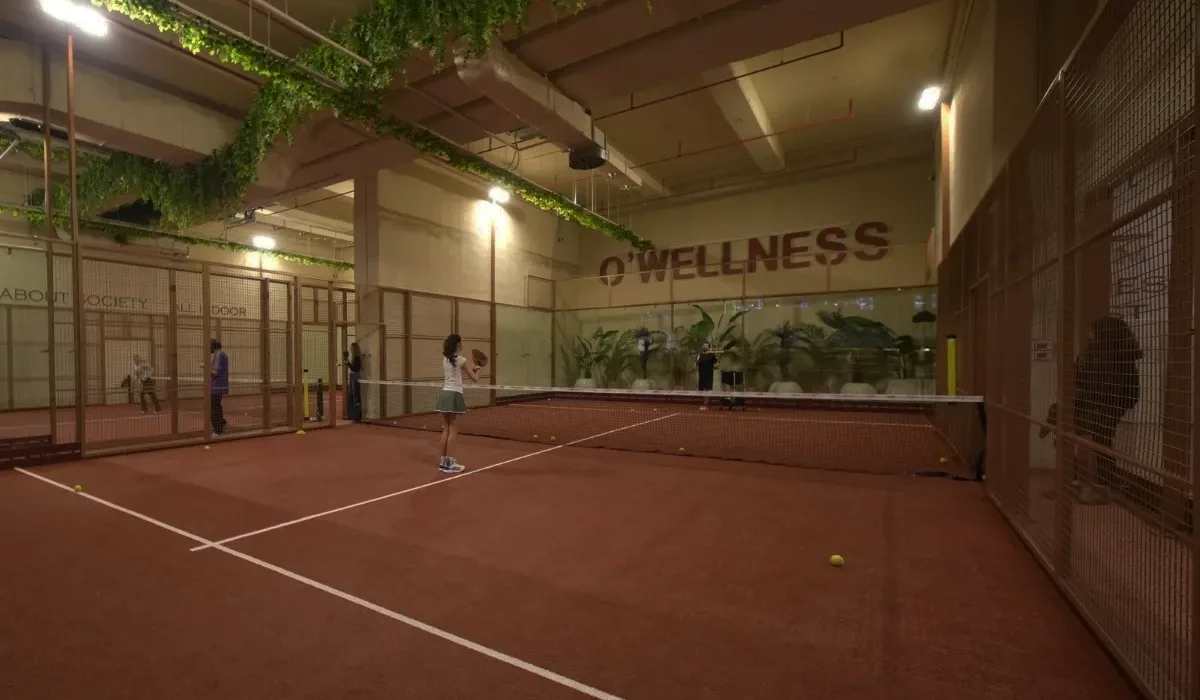
An important part of club events is also what happens after court. Gathering in the lounge after court time, chatting and reinforcing team spirit strengthens social bonds. The lounge area has a court view; it is suitable for social gatherings with coffee and light food options. Co-working and Wi-Fi are also available for work or between classes.
For athletes who want to recover after busy tournament days, recovery area offers options such as sauna, steam and massage. You can discuss on WhatsApp how these services could be included in club events.
How do you do it in Beytepe?
A simple way to take the first step as a club:
- Appoint a padel representative on the club's board.
- Write the club's name, number of members and expected event type to our WhatsApp line.
- First plan a trial event; start with a small group.
- After the trial, collect feedback and propose a regular time.
- Create a calendar for an in-club league or an inter-campus cup.
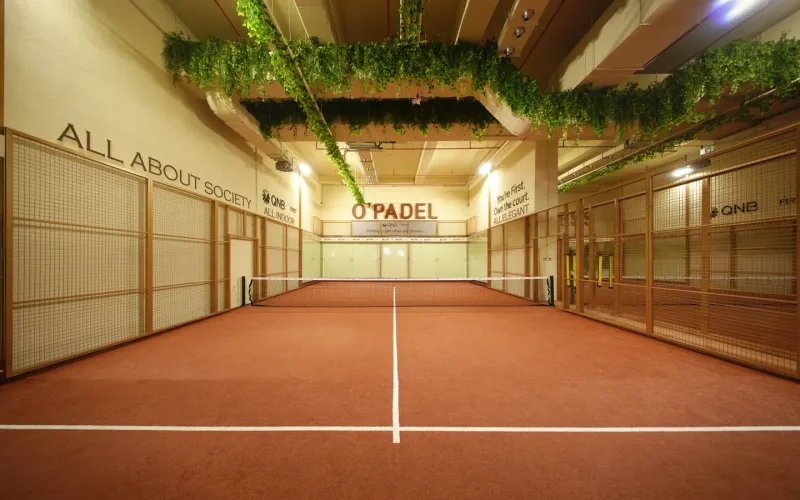
Membership is not required; every event can be done by booking and cancelled free of charge up to 24 hours in advance. This flexibility gives clubs peace of mind during exam periods and academic calendar changes. For general court information, see the padel courts page may be useful.
Conclusion: the club grows, the campus gets moving
A padel partnership with a university club means bringing Ankara's campus culture onto the court. Regular sessions, training days and tournaments keep members both active and engaged. Beytepe's proximity to campuses and its indoor courts make planning easier. If you want to prepare a partnership proposal for your club, use our WhatsApp line or contact page .
Frequently Asked Questions
Yes. Models such as regular court time, training days and tournament organisation can be discussed according to the club's needs. For terms, a discussion is held via our WhatsApp line.
Campaigns and special terms are set according to current policy. For exact information you need to write to our WhatsApp line with your club details.
Corporate team-building days are designed for groups of 8–40 people. For club events, you can confirm capacity on WhatsApp.
No, membership is not required. Bookings are made via WhatsApp and can be cancelled free of charge up to 24 hours in advance.
It suits university clubs in Ankara, primarily Hacettepe, Bilkent and METU (ODTÜ); the university cup targets teams from these three campuses.



 Padel Courts
