
Ankara padel racket the first question to ask yourself before buying shouldn’t be “which model” but “how many times have I tried it”. Padel rackets give very different playing feels depending on shape, weight and EVA foam density; so trying before you buy lets you make the right decision in the long run.
In this article we explain how you can get equipment in Ankara, how to evaluate store and online options, and why trying at Beytepe is a practical choice.
Why You Should Try Before You Buy
Padel rackets are made in three basic shapes: round, tear-drop and diamond. Round rackets emphasise control and diamond rackets emphasise power; the tear-drop shape offers a balance between the two. For a beginner, a round or tear-drop racket with medium-soft EVA foam is generally recommended.
Choosing a racket from its picture or price tag alone is risky; the weight distribution and grip feel in your hand can’t be understood without trying it on court. So, where possible, the healthiest method is to try several models on court before deciding to buy.
Store Options in Ankara
In Ankara, sports retail chains and some specialist padel/tennis shops sell equipment such as rackets, balls and bags. These shops usually have a wide range of brands, but it may not always be possible to hold and try every model.
When shopping in a store, telling the sales assistant your level (beginner, intermediate, advanced) and your playing style (control-focused or power-focused) makes it easier to get the right recommendation.
Pros and Risks of Shopping Online
Online platforms usually offer a wider variety of models and comparative pricing. But choosing a racket without ever holding it, just by looking at technical specifications, can be misleading, especially for beginners.
If you plan to buy online, first testing a model with similar specifications using rental or demo rackets at the club makes it easier to make the right choice afterwards.
Why Trying at Beytepe Is Practical
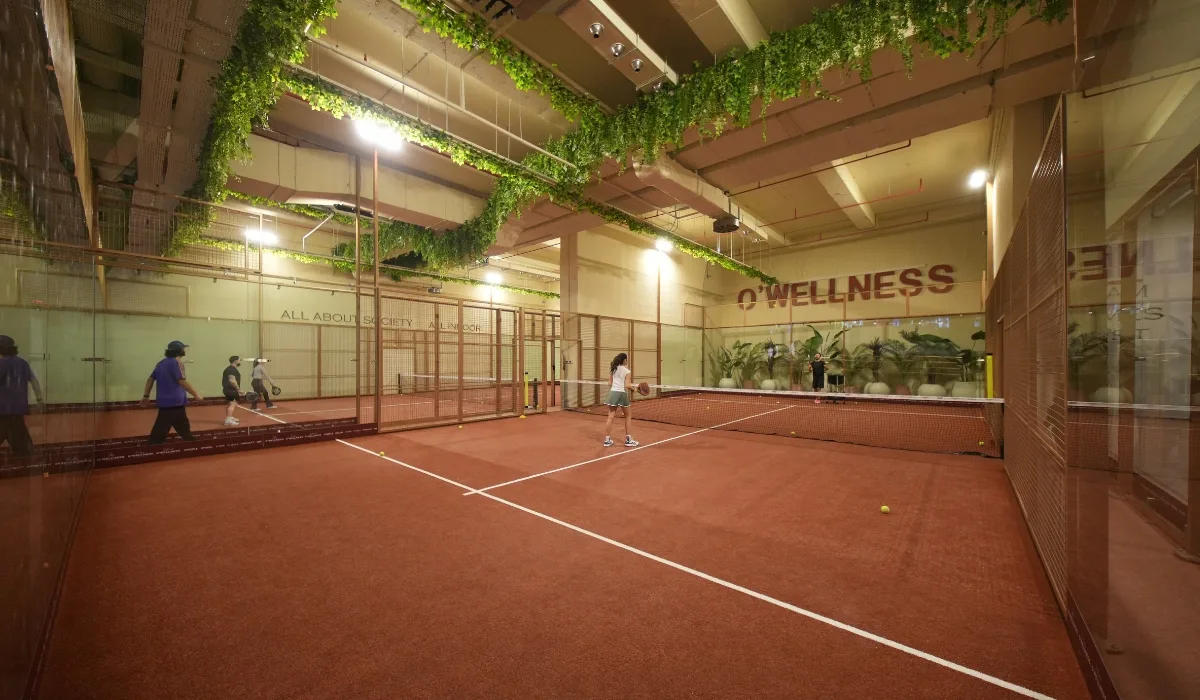
A court booking at O’Padel Beytepe comes with a racket and ball rental option. This lets you try rackets of different weights and shapes in a real match setting before deciding to buy.
This trial process is critical, especially for beginners: choosing your first racket wrongly can both increase the strain on your wrist and slow down your learning. If you're just starting padel lessons, getting a racket recommendation from your instructor is also a good starting point when you join.
Choosing a Racket for Your Level
| Level | Recommended shape | Foam density |
|---|---|---|
| Beginner | Round | Soft / medium |
| Intermediate | Tear-drop | Medium |
| Advanced | Diamond | Hard |
This table provides general guidance; for a final decision, trying a few models on court is always the more reliable method.
Ball Choice Matters Too
Another detail as important as the racket is ball choice. Ankara’s altitude and dry air affect ball pressure and bounce behaviour; if you want to look into this in more detail, see how Ankara’s altitude affects padel article.
The balls used at the club are generally chosen from FIP-approved models suited to indoor conditions, which provides a consistent playing experience.
Tips for Care and Longevity
- Don’t leave the racket in direct sunlight or in an extremely hot car; EVA foam can harden over time and lose its performance.
- After each use, check the frame and surface, and stop using it if there is a crack.
- Changing the grip tape regularly improves both comfort and control.
Why Weight and Balance Point Matter
As much as a racket’s weight, where that weight is concentrated on the racket (the balance point) shapes the playing feel. Weight distribution closer to the handle (low balance) gives a faster, more manoeuvrable racket, while weight closer to the head (high balance) gives more hitting power but less manoeuvrability.
Rackets with a low or medium balance point are generally recommended for beginners; this makes control easier and reduces the strain on the wrist. As they move up in level, players can turn to higher-balance models according to their own playing style.
A Budget-Based Shopping Strategy
Padel rackets are sold across a wide price range; there is a clear price gap between entry-level models and the top-end rackets used by professional players. For a beginner, rather than buying the most expensive model, starting with a mid-range racket and moving up to a higher model as your level progresses is the more sensible strategy.
This approach both avoids unnecessary spending and reduces the risk of making a high-budget investment before your playing style is clear. Trying rental rackets at the club gives you an extra data point before making this decision.
Accessories: Bag, Grip and Protectors
Besides the racket, there are a few accessories to consider: a racket bag protects the racket from knocks during carrying and storage; a spare grip tape prevents slipping if your hand sweats; and a racket edge protector slows wear on the frame when it touches the floor, especially on low shots.
Although these accessories may seem like a luxury at first, for someone who plays regularly they are practical investments that help extend the racket’s life.
Is Buying Second-Hand Equipment a Good Idea?
Some players prefer to get their first racket second-hand. Although this seems sensible budget-wise, it carries the risk of the EVA foam having hardened over time or of invisible micro-cracks in the frame. If you’re going to buy a second-hand racket, it helps to check the frame carefully for cracks and to ask about the racket’s age (year of manufacture).
For beginners, instead of buying second-hand, trying rental rackets at the club and then buying a new model within your budget is a more reliable route in the long run.
Choosing Equipment for Children
For young players in the children’s academy, standard adult rackets can feel both heavy and large. Shorter, lighter rackets made specifically for children are important for supporting proper technical development. Kids' academy getting guidance from the instructors on this is a practical starting point for families.
Seasonal Equipment Care
Ankara’s dry air and temperature swings also affect how equipment should be stored. Leaving the racket in an extremely hot or cold car boot for a long time can damage the structure of the EVA foam. Storing the racket at room temperature, away from moisture, during seasonal changes is a simple but effective measure for long life.
What to Look at When Choosing a Brand
There are dozens of brands on the padel equipment market; each brand has its own shape and foam technology. When choosing a brand, it’s more accurate to look not just at popularity but at whether it offers models suited to your own level and playing style. A top-end racket used by professional players can feel needlessly hard and uncontrollable for a beginner.
At this point, getting advice from the club’s instructors or experienced players is a practical way to find out which brand offers models suited to your level.
Renting or Buying a Racket: A Decision Guide
For someone who plays once or twice a month, renting a racket can be more economical than buying. For someone who plays regularly several times a week, owning your own racket is an advantage for both hygiene and getting used to that racket. As your playing frequency rises, it makes sense to revisit the decision to buy.
A Final Checklist for Buying Equipment
Before buying a racket it’s useful to ask yourself these questions: How many months have I been playing? Is my style control-focused or power-focused? How flexible is my budget? The answers to these three questions are the key criteria that will guide you in deciding the right shape, foam density and price range.
Is There a Racket Difference for Women and Men?
Technically there is no gender-specific distinction in rackets; the selection criteria are based on muscle strength, playing style and experience level rather than gender. Although some brands use names such as “women’s model” for marketing purposes, the real determining factors are weight and foam density.
One Last Trial Round Before Buying Equipment
Before deciding, trying different models back to back at the club and taking notes, such as which gave you more control over the ball and which tired you less, makes the decision process concrete. These notes make it easier to head for the right model when shopping in a store or online.
Spreading Your Equipment Investment Over Time
Instead of buying all the equipment (racket, bag, shoes, accessories) at once, first getting the most critical piece, the racket, and completing the other accessories over time is a strategy that makes the budget more manageable. This approach also lets you find out through experience which accessories you really need.
The Value of Local Club Recommendations
Advice from players who play regularly at Beytepe and from instructors can be more reliable than online reviews, because these people have the chance to observe your playing style and level first-hand. Taking such local advice into account speeds up the decision process.
The Long-Term Payoff of Choosing the Right Equipment
Playing with the right racket directly affects not only performance but also the enjoyment you get from the game. A player using a racket of the wrong weight or stiffness can both tire faster and see technical progress slow down. That’s why the time and attention spent on choosing equipment pays off handsomely in the long run.
Related Articles
Once you’ve chosen your equipment, if you want to build a community to play with regularly, see our our partner-finding guide, if you’re thinking of playing in the morning, see our morning padel article .
Other Details to Consider Besides the Racket
Shoe choice is at least as important as the racket; sports shoes suited to indoor courts with strong sole grip support both performance and safety by preventing slipping during sudden changes of direction. Instead of general-purpose running shoes, models with lateral support suited to racket sports should be preferred.
This detail is as worthy of attention as the racket, especially for frequent players, in order to protect ankle health.
In conclusion, choosing the right equipment should be a decision made without rushing and, where possible, by trying; this approach helps you protect both your budget and your enjoyment of the game.
The Value of an Instructor’s Advice in Choosing Equipment
Instructors who teach regularly at the club get the chance to observe which racket dozens of different students play most comfortably with. This accumulated experience can offer a more personalised recommendation than a shop assistant’s general product knowledge. When taking lessons, telling your instructor about your own playing style and the points you struggle with makes it easier to get tailored equipment guidance.
How to Take Your First Step at Beytepe
Before buying a racket, we recommend that you take a trial lesson, and try different rental rackets. That way you see which shape and weight suit you in a real playing environment, and you also reduce the risk of making an unnecessary purchase.
The right equipment, combined with the right technique, speeds up your progress. You can reach us through our WhatsApp line for a trial lesson or a court booking.
Frequently Asked Questions
Rackets with a round shape and soft or medium-density EVA foam generally give beginners easier control.
It’s not mandatory but it’s recommended. Rackets feel very different depending on weight and foam density, so deciding by trying on court is the healthier approach.
Yes, racket and ball rental is offered together with a court booking.
Online options offer greater variety, but buying without trying is risky. Getting a recommendation from an advisor in a store, or first trying a rental racket, is a safer route.
Protecting it from extreme heat, checking the frame and surface regularly, and renewing the grip tape will extend the racket’s life.


 Padel Courts
