

Padel cramp problems usually come down to one of three causes: insufficient warm-up, an electrolyte-fluid imbalance, or a sudden load beyond the fitness level you have built up to that day. The good news is that all three are largely preventable problems.
In this article we explain step by step why muscles suddenly contract and cramp, which situations increase the risk, and how to minimise it when playing on the indoor courts in Beytepe.
What is a muscle cramp and why is it common on court?
A cramp is an involuntary, painful contraction of a muscle that cannot relax. In padel it is seen most often in the calf, sole of the foot and hamstring muscles, because these are the groups that take the most load in sudden sprints, braking and changes of direction.
The general view in sports science is that cramps are not caused by a single factor but by several factors coming together: muscle fatigue, loss of neuromuscular control and fluid-electrolyte imbalance are among the main ones.
Lack of warm-up: the most overlooked cause
Suddenly sprinting hard or attempting a sudden smash on court with cold muscles forces the muscle to carry a load it is not ready for. This markedly increases cramp risk.
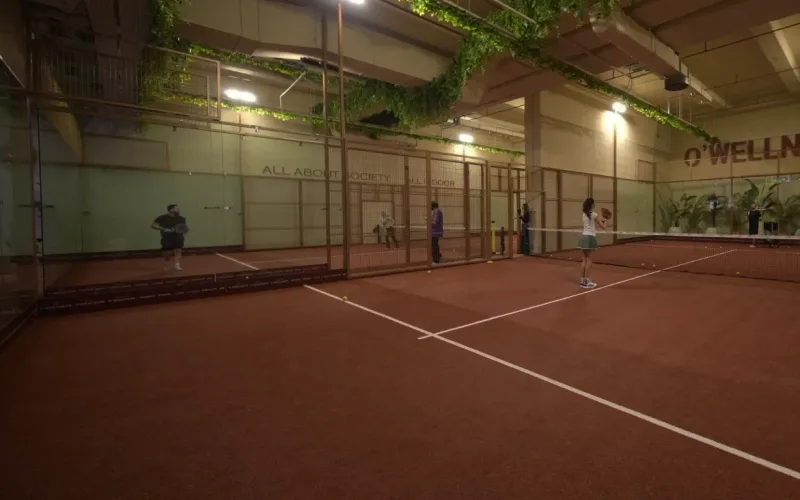
Coming in from the cold outdoors in Ankara’s winter months and starting to play right away delays muscle warm-up even further. Although this disadvantage disappears on the indoor, climate-controlled courts in Beytepe, it is still necessary to do at least 8-10 minutes of dynamic warm-up (light jogging, leg swings, side steps) as soon as you enter the court.
Electrolyte and fluid balance
With sweating, the body loses not just water but also electrolytes such as sodium, potassium and magnesium. A shortage of these minerals can disrupt the normal contract-and-relax signalling of muscle cells and raise the likelihood of cramps.
If you are going to play a long match or two sessions back to back, it may make sense to choose a drink containing electrolytes instead of just water. Including sources of potassium and magnesium such as bananas, dried fruit, leafy greens and nuts in your daily diet is also a protective habit in the long run.
How much fluid is enough?
No exact figure applies to everyone; the amount of sweating varies from person to person. The general rule is to drink water in small sips at regular intervals without waiting to feel thirsty, and to more than make up for fluid lost after the match.
Fitness and load management
Taking a long break and then suddenly entering an intense tournament, or staying on court much longer than usual, is another important factor that raises cramp risk in unprepared muscles. Building up your fitness gradually is a safer approach than sudden loading.
If someone who plays once or twice a week is suddenly going to take part in a four-hour tournament, it helps to build up fitness gradually beforehand through group lessons or training sessions. Before a monthly Americano regular but measured formats like these make this transition safer.
What to do when a cramp hits?
- Stop playing, slowly stretch the cramped muscle and gently massage it.
- Drink water or an electrolyte drink in small sips.
- Do not try to sprint again until the pain has passed; wait until the muscle is ready again.
- If it keeps recurring, choose to end play for the day and rest.
Practical steps to prevent cramps in Beytepe
Doing a few minutes of dynamic warm-up at home or in the changing room before coming to the indoor courts in Beytepe prepares your muscles regardless of court temperature. Keeping water or an electrolyte drink with you before and during the match is also a simple but effective precaution.
For regular players, the court + recovery packages at O’Spa Beytepecan reduce muscle tension with sauna and contrast therapy and help you arrive better prepared for your next session. In addition, the smoothie options in the loungeare a way to practically meet your electrolyte and nutrient needs after a match.
A shared culture of awareness on court
When you notice a match partner has a cramp, helping them - handing over water, gently supporting their muscle - should be a natural part of court culture. This kind of mutual attention both increases safety and strengthens the social and supportive side of the game.
For beginner players, seeing situations like this also helps them develop their awareness of cramps early on.
Special points to watch on court in winter
When you come in from the cold in Ankara’s winter months and step straight onto the court, your body’s core temperature may not yet have balanced with the air. Even if the court is warm, a body coming from the cold outside taking a little more time to warm up is a simple precaution that reduces cramp and general injury risk.
n
The benefit of keeping a training log
Briefly noting when and how long you played, the weather conditions and how you felt that day can help you see your own cramp pattern over time. You may notice that you always cramp at the end of the second hour, or with a particular fluid intake pattern; this kind of awareness offers a far more personal solution than general advice.
After keeping this record for a few weeks, sharing it with your coach can be a valuable source of data for small adjustments to your warm-up or fitness programme.
n
The contribution of a cool-down routine
Instead of stopping abruptly as soon as the match ends and heading to the changing room, a cool-down routine of a few minutes of light walking and stretching helps muscles shift gradually into rest mode. This transition can also somewhat reduce the muscle tightness you will feel the next day.
On the courts in Beytepe, taking a few minutes for this routine instead of leaving straight after the match can be a small but effective habit.
The misconception about salt intake
Some players think that restricting salt completely is healthy; however, in athletes who sweat heavily, excessive salt restriction can lead to a sodium imbalance and therefore an increased cramp risk. A balanced approach aims for a diet that is neither too salty nor entirely salt-free.
n
The indirect link to heart health
A player with good cardiovascular fitness tires less when playing at the same tempo, and this is an indirect factor that reduces cramp risk. The regular cardiovascular training we mentioned in our heart health article can also be considered part of your cramp prevention strategy.
n
The difference between a cramp and muscle soreness (DOMS)
A cramp should not be confused with the muscle soreness felt the next day (delayed onset muscle soreness, DOMS). A cramp is an instant, painful, involuntary contraction, whereas DOMS is a general tenderness that appears 24-48 hours after training, caused by unaccustomed or intense effort.
Their causes and management differ: while a cramp calls for an immediate response, rest, light movement and adequate protein intake may be enough for DOMS. Telling the two apart helps you choose the right prevention strategy.
A special note for beginners
Players new to padel may experience cramps or muscle soreness more often in the first weeks because of unfamiliar movement patterns. This is a normal adaptation process; trial lesson, and a gradual start can support the body in getting used to the new movement.
n
Does cramp risk change with age?
As we age, muscle flexibility and the capacity to regulate fluid balance can change somewhat; this can make some players feel that cramps become more frequent with age. This does not mean older players cannot play padel; it just means they need to take a little more care with warm-up, fluid intake and fitness management.
For middle-aged and older players who play regularly, not neglecting weekly fitness work continues to be one of the most effective ways of keeping cramp risk under control.
The relationship between shoes and cramps
A wrong or worn-out shoe can indirectly increase cramp risk by making the foot and calf muscles work extra to compensate. A padel-specific shoe with good sole support is a valuable investment for both injury and cramp prevention.
In our joint health article we cover shoe choice in more detail; the right equipment is a shared point of prevention for both joint and muscle health.
Keeping a cramp diary can be useful
If you get cramps often, noting under which conditions (a hot day, a long match, little sleep, not enough water) they appear helps you recognise your own triggers. This simple tracking lets you build a prevention strategy that is far more personal and effective than general advice.
n
The effect of sleep and general fatigue on cramps
Insufficient sleep interrupts the muscles’ repair and rest process and raises overall fatigue; a tired muscle is more prone to cramping than a rested one. If you have had a busy week and slept little, it may make sense to choose a more cautious pace on court than usual.
A regular sleep routine is a simple but effective precaution not just for general health but also for reducing cramp risk. Keeping the night before a tournament short can directly affect your performance and cramp risk the next day.
The temperature and humidity factor
In high temperatures and humid environments, sweating increases, which can accelerate electrolyte loss and raise cramp risk. When playing outdoors this factor can be out of your control; an indoor, climate-controlled court keeps the temperature steady and largely removes this variable.
Because you play at a similar temperature and humidity level all year round on the indoor courts in Beytepe, the weather-dependent part of cramp risk is significantly reduced; what remains are factors you can control, such as warm-up, fluid balance and fitness.
The role of flexibility work
Regular flexibility (stretching) work can help muscles become more tolerant of sudden loads by increasing their range of motion. Adding static stretches, especially for the calf and hamstring muscles, to your post-training routine can be a useful habit.
Doing these stretches not before court time but after it, or on a separate day, avoids straining muscles while they are cold. Some studies note that long static stretching right before training can temporarily reduce performance; so it is more appropriate to warm up with dynamic movements.
n
Learning your personal threshold over time
Everyone has a different threshold for cramp susceptibility; some players never get a cramp even after hours of play, while others may show symptoms sooner. Learning your own threshold by observing over a few months lets you personalise your preventive measures (warm-up time, amount of fluid) accordingly.
n
When should you see a doctor?
If cramps recur often, come with severe pain or affect your daily life, there may be a non-dietary cause behind it (for example, a circulatory or nervous system condition). In this case, consulting a health professional is the right thing to do.
When you get your warm-up, fluid balance and gradual fitness build-up right, you have time left to think about your game on court rather than cramps. To book a session on the indoor courts in Beytepe, or to get coach support with warm-up and fitness, you can message us on our WhatsApp line.
Frequently Asked Questions
It is seen most often in the calf, sole of the foot and hamstring muscles; these are the areas that take the most load in sprints and sudden stops.
Electrolyte imbalance is an important factor but not the only cause; lack of warm-up and sudden fitness loading also play a role.
You should stop playing, slowly stretch the muscle, drink water in small sips and avoid sprinting until the pain passes.
A dynamic warm-up markedly reduces cramp risk by preparing muscles for sudden loading, and in particular prevents sprinting straight from cold muscles.
Frequent and severe cramps can be a sign of another health problem; in this case you should consult a doctor.



 Padel Courts
