
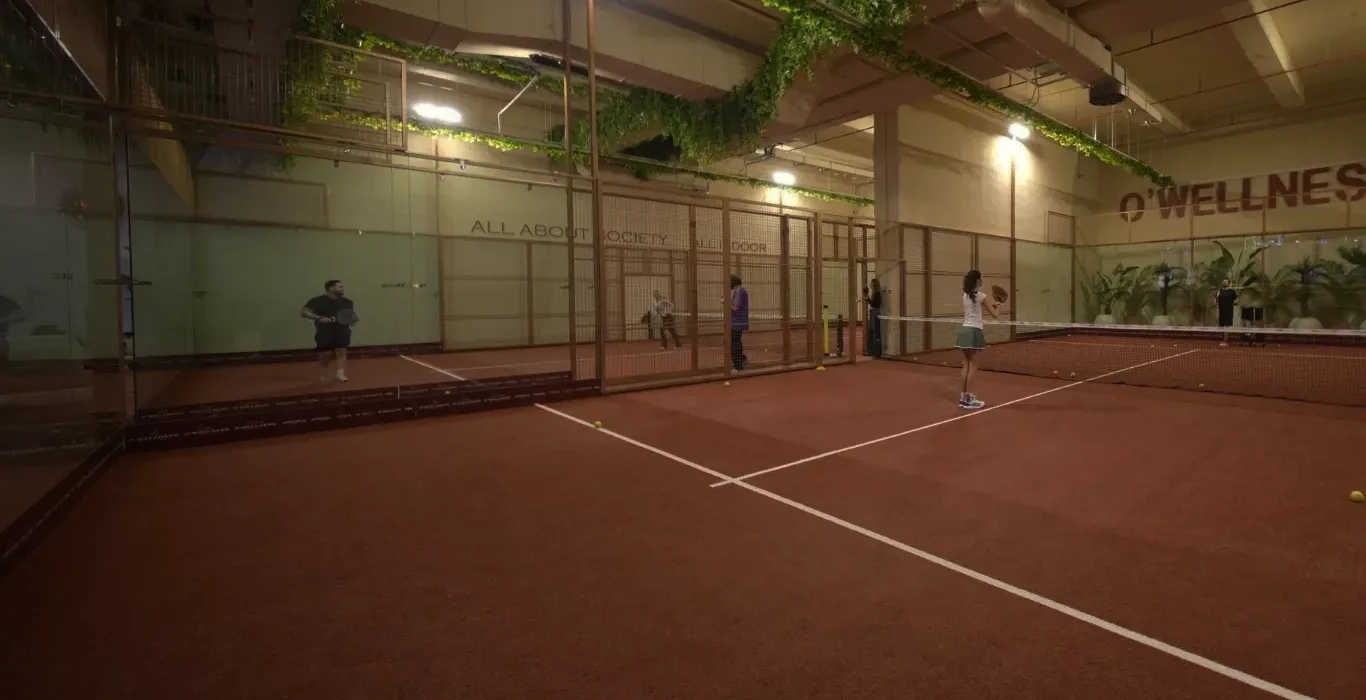
Padel heart health wise, it is a sport that carries the known benefits of regular cardiovascular exercise and, being social and fun, is highly sustainable. The alternation of short sprints and active rest periods works the cardiovascular system regularly.
In this article we cover padel's general effects on the heart, how you can track heart rate zones and how you can start safely on the indoor courts in Beytepe.
The known relationship between regular exercise and heart health
The generally accepted recommendation of health authorities is for adults to do at least 150 minutes of moderate-intensity aerobic activity a week. Because padel combines both cardiovascular and muscle-strength components, it can be an enjoyable way to reach this target.
It is widely accepted that regular aerobic activity contributes to balancing blood pressure, improving cholesterol profile and increasing the heart's overall endurance. Padel's variable tempo - short sprint, short rest - sets the ground for this kind of stimulus.
Padel's effect on heart rate: intermittent intensity
Padel matches progress not at a steady tempo but in an intermittent (interval) structure: in a rally the heart rate rises quickly and partly falls in the short break that follows. This profile can provide a cardiovascular stimulus similar to interval training.
As a general reference, maximum heart rate is estimated with the formula “220 – age”, and moderate-intensity exercise is aimed at 50-70 percent of this value. In padel it is normal to go above this range during rallies and drop below it in breaks; this variability is one of the sport's valuable aspects for the heart.
How can you track your heart rate?
Using a heart rate watch or smartwatch is a practical way to see your own intensity range. If you notice over time that your heart rate recovers faster when playing at the same tempo, this is a sign your cardiovascular endurance is improving.
The indirect contribution of being a social sport
Padel is a sport played in pairs with high social interaction. It is known that regular social activity contributes indirectly to heart health by lowering stress levels; that chronic stress has negative effects on the cardiovascular system is generally accepted medical knowledge.
In this respect padel offers a two-way contribution, providing both direct exercise and indirect stress management. In our article on padel's effect on mental health, we cover this topic in more detail.
Who should be careful, and when is a doctor's approval needed?
In cases such as a known heart condition, high blood pressure or just coming out of a long sedentary lifestyle, consulting a doctor before starting padel is an important step. A gradual start with the doctor's approval minimises risks.
For a healthy adult, padel is generally considered a safe activity; however, the phrase “generally considered safe” does not replace individual health history. If in doubt, having a check-up is the most correct approach.
Setting up a padel routine that supports heart health in Beytepe
The indoor, climate-controlled courts in Beytepe make it easier to set up a regular exercise routine independent of seasonal conditions. Instead of giving up exercising outdoors in Ankara's cold winter months, you can play at the same tempo in every period of the year.
Two or three times a week by renting a court or monthly Americano by joining regular formats such as these, you can turn both social and cardiovascular benefit into a sustainable habit. If you are just starting, it is recommended to begin at a low tempo with trial lesson, and increase intensity gradually.
The place of recovery days in heart health
Constantly training at a high tempo can create a load that gives the cardiovascular system no chance to rest. Adding at least one or two rest days to your weekly programme lets both muscles and heart recover and increases long-term sustainability.
On these rest days, low-tempo activities such as a light walk can support recovery without leaving the cardiovascular system completely idle; this kind of balance is considered a beneficial approach for both performance and health.
Ways of measuring your own progress
Noticing over time that you tire less in the same duration and that recovery between matches is faster is a concrete sign that your cardiovascular capacity is improving. Tracking this progress in a journal or a smartwatch app is a simple way of keeping your motivation alive in the long term.
n
The effect of group dynamics on motivation
Many people who start sport with a heart health goal find it hard to keep up a routine alone. Padel being played in pairs or groups solves this motivation problem naturally; knowing your partner is waiting for you reduces the chance of giving up playing that day.
This sense of social responsibility stands out as one of the most effective ways of keeping up regularity in the long term; it offers a far more sustainable structure than an individual cardio routine that demands discipline.
n
Padel in the context of smoking and heart health
For people who smoke or are in the process of quitting, a regular exercise routine can be a supportive tool for both motivation and regaining lung-heart capacity. It is important to make a gradual start under a doctor's guidance in this process.
The indirect link with weight management
Regular padel can support weight management indirectly by contributing to calorie balance; being within a healthy weight range is also a known factor that positively affects cardiovascular health. This makes padel not just fun but a long-term health investment.
n
The complementary role of nutrition in heart health
Nutrition is an important factor affecting cardiovascular health as much as exercise. In our weekly nutrition plan the balanced carbohydrate-protein structure we recommend, combined with a regular padel routine, supports the heart health goal in a more holistic way.
The link between cramps and endurance
Good cardiovascular capacity lets the muscles tire less over long rallies and so can also indirectly reduce the risk of cramps. This is one of the points where the heart health goal overlaps with performance.
n
Stress test and check-up recommendation
For people over 40 or with a known risk factor (family history, smoking, high cholesterol), having a comprehensive heart check-up and, if necessary, an exercise test before starting intense sport is a recommended step for a safe start. This should be seen not as a theoretical risk but as a responsible preparation step.
With your doctor's approval after the check-up, you can make a gradual start on the indoor courts in Beytepe and increase tempo and frequency over time.
Maintaining long-term motivation
The biggest enemy of a sports habit started with a heart health goal is loss of motivation and irregularity. Padel's social and competitive structure offers an advantage that keeps this motivation alive for longer than just running “for health”.
n
Comparison with other sports
While sports with a steady tempo such as running develop cardiovascular endurance in a different way, padel's intermittent structure works the cardiovascular system and other physical skills such as quickness and balance at the same time. This versatility makes padel a more comprehensive activity than a one-dimensional exercise.
If you have a cardiovascular goal and are simply bored of running, padel can be a good alternative that meets this need in a social and fun format.
Long-term tracking: heart rate recovery speed
Observing over time how quickly your heart rate returns to normal after a rally of the same intensity is a simple way to track your cardiovascular development. Improvement in this recovery speed can be a concrete indicator of regular play.
For players who use a smartwatch, this data makes weekly or monthly comparison easier and can raise motivation.
The contribution of playing with family or a group of friends
For those starting sport with a heart health goal, the biggest challenge is usually sustainability. Building a regular court routine with family members or friends creates a social support mechanism that increases motivation and continuity compared with exercising alone.
n
Difference in approach by age and fitness level
The way of starting padel should not be the same for a young person who exercises regularly and a middle-aged person just coming out of a long sedentary lifestyle. For the second group, a gradual introduction, starting with short, low-tempo sessions and increasing over time, is a safer route.
As age advances the cardiovascular system's recovery speed can also change; so paying attention to how you feel after an intense match is a valuable source of feedback for adjusting your tempo.
Indirect contribution to blood pressure and cholesterol
That regular aerobic activity contributes to balancing blood pressure and improving the lipid profile (cholesterol, triglycerides) is widely accepted knowledge in cardiology. Because padel offers this general benefit in an enjoyable and sustainable format, a positive effect on these indicators can be expected when it is done regularly.
For this effect to be observable, a regular routine lasting weeks and months is needed, not a one-off; so those who start padel with a heart health goal are advised to focus on sustainability instead of expecting short-term results.
It is also important not to overdo it
Exercise is beneficial for heart health, but overload, especially playing intense matches back to back without adequate recovery, can have the opposite effect. Including rest days in the plan means remembering that the cardiovascular system, like other systems, needs recovery.
If in one week you have both intense training and an intense work pace, deliberately lowering the tempo on court may be a wiser choice for long-term sustainability.
n
The value of starting with small steps
For those new to sport with a heart health goal, the biggest mistake is trying to start at a very high tempo from day one. Starting with short, low-tempo sessions and increasing gradually over weeks is a far more effective strategy for both safety and long-term motivation.
n
The benefit of moderate competition
Lightly competitive settings such as Americano or league formats can strengthen the cardiovascular stimulus by naturally raising tempo and intensity; experiencing this within an enjoyable framework without overdoing it is the most productive approach. Competition itself can also serve as an extra source of motivation for some players.
n
Supporting it with breathing work
Taking a few deep breaths in the short breaks between games can both help your heart rate recover faster and let you start the next rally more calmly. This simple breath awareness is a small but practical tool that supports cardiovascular recovery.
n
Final word: a conscious and enjoyable habit
Turning to padel with a heart health goal becomes a valuable gain in the long run with the right start and regularity. Continuing this journey not alone but with the community and coach support in Beytepe increases both your safety and your motivation.
n
Don't neglect recovery too
After an intense match, the sauna and contrast therapy at O’Spa Beytepe options can reduce muscle tension and support overall recovery. Regular recovery makes it easier to come to your next session better prepared and keep up the routine.
If you are looking for a regular, enjoyable activity for your heart health, booking a session on the indoor courts in Beytepe can be a good start. For questions, you can reach us on our WhatsApp line and request a trial lesson for a start at the right level.
Frequently Asked Questions
When played regularly, its interval-style intensity makes it an activity considered to support cardiovascular endurance.
If you have a known heart condition, you should always get your doctor's approval before starting; a gradual start is recommended.
During rallies your heart rate climbs quickly and partly drops during short breaks; this interval pattern varies with each person's fitness level.
The general recommendation is at least 150 minutes of moderate-intensity activity per week; two or three sessions a week can contribute to this goal.
Yes; thanks to the indoor, climate-controlled courts, you can keep your routine going without interruption through the winter months and maintain a regular exercise habit.


 Padel Courts
