
The padel backhand is a stroke that stays weaker than the forehand for many players but can be turned into a reliable weapon with the right technique. In this article we explain the difference between the one-handed backhand and the block backhand, the differences from tennis and especially ways to strengthen the backhand after the glass; On the indoor courts in Beytepe, and how to improve this technique.
Why does the backhand so often stay weak in padel?
Most players, because they naturally feel more comfortable on the forehand side, unconsciously spend more time on the forehand in training. Over time this causes the backhand to fall behind both technically and psychologically. Opponents also usually notice this weakness quickly and systematically send balls to the backhand side; we covered this topic finding your opponent's weak spot: tactical reading in padel in our article from the opponent's perspective.
One-handed backhand: basic mechanics
In the one-handed backhand the racket is used with one hand, with a swing towards the opposite side of the body. The basic elements of this stroke are:
- Trunk rotation: Turning the shoulders side-on to the ball increases the power and accuracy of the stroke.
- Compact backswing: In padel a short, controlled take-back is preferred over a wide preparation movement.
- Contact point: Ideally you meet the ball slightly away from the body, in line with your leading foot.
- Wrist firmness: If the wrist is left loose you lose control; a firm wrist keeps the racket face stable.
Block backhand: a safe option in defence
The block backhand is a technique of returning the ball, especially against fast balls, without a big swing, by holding the racket steady and using the ball's own energy. This stroke is especially useful in moments with limited reaction time, such as a strong smash or a fast volley. In the block backhand the aim is not to generate power but to get the ball back into play in a controlled way; this makes it an indispensable tool when defending at the net.
Differences from tennis: why the same technique doesn't work
When tennis players move to padel they usually try to keep up the habit of a big swing on the backhand; in the narrow padel court and an environment with glass this often causes problems. In padel:
- The court is narrower, so there's no room for big swings.
- Glass rebounds make the ball sometimes arrive at unexpected angles; this shortens preparation time.
- Because most points end near the net, the backhand often needs to be played as a volley or block.
These differences mean players coming from tennis need to relearn the padel backhand from scratch with a compact logic. If you are curious about the general differences between padel and tennis, and in our padel lessons, special work can be done for this transition.
Backhand after the glass: the toughest scenario
The ball coming to the backhand side after rebounding off the back glass is one of the toughest scenarios in padel because both the rebound angle and timing uncertainty increase. To succeed in this case you need two things: early positioning and compact stroke preparation. By improving your footwork you can increase your speed of positioning after the glass; on this, footwork in padel: the split step and small steps we recommend reading our article.
Another way to strengthen the backhand after the glass is to learn to meet high balls off the glass with techniques such as the backhand bajada; for the general logic of the bajada the bajada in padel: bringing the ball down off the glass article.
Practical tips for strengthening your backhand
A few practical approaches for players who want to improve their backhand:
- Consciously devote at least a third of your training to the backhand.
- Ask a partner to keep sending balls to your backhand side.
- Practise the block backhand and the full-swing backhand separately.
- Check contact point and trunk rotation with video analysis.
How do you improve your backhand technique at Beytepe?
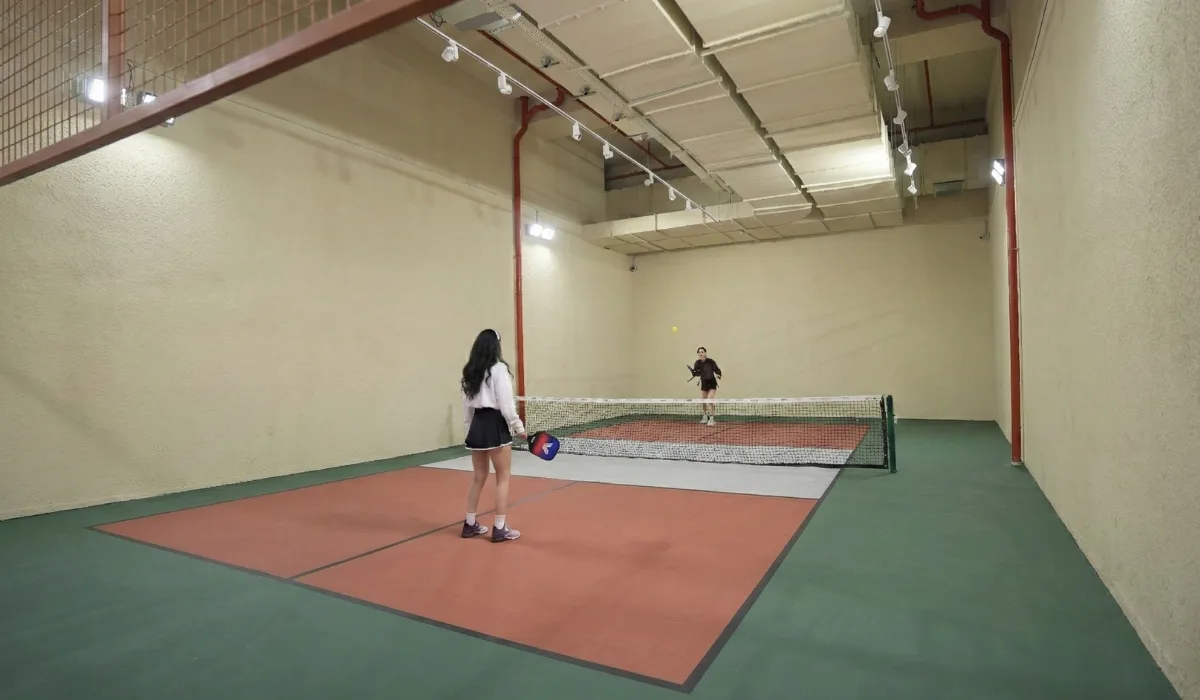
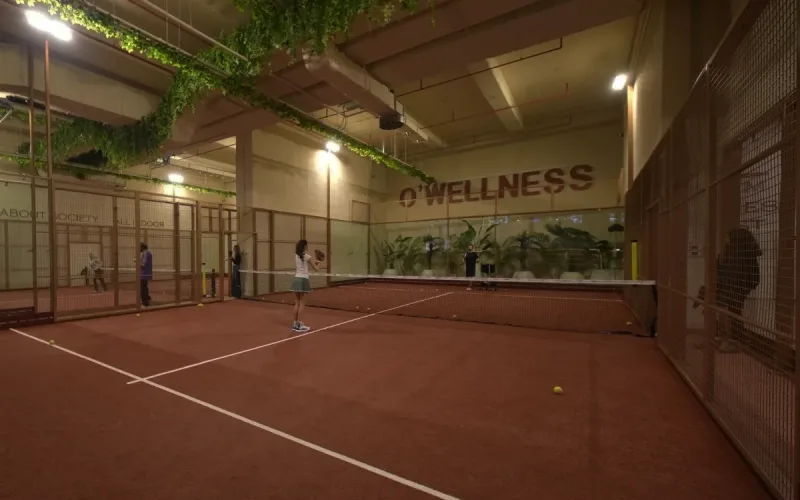
At O’Padel Beytepe's On indoor courts, fixed bounce and lighting conditions offer a suitable ground for repeating a technique that needs precise timing, like the backhand, with confidence. Working on both the one-handed and block backhand separately with a coach makes clear which technique to use in which situation.
If you want one-to-one support on this our padel lessonsand if you want to test what you've learned in a competitive setting, the monthly Americano tournaments .
Confidence in the backhand: as much a mental matter as a technical one
For many players, a weak backhand is not only technical but also a mental matter. A player who has made several errors in a row on the backhand may tend to play an even more nervous and uncontrolled stroke on the next backhand chance. To break this cycle, repeatedly and successfully applying the backhand under deliberately low pressure in training is the most effective way of rebuilding confidence.
Backhand volley: a different skill at the net
The backhand from the baseline and the backhand volley at the net require different skill sets. Because time is very limited at the net, the backhand volley relies almost entirely on the block technique: instead of a big swing, holding the racket steady and using the speed of the ball. Treating this skill as a separate training topic strengthens your net game significantly.
The two-handed backhand option: an alternative for some players
Some players, especially when they feel a need for power and stability, prefer a two-handed backhand. This variation can give more power and control than the one-handed backhand but slightly restricts reach. To work out which variation suits you better, it helps to try and compare both techniques with a coach.
Measuring backhand progress: a simple self-assessment
In your next few matches, roughly tracking what percentage of balls coming to your backhand side you successfully get back into play lets you see your progress concretely. This simple tracking method also reveals which areas (deep ball, short ball, high ball) you still struggle with and helps you shape your training focus accordingly.
Eye tracking and seeing the ball early on the backhand
On the backhand side, seeing the ball early is generally harder than on the forehand because body rotation happens at a different angle. Trying to track the ball as early as possible, from the moment it leaves the opponent's racket, buys the extra time needed for backhand preparation. This simple but effective habit reduces the “noticing too late” problem that lies at the root of many backhand errors.
Breathing and relaxation on the backhand
A general unease about the backhand usually leads to unnecessary tension in the shoulder and wrist area. Consciously relaxing the shoulders before the stroke and making a short exhale reduces this tension and gives a smoother swing. A tense backhand, even if technically correct, usually ends up uncontrolled and inaccurate.
Backhand development table
| Level | Focus | Common difficulty |
|---|---|---|
| Beginner | Basic grip and block technique | Tendency to avoid the backhand |
| Intermediate | Generating power with the one-handed backhand | Inconsistent contact point |
| Advanced | Backhand after the glass and spin control | Technique breaking down under pressure |
Assessing your backhand progress by these stages makes clear which training content to prioritise.
Developing your backhand together with your partner
Making it a training routine with a partner you play with regularly to consciously send balls to each other's backhand side helps both players improve this stroke. Mutual, purposeful training like this brings much faster technical progress than randomly played matches.
Patience and a long-term perspective on the backhand
The backhand is usually a stroke that develops more slowly than the forehand; this is not due to a player's shortcoming but to it being a side naturally practised less. Accepting this and seeing backhand development as a long-term rather than a short-term project prevents needless frustration and keeps motivation up.
Learning the backhand by watching
When watching the backhand technique of advanced players, paying attention to when and how they use the block backhand in particular gives valuable clues on when to bring this technique into your own game. Seeing that in professional matches the backhand is mostly used in defensive and transition moments helps you understand the stroke's role more clearly.
Making the backhand fun in a group
Organising short, fun-focused sets with a group of friends where you play using only the backhand reduces any unease about the stroke and lets you develop the technique in a more relaxed setting. Creative training formats like this make repetition less boring.
The importance of body posture in the backhand
In the backhand, turning the shoulders and hips at the right angle to the ball is decisive not only for power but also for balance. If the body opens too early (facing the ball square-on), the power and control of the stroke fall. Checking this posture detail in a mirror or on video raises your technical awareness.
The relationship between the backhand and racket choice
Some racket models, because of their weight distribution, can naturally make the backhand feel easier or harder. If you consistently struggle on the backhand, it may help to ask a specialist whether your racket's balance point suits you.
Seeing the backhand as a long-term investment
Although investing in the forehand gives faster visible results in the short term, long-term investment in the backhand raises your overall game level disproportionately, because it removes the weakness opponents target most often. So making the backhand a fixed component of your regular training plan is one of the investments with the highest long-term return.
Tracking backhand progress together with your partner
Doing a “backhand check” every few weeks with a partner you play with regularly, that is, deliberately sending balls to each other's backhand side and watching both of your progress, is a simple but effective way to keep motivation high. This kind of mutual accountability makes backhand work, which is easily neglected in individual training, more consistent.
The value of finding a regular training partner when developing your backhand
Backhand development progresses faster through regular, purposeful repetition with the same partner than through playing random different opponents. Finding a regular training partner in the Beytepe community makes it easier for both of you to deliberately send balls to each other's backhand and trade feedback. Regular partnerships like this are one of the most practical ways to speed up technical development.
Including the backhand in your seasonal training plan
At Beytepe, where you can play on indoor courts all year, you can keep backhand development going as a continuous training goal, not tied to any one season. This continuity prevents the technical regression that weather-related interruptions can cause.
Maintaining backhand confidence during a match
When you make several backhand errors in a row in a match, going back to the basic principles you worked on in training (trunk rotation, compact preparation, firm wrist) rather than hesitating on the next backhand chance speeds up your recovery. This short mental “reset” habit helps you maintain the backhand's reliability within the match.
Conclusion: the neglected stroke, a hidden advantage
The backhand is a stroke most players neglect but that becomes a big advantage when worked on properly. Developing the one-handed and block backhand separately and being prepared for after-the-glass scenarios removes the weakness your opponents target most often. If you want to improve your backhand on the courts at Beytepe, message us on our WhatsApp line trial lesson, .
Frequently Asked Questions
The one-handed backhand aims to generate power with trunk rotation and a full swing, while the block backhand aims to hold the racket steady against fast balls and make a controlled return using the ball's energy.
The tennis habit of a wide swing doesn't work in the narrow padel court with glass rebounds; you need to relearn with a compact backswing.
Because the ball's rebound angle and timing are uncertain, it calls for early positioning and compact stroke preparation; this is directly tied to footwork.
Deliberately devoting at least a third of your training to the backhand brings noticeable improvement over time.
Yes, in one-to-one and semi-private lessons at O'Padel Beytepe, the one-handed and blocked backhand can be worked on separately, with video analysis support.



 Padel Courts
