

The padel lob is a shot that sends the ball in a high arc over the opponents' racket reach into the back court, forcing them back from the net. In padel, the lob isn't decoration; it's the game's basic currency: because the net position wins points, a good lob is the most reliable way to take that position back from your opponents. The right lob is high enough and deep enough; if either is missing, the lob gives your opponent a smash opportunity.
In this article we cover the mechanics of the lob, the right height and depth criteria, the differences between forehand and backhand lobs, target zones and the mistakes most commonly seen at club level. As the O’Padel Beytepe coaching team, we teach the lob from the very first lessons, because a player who lobs with confidence stays alive in a match even if their technique is incomplete.
Summary
- A good lob meets two criteria together: a height your opponent can't reach and a depth that reaches the last meter before the back glass.
- The mechanics are soft: open racket face, a low-to-high motion, a high finish; you generate arc, not power.
- The default target is the deep corner on your opponent's backhand side.
- After hitting the lob, keep your alignment with your partner and move a few steps forward; staying put prolongs your defense.
- The costliest mistake is the short lob; even with enough height, without depth the lob becomes an invitation to smash.
Why the lob is padel’s most valuable defensive tool
In padel, the battle between two pairs comes down to a simple question: who's at the net, and who's at the back? The pair at the net hits the ball from above, controls the angles and finishes the point. The pair at the back has to wait, defend and look for an opening.
The lob flips this balance. When your opponents are at the net, a high, deep ball forces them to run back and play it off the back glass. While they run back, you move toward the net. One lob can change who owns the court in a single move.
The lob's second function is talked about less but is just as valuable: it buys time. When you're out of breath, off balance, or your positioning with your partner has broken down, a high ball buys a few seconds to reset. That's why the lob is also a tempo tool; if your opponent wants to play fast, a good lob disrupts their rhythm.
We cover the tactics of this transition in our article transition from defense to attack , and where to stand at the net in our article net position . For a decision tree on when to lob, see when to lob in padel article.
How to measure a good lob: height and depth
Lob quality is the product of two variables. A lob that's only high but lands short lets your opponent take one step back and smash. A lob that's only deep but travels low gets cut off with a volley by the player at the net, who just stretches out their racket.
The practical criteria are:
- Height: As it crosses the net, the ball should be at least one or two meters above the outstretched racket of the player at the net. On an indoor court, you also factor in the ceiling height.
- Depth: Your target is the last one-meter band in front of the back glass. A ball landing here either hits the glass directly or pins your opponent against it.
- Lateral position: Your default is the diagonal corner, your opponent's backhand side. This is the zone most likely to produce the weakest return.
- Arc shape: The ball's highest point should be between the net and the baseline. If the peak is too close to the net, the ball drops steeply and becomes ideal for a smash.
A very high and very deep lob, the globo, is the most extreme form of defense and requires a separate skill; the art of defending with the globo is the focus of our article.
Lob mechanics: step by step
1. Grip and preparation
Start with a continental grip. In the lob you need to keep the racket face open, and the continental grip lets you do this most naturally; details in padel racket grip our article. Lower the racket below waist height, behind where the ball will arrive. Keep your shoulders turned toward the side glass.
2. Feet and balance
Set up behind the ball rather than getting under it. Knees bent, weight on the back foot. A lob hit with an unbalanced body almost always lands short. Use crossover sliding steps when moving back; for footwork, see padel footwork our article.
3. Contact
Open racket face, motion from low to high. You carry the underside of the ball softly; you don't hit it. The contact point should be in front of your body, between knee and waist. Keep your wrist firm; a player who tries to lift with the wrist gains height but loses depth.
4. Follow-through
Finish by raising the racket up over your head. The finish height determines the lob's arc; a cut-short finish means a short lob. Shift your weight from the back foot to the front foot.
5. Post-shot move
Don't freeze after hitting the lob. If your opponents are running back, you and your partner move two or three steps forward together. Advancing without breaking alignment is critical; a player who moves up alone opens a lane in the middle. For partner coordination, see partner communication .
Forehand lob, backhand lob and lob off the glass
| Lob type | Difficulty | Key detail | Typical mistake |
|---|---|---|---|
| Forehand lob | Low | Carrying the finish over your head | Adding power and hitting the ball long |
| The backhand lob | Medium | Shoulder rotation and open racket face | Jamming the arm into the body and losing height |
| Lob off a ball coming back from the glass | Medium-high | Waiting for the ball to come off the glass and letting it drop | Hitting early and producing a short lob |
| Lob on the run (off balance) | High | Height first, depth second | Trying to save both at once and hitting into the net |
The backhand lob is the variation that needs the most practice at club level, because keeping the racket face open is harder on the backhand side. To solidify the basic mechanics, study backhand technique and forehand technique our articles. Lobbing a ball coming off the glass is also a wall-reading skill; wall play our article lays the foundation for this.
The lob doesn't improve when practised without a target. At Beytepe, with a coach you can make depth control measurable using back-wall target lob blocks.
When to lob and when not to
The lob is a powerful tool, but not every ball calls for one. The lob is the right decision when:
- Your opponents are at the net and you're defending in the back court.
- When returning serve, your opponent is rushing to the net; details in service return .
- You want to slow the tempo and catch your breath after a long rally.
- One of your opponents is clearly weak on high balls.
Avoid the lob when:
- You've completely lost your balance and can't generate height; this lob will land short.
- The ball came too close to your body; you can't open the racket face.
- Your opponent has a strong smash and you've started hitting short lobs in a row; as an alternative, chiquita try playing at their feet.
The six most common lob mistakes
- Short lob. The costliest mistake. Without depth, height is useless; aim for the last meter of the back band.
- Forgetting to carry instead of hit. The lob isn't a power shot. The moment you add power, the ball goes long or its arc breaks down.
- Lifting with the wrist. You gain height but lose control. The arc comes from the height of your finish, not your wrist.
- Getting under the ball. If you don't set up behind the ball, the contact point slides back and the ball rises steeply and lands short.
- Staying put after the lob. The point of the lob was to move forward; if you don't, you're just prolonging your defense.
- Lobbing to a single target. Every lob to the same corner gets read. Alternate between crosscourt and down the line.
Lob drill program
- Target band drill: Mark a one-meter-wide band in front of the back glass. Hit 20 lobs and count how many land in the band. Track this number week by week.
- Height control: Your partner waits at the net with their racket stretched out. The lob must get past without touching their racket; every ball that touches is an error.
- Lob off the glass: The feed comes to the back glass; you wait for the ball to come back and then lob. Balls hit early don't count.
- Backhand series: All 20 lobs on the backhand. Your lob won't be reliable unless you work on your weak side.
- Lob + advance: After each lob, move three steps forward with your partner, then return to position. You're making the move automatic.
For more options, see our list of 20 padel drills, and to see the whole family of shots, padel shot techniques guide take a look. How to respond to your opponent's lob is covered in bandeja, víbora and smash variations our articles; for starting the point, serve technique we have a guide.
What happens after the lob: completing the transition
You hit a good lob and your opponents are running back. The truly critical moment of the point starts right here, because the lob doesn't win the point by itself; it only creates an opportunity. Most club players waste that opportunity.
The right move is this: start advancing together with your partner the moment you hit the lob. The word together matters. A player who moves forward alone leaves a diagonal lane between themselves and their partner, and the opponent will find that lane even from a weak ball. The two of you should line up roughly level, between the service line and the net.
The second decision is how far to advance. If your lob is very deep and your opponent is playing it off the back glass, you can move up to the net; their likely reply will be a high, weak ball. If your lob landed at medium depth, stop and wait at the service line; your opponent may find time to hit a bandeja at you, and having advanced too far leaves you vulnerable at your feet.
The third decision is shot selection based on the reply. If the opponent had to jump, prepare the high volley or the smash. If the opponent produced a deep, low ball with a bandeja, don’t force it; send them back again with a second lob. In padel, hitting two, three or four lobs in a row is not weakness but patience; we explain why it wins in our slow-ball game article.
Learning to read your opponent's reply to the lob is also part of this transition. If your opponent turns sideways to the ball and takes the racket up by their ear, a bandeja is coming; if they lose balance and retreat, a high, weak ball is coming. This reading habit is covered in opponent analysis in our article, and the full tactical picture in the padel tactics guide .
Conclusion: Make Your Lob Measurable at Beytepe
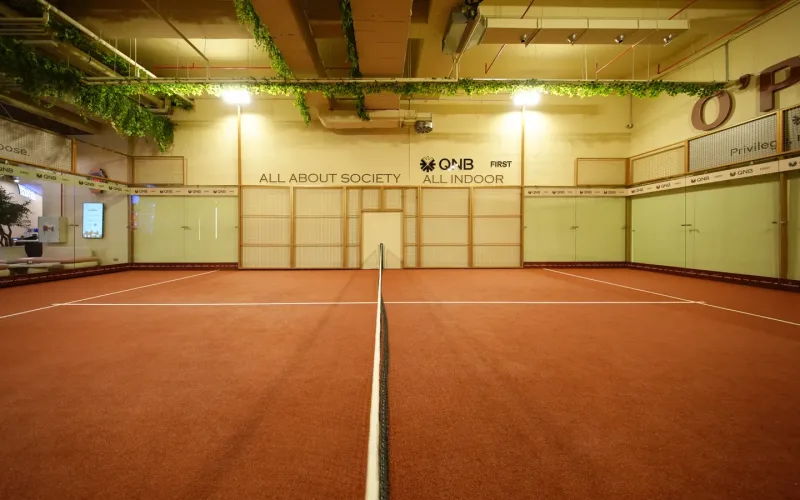
The lob is the least conspicuous shot in padel but the one that wins the most matches. Its improvement is also measurable: when you set a target band and track your hit count over weeks, you see progress concretely. Our indoor, climate-controlled courts in the O’Wellness Beytepe complex make this measurement meaningful; because they are unaffected by Ankara’s windy weather, the arc of your lob stays true, the same shot lands in a similar place every time, and you don’t lose a high ball against the LED lighting. Our players coming from around Beytepe, Çankaya, Ümitköy and Çayyolu lessons work on lob and defense blocks, Americano and level league and test it under pressure in their matches. For court options, our courts and see our reservation page you can take a look; membership is not required, a WhatsApp booking (+90 536 908 08 00) is enough.
Frequently Asked Questions
It passes clearly above the outstretched racket of the player at the net and lands in the last one-meter band in front of the back glass. The ball's highest point is between the net and the baseline; if the peak is too close to the net, the ball drops steeply and becomes ideal for a smash.
The three most common reasons: getting under the ball and letting the contact point slide back, cutting the finish short, and trying to lift with the wrist. Set up behind the ball, finish by raising the racket over your head, and think arc, not power.
If your opponents are at the net and comfortable with high balls, playing at their feet with a chiquita can be more effective. If your opponent is just coming to the net or is weak on high balls, the lob pays off more. Mixing the two makes you unreadable.
You need to factor in the ceiling height, but it doesn't make it harder; on the contrary, it makes it easier. With no wind or sun, the lob's arc isn't disrupted and the same shot lands in a similar spot every time. It's an ideal environment for learning depth control.
The mechanics, yes: an open racket face, a low-to-high motion and a high finish settle in with shadow reps. Depth control, however, requires real balls and a target band; a block with coach feeding or a ball machine is the most efficient approach.


 Padel Courts
