

Using the walls in padel is the skill of meeting a ball that bounces back off the back and side glass with a plan instead of panic. The short definition: in padel, the glass isn’t an obstacle; it’s the fourth player in the game. A player who can read where, how fast, and at what angle the ball will come back off the glass can turn even an opponent’s hardest shot into comfortable defense, and sometimes straight into attack.
In this article we look separately at the back glass, side glass and double glass (back then side, or the reverse) situations: how to read the ball, where the feet should go, the contact point, the racket face and the safest exit target for each scenario. As the O’Padel Beytepe coaching team, we consider wall reading the most decisive divide in padel, because a player who can't use the ball off the glass can't get above the 3.0 level.
Summary
- The glass slows the ball down and makes its direction predictable; a ball coming off the glass is usually easier than the first shot.
- Basic rule: don’t run with the ball; get to where it’s going to come back ahead of time and wait there.
- On the back glass, turn your hips toward the side glass, not the net; meet the ball in front of your body, low and from the side.
- On the side glass, the ball seems to speed up; stepping back and out is almost always the right answer.
- On a double glass, the goal isn’t to win the point but to buy time with a high, deep globo.
Why the glass is padel’s biggest advantage
Most beginners see the glass as a threat: the ball goes behind them, and panic sets in. But physics says the opposite. 12 mm tempered glass absorbs part of the ball’s energy, so a ball coming off the glass is slower than it was before hitting it. What’s more, the rebound angle is consistent and predictable.
The practical result: a ball that would be considered lost in tennis can be saved in padel. Even your opponent’s smash can come back off the back glass and give you another chance to hit. That’s why points in padel aren’t won with a single hard shot, but by stacking up positional advantages.
To understand how the court behaves, you need to know its geometry; we covered glass heights, the fence line, and surface characteristics in detail in our padel court dimensions and structure article. To see how roles are split between shots as a whole, our padel shot techniques guide provides a good framework.
Back glass: the scenario you’ll face most often
Your opponent sent a deep ball; it will hit the back glass behind you and come back into the court. Here’s the correct sequence:
- Decide early. The moment you see the ball land near the line, decide “this ball is coming off the glass” and drop the plan to hit it off the ground.
- Side-step past the ball. Don’t run in line with the ball; step out of its path, to the side.
- Give the glass your side, not your back. Turn your body sideways, positioned so your racket hand stays on the glass side.
- Wait. Wait for the ball to hit the glass and come back. The most expensive mistake in padel is trying to meet the ball before it comes off the glass.
- Meet it low and in front. Bend your knees; the contact point should be in front of your body, close to knee height.
- Send it up and deep. From this position, your goal isn’t to win the point; it’s to reset the rally with a high, deep ball.
This shot played off the back glass has its own name and its own technique: the contrapared, or back-wall shot. Our article that breaks down its mechanics step by step, contrapared technique is the natural follow-up to this section. If you want to turn high balls coming off the glass into attacks, you should also read our bajada technique article.
Side glass: reading the angle
A ball coming off the side glass is harder to read than one off the back glass. The reason is psychological: because the ball moves sideways, it visually seems to speed up, and the player lunges forward to catch it. That lunge is almost always a mistake.
The right answer goes the other way: take a step back and out. That keeps the area where the ball will come back in front of you and keeps your body from getting jammed. Keep the racket face open, give a short sliced reply, and always send the ball down the line along the side glass it came from rather than crosscourt; this buys you more recovery time.
The second feature of the side glass is that it gives you a free angle when you’re getting out of defense. When you send the ball parallel to the side glass, the opposing net player has to meet it far from their body and usually chooses to play it safe: which means a high ball comes back to you. That’s a quiet gain that sets up your next move. If you’re going to meet that high ball at the net, our how to hit a bandeja article, and if you’re looking for a slightly more aggressive answer, our víbora technique article is the next step.
The side glass is also a weapon in attack. A smash landing close to the side glass on your opponents’ side can bounce off the glass and leave the court. We cover this finishing pattern in our remate por tres article and, more generally, in see types of padel smash article.
Double glass: globo, not panic
When the ball hits the back glass and then the side glass (or vice versa), it has slowed down twice but also changed direction twice. That makes the ball’s incoming line harder to predict and raises the risk of error.
In a double-glass scenario, shrink your target. The goal is not a beautiful shot but staying in the point. The most reliable answer is a high, deep globo: it keeps the ball in the air for a long time and buys you and your partner time to reposition. We covered how to use this defensive tool in detail in our defending with the globo article; as for when to hit a lob, padel lob technique article gives you the decision criteria.
The second priority on a double glass is partner communication. Saying “mine” or “yours” is the only reliable mechanism that stops both players from going for the same ball. To build a shared language for this, our padel partner communication article includes practical phrases.
Wall scenarios decision table
Here’s the simple framework our coaching team uses to make quick decisions on court:
| Scenario | Footwork | Contact point | Safe target |
|---|---|---|---|
| Back glass, slow ball | Side-step next to the ball | Knee height, in front of the body | Deep, medium-height crosscourt |
| Back glass, fast ball | Move back and out; don’t crowd the glass | Waist height | High globo |
| Side glass | One step back and out | Between knee and waist | Down the line along the same side glass |
| Double glass | Open up wide, wait for the ball | Wherever possible, low | High, deep globo |
| Ball came high off the glass | Shift weight forward | Above shoulder height | Attack with a bajada |
There’s a recurring logic in the table: the harder the ball, the higher and deeper the target should be. You send an easy ball flat and deep, and a hard ball up and long. This principle alone significantly lowers your error rate in wall play.
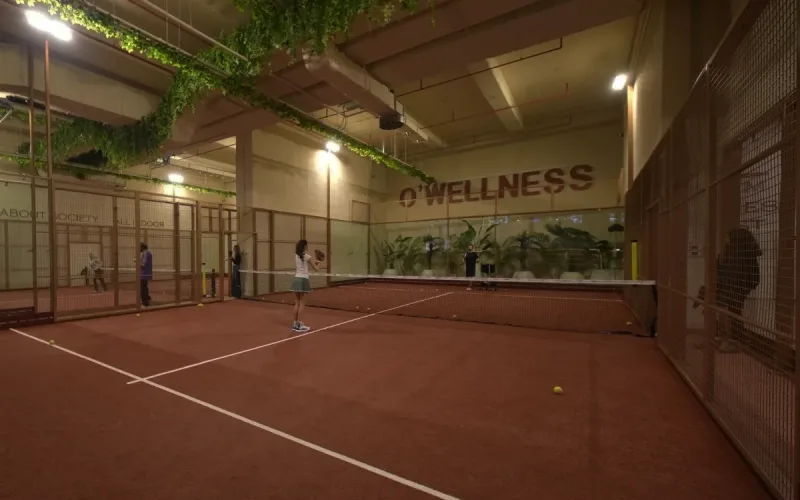
Wall reading is built through repetition, not through books. On our indoor courts at the O’Wellness Beytepe complex you can plan sessions dedicated to glass work; WhatsApp: +90 536 908 08 00.
The most common mistakes in wall play
- Running with the ball: If the ball and the player are on the same line, there’s no room to hit. Step past the ball and get outside it.
- Hitting without waiting for the glass: Meeting the ball before it comes off the glass is both difficult and unnecessary; the glass is giving you time, so use it.
- Getting too close to the glass: If your back is too close to the glass, there’s no room to take the racket back. Leave an arm’s length.
- Standing upright: A ball coming off the glass is usually low; if you don’t bend your knees, the contact point breaks down.
- Trying to finish the point: Trying a hard shot from defense is the most common way to lose points in padel.
- Locking your eyes on the ball: Completely losing track of the opponents’ positions while watching the ball come off the glass makes it impossible to choose the right target.
There’s a seventh item that belongs on this list: staying where you are after hitting a ball off the glass. If you’ve hit your way out of defense, depending on the quality of that ball, you need to either move up to the net or plan to reset at depth. The end of the shot isn’t the end of the rally; every save off the glass is the start of your next positioning decision.
All of these mistakes come down to footwork. We work through split step, side step and recovery mechanics in detail in our padel footwork article. If you want to make the call to switch from defense to attack at the right moment, transition from defense to attack article is the tactical companion to this one.
A three-stage plan for learning the wall
Wall skills don’t come all at once; they settle in over three stages.
Stage one: keeping the ball in play after the glass. Your goal isn’t direction, just getting the ball over the net. Ask your partner or coach for steady, medium-pace balls to the back glass. Your measure is simple: out of ten balls, how many stayed in play?
Stage two: direction and height. Once the ball stays in play, depth comes next. Your goal is to send the ball beyond the service line, ideally with enough height. At this stage you start making a conscious choice between a globo and a low exit.
Stage three: attacking off the glass. Now you turn high balls coming off the glass into attacks with a bajada and use the side-glass angle deliberately. At this level, the glass isn’t a defensive tool for you but a place to build play. You can find level definitions and the typical timeline for this progression in our padel level rating article.
It’s important not to skip stages. Trying to attack off the glass before mastering stage two means giving back the position you’ve earned with an error. Our coaches’ benchmark is clear: if a player can send eight out of ten balls off the glass beyond the service line, they’re ready for stage three.
The total time for all three stages depends on how often you play; for a player who practices regularly, the first two stages are a reasonable goal within a few months. If you want to practice on your own, our list of 20 padel drills includes wall exercises too.
Conclusion: Get to know the glass on the Beytepe courts
Using the walls is the one skill that sets padel apart from other racket sports, so learning it is synonymous with learning the game itself. The day you make waiting for the glass, letting the ball go past you and shrinking your target on difficult balls a habit, the rhythm of your matches changes. Our indoor courts in Beytepe speed up this learning: tempered-glass surfaces give a consistent bounce so it's easier to learn how the ball comes back, the indoor, climate-controlled environment, even on Ankara's windy, snowy or scorching days, doesn't disrupt reading, and professional lighting lets you see the ball clearly behind the glass. If you're coming from Çankaya, Çayyolu, Ümitköy or Bilkent and in our padel lessons, wall blocks, Americano and level league test what you’ve learned in our courts and reservation options .
Frequently Asked Questions
No, but it’s almost always an advantage. Hitting the ball off the ground before it reaches the glass means making a harder shot with less time. Because the glass slows the ball down, waiting gives you an easier, more controlled shot.
As long as the ball doesn’t bounce a second time on the ground after hitting the glass or the fence, play continues. A ball coming off the fence bounces more irregularly than one off the glass, so shrinking your target and giving a high, deep reply is the safest choice.
Usually for one of two reasons: your knees aren’t bent, so the contact point stays too high, or your racket face is closed. A ball off the glass comes in low; you need to bend your knees and open the racket face slightly to send the ball upward.
Yes. Feeding yourself medium-pace balls toward the back glass and playing the rebound is the fastest way to learn the bounce angle. Even a fifteen-minute block on court makes a difference; at the first stage, make your goal keeping the ball in play, not direction.
For most players, the side glass. The ball’s sideways movement makes it look faster and pushes the player to lunge forward. The right answer is to step back and out; this one correction fixes most side-glass errors.



 Padel Courts
