
Core training for padel isn't about doing sit-ups; it's about training your trunk to generate rotation, brake rotation, and stay stable while you're on one foot. The short answer: in padel, power comes not from the arm but from rotation that starts at the ground and transfers to the racket through the leg-hip-trunk chain. The core is the transfer link in that chain; when it's weak, the shoulder and elbow try to take over shot power, and the result is both a slower ball and a higher injury risk.
As the O’Padel Beytepe coaching team, we see core work not as the decorative part of conditioning but as a prerequisite for technical development. Below we explain exactly what the core does in padel, which exercises transfer directly to shots like the bandeja and smash, and how to set up a weekly plan. If you have back pain, a history of disc herniation or a recent abdominal surgery, consult your doctor before starting the programme.
Summary
- In padel, the core's job isn't to generate power but to transfer force from the legs to the racket without loss and to brake unwanted movement.
- Three functions are trained: anti-extension, anti-rotation, and power-generating rotation.
- Not sit-ups: plank variations, dead bugs, Pallof presses, medicine ball throws, and carries.
- A 12–20 minute block 2–3 times a week is enough for most club players.
- Core weakness shows up most as lower back and shoulder complaints after the bandeja, smash, and turning off the glass.
What does the core actually do in padel?
Think of a bandeja. Your feet press into the ground, your hips turn, your trunk carries that rotation, and your shoulder and arm uncoil last like a whip. In this chain, the trunk does two jobs: it transfers rotation from the hips to the upper body, and it prevents uncontrolled bending of the lower back during that transfer. The second job is at least as important as the first, because transfer is only efficient through a solid trunk.
If the core is weak, the body compensates. The most common compensation is starting the rotation from the shoulder, which means extra load on the posterior shoulder capsule and the elbow. The second most common is arching the lower back excessively to reach an overhead ball, the classic cause of lower back tightness after smashes. So core work isn't just about performance; it's also an injury prevention strategy. We cover the shoulder mechanism in detail in our padel shoulder injuries article, and the elbow side in our tennis elbow .
Where does the chain break?
Think of power transfer in padel as a four-link chain: ground contact, hips, trunk, arm. If one link is weak, the next one tries to cover the gap. If your foot drive is weak, your hips over-rotate; if your hip mobility is limited, your lower back over-rotates; if there's no trunk control, your shoulder overworks. The typical sign we see on court: a player speeds up their arm to hit harder, but the ball doesn't speed up, and their shoulder hurts the next day. That picture almost always comes from the trunk and hips, not the arm.
That's why core work shouldn't be thought of separately from technical lessons. When your coach says “start from your hips,” your trunk needs to be able to carry out that instruction. Seeing the control you build in the gym pay off on court is only possible by training both sides in the same week.
The core’s three functions and how they apply in padel
Thinking of the core as a single muscle group is misleading. Breaking it down by function makes choosing the right exercise easier.
| Function | On-court application | Sample exercise |
|---|---|---|
| Anti-extension | Keeping the lower back from arching during overhead smashes and bandejas | Plank, dead bug, ab wheel |
| Anti-rotation | Holding the trunk steady to block volley when your opponent hits hard | Pallof press, single-arm carry |
| Anti-lateral flexion | Keeping the trunk from collapsing sideways when reaching wide | Side plank, suitcase carry |
| Power-generating rotation | Generating speed on the forehand, víbora, and smash | Medicine ball rotational throw |
| Hip-trunk separation | Controlled lag of the upper body as the hips rotate | Cable rotation, reformer rotation |
Note: four of these five functions are about “resisting movement.” That's why core training for padel is largely stability training.
A 10-exercise padel core block
The list below can be done with no equipment, or with just a resistance band and a medicine ball. You don't need to do them all on the same day; splitting them into A and B and alternating twice a week is the most sustainable approach.
- Dead bug — 3×8 reps (each side). Extend your arm and leg without your lower back lifting off the floor. The cornerstone of anti-extension.
- Plank — 3×30 seconds. Squeeze your glutes, keep your ribs down. Increase tension rather than duration.
- Side plank — 3×25 seconds (each side). Carries over directly to padel's wide-reach position.
- Pallof press — 3×10 reps (each side). The band tries to rotate your trunk while you resist. The most padel-specific core exercise.
- Bird dog — 2×10 reps (each side). Builds coordination between the hips and the shoulder girdle.
- Suitcase carry — 3×20 meters (each side). Walking with a weight in one hand trains anti-lateral flexion in real-life conditions.
- Medicine ball rotational throw — 4×6 reps (each side). Throw sideways into a wall. The movement that teaches power production; do it after warming up, before you're tired.
- Medicine ball overhead slam — 3×6 reps. A top-down version of the smash chain.
- Hollow hold — 3×20 seconds. Teaches trunk tension in a single position.
- Half-kneeling cable rotation — 3×10 reps (each side). Teaches the trunk to rotate while the hips stay fixed; one of the best movements for developing bandeja feel.
Always put rotational throws at the start of the block and stability exercises at the end. Training explosive rotation with a tired trunk breaks down technique and needlessly strains the lower back.
Test your core: four simple benchmarks
Knowing where you stand before starting the program is the easiest way to track progress. The four tests below can be done at home with no equipment. The goal isn't to set records; it's to find the weak link and repeat the same tests six weeks later.
- Plank quality test: Can you hold for 45 seconds without your hips dropping or your lower back sagging? If your hips sink before time is up, your anti-extension is weak.
- Side plank symmetry test: Measure each side separately. If the difference is more than twenty percent, there's an asymmetry; this is very common in padel because of the dominant side.
- Dead bug control test: Can you do 8 reps of opposite arm-leg extensions without your lower back lifting off the floor? If it lifts, shorten the range of motion.
- Single-leg stance + rotation test: Standing on one foot, rotate your trunk left and right. If you lose your balance, you need to work on hip-trunk separation.
Whichever of these four tests you struggled with, double the reps for that function in the first two weeks of the program. Where you'll see it pay off fastest on court is an increase in the number of balls you can hit without losing balance. Doing the tests under a coach's supervision is more reliable than trying to spot compensations on your own.
Weekly plan: where should core work go?
The core block doesn't have to be a training day of its own. Here's the setup that works best for our club players:
- On match day: 10 minutes of stability (plank, dead bug, Pallof) after the match. Before the match, only light activation as a warm-up.
- On strength day: leg strength a full 12–15 minute block after the session.
- On rest day: reformer Pilates or mobility. This day doesn't tire your core; it improves control.
- During tournament week: lower the weight, keep the rotational throws, shorten plank durations.
This setup fits with the our 8-week conditioning program’s framework. Depending on which week of the program you're in, track movement quality first rather than rep counts.
The only way to tell whether core work pays off on court is to play. Book a slot via WhatsApp on our indoor courts in Beytepe and see the difference in your bandeja for yourself.
The 6 most common core mistakes
Players who train their core but see no difference on court usually have one of the following.
- Only doing sit-ups. Sit-ups flex the trunk forward; padel rotates it. The carryover is low, and they aren't an ideal choice for your spinal discs.
- Holding your breath. You need to maintain trunk tension without holding your breath; otherwise you lose control at the end of long rallies.
- Neglecting the hips. Rotation starts at the hips. If hip mobility is limited, the trunk has to over-rotate. That's why mobility routine is an integral part of the core program.
- Mistaking duration for quality. A sloppy three-minute plank is worthless next to a tight 30-second one.
- Training in one direction only. Everyone in padel has a dominant side; if you don't train both directions equally, the asymmetry grows.
- Pushing through pain. If you have sharp lower back pain or pain radiating into your leg, stop the exercise and see your doctor.
Reformer Pilates, physiotherapy, and recovery
The most common core question we get: should I train in the gym, or is Pilates enough? The practical answer is that they do different jobs. Free weights and medicine ball work develop power production; work done in a controlled, spring-resisted setting develops deep stabilization and hip-trunk separation.
The reformer pilates sessions at O’Wellness Beytepe fit this second need exactly: you work rotation movements with low joint load, under control where you can spot errors immediately. The gain we see most often in padel players is less of the lower back arching backwards during the bandeja. Low-impact, controlled work is also a good intermediate step for maintaining trunk control without loading the lower back.
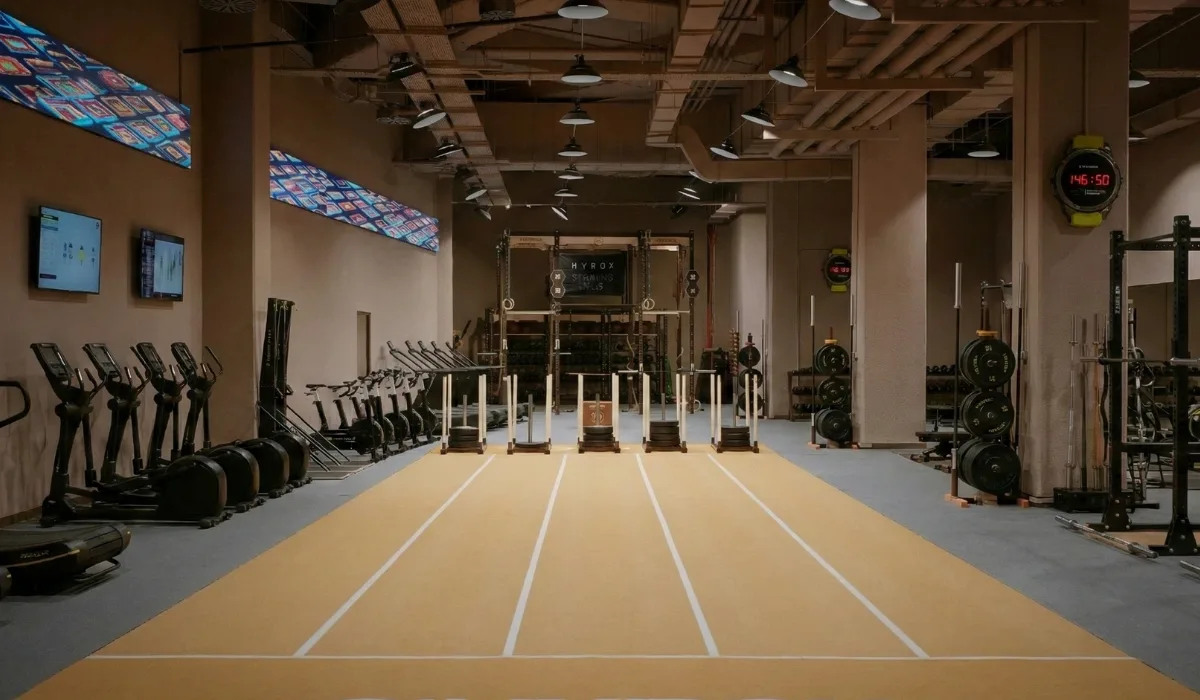
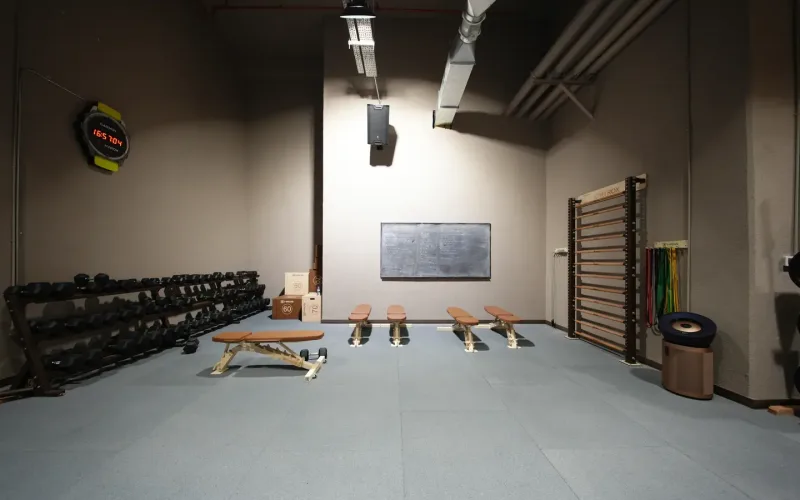
If you have a chronic lower-back complaint or a recurring trunk injury, the order is different: assessment first. The team working in the fitness and conditioning area at O’Wellness Beytepe can help you identify through movement analysis which function (anti-rotation or hip mobility) is lacking; if necessary you are referred to a healthcare professional and the programme is built on that. After an intense core week, the sauna and steam room at O’Spa Beytepe are a practical way to finish, easing tension in the trunk muscles; a sports massage works especially well for accumulated tension around the back and hips. If you opt for a cold plunge, medical approval must be obtained first if you have any cardiovascular condition.
Conclusion: Build your trunk, test your game in Beytepe
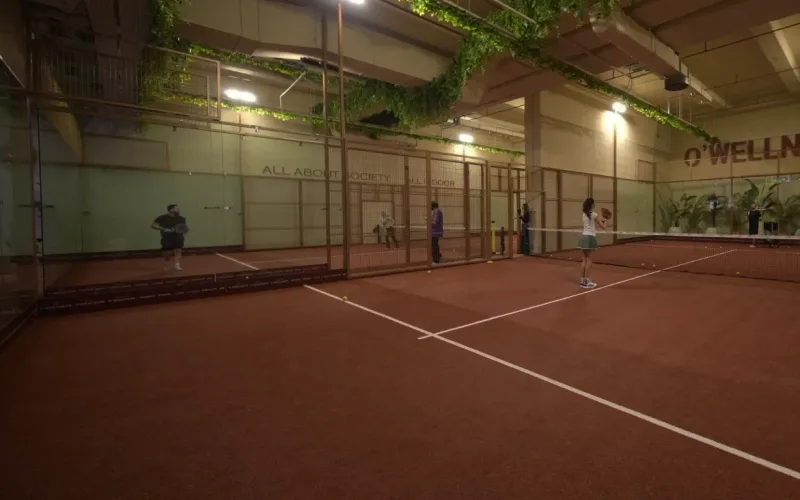
Core training for padel is neither complicated nor long. Twice a week, with five or six well-chosen movements, you can make your trunk able to produce rotation and brake unnecessary movement. You'll see the gain most clearly in the bandeja and smash; where you'll be most grateful is your lower back and shoulder. At the O’Wellness Beytepe complex in Çankaya, court, wellness and spa facilities are under one roof, so you don't have to spread this programme across different addresses; coming from Çayyolu, Ümitköy or Bilkent, you can complete both your training and your match in a single visit. Membership is not required; booking via WhatsApp (+90 536 908 08 00) is all you need.
If you don't know where to start, do a short assessment with our coaching team; knowing which function is weak delivers results much faster than doing a hundred random reps. Then add the recovery and wellness side to your plan as well.
Frequently Asked Questions
The core doesn't generate power on its own, but it ensures force from the legs and hips transfers to the racket without loss. When transfer improves, the same effort produces a faster, more controlled ball. You'll feel the clearest difference on overhead shots like the bandeja and smash.
Sit-ups aren't a priority exercise for padel. Movements that teach you to generate rotation and brake unwanted movement instead of flexing the trunk forward (Pallof press, dead bug, side plank, medicine ball throws) offer much better carryover. Focus on the quality of these movements rather than the number of sit-ups.
If you have sharp, persistent pain in the lower back or pain spreading down the leg, see your doctor instead of following a programme on your own. After assessment, controlled core work is recommended for many people, but which movements are suitable varies from person to person; the conditioning team at O'Wellness Beytepe and, if needed, a healthcare professional can help you make this choice.
Not entirely; it complements it. Reformer Pilates is strong on deep stabilization, hip-trunk separation, and control; for explosive rotational power you also need fast movements like medicine ball throws. Fitting both into your week gives the most balanced result.
Improvement in movement quality is usually felt in the first three to four weeks; noticing it in your shots on court can take six to eight weeks of consistent training. A short but focused block twice a week is far more effective than one long session a month.


 Padel Courts
