
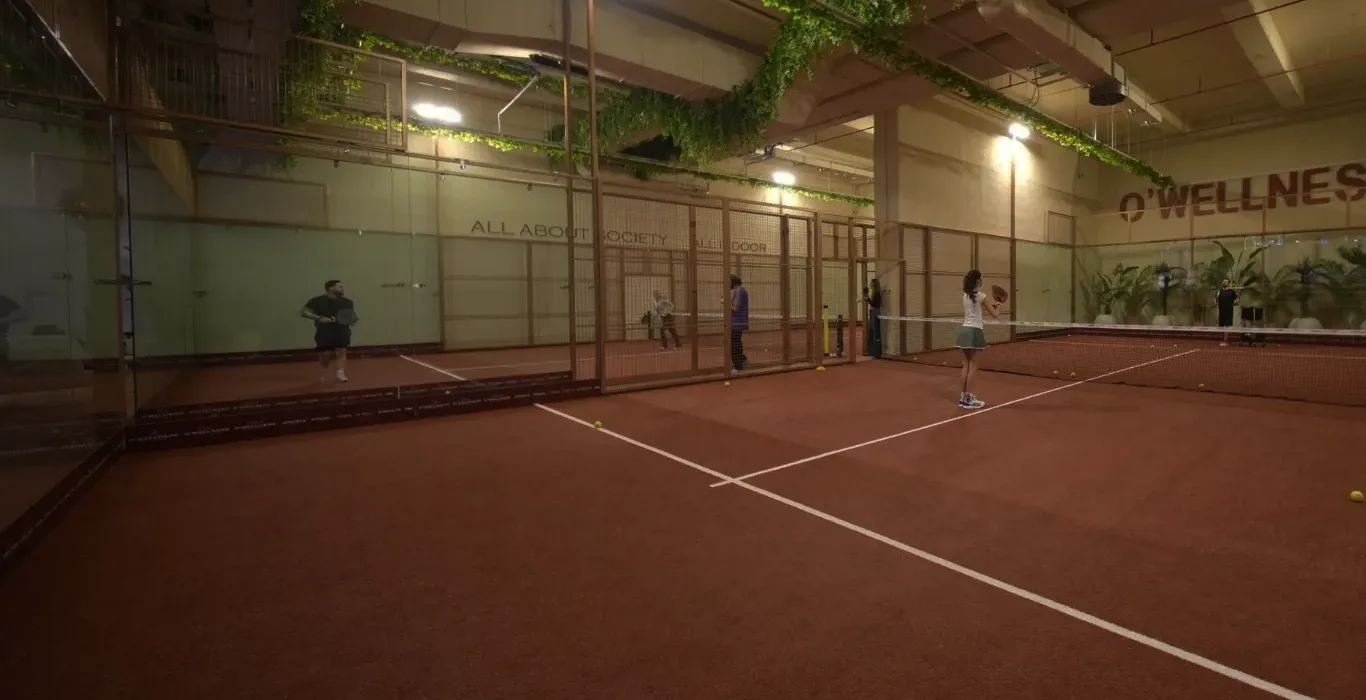
The padel serveis made by bouncing the ball on your own side first and sending it diagonally below waist height into the opponent's service box. This “underhand serve” rule is one of the most basic differences that sets padel apart from tennis, and counts as a fault if not done correctly.
In this post we explain the correct serve technique step by step, and show the most common mistakes and how you can improve this technique on the courts in Beytepe’.
The serve's special place in padel
One of the most surprising details for someone who has just started watching padel is that the serve isn't powerful and fast as in tennis, but controlled and strategic. This difference is directly related to the small size of the court: in a tight space a very fast serve can make you lose control after the bounce and give the opponent an easy ball.
So being a good server in padel is less about hitting hard and more about finding the right place and the right time. On the courts in Beytepe’, many beginners notice this difference in their first few lessons and shape their serve approach accordingly.
Padel serve rules: the basic framework
You must bounce the ball on the ground before serving; you can never serve out of the air (as in tennis). After the ball bounces, it must be hit with the racket below waist height and sent diagonally into the opponent's service box. The ball may go over the net and land in the opponent's service box directly or by lightly touching the net.
During the serve both your feet must be in contact with the ground and must not cross the baseline. Although these rules sound complicated at first, after a few tries they turn into a natural routine.
Correct serve technique, step by step
- Stance: Position yourself behind the service line, facing diagonally towards the target service box.
- Bounce: Drop the ball in front of you, slightly to the side of your foot, and let it bounce once.
- Contact: When the ball drops below your waist, hit it with an upward motion of the racket from below.
- Direction: Turn your wrist and torso towards the target service box to create a diagonal trajectory.
- Follow-through: Keep your balance after the shot and get ready to move into net play.
Working on these steps at a slow tempo, focusing first only on settling the right mechanics, is far more useful than adding power. In padel lessons, instructors generally teach serve technique by breaking it into parts like this.
Counting how many consecutive serves you can get in without a fault in your first attempts is a simple but effective way to see your progress objectively. Increasing this number over time also increases your confidence on court.
Target zones: where should you serve?
For beginners, serving safely, at medium pace and to the opponent's backhand side (usually the inner corner of the left service box for people who aren't left-handed) is a good starting point. At advanced level, serve variety becomes an important tactical weapon.
- Inner corner (T zone): Forces the opponent to react quickly, close to their net partner.
- Outer corner: Pulls the opponent out wide of the court and makes the return angle harder.
- Short, slow serve: Aims to draw the opponent forward and catch them unprepared.
Increasing serve variety makes it harder for the opponent to predict the return shot. If you want to look into this more deeply, return strategies article.
The continental grip: the right grip for the serve
How you hold the racket when serving directly affects control of the shot. The generally recommended grip in padel is the continental grip; the angle formed between the racket's broad face and the base of the index finger gives flexibility in both horizontal and vertical shots. This grip lets the wrist move naturally from below upward during the serve.
Players coming from tennis usually try to serve with a forehand grip habit, which makes ball control harder. Letting your instructor correct your grip in your first lessons is an important investment for the serve variety you'll gain later. In our article on racket grip we cover this topic in more detail.
Body position and weight transfer
A good serve isn't just about arm movement; transferring the body and weight correctly adds both power and consistency. A slight weight shift from your back foot to your front foot when serving adds natural momentum to the shot.
Turning the shoulders towards the target service box makes the diagonal trajectory more accurate. Although these details look small at first, in the long run they noticeably increase both the power and placement accuracy of your serve.
The most common serve mistakes
- Bouncing the ball too high: Disrupts timing at contact and raises the risk of hitting above the waist.
- Hitting with excessive power: Reduces control; the serve needs placement accuracy more than power.
- Using a fixed direction: Always serving to the same corner lets the opponent adapt easily.
- Foot fault: Crossing the baseline at the moment of the serve, or having your foot in the air, counts as a fault.
Most of these mistakes can be easily corrected with conscious repetition in the first few months. When practising regularly on the courts in Beytepe’, asking your instructor to review your serve mechanics on video is also useful.
Position after the serve: why it doesn't end with the shot
Switching straight to rest after a correct serve is a common mistake. In padel, the player who serves usually moves forward to the net after the serve to form the net line with their partner. This transition is a step that doubles the tactical value of the serve.
If you want to learn the timing of the run to the net after the serve, run to the net after the serve you can find this transition in detail in our article on the topic.
The slice serve and putting spin on the ball
Adding a slight slice (cut) to the serve can make the ball veer sideways after the bounce, making the opponent's return harder. This technique is applied by the racket touching the ball from below and slightly from the side, and is a common tactical variation among intermediate-to-advanced players.
Beginners are advised to settle a flat, consistent serve mechanic before moving on to the slice serve; otherwise trying to add spin can make control even worse. This order of progression is a principle we also stress in our article on common beginner mistakes .
Golden point and the serve: what changes under pressure?
Under the golden point rule applied at 40-40, the pair decides, before the match or on the spot, which side (right or left) the server will serve from. The pressure of this single-point moment shows how solidly your serve technique is settled; so regular serve practice is valuable not only technically but for mental preparation too.
A practical training routine for serve practice
To improve your serve you don't need an extra partner; you can also practise alone with a target (a cone, towel or marker) placed at the side of the court. Putting the target first at the inner corner, then the outer corner, and counting how many of ten serves reach it lets you measure your progress concretely.
- 10 serves flat and at medium pace, focusing only on rule consistency.
- 10 serves aiming at the inner corner.
- 10 serves aiming at the outer corner.
- 10 serves short and slow, simulating drawing the opponent forward.
Repeating this routine two or three times a week makes a difference in both the consistency and the variety of your serve within a few weeks. You can also book the indoor courts in Beytepe’ for this kind of individual work; the absence of wind makes results more reliable when doing target-based practice.
Serve differences for left-handers
For left-handed players, serve angles develop in the opposite direction to right-handers; this creates an unfamiliar return angle for the opponent. A left-hander's serve, especially when served from the right service box, can naturally create a more challenging diagonal angle to the opponent's backhand side.
Knowing this difference is useful both for left-handed players to realise their own advantage and for right-handed players to understand how to prepare against a left-handed opponent. In our article on padel for left-handers we cover this topic in more detail.
How do you improve your serve technique in Beytepe?
The serve is one of the rare moments in padel because it starts entirely under your control; you can prepare the ball however you like without any interference from the opponent. This makes it one of the most improvable techniques. In Beytepe’s On indoor courts, booking a regular session and focusing only on serve repetition can make a noticeable difference in a short time.
One-to-one padel lessons during lessons, asking your instructor to focus specifically on serve mechanics, combined with video analysis support, speeds up the development process. If you're just starting, spending your first few weeks focusing on consistency rather than power builds a more solid technical foundation in the long run.
How does serve rotation work between pairs?
Over a set, the serve rotates among the players in a set order: each game passes to the opponents of the side that won the previous game, and both players in a pair serve in turn. Knowing this rotation lets you keep track of who serves when and manage the match tempo better.
Beginner pairs sometimes mix up whose turn to serve it is; so confirming the serve order out loud at the start of the match prevents needless pauses. For more detail on the scoring system, see our scoring guide .
Taking serve practice into the match
Taking the serve technique you've developed in training into a real match requires a different skill, because time pressure and watching the opponent now come into play. Hitting a few practice serves before the match (as far as the rules allow), or starting with safe, medium-pace serves in the early games and adding variety over time, helps you keep your consistency under pressure.
In a tournament setting, for example at Beytepe’s monthly Americano events, testing your serve technique against different opponents is very valuable in practice; because each opponent has a different return style, you learn to adjust your serve to this variety.
Conclusion: the serve is the match's first tactical move
A correct padel serve is not just about applying the rules; it is a small tactical package that includes target choice, variety and positioning after the serve. Working on this technique regularly helps you gain an advantage from the very first second of the match. At the same time, the serve is the least tiring but highest-control moment of the match; this makes it one of the most productive parts to work on in training.
If you want to develop your serve technique under an instructor's supervision, reach us on our WhatsApp line you can book a lesson in Beytepe’.
Remember, the best serve is not necessarily the strongest but the most consistent and most varied. When you find this balance, your service game will no longer be stressful for you but a stage where you build an advantage.
Frequently Asked Questions
In padel the serve is bounced on the ground first and hit diagonally from below waist height; serving out of the air as in tennis is against the rules.
Bouncing the ball too high and trying to hit with excessive power are the most common mistakes; control should always come before power.
For beginners, serving at medium pace to the opponent's backhand side is safe; at advanced level, variations such as the inner corner, outer corner and short serve provide a tactical advantage.
After a good serve, moving forward to the net together with your partner lets you build pressure in the point and handle the opponent's return more easily.
By taking a one-to-one padel lesson you can ask your instructor to focus on serve mechanics and increase your consistency with regular repetition.


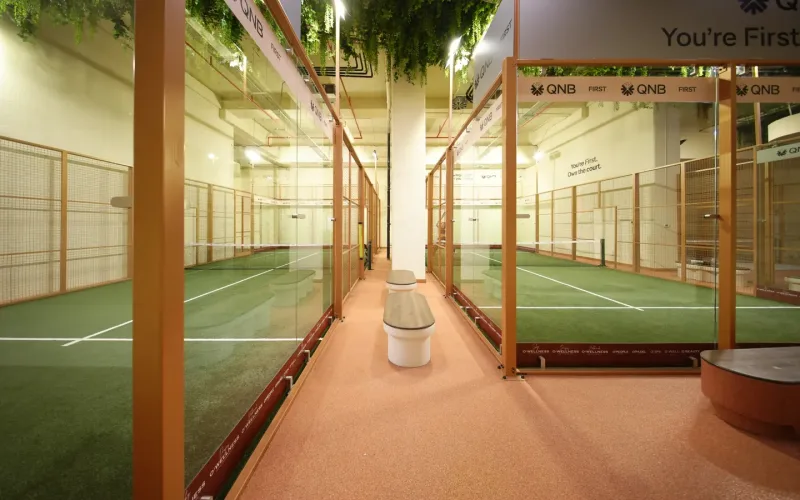


 Padel Courts
