

Padel mistakes usually come from positioning and mindset problems rather than technical shortcomings. Most beginners miss padel-specific dynamics because of habits they bring from tennis or other racket sports. Below we list the 15 most common mistakes and a concrete way to fix each.
Mistakes related to positioning and movement
1. Avoiding moving up to the net
Beginners generally feel vulnerable in the net area and prefer to stay on the baseline. Yet in padel, gaining net dominance is the most important factor deciding the fate of the match. Fix: make a conscious habit of moving up to the net after a serve or return.
2. Standing still, not doing a split step
Standing still while the opponent hits seriously lengthens your reaction time. Moving into a ready position with a small hop (split step) the moment the opponent hits the ball improves both your change of direction and your reaction speed.
3. Running to the net at the same time as your partner, leaving gaps
When both players move forward or back at the same time, big gaps open on court. Synchronised movement between partners is one of the most critical tactical elements in padel.
Mistakes related to shot technique
4. Trying to put too much power into the ball
The padel court is small and the glass keeps the ball in play; so hitting hard like in tennis usually leads to errors. Control and placement are worth far more than raw power.
5. Trying to hit with the wrist
Hitting with a wrist movement both lowers accuracy and increases injury risk. The power of the shot should come from shoulder and trunk rotation; the wrist's job is only to stabilise the racket.
6. Glass panic: fear of missing the ball off the glass
Beginners panic when they see a ball coming off the back glass and hit too early or too late. Learning the angle a ball will take off the glass takes time; the best way to practise is to build the habit of reading rebounds off the glass. For detailed technique, how to play the ball off the back glass article.
7. Serving too fast and without control
The serve in padel is not a weapon that wins the point directly; the aim is an accurate, diagonal start. To develop your serve technique step by step, see our serve technique guide .
Tactical and decision-making mistakes
8. Playing every ball like a winning shot (smash)
Trying a smash at every opportunity increases errors. The smash should be chosen only at a moment of clear advantage, on balls arriving at the right height; otherwise patient play wins more points.
9. Not using the lob enough
Beginners generally don't use the lob defensively, or at all. Yet a good lob pushes the opposing pair at the net back and hands control to you.
10. Not trying to read the opponent's weak side
Rather than playing randomly through the match, noticing early whether the opponent's backhand or their recovery after the glass is weak changes the course of the game.
11. Not communicating with your partner
Because padel is a doubles sport, even simple verbal signals like “mine” and “yours” prevent confusion. Playing silently can lead to both players going for the same ball or neither going.
Mental and habit mistakes
12. Losing morale after every point
Moments like the golden point create high tension in padel; but losing heart after dropping a point harms the next point too. A short breath and reset routine works here.
13. Going on court without warming up
Starting hard shots with cold muscles raises the risk of injury, especially around the shoulder and elbow. A short warm-up routine greatly reduces this risk.
14. Continuing to play with the wrong racket grip
Using a forehand grip out of tennis habit instead of the continental grip creates a technical limitation on many shots. To learn the right grip, see our racket grip guide .
15. Going into a match without fully knowing the rules
Uncertainty about scoring, serve and glass rules leads to needless arguments on court. Before going into a match, clarifying the scoring system makes things easier.
How do you get rid of these mistakes at Beytepe?
Almost all of these fifteen mistakes can be corrected quickly with the right guidance. In our lessons in Beytepe, our coaches spot these recurring mistakes early, especially in beginner players, and correct them with individual feedback. Thanks to the video analysis option, you can see concretely which mistakes you are making by watching your own shots.
The fastest way to correct mistakes is to play regularly. Joining our monthly Americano tournaments is a good way to test the techniques you've learned under real match pressure.
Patience is the greatest teacher
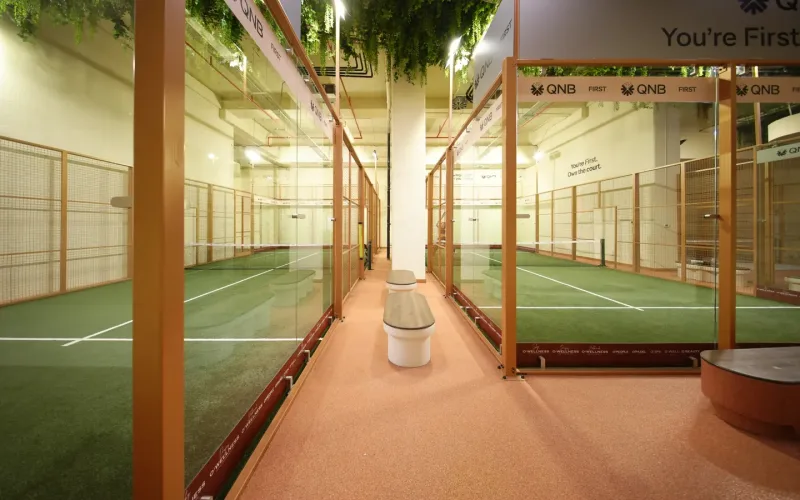
Almost all of these mistakes fade on their own over time with regular practice. What matters is to see each mistake not as a failure but as an opportunity to improve. On our indoor courts at Beytepe, you can keep up this progress all year round, unaffected by weather conditions.
The first step in noticing mistakes: awareness
Most of these fifteen mistakes repeat as long as the player is unaware of them. Watching your own game, asking a friend for feedback or recording a video are the most practical ways to see which mistakes repeat regularly. Without this awareness, technical correction efforts usually stay superficial.
Coaches play a critical role at this point; they can spot, from the outside, habits the player can't notice themselves. That is why taking regular lessons is valuable not only for learning new techniques but also for correcting existing mistakes.
The order for correcting mistakes: where to put priority?
It isn't realistic to try to fix all fifteen mistakes at once. Usually mistakes related to safety and basic technique (wrong grip, lack of warm-up) are tackled first, then positioning mistakes (not moving up to the net, not doing a split step), and finally advanced tactical mistakes (reading the opponent, using the lob).
This step-by-step approach lets the player feel concrete progress at every stage and keeps motivation high.
Analysing mistakes together with your partner
Because padel is a doubles sport, some mistakes come not from the individual but from pair dynamics. Doing a short review with your partner after the match, in which moments gaps opened, on which balls you both hesitated, lets you improve as a pair, independently of individual training.
For a more systematic approach to this, see our match analysis guide .
How the mistake-correction process works at Beytepe
In our lessons at Beytepe, our coaches note the student's recurring mistakes in the first few sessions and build a personalised work plan from them. This approach lets each player progress according to their own needs rather than a general curriculum. The video analysis option is an effective tool, especially for seeing grip and positioning mistakes concretely.
The relationship between mistakes and injury
Some of these fifteen mistakes affect not only performance but also health. Hitting with the wrong grip and wrist movement can lead to elbow and wrist pain over time, while starting hard shots without warming up increases the risk of muscle and tendon injury. So correcting technical mistakes protects not only the quality of your game but also your long-term health as an athlete.
A special note for adult beginners
Players who start sport as adults generally move more cautiously than children, which means they make some mistakes (like using excessive force) less often. But in the same group they may need more work on flexibility and reaction speed. To strike this balance, it helps to follow a regular, gradual training programme.
Turning mistakes into a development map
Rather than trying to fix all fifteen mistakes in one go, focusing on one or two mistakes each week is a more sustainable approach. This way progress becomes concrete and measurable; the player can clearly see in which areas they have improved.
Is it possible to get rid of these mistakes completely in the long run?
Even experienced players can slip back into some of these mistakes from time to time; old habits can resurface, especially under fatigue or stress. So the goal is not to “eliminate them completely” but to reach a level of awareness at which you notice them and correct them quickly. Continuing to play regularly is the most natural way to keep this awareness alive.
The role of equipment in reducing mistakes
Some mistakes come not from technique but from equipment. For example, playing with a very heavy racket can increase the tendency to hit with the wrist, while playing in shoes with slippery soles can trigger positioning mistakes. Choosing the right equipment is a complementary factor that makes technical corrections more lasting. If you can't decide what equipment you need on court, courts you can try different options with rental equipment.
Will you correct mistakes faster in a group lesson or an individual lesson?
Group lessons make you feel you are “not alone,” because the mistakes show up in other students too, and provide social motivation; individual lessons give feedback directly tailored to you, so they are more effective when you want to correct a specific mistake quickly. For many players the ideal approach is regular group lessons plus an occasional one-to-one lesson.
Keeping a simple log to track mistakes
Briefly noting after each lesson which mistake you noticed and where you improved lets you see your own progress line over time. This simple habit is a concrete tool that motivates long-term progress in particular.
The benefit of reviewing mistakes in bulk
Reviewing these fifteen mistakes again at regular intervals (for example every month) lets you see clearly in which areas you have made progress and which still need attention. This kind of periodic self-assessment is a valuable discipline tool, especially for players who train on their own.
The value of sharing mistakes within the community
Openly sharing your own mistakes with other players lets both you and those who listen learn from them. At the social match nights at Beytepe, this kind of experience sharing is becoming a valuable learning resource for beginners; everyone has made the same mistakes at some point, and this shared experience strengthens the community bond.
Finally: mistakes are proof of progress
After reading these fifteen mistakes, you may have recognised a few in yourself; this is perfectly normal and even a positive sign, because awareness is the first step of change. No player starts without mistakes; what matters is to work on them consciously instead of ignoring them.
One last note
Being aware of these mistakes is the first step to correcting them quickly and having a more enjoyable playing experience.
Your next step: practising on court
Having read these fifteen mistakes doesn't mean you can fix them automatically; the real change happens on court, through repeated practice. Focusing specifically on one or two items from this list in your next lesson is the most effective way to turn your general awareness into concrete progress.
Every player who notices their own mistakes and works on them makes clear progress in a short time.
If you would like to identify your own mistakes under a coach's supervision, you can reach us on our WhatsApp line for a trial lesson.
Frequently Asked Questions
Avoiding moving up to the net and trying to put too much power into the ball are the two most common mistakes.
Learning the angle a ball takes off the glass takes time; regular practice and repetition under a coach's supervision is the most effective method.
The smash should be chosen only on balls that give a clear advantage and arrive at a suitable height; trying a smash on every ball increases the error rate.
The continental grip lets you switch quickly between forehand and backhand; the wrong grip creates a technical limitation on many shots.
Taking regular lessons under a coach's supervision and watching your own shots with video analysis is the most effective way to notice and correct mistakes quickly.



 Padel Courts
