
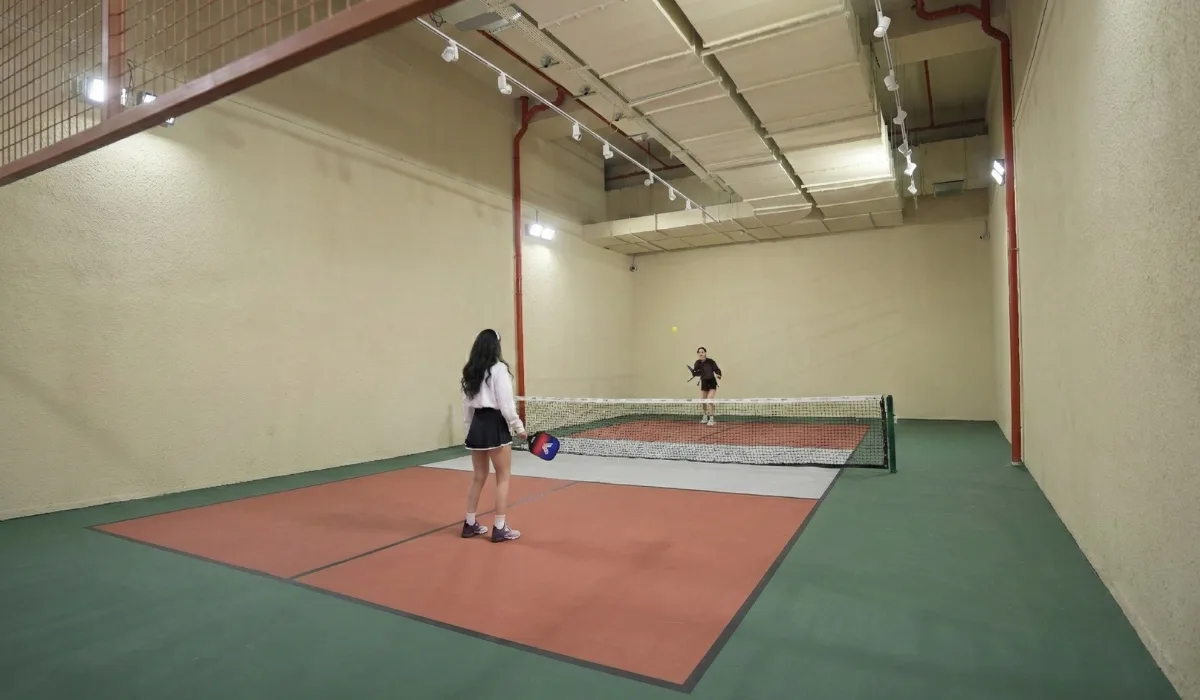
What is padel? Padel is a racket sport that combines the best of tennis and squash, played in teams of two on a 20×10 meter court enclosed by glass and fencing. It is played on a smaller court than tennis, with a shorter, perforated racket and an underhand serve; what sets it apart from every other racket sport is that the ball stays in play after bouncing off the walls. In short, padel is a game you can start enjoying on day one and keep mastering for years.
In this guide we explain from scratch what padel is, how it is played, the structure of the court, the basic rules, scoring, the equipment you need and how to prepare for your first match. As the O’Padel Beytepe coaching team, we work on our Ankara courts with many players who are picking up a racket for the first time; this article is the written, expanded version of what we tell them in their first lesson.
Summary
- Padel is a racket sport played 2 vs 2 on a 20×10 m court enclosed by glass and fencing.
- The ball can bounce off the walls; the serve is hit underhand, below waist height.
- Scoring is the same as tennis (15-30-40, game, set); club matches usually use golden point.
- The racket is short, stringless and perforated; the ball looks like a tennis ball but has lower pressure.
- It is easy to learn: most new players can rally in their first session.
What Is Padel? Definition and a Brief History
Padel was born in the late 1960s in Mexico, in the garden of a house in Acapulco. Enrique Corcuera surrounded a court with walls to fit it into a limited space and made the ball bouncing off the wall part of the game. The game soon moved to Spain, where it became a popular mass sport. Today Spain and Argentina are padel’s two major hubs, while the rest of Europe, the Middle East and, in recent years, Turkey are among the fastest-growing markets.
Padel’s international governing body is the International Padel Federation (FIP). Court dimensions, racket and ball standards and the official rules are set by this federation. The O’Padel Beytepe courts are built to FIP dimensions; so the game you learn here is valid in exactly the same way on a court anywhere in the world.
Why has padel spread so fast?
The answer is simple: the learning curve is very gentle. While tennis takes weeks of technical work before you can rally, in padel most people start getting the ball back and forth over the net within their first hour. The small court reduces the running load, and the walls bring back balls you thought you had missed. Add the four-player social format and you get an experience that is both athletic and social. We cover the topic in more depth in our Why Is Padel So Popular? article.
What Is a Padel Court Like?
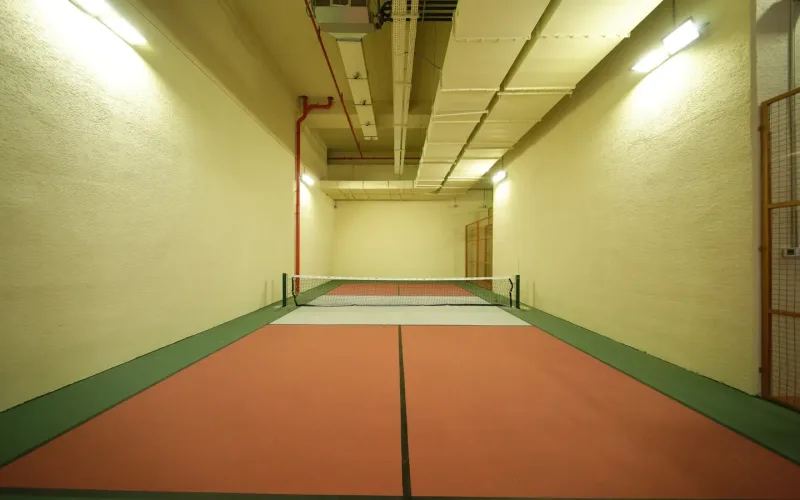
A padel court is a rectangle 20 meters long and 10 meters wide. In the middle is a net that is 88 cm high at the center. The back walls of the court are entirely glass; the side walls are partly glass and partly metal fencing. The walls reach up to 4 meters high at the back.
The surface is usually synthetic turf filled with silica sand. The sand makes shoe sliding controlled and reduces the load on the joints. On indoor courts, lighting quality directly affects how readable the game is; at O’Padel Beytepe the courts are LED-lit and climate-controlled, so Ankara’s snowy winters, wind or dry summer heat won’t spoil the game.
| Item | Standard Value | Why It Matters |
|---|---|---|
| Court size | 20 × 10 m | About one third of a tennis court; low running load |
| Net height | 88 cm in the middle, 92 cm at the sides | Suited to low-ball play and volleys |
| Back wall | Tempered glass, 3 m + 1 m fencing | Makes the ball bounce predictable |
| Side wall | Mix of glass + metal fencing | A ball off the fencing bounces unpredictably |
| Surface | Sand-filled synthetic turf | Slide control and joint protection |
| Service line | 6.95 m from the net | Defines the box where the serve must land |
We went into the court’s technical details, from glass thickness to lighting standards, in our Padel Court Dimensions and Construction article. We cover the features of the O’Padel Beytepe courts in padel courts page.
How Do You Play Padel? The Flow of the Game
Padel is a game in which two teams hit the ball back and forth over the net. A ball that lands in the opponent’s half can hit the walls after bouncing once on the ground and is still in play. However, the point ends if the ball touches the ground twice, hits the fencing directly, or hits the opponent’s wall without touching the ground first.
- Serve: The server bounces the ball once on the ground and hits it from below waist height into the diagonally opposite service box. You get two serves.
- Welcome: The receiving player waits for the ball to bounce once in their own half and then hits it. A serve that comes back off the back glass can also be returned.
- Rally: The teams take turns hitting the ball over the net. You are free to use the walls on your side; after the ball touches the ground it can bounce off the glass and come back to you.
- End of the point: The point ends if the ball touches the ground twice, goes into the net, hits the fencing directly or goes out of the court.
The rule that surprises new players most: you don’t have to chase the ball that gets past you. Wait, and let the ball bounce off the glass and come to you. This waiting reflex is the most valuable skill you learn in your first weeks of padel.
Using the walls: the heart of padel
In padel, the walls are both a defensive and an attacking tool. When a ball your opponent hit hard bounces off the back glass, it slows down and gives you a comfortable shot. At advanced levels, players deliberately send the ball into the opponent’s glass to make the return harder. That is why in padel it’s not power that wins, but reading where the ball will go and how fast.
Padel Rules: The Basics You Need to Know
Padel rules are based on tennis but differ in a few important ways. For a beginner, the most critical ones are these:
- The serve is hit underarm. At the moment of contact the ball must be at or below waist height. The server keeps at least one foot on the ground and must not step on the service line.
- The serve goes to the diagonal box. The ball must land in the opposite service box; if it hits the fencing after landing it is a fault, if it hits the glass it is good.
- Your own wall is your friend, your opponent’s wall is your enemy. If the ball hits the wall on your opponent’s side before touching the ground, you lose the point.
- The fencing is always risky. If the ball hits the fencing in your opponent’s half without touching the ground first, the point ends.
- Playing outside the court is allowed. On certain courts, if the ball leaves the court, a player can go out through the door and play the ball back; this is an advanced situation.
We compiled all of these rules and their exceptions, based on the FIP text, in our Complete Guide to Padel Rules article. If you’re just starting, the five points above are enough for you to play your entire first match comfortably.
Padel Scoring System
Padel scoring is the same as tennis: 15, 30, 40 and game. To win a set you need to win six games with a margin of at least two; at 6-6 a tie-break is played. Matches are usually best of three sets, while at club level and in tournaments one-set or timed formats are common to save time.
A common difference in padel is the golden point rule. At 40-40 there is no advantage; a single point decides the game and the receiving team chooses which side the serve goes to. This rule speeds up the match and turns every deuce moment into a small final. We share the rules applied in our Americano and league matches at O’Padel Beytepe at the start of each event; the golden point is often the standard.
Americano and Mexicano scoring
Social tournaments use a total-points format instead of traditional set scoring. In Americano, each match is played to a set number of points (for example 16 or 24) and each player collects individual points. In Mexicano, pairings are determined by the results of the previous round; winners play winners. These formats are ideal for beginners getting into competition; for details, see tournaments and leagues page.
Padel Equipment: Racket, Ball, Shoes
Padel equipment is simpler than tennis gear, and the cost of getting started is low. There are three essentials: racket, ball and shoes.
Padel racket
A padel racket is stringless, solid-faced and perforated. Its length cannot exceed 45.5 cm and a wrist strap is mandatory. The face consists of a carbon or fiberglass layer over an EVA or foam core. There are three basic shapes: round (control-oriented, suited to beginners), teardrop (balanced) and diamond (power-oriented, advanced). Make your first racket round or teardrop shaped, around 350-365 grams, with the balance close to the handle; that way your wrist and elbow won’t tire.
The padel ball
A padel ball looks like a tennis ball but has slightly lower internal pressure. This lets the ball bounce off the wall without flying out of control. On indoor, climate-controlled courts the ball behaves more predictably; outdoors, temperature and wind noticeably change the ball’s speed.
Padel shoes
A sand-filled synthetic turf surface calls for shoes with a suitable sole. Herringbone or omni-pattern soles provide both grip and controlled sliding on sand. Avoid playing in running shoes; the lack of lateral support puts your ankle at risk. For our detailed buying guide, take a look at our How to Choose a Padel Racket article. For your first sessions you don’t need to buy a racket right away; you can write to us on WhatsApp for racket provision.
Basic Padel Shots
In padel, your shot repertoire develops with a different logic than in tennis. Rather than powerful smashes, the shots that stand out are the ones that keep the ball under control and force the opponent into errors. For a beginner, the order of priority is:
- Forehand and backhand groundstrokes: Getting the ball over the net at medium pace, focused on control and placement. The foundation of the rally.
- Volley: Blocking the ball at the net before it touches the ground. In padel, the vast majority of points are won at the net.
- Lob (globo): A high ball that pushes the opponent away from the net. The key to switching from defense to attack.
- Bandeja: Padel’s signature shot. Hitting a high ball in a controlled way at shoulder height with slice; used to hold the net position.
- Shot off the wall: Patiently waiting for the ball coming off the back glass and playing it.
Shots like the smash, víbora and chiquita come not in the first months but after the fundamentals are in place. We gathered all the shots with their technical details in our Padel Shot Techniques Guide .
Positioning and Basic Tactics in Padel
Padel is a doubles game and positioning is everything. There are two basic zones on the court: the net (attack) and the back court (defense). The general rule is this: the team at the net has the advantage, because volleys and bandejas hit from the net keep the opponent under constant pressure.
That is why the basic tactical cycle in padel works like this: if you’re at the back, push your opponents away from the net with a good lob and run forward. If you’re at the net, hold your position with the bandeja and volley and keep your opponents at the back. Move side by side with your partner; don’t drift too far apart, and agree in advance on balls coming down the middle. Who plays on the right and who on the left is also an important decision; the stronger finisher usually plays on the left.
A warning for players coming from tennis
If you have a tennis background, you need to break two reflexes: the urge to hit the ball hard and the habit of chasing the ball that gets past you. In padel, a hard shot usually means an easy ball that hits your opponent’s glass and comes back. We examined the differences between padel and tennis in detail in our 12 Differences Between Padel and Tennis article; if you have a squash background, our Padel or Squash? article will speak to you more.
The Serve in Padel: The Simplest Shot, Yet the One With the Most Mistakes
Technically, the serve is the easiest shot in padel; yet it is when new players lose the most points. The reason is simple: the underhand serve looks easy, so it gets hit carelessly. A good serve, however, pins the opponent into the narrow zone between the back glass and the fencing and hands your team the net position.
For a proper serve, bounce the ball once on the ground beside you, behind the service line; with the racket below waist height, send it into the diagonally opposite box with a little slice. Aim for the corner where the side glass meets the fencing; a ball coming off there puts the opponent in a tough spot. Don’t wait after serving; immediately take two or three steps toward the net. Moving up to the net after the serve is one of padel’s most fundamental tactical habits and should be learned from the very first week.
Who Is Padel For?
Padel is one of the rare games where someone with no sports background and an experienced athlete can both enjoy themselves on the same court. Because the court is small, running distances are short; because the ball is slow, reaction time is comfortable; and because the game is played in pairs, the load is shared.
- Children: Can start from age 6-7 with a suitable racket and low-pressure balls.
- Over 40: A joint-friendly option thanks to short sprints and low impact load. A warm-up and the right shoes are a must.
- Tennis and squash players: Racket feel is an advantage, but you need to learn the differences in rules and reflexes.
- Those who have never held a racket: Perhaps the most advantaged group, because there are no bad habits to break.
The physical demand of padel is moderate: it raises your heart rate but doesn’t require long stretches of running. An average one-hour club match burns noticeably more energy than brisk walking. We covered heart health and calories in our The Science-Backed Benefits of Padel article.
How Long Does It Take to Learn Padel?
Short answer: you can rally in your first session, play an enjoyable match within a few weeks, and settling into the basic tactics takes a few months of regular play. Players who take lessons improve much faster than those who progress only by playing matches, because padel’s most important skills (reading the wall, the bandeja, positioning) are not picked up on their own but learned through coaching.
For a realistic timeline and level-by-level expectations, read our How Long Does It Take to Learn Padel? article. At O’Padel Beytepe padel lessons, offered in private and group formats, are planned around the level system (1.0-7.0); your level is determined in your first lesson and the next steps are built from there.
If you would rather feel padel on court than read about it, you can book a single session on our indoor courts at O’Wellness Beytepe via WhatsApp. No membership needed.
How Should You Prepare for Your First Padel Match?
The checklist for your first match is short. Comfortable sportswear, trainers with a suitable sole, water and a small towel are enough. You can ask the club about rackets and balls. A 10-minute dynamic warm-up before the match (light jogging, side steps, arm circles) reduces the surprises of day one.
Set the right expectations on court: the first 15 minutes go into understanding how the ball comes off the walls. Losing points is normal, even necessary. Talk to your partner, and make calling “mine” on balls down the middle a habit. All the details, from what to wear to court etiquette, are in Preparing for Your First Padel Match .
No partner?
This is the most common obstacle in padel: “Who will I play with?” The answer is the club community. The O’Padel family’s Beytepe community holds Newcomers Night; beginners meet players of the same level and play their first matches with a coach. Regular Americano tournaments are also ideal for coming alone and playing with four different partners. For details, community page.
Common Beginner Mistakes in Padel
There are a few mistakes almost everyone makes in the first weeks. Knowing them in advance shortens the learning process:
- Hitting the ball too hard. In padel, control comes before power; a hard shot usually comes off the glass and hands your opponent an easy ball.
- Turning your back to the wall. Instead of chasing the ball that gets past you, turn sideways and wait for it to come off the glass.
- Standing too close to the net. Standing 2-3 meters back from the net leaves you room to defend against the lob.
- Separating from your partner. When one player is at the net and the other at the back, a huge gap opens up in the middle.
- Wrong grip. The continental (hammer) grip is the only correct starting point for both the volley and the bandeja.
We listed the fixes for these and other mistakes in our 15 Beginner Mistakes in Padel article.
Padel Level System: From 1.0 to 7.0
In padel, players are rated on the 1.0-7.0 scale common at international clubs. This system matches players of the same level and forms the basis of tournament categories. A beginner sits in the 1.0-1.5 range; a player who can rally, knows the basic rules and partly uses the wall moves up to 2.0-2.5. Around 3.0 is the intermediate level, where you can play comfortably in club tournaments and use the bandeja and lob deliberately. 4.0 and above describes experienced players with tactical depth and a wide shot repertoire; 5.0 and beyond is semi-pro and pro territory.
The level system is not a label but a compass. At O’Padel Beytepe, your coach determines your level in your first lesson; Americano tournaments, level leagues and club tournaments are split into categories based on these levels. That way, in your first tournament you meet not players far stronger than you, but players in the same learning phase as you. If you want to raise your level, regular lessons and at least two matches a week are a practical combination that gives visible progress for most players.
Sample weekly beginner routine
- 1 group lesson (60 min): Technical fundamentals, wall work and positioning.
- 1 social match or Americano: Trying out what you’ve learned with different partners.
- 10-15 min warm-up and cool-down: Before and after every session, to lower injury risk.
- Optional 1 conditioning session: Core, leg and shoulder mobility; especially valuable for players over 40.
Padel and Wellness: What Happens After the Game?
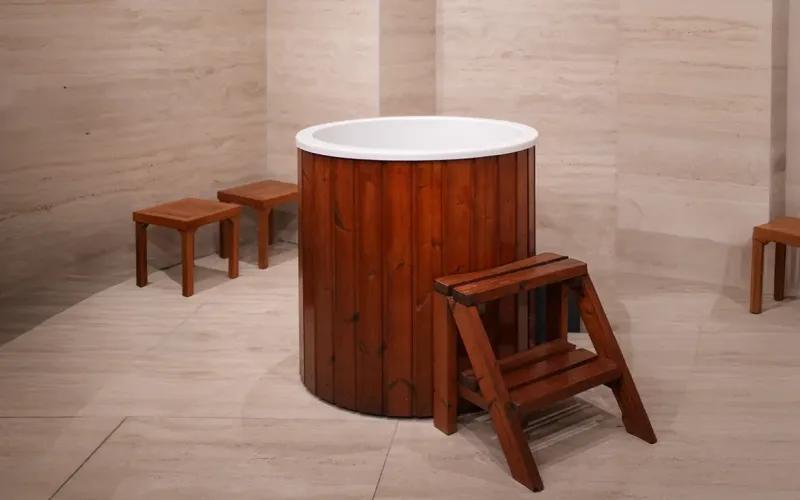
Despite its low impact load, padel is an intense athletic activity; it especially works the shoulder, forearm and calf muscles. A short cool-down and stretching routine after the match reduces muscle soreness the next day. For regular players, recovery tools such as sauna, contrast therapy and sports massage protect training quality.
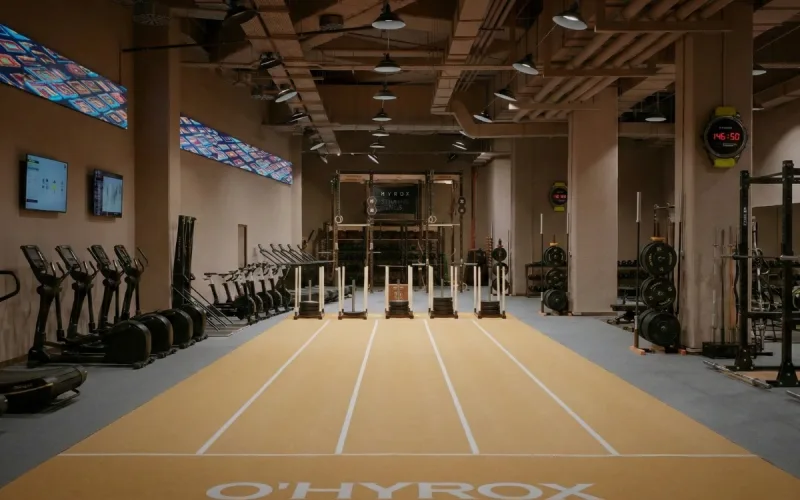
The location of O’Padel Beytepe in the O’Wellness Beytepe complex offers a practical advantage here: within the same complex there are the recovery facilities of O’Spa Beytepe and the fitness and conditioning area of O’Wellness Beytepe; you can write to us on WhatsApp for current facilities. Post-match recovery options recovery and wellness page.
Conclusion: Where Should You Start With Padel?
Padel is a game whose rules you can learn in an afternoon, that is enjoyable in the first session and that deepens over the years. Glass walls, the underhand serve and doubles play set it apart from tennis and squash; the short court and slower ball make it open to almost everyone. If you live or work in Ankara, in Beytepe, Çayyolu, Ümitköy, Konutkent or along Eskişehir Yolu, the O’Padel Beytepe courts in the O’Wellness Beytepe complex in Çankaya’s Beytepe neighbourhood are designed for you to take your first step in an indoor, climate-controlled setting, in snowy winters and hot summers alike. Borrow a racket from the club, book a session and feel the ball come off the glass for the first time yourself; the rest comes naturally. Membership is not required; for bookings, WhatsApp: +90 536 908 08 00.
Frequently Asked Questions
Official padel is played in doubles. There is a singles padel format played on narrower (20×6 m) courts, but it is rare in Turkey. At clubs, one-on-one training sessions can be held on a standard court.
No. Padel is one of the rare sports where people who have never held a racket can rally in their first session. A tennis or squash background is an advantage for hand-eye coordination but requires relearning some reflexes.
Membership is not required at O'Padel Beytepe. Via WhatsApp (+90 536 908 08 00) you can choose a single-session court booking, a package, a fixed weekly slot or a lesson + court combination. You can also write to us for racket provision.
At club level a standard court booking is usually 60 or 90 minutes. A full three-set match takes 60-90 minutes; in the Americano format, matches are played in short rounds.
On indoor, climate-controlled courts, padel is played in the same conditions all year round. Even in Ankara's cold, snowy winters, snow, wind and cold don't affect the game because the O'Padel Beytepe courts are indoors; ball behaviour is also more predictable than on outdoor courts.


 Padel Courts
