

The most common beginner mistakes in padel are decision errors, not technical ones. Most new players try to hit the ball hard, can’t wait for the ball coming off the wall, move separately from their partner and keep playing with a tennis grip. When these four mistakes appear together, the game becomes fast-paced but inefficient: you run a lot, hit a lot and win few points.
Below we list the ten mistakes we see most in the first three months, the cause of each and a fix you can apply on court. All of them can be corrected, and most make a noticeable difference in a single session. If you want to refresh the basics, What Is Padel and How Do You Play? guide is helpful.
Summary
- The most common mistake is trying to hit hard; in padel, placement wins points, not speed.
- The second most common mistake is running toward the ball coming off the wall; the right move is to get behind the ball and wait.
- Playing with a tennis forehand grip makes wall shots and volleys almost impossible.
- Not moving in line with your partner creates the most easily exploited gap on court.
- Most mistakes stem from decisions, not technique; that’s why lessons fix them quickly.
1. Hitting the Ball Too Hard
This is the most obvious reflex in beginners. The logic seems reasonable: a hard ball leaves the opponent less time. In padel, the opposite happens, because a hard ball comes off the back glass fast and high and hands the opponent a ready-made smash opportunity.
The fix is simple but takes discipline: in the first weeks, keep your power at sixty percent and set your goal as “keep the ball in.” In padel, most points come from the opponent’s errors; sending the ball back one more time is the highest-return strategy.
2. Running at the Ball Coming Off the Wall
The ball coming off the glass is the one new players miss most, and the reason is timing, not lack of skill. Instinct says go toward the ball; the right move is to set up behind the point where the ball will rebound and wait for the ball to come to you.
A practical method: one step back as the ball comes off the glass, then one step forward as it drops. This two-step rhythm is the foundation of the whole wall game. For detailed practice, using the walls in padel this article is the next step.
3. Playing with a Tennis Grip
The most common mistake among players with a tennis background. The tennis forehand grip creates two problems in padel: there’s no time to adjust the racket face on reflex volleys at the net, and getting the racket under the ball on low balls off the wall becomes harder.
The fix is switching to the continental, or hammer, grip. It feels strange in the first sessions but becomes automatic within three or four sessions, and you’ll be able to play every shot with one grip.
4. Moving Separately from Your Partner
Padel is a doubles game, and the most basic rule of a pair is this: the two players move like a single line. If one moves up to the net while the other stays back, the diagonal gap between them becomes the most easily exploited zone on court.
- Move up together and drop back together; keep about three or four meters between you.
- When your partner is pulled to the diagonal corner, shift in the same direction and cover the middle.
- When you get lobbed, both of you drop back; one player turning back alone splits the court in two.
To go deeper into the tactical side of positioning, padel net position .
5. Not Deciding Who Takes the Middle Ball
Both players going for the same ball, or neither going, explains a large share of the points lost at beginner level. The problem isn’t technique; it’s communication.
As a general rule, the middle ball is the responsibility of the player whose forehand faces the middle, and in most pairs that’s the player on the left. But more important than the rule is settling it out loud at the start of the match. “Mine,” “yours,” “leave”: three words solve nearly all of this mistake. Role allocation right and left player roles .
The fastest way to see which of these mistakes you make is on court: a single session with a coach prevents months of bad habits.
6. Wrong Serve and Return
The padel serve is hit below the waist after bouncing the ball once. Two mistakes stand out among new players: trying to hit overhead like in tennis, and putting power into the serve.
On the return, the most common mistake is standing too far forward. You should stand close to the back wall when returning, because the ball may come off the glass, and a player standing forward leaves the ball behind them. For the full list of rules, padel serve rules page.
7. Trying to Finish Every Ball with a Smash
Smashing every ball that comes overhead is the most costly habit at beginner level. Trying to finish a high, deep ball with a smash usually produces an error into the net or the glass.
The right alternative is the bandeja: keeping the point going with a controlled, low, deep overhead while holding the net position. The bandeja is usually taught after the third month, but knowing its logic from the start improves your decision quality. For details, how to hit a bandeja article is available.
8. Wrong Equipment and Skipping the Warm-Up
This mistake isn’t technical but has the heaviest consequences. Heavy, teardrop-shaped rackets give power but increase the load on the wrist and elbow; the right direction for beginners is a round-head, medium-weight, flexible racket. A thin grip also overworks the wrist, so its thickness needs to suit your hand.
Shoes are the first real investment you need to make: running shoes don’t support the ankle in lateral movement. Skipping the warm-up also leaves the three areas padel stresses most, the shoulder, elbow and calf-Achilles, unprotected.
| Mistake | Consequence | Fix |
|---|---|---|
| Hitting hard | Ready-made smash chance for the opponent | Keep power at 60%, aim for direction |
| Running at the wall | Ending up in front of the ball | One step back, one step forward rhythm |
| Tennis grip | Struggling with volleys and balls off the wall | Continental (hammer) grip |
| Moving separately | Diagonal gap | Move up together, drop back together |
| Smashing every ball | High error rate | Hold position with the bandeja |
| Running shoes | Ankle risk | Court-soled padel shoes |
9. Playing Too Long and Too Often
Padel is a fun game, and beginners often overdo it: four or five sessions a week, each two hours long. The result is usually the same: elbow or shoulder complaints by the fourth week.
A reasonable starting dose is two sessions a week, 60–75 minutes per session. Fatigue breaks down technique, and broken-down technique increases injury risk. Leaving at least one day of full rest and cooling down after sessions speeds up progress. For structured recovery, recovery and wellness you can look at the options.
10. Playing for Months Without Taking a Lesson
The most costly mistake comes last. Learning only by playing matches is possible but slow, because during a match you can’t see your own grip, contact point or positioning errors. A movement repeated incorrectly becomes permanent, and fixing it later takes longer than learning it for the first time.
The most efficient structure is one lesson plus one free match a week. The formats padel lessons can be seen on this page. How long it takes to reach which level how long to learn padel is explained in this article; the content of the first lesson what you learn in your first lesson .
Bonus: Choosing your position before chasing the ball
Most beginners focus so much on chasing the ball that they forget where they should be standing on the court. In padel, good positioning is often worth more than running fast. Returning to the middle of the court and lining up with your partner after every shot lets you reach the next ball with less running. At first this habit takes conscious effort; within a few weeks it becomes automatic.
As a simple rule, asking yourself “where am I going back to?” after hitting the ball works well. If you are at the net, try to stay level with your partner; if you are at the back, try to stand at a distance where you can wait for the ball without getting too close to the back glass. Learning that the right and left sides have different responsibilities also strengthens your positional awareness; for that, see right and left player roles in padel article.
Bonus: Trying to fix every mistake at once
After reading this list, it may be tempting to try to fix all ten mistakes in your next match. However, focusing on too many things at once usually leads to progress in none of them. A more effective approach is to focus on just one or two mistakes each week. For example, spending one week focusing only on your grip and waiting for the ball to come off the wall, then the next week on communicating with your partner on middle balls, builds lasting improvement step by step.
You can keep simple notes to track your progress: writing down after a match which mistake has decreased and which still happens often sets your focus for the next lesson or match. Sharing these notes with your coach also makes your lessons more productive. To see your level progress more objectively, padel level assessment article.
Bonus: Impatience and being too hard on yourself
Although padel is relatively quick to learn, mastering it takes time. It is completely natural to feel rapid progress in the first weeks and then feel like you are stuck for a while. Being too hard on yourself in these periods can drain both your enjoyment and your motivation. Seeing each match as a learning opportunity rather than a test is the key to sticking with the sport long term. For an overview of the learning process, how long to learn padel you can read our article.
Playing regularly with players at your own level is also important in this process. Events like the O’Padel Beytepe community’s Newcomers Night offer a good environment to meet players of a similar level and play without feeling pressure. For current events, community page.
Bonus: Skipping post-match recovery
Beginners usually leave the court as soon as the match ends. Yet a few minutes of cooling down and stretching can help reduce muscle stiffness the next day and help you start your next match fresher. A simple routine can consist of a slow walk and calf, thigh, hip and shoulder stretches. For details, post-padel cool-down and stretching take a look at our article. If you feel pain in your joints or muscles that does not go away after a match, take a break from playing and consult your doctor.
Making a recovery routine a natural part of your match is one of the simplest ways to keep playing padel healthily for many years. You can also add the recovery and wellness facilities in the same complex to this routine.
Conclusion: Fix the Mistakes on Court in Beytepe
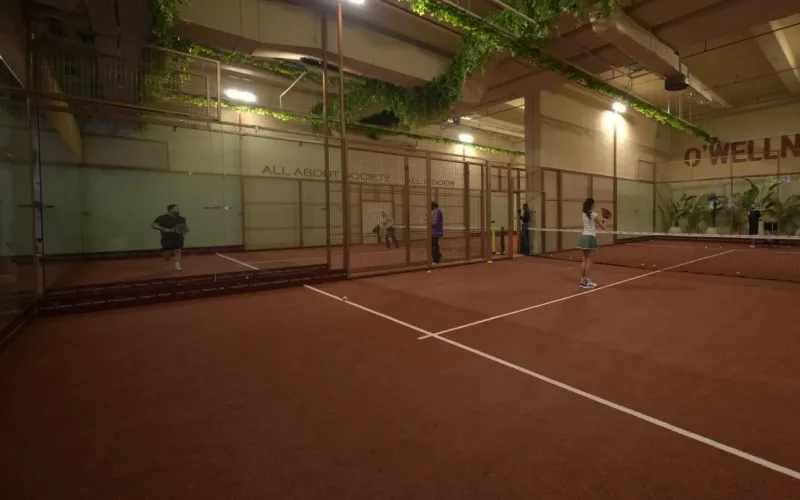
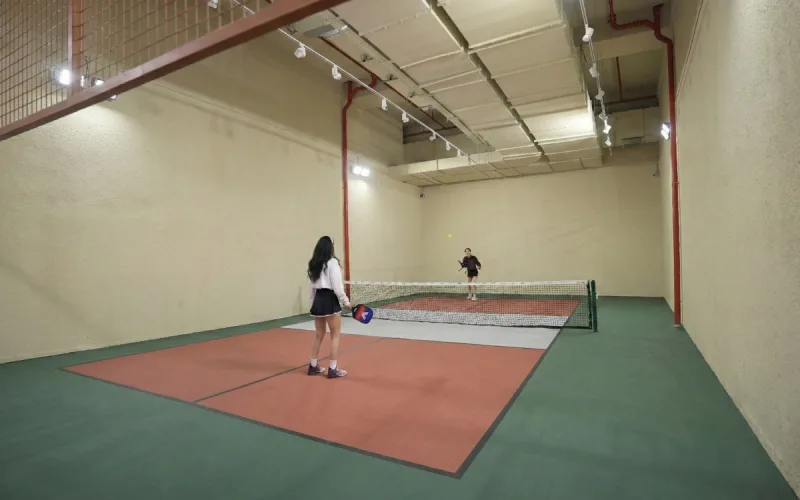
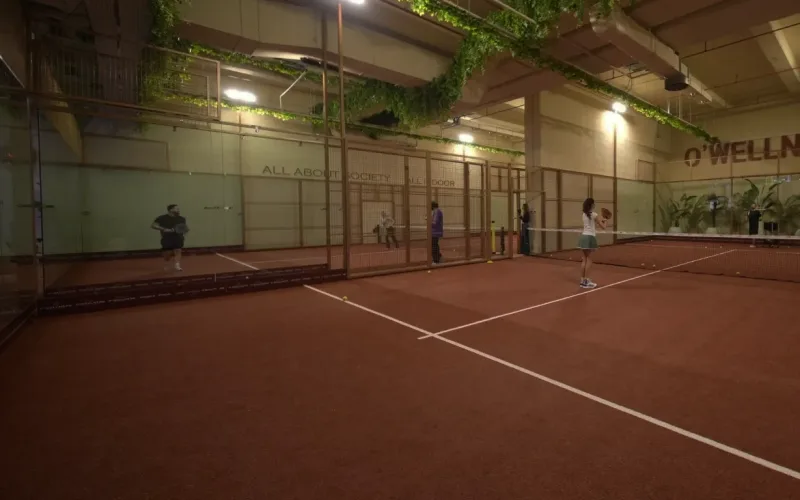
What these ten mistakes have in common is this: none of them comes from a lack of talent; they are all habits. So the way to fix them isn’t to play more, but to play with the right feedback. On the indoor, climate-controlled courts of O’Padel Beytepe at the O’Wellness Beytepe complex in Çankaya, Ankara, our certified coaching team identifies in your first session which mistake hurts your game most and builds your programme accordingly; for those coming from Çayyolu, Ümitköy, Bilkent and Eskişehir Yolu, it’s also easy to hold a regular slot. Membership isn’t required; for a padel lesson in Ankara and bookings, WhatsApp: +90 536 908 08 00. For the courts and surface features, padel courts on this page, and available times book a court page.
Frequently Asked Questions
Partly. Decision errors, such as the tendency to hit hard or try to smash every ball, can be reduced with conscious effort. But mechanical errors like grip, contact point and foot placement aren’t visible to you during play; you need the outside eye of a coach or a video recording.
Moving together with your partner and settling the middle ball out loud. Since neither requires technique, both can be applied within a single match and make an immediate difference in the number of points lost.
It’s not a disadvantage, but some habits need to be relearned: switching to a continental grip, shortening the backswing and waiting for the ball to come off the glass. Since your hand-eye coordination is already there, overall progress is usually faster.
There are three common causes: a racket that’s too heavy or stiff for you, overworking the wrist because of a thin grip, and long sessions played with an inadequate warm-up. If the pain lasts more than two days, you need to reduce your playing load and review your equipment with a coach.
Not if the right format is chosen at the start. Rotating formats like Americano match players by level, so the pressure stays manageable, and exposure to different playing styles improves decision quality.


 Padel Courts
