
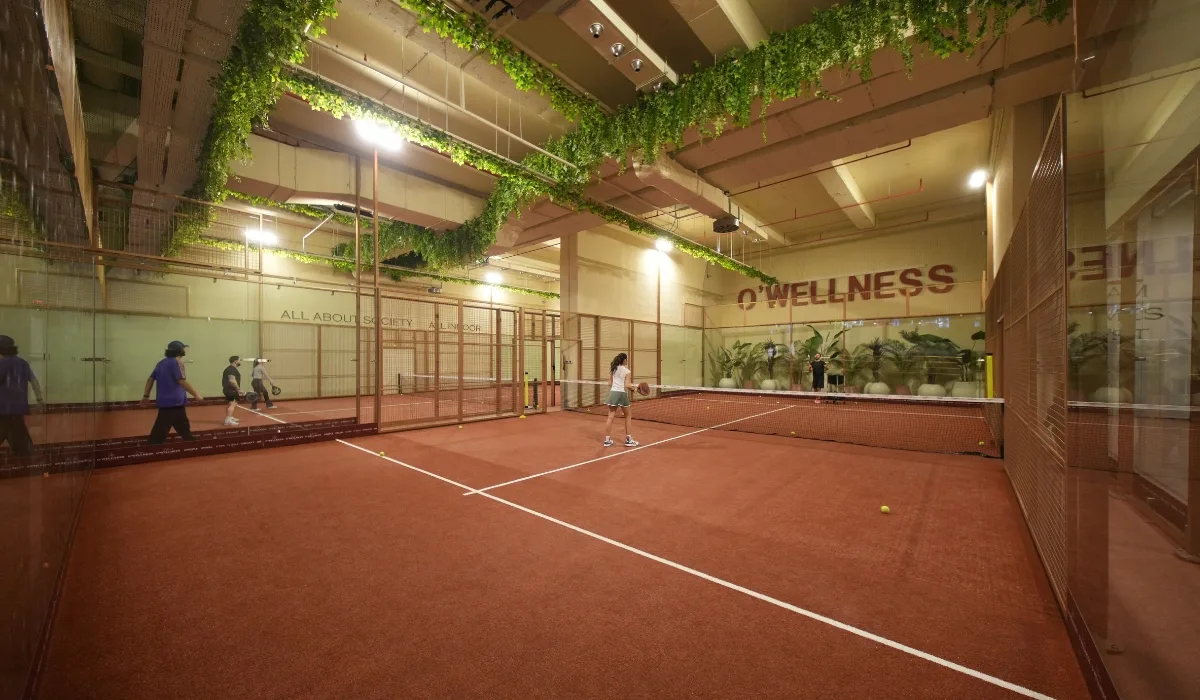
Padel and badminton, both racket sports that demand quick reflexes and good footwork, differ clearly in terms of ball, racket, court and game logic. In badminton, you play with a light racket and keep the shuttle from touching the ground; in padel, you play with a short, perforated, short-handled racket on a court enclosed by glass, letting the ball bounce once. A badminton background gives you real advantages when switching to padel, but you'll need to consciously change some habits.
In this article, as the O’Padel Beytepe coaching team, we put the two sports side by side and explain what players coming from badminton find easiest and hardest on court, and how you can speed up the transition. The aim is not to show one sport as better than the other, but to make clear which skill can be carried over where.
Summary
- In badminton, the shuttle must not touch the ground; in padel, the ball can bounce once and the glass is part of the game.
- Badminton players' reflexes, net play and footwork are a big advantage in padel.
- The habit that most needs to change: replacing wrist-driven strokes with controlled, body-supported strokes.
- Padel is almost always played as doubles; positioning and communication with your partner are critical.
Key Differences: Equipment, Court and Rules
Let's start comparing the two sports with the most concrete differences. The table below summarizes the main points in terms of racket, ball, court and basic rules.
| Feature | Badminton is | Padel |
|---|---|---|
| Racket | Long handle, very light, strung | Short handle, stringless, perforated, foam core |
| Ball | Shuttlecock | Similar to a tennis ball, with slightly lower pressure |
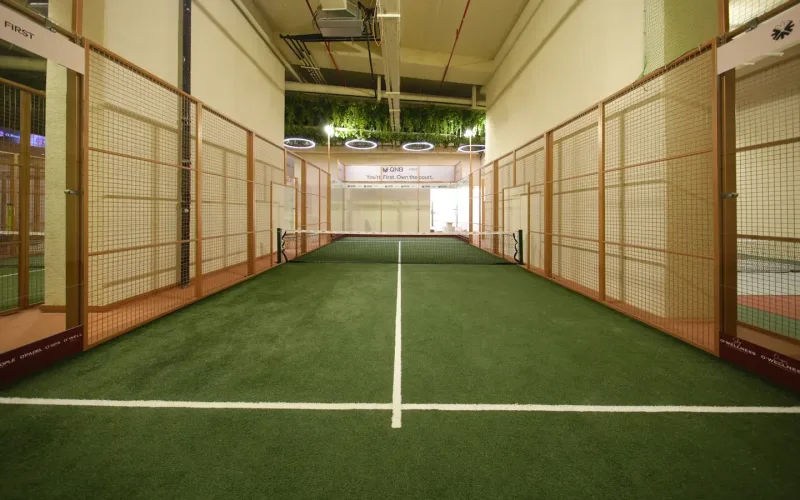
| Court | Open court with lines, no walls | 20×10 m court enclosed by glass and metal fencing |
| If the ball hits the ground | The point ends | One bounce is allowed |
| Walls | Not part of play | The glass is an active part of play |
| Serve | Underhand, diagonal | Below waist height, after bouncing the ball, diagonal |
| Game format | Singles and doubles | Almost always doubles |
| Scoring | Rally scoring | Tennis-style (15-30-40-game) |
If you're curious about the structure of a padel court in detail, check out our padel court dimensions and structure article. For the scoring system, our padel scoring system article offers a short, clear summary.
The practical result of these differences is this: in badminton, every shot is a “last chance,” because the point ends the moment the shuttle touches the ground. In padel, since the ball can bounce once and come back off the glass, the rhythm of the game is different; patience, reading the ball and good timing become far more decisive.
Advantages That Carry Over from Badminton to Padel
Someone who has played badminton usually gets off to a fast start on a padel court. That's because some skills at the intersection of the two sports transfer directly.
- Reflexes and hand-eye coordination: Badminton's fast pace provides a strong foundation for volleys at the net. Reacting to fast-incoming balls comes naturally to badminton players.
- Net play: The short, controlled touches played at the net in badminton translate to shots like the volley and dejada in padel.
- Footwork: Small, quick steps and constant balance adjustments are very valuable in padel too. Badminton players usually position themselves well on court.
- Overhead experience: Badminton's smash and clear motions give you a reference point when learning the bandeja and smash in padel.
- Doubles experience: Someone who has played badminton doubles more easily grasps space sharing and rotation with a partner.
Thanks to these advantages, many players coming from badminton can build rallies from their first lessons and feel comfortable at the net. For comparisons with other racket sports, see differences between padel and tennis and padel vs. squash check out our articles as well.
Habits You'll Need to Change
Along with the skills that transfer, there are also habits that can hold you back in padel. Spotting them early significantly shortens the transition.
Wrist-driven strokes
In badminton, the wrist is one of the main sources of shuttle speed. In padel, however, the racket and ball are heavier, and a wrist-heavy, whip-like stroke both reduces control and can put unnecessary strain on the elbow and wrist. In padel, strokes should be shorter, more compact and supported by trunk rotation. The wrist stays stable and controlled on most shots.
If you feel pain around your elbow, besides reviewing your technique, we recommend consulting your doctor. We cover this topic in tennis elbow and padel in our article.
The reflex to attack every ball
In badminton, a high shuttle is usually an invitation to smash. In padel, though, smashing every high ball is often a mistake; the ball can come back off the glass and give your opponent an easy opportunity. The most common shot against high balls in padel is the controlled, deep bandeja. The smash is a finishing weapon to use when you have the right position and the right ball.
The worry about letting the ball drop
One of the hardest things for badminton players is letting the ball bounce and even hit the glass. Instinctively trying to hit the ball in the air leads to rushed, unbalanced shots. In padel, waiting for the ball to come back off the glass to buy time is often the right decision. To develop this skill, our using the walls in padel article is a good guide.
Grip
Badminton grips and finger adjustments don't carry over directly to padel. In padel, a single grip close to the continental grip is used for most shots. For details, see padel racket grip article.
Ready to try your badminton reflexes on a padel court? You can start with a single session on our indoor courts at O’Wellness Beytepe, and if you like, speed up your transition with a lesson; booking is via WhatsApp.
Physical Demands: Conditioning and Injury Risk
Both sports require agility, sudden changes of direction and explosive movement, but their movement patterns differ. Badminton emphasizes deep lunges and jumps. In padel, the court is larger, but thanks to the glass, points can last longer; short sprints, side steps and long stretches with bent knees stand out.
There are a few physical points players coming from badminton should watch out for:
- Shoulder load: Because a padel racket is heavier, the shoulder takes more load on repeated overhead shots. Gradual adaptation and shoulder strength work are important. See padel and shoulder injuries.
- Knee and ankle: Padel's sand-filled artificial turf offers different traction from a badminton hall floor. Proper shoes and a good warm-up are essential. Details in knee and ankle in padel .
- Endurance: Padel matches can involve longer rallies; aerobic capacity and leg endurance become more important.
If you have any joint problem or past injury, we recommend consulting your doctor before switching to a new sport. Support from a sports physiotherapist and work in the fitness and conditioning area of O’Wellness Beytepe can support this transition; for details, recovery & wellness on our page.
Tactical Differences: Reading the Court
Badminton tactics are built around running your opponent to all four corners of the court and creating openings. Creating openings matters in padel too, but at the heart of the game is controlling the net. In padel, the pair at the net is usually in the stronger position; the pair at the back tries to win that position back with a lob.
So the basic tactical cycle in padel goes like this: defend patiently at the back, lob at the right moment, move up to the net, and hold your position at the net with bandejas and volleys. For badminton players, internalizing this cycle can be even more decisive than learning technique. Shifting from badminton's “finish it now” instinct to a “win the position, then finish” mindset visibly reduces your errors in matches. For a general tactical framework, see padel tactics guide article.
Communication with your partner is also at the heart of this cycle. Short calls like “mine,” “yours” and “lob,” and moving forward and back together, require a different kind of coordination from rotation in badminton doubles. In padel, the two players usually move side by side, along a parallel line.
Can You Keep Playing Both Sports?
Many players want to start padel without giving up badminton, and that's absolutely possible. Playing both sports in parallel can benefit both your reflexes and your endurance. But there are a few things to keep in mind.
First, technical crossover: especially in the first few weeks, the wrist action from badminton may creep into your padel strokes, or vice versa. To reduce this, it helps not to play both sports back to back on the same day and to do a few minutes of sport-specific warm-up at the start of each session. Over time, your brain learns to tell the two movement patterns apart.
Second, total load: both racket sports place repetitive load on the shoulders, elbows and knees. It's important to make room for recovery days in your weekly schedule and to pay attention to sleep and nutrition. On recovery, our padel recovery guide article includes practical tips. If you feel lasting pain anywhere, the best thing to do is to reduce your load and consult your doctor.
Finally, goal setting: deciding which sport you want to be more competitive in helps you allocate your training time more efficiently. If you have competitive goals in padel, the formats on our tournaments and leagues page are a good starting point.
Transition Plan: First Steps for Badminton Players
When switching from badminton to padel, the following order helps you build solid new habits while making use of your existing skills:
- Learn the basic grip and stroke mechanics with a beginner lesson. A coach's eye is very valuable for spotting badminton habits early. Lesson options: padel lessons on our page.
- Set aside dedicated time for playing off the glass. In the first few weeks, do drills focused on playing balls coming off the back glass.
- Use volleys and net play as your strength. Your badminton reflexes give you an advantage here.
- Learn the bandeja, limit the smash. Build a repertoire of controlled shots against high balls.
- Gain experience with social matches. Rotating formats like Americano help you adapt faster to different playing styles.
For a structured start, you can follow our 4-week padel learning plan article. On the equipment side, we recommend starting with a control-oriented racket; for options, see how to choose a padel racket take a look at our article.
Result
Although badminton and padel have different rules and a different game logic, reflexes, footwork and net-front skills build a strong bridge between the two sports. Once you drop the wrist-heavy stroke and learn to play with the glass and the patient tactical cycle, your badminton background becomes a serious advantage in padel. In Ankara, on the indoor courts of O’Padel Beytepe in the O’Wellness Beytepe complex in Çankaya’s Beytepe neighbourhood, you can plan this transition together with the O’Padel Beytepe coaching team, community and meet players from other racket sports at our events; for court options, our book a court and padel courts our pages are waiting for you. Membership is not required; just message the WhatsApp line +90 536 908 08 00.
Frequently Asked Questions
Usually, yes. Reflexes, hand-eye coordination and net skills are directly useful in padel. However, you also need to learn new habits such as playing off the glass and compact stroke technique.
Because the padel racket and ball are heavier, wrist-driven strokes can reduce control and put extra strain on the elbow and wrist. Switching to a more compact, body-supported stroke under a coach's supervision is recommended.
Padel is almost always played as doubles. If you have no partner, lesson + court combinations, rotation formats such as Americano and community events offer a good start.
To begin with, a control-oriented, medium-weight racket with the balance closer to the handle is usually more suitable. To try different models in your first lessons, you can ask the club on WhatsApp.


 Padel Courts
