
Faults and violations in padelare the topic new players hesitate over most during a match. Is hitting the ball twice a fault, does touching the net always lose the point, what happens if the racket leaves your hand? These questions come up often on the courts at Beytepe, especially in social matches played without a referee. In this guide we go through the violations in the padel rules systematically and explain with examples how each one is judged.
Hitting Violations: Rules About Contact with the Ball
In padel, the ball is hit only with the racket, only once, and after the ball has bounced on the ground at most once. These three sentences cover almost all hitting violations.
- Double hit: If the ball makes two separate contacts with the racket face, it is a violation. However, the ball “sliding” on the face within a single continuous motion is not counted as a violation; what is critical is whether there are two separate hitting motions.
- Double bounce: If the ball touches the ground twice in your area, the point goes to the opponent.
- Body contact: The ball can't be hit with the hand, arm, foot or torso. The ball hitting you also loses the point.
- Throwing the racket: Letting go of the racket and hitting the ball with it is not a valid shot.
Joint Hits with Your Partner
Both partners hitting the same ball together is a violation. That's why on-court communication is critical; saying “mine” or “yours” is not just courtesy but a requirement under the rules.
Violations Involving the Net and Posts
In padel, the net is the physical boundary in the middle and a line that must not be touched:
- Touching the net: If the player, their racket or their clothing touches the net, post or net tape while the ball is in play, it loses the point.
- Reaching over the net: Extending the racket across the net before the ball has crossed to the other side is a violation. However, if the racket extends across in the natural follow-through after the shot has been completed on your own side, it is tolerated.
- Stepping into the opposing area: Stepping into the opponents' area under the net is a violation.
Practical tip: when playing at the net, keep your body weight vertically balanced, not leaning back. The tendency to lean on the net is one of the most common causes of needless lost points.
Violations Involving the Glass and Wire Mesh
The most distinctive thing that sets padel apart from tennis is the walls, and the rules are very clear on this point:
- In your own area, the ball hitting your own glass before you strike it is completely valid and a natural part of the game.
- If the ball you send to the other side hits the opponent's glass or wire mesh before it has bounced on the ground, it is a violation; the point goes to the opponent.
- It is normal for the ball to hit the glass after it has bounced on the ground in the opposing area; play continues.
- A ball that hits the wire mesh on your own side can stay in play, since it hasn't crossed over yet; but in most cases, if you lose control of the shot, it turns into a lost point in practice.
The Ball Leaving the Court
If the ball leaves the court after bouncing on the ground in the opposing area, some venues have an arrangement that lets the player go outside and play the ball. This depends on the layout of the area around the court; find out your club's practice in advance. On indoor courts this situation is usually not defined and the point ends.
Service Violations
The serve is the part with the highest potential for rule violations. The basic framework is as follows:
- The serve is hit below waist height, after bouncing the ball once on the ground.
- Stepping on the service line or into the court during the serve is a violation.
- Both feet must be in contact with the ground during the serve; you can't jump when serving.
- The ball must land in the diagonal service box; the wrong box is a violation.
- Two consecutive faulty serves lose the point.
The easiest fix for beginners is to build the serve on placement rather than pace. Because of the below-waist contact requirement, the padel serve is inherently slower than in tennis; looking for power here raises both the risk of violations and the error rate.
Conduct and Flow-of-Play Violations
Beyond technical violations, there are also rules that protect the flow of the game:
- Delay: Waits between points that exceed a reasonable time can lead to a warning in official matches.
- Obstructing the opponent: Deliberately preventing the opponent from reaching the ball is a violation.
- Distraction: Shouting or distracting with sudden movements while the opponent is hitting is unsportsmanlike.
- Equipment: Wearing the racket's wrist strap is mandatory at many venues; it is enforced for safety reasons.
Managing Violations in Matches Without a Referee
Since most amateur padel is played without a referee, the application of the rules relies on players' honesty. Approaches that work in social matches at Beytepe:
- Call your own violations yourself. You know best about violations like double hits or net contact; owning up earns you respect within the club.
- In doubtful situations, replay the point. Replaying the point saves time compared with getting into an argument.
- Discuss the format at the start of the match. Agree a shared framework for golden point, the ball-leaving-the-court rule and in/out calls.
In Matches with a Level Gap
In sessions that mix players from Bilkent, Hacettepe Beytepe and the METU (ODTÜ) area, a level gap is natural. Rather than keeping count of a beginner's violations, a short, constructive explanation between sets is far more effective. The social nature of padel shows that the best way to pass on rules knowledge is to set an example on court.
The Five Most Common Violations and Their Fixes
- Touching the net: At the net, bend your knees slightly and keep your weight centred, not forward.
- Service violation: Check that you always bounce the ball on the ground and hit it below the waist, and turn your foot position into a habit.
- Double bounce: In back-glass play, learn to wait for the ball; rushing usually causes the ball to bounce twice.
- Joint hit: Make a vocal call on every ball.
- Hitting the opponent's glass directly: Aim your shot at the floor, at the open space; aiming at the glass is not a valid tactic.
Result
Although the list of violations in padel looks long, the basic logic is simple: hit the ball with the racket, once, after at most one bounce; don't touch the net; and let the ball you send across bounce on the ground first. Once you have these three principles down, most violations disappear on their own. You'll pick up the remaining details quickly by playing on court, watching experienced players and asking your coach.
Extra Notes: How to Learn the Rules Quickly
Reading the rule texts is useful, but the padel rules are learned fastest on court, through concrete situations. Our recommendation for new players is to focus on just three rules in the first five sessions: the below-waist serve, a single bounce and not touching the net. Once these three settle, the rest of the details fall into place naturally, because most other violations are derivatives of these three basic habits.
A second practical method is watching matches. Following the referee's decisions in professional matches records the rule you read in the text into your visual memory. Fast-moving situations such as net contact and hitting the opponent's glass directly are understood much more clearly when watching.
Rules Practice with Your Coach
When taking a lesson, you can ask your coach for a short rules-focused segment. For example, working on only the serve rules in a ten-minute block, then the number of bounces in back-glass play for another ten minutes, develops both technique and rules knowledge at the same time. This approach makes you feel much more at ease when you take part in your first club match.
Finally, it is important to see rules knowledge not as a tool for gaining an edge but as a shared language. Padel is a game in which four people on court rely on each other; handling violations honestly is a more lasting gain than technical improvement.
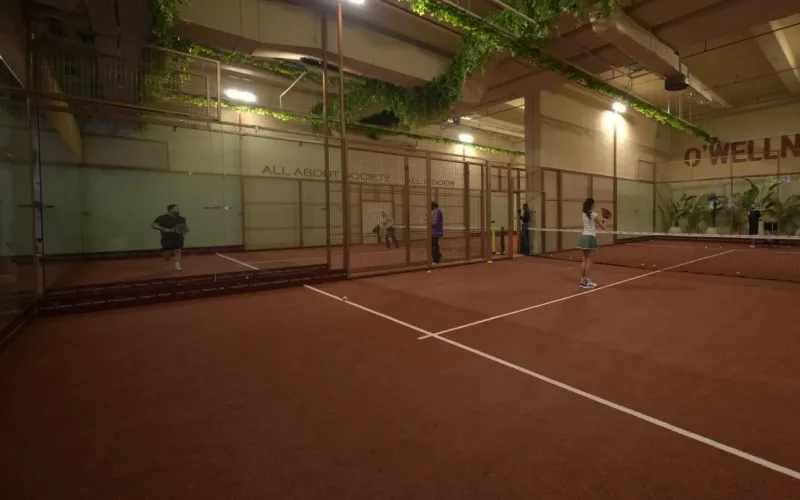


 Padel Courts
