
A family pickleball session is one of the easiest shared activities to set up for a weekend: the rules are simple, the ball is slow, the court is small and an age gap doesn't spoil the game. With the right plan, a 60 to 90 minute session followed by a lounge break becomes a weekend programme the whole family can enjoy in Beytepe.
Below you will find rule adaptations by age group, session length, equipment choices and the post-session flow. The goal is to set up a family pickleball session where everyone is both moving and smiling.
Why is pickleball such a good fit for families?
A pickleball court measures roughly 13.4×6.1 metres, about the same as a badminton court. This small space lets people of different ages and fitness levels rally comfortably on the same court. The paddle is light, and the ball is perforated and slow. A child makes contact with the ball from the very first minutes, while a grandparent can join in without strain.
Another advantage is how fast it is to learn. Within the first ten minutes, the logic of serving, returning and scoring clicks into place. It doesn't require reading the walls like in padel or a powerful serve like in tennis. That's why both the youngest and the oldest person in the family have a valuable role in the game. If you'd like to compare pickleball with padel, our article on playing padel and pickleball together explains the differences and common ground.
Rules and adaptations by age
The standard rules suit everyone, but when the age gap in a family is large, small adjustments make the game much fairer.
Ages 5-8: start it like a game
At this age the goal isn't the score but hitting the ball and having fun. Set aside pickleball's classic “11 points” rule; instead, count the number of consecutive hits you make together (“this time it was 8, the record is 12!”). Instead of serving, you can toss the ball by hand and let the little ones hit it. Marking the no-volley zone (the kitchen) with a coloured tape and calling it the “lava zone” makes it easier for children to remember the line. With younger kids, keep the session to no more than 30-40 minutes; when attention starts to drift, taking a break is the right call.
Ages 9-13: the transition to rules
This age group loves scores and competition. You can teach the serving rule (underhand, to the diagonal box). Show tactical elements such as the third shot and the dink during play, but don't pressure them. When choosing a paddle for kids, go for a short-handled, light model. Pairing an adult with a child to balance the teams is both instructive and fun. Our guide on our padel guide for children may also be an interesting resource on getting kids started in racket sports.
Ages 14-17: competition and dynamism
Teenagers can now play almost on equal terms with adults. The risk here is that hard hitting can shut the older players out of the game. Set a simple house rule: “No hard shots until at least three soft shots have been played in each rally.” This rule builds technique and lets everyone stay in the rally.
Adults and those over 60
For older family members with sensitive joints, it's possible to reduce the area they cover: for example, playing one side only and leaving the other to a child, or sharing the movement load in doubles teams. Wearing suitable shoes is a must so you don't struggle with light jumps. Our joint health article , which explains how to protect your knees and ankles, can be useful extra reading on this.
Session length and flow
For a family session on an indoor court, the following flow generally works well:
- First 10 minutes: Getting acquainted and warming up. A light jog around the court, arm circles, and ankle and wrist movements.
- Next 10 minutes: Shot practice. Serve attempts, returns and short rallies.
- Middle section, 30-40 minutes: Matches. Swap teams every 15 minutes so that everyone plays with everyone.
- Last 10 minutes: Fun games. For example, an “everyone gets one hit” chain or target shots.
When planning the length, the child's age should be the deciding factor. For young children the total time shouldn't exceed 45 minutes; for teenagers it can go up to 90 minutes. Keep water on hand for rest breaks; Ankara's dry air can make you dehydrated without noticing, even on an indoor court.
A quick summary of the rules: one page for everyone
Before the session, rather than explaining the rules one by one, the most effective method is to sum them up in five sentences. The serve is hit underhand, to the diagonal box. The receiving side lets the ball bounce, and the serving side lets the next ball bounce too; in other words, the ball must bounce on the first two shots. No volleys are allowed inside the no-volley zone (the kitchen); you have to wait for the ball to bounce. Only the serving side can win a point, and the game usually ends at 11 points, with a two-point margin. A ball that lands on the line is in.
Saying these five sentences once and jumping straight into the game is far more effective than trying to make everyone memorise the rules. Kids learn from their mistakes, and adults may mix up a few rules in the first match too. In a family setting, giving the referee role to the children in turn makes them more engaged in the game.
Mini game formats for the family
A standard match may not suit everyone. The following formats keep the session lively:
- King/Queen court: One side stays on court while the opposing teams come in one by one. The winner stays on. This gives fast rotation and cuts down on waiting.
- Balance the adult's hand: The adult only hits soft shots, while the child hits however they like. Staying in the rally is fun for everyone.
- Target shots: Place a box or cone in one corner of the court and try to land the ball there. It builds accuracy for little ones.
- Team spirit: Play as a family team against another family's team; new friendships can form in the social club atmosphere.
When choosing a format, use the least experienced person in the family as the baseline. The best family session is one where even the weakest player enjoys the same game.
Practical ways to keep kids motivated
Some kids get bored on the first try. Take that as normal and don't push. A small reward system (for example, writing the rally record on a board) or letting them choose their favourite smoothie’ at the end of the session can provide motivation. Saying “nice try, hit it a bit softer next time” instead of criticising mistakes speeds up learning. Asking for the child's preference matters too: let them decide which game they want to play in the next session. For children who show an interest in racket sports, a structured lesson option may come later; our our padel lessons page page includes information about the kids' academy.
Equipment: what to rent, what to buy?
You don't need to buy equipment for your first session. Paddle rental is available at Beytepe, so no one in the family has to shop before trying it out. After a few sessions with a rental paddle, you'll notice your own preferences: lighter and control-oriented, or heavier and power-oriented? A paddle with a small grip for kids and a medium-weight one for adults is generally a good start.
For clothing, comfortable sportswear and non-slip sports shoes are enough. A spare T-shirt, a small towel for the kids and your own water bottles make the session easier. On an indoor court, special pickleball shoes aren't essential, but it's important that the sole doesn't slip and supports lateral movement. For a broader look, see what to wear on an indoor court article.
Rules for safe and healthy play
- Warm-up: . Kids and adults alike should warm up for at least 5-10 minutes at an easy pace.
- Paddle safety: During serves and shots, keep your distance from your partner and opponent; don't walk around swinging your paddle.
- Stray balls: If another ball comes onto your court during play, shout “ball!” right away and stop the game.
- Vision: For family members who wear glasses, a strap for the glasses can be useful.
- Overexertion: Take a break when you feel pain or fatigue. In racket sports, rest is part of performance.
Remember that children are still developing while they play sport; prefer variety over repeating the same movements for long periods. For a child who does other activities during the week, weekend pickleball is an ideal addition.
After the session: a lounge break
Socialising after the activity is the most enjoyable part of the family experience. In the court-view lounge & café area you can choose a specialty coffee, a smoothie for the kids or a light snack. Especially after a long sports session, a balance of protein and carbohydrates supports recovery. For ready-made ideas, you can check our smoothie recipes article and choose from the menu together at the end of the session. Thanks to the Wi-Fi in the lounge, the adults can also check a message or two.
If you still have energy at the weekend, setting a small goal with the family for the following week is a great motivator: something like “Next week we'll reach 20 consecutive hits.” Goals build a sense of responsibility in kids and bring out the fun side of sport for adults too.
A sample weekend plan in Beytepe
The flow below is a fictional example; you can adjust the times to your family's rhythm.
| Time | Activity | Note |
|---|---|---|
| Late morning | Shared breakfast, something light | It's best not to eat heavily at least 1 hour before the session |
| Towards noon | 60-90 minute family pickleball session | Warm-up, shots, mini matches |
| After the session | Lounge break | Water, smoothie, light snack |
| Optional | A short recovery or relaxation session for adults | Depending on the kids' schedule |
Don't hesitate to adapt the schedule to suit you. Courts are usually busy at the weekend, so booking in advance is best; our WhatsApp line can help with time suggestions and availability. For a general Ankara programme for families at the weekend, you can also read our article on a weekend family programme in Ankara .
Weather, seasons and the Ankara advantage
Winters in Ankara are cold and summers are dry and hot; since the altitude is around 850 metres, the daily temperature swing is also large. A family activity played outdoors can be cancelled in January because of wind and cold. Indoor, climate-controlled courts remove this uncertainty: kids play without getting cold, and adults without being overwhelmed by sweat. Planning your weekend ahead and securing your booking also eliminates weather surprises.
On the school calendar, exam weeks or holiday periods can affect the family programme. For families who work at Hacettepe, Bilkent or nearby schools, adding a pickleball session to the weekend routine is a great way to shake off the stress of the week. For families coming from Ümitköy, Çayyolu and around Koru, getting to Beytepe is generally quick; still, it's a good idea to confirm your booking time before setting off.
Common mistakes
The most common mistake families make in their first session is starting the match too seriously. Fun first, score later. The second mistake is making a young child play at the same pace as an adult; this overwhelms the child and puts them off the sport. The third mistake is skipping equipment and warm-up; a short preparation noticeably reduces the risk of injury. Finally, don't leave the end of the session to the kids getting tired; finishing before fatigue sets in makes the child say “let's go again” the following week.
Practical steps for your first session
First think about everyone's age and physical condition in the family and decide on the duration. Then check the court and beginner workshop options on our pickleball page . Confirm paddle and ball rental via WhatsApp before the session and make your booking; free cancellation up to 24 hours in advance gives you comfortable peace of mind for surprises like weather or a sick child. If someone in the family also wants to try padel, in the same complex padel courts you can move on to a different experience the following week.
Conclusion: movement, laughter and time together
The real charm of pickleball is that different ages feel equal on the same court. Thanks to the indoor courts at Beytepe, you can plan without worrying about the weather and round off the day with a coffee or smoothie in the lounge after the session. Book via WhatsApp for the weekend, start your first family pickleball session with age-appropriate rules, and leave the rest to the flow of the game.
Frequently Asked Questions
30-45 minutes is enough for young children, and 60-90 minutes for teenagers and adults. It's best to finish the session without waiting for the kids to get tired.
From around 5-6 years old they can start in a playful way. At this age the goal should be the number of consecutive hits instead of the score.
No. Padel racket rental is available in Beytepe; you don't need to buy one before trying.
Yes. Adult-child pairings, the consecutive soft-shot rule and team changes balance the game.
You can relax in the lounge with a court view over coffee, a smoothie or a light menu; adults can also move on to the recovery area if they wish.
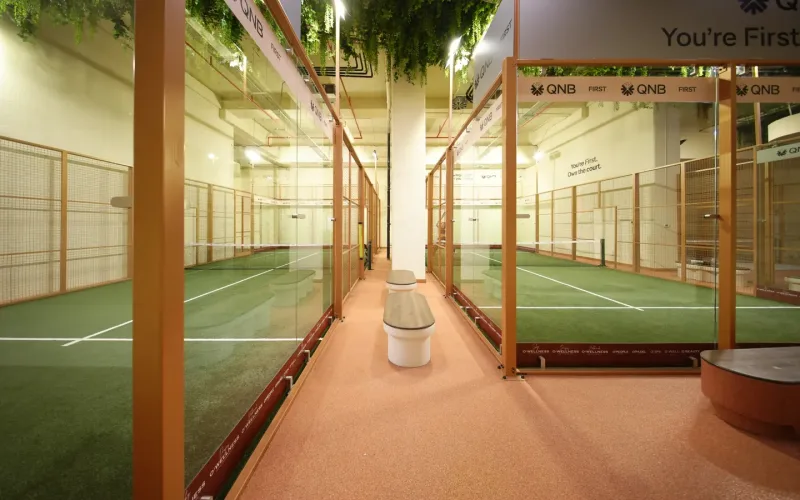


 Padel Courts
