

The pickleball serveis a stroke hit from below wrist level towards the diagonal box, which must land in the opposing team's service area without touching the net. A serve hit with the right technique not only fulfils the rule; it also gives you the first advantage of the rally. In this article we cover the classic underhand serve, the increasingly popular drop serve option, the rules and common mistakes.
The serve is one of the technical elements beginners struggle with most, because you need to follow the rule correctly and direct the ball where you want it at the same time. By following the steps below, you can make your serve reliable in a short time.
How do you hit the classic underhand serve?
The underhand serve is the most widely used serve. According to the rules, the paddle head must be below the wrist at the moment of contact and the ball must be struck with the hand below waist level. The ball is tossed up or held in the hand and dropped, then directed with the paddle towards the diagonally opposite box.
During the serve, both feet must be behind the service line, outside the court, and your feet must not leave the ground at the moment of contact. This detail is a frequently overlooked rule; players who want to add power in particular may step forward without realising.
What is a drop serve?
The drop serve is a serve type added to the official rules later, in which you release the ball from your hand, let it bounce once on the ground and then hit it. This method is very helpful for beginners who struggle with the timing of tossing the ball up and hitting it. There is no restriction on how high the ball may bounce in a drop serve, which makes the serve more flexible.
Many beginner-level players start with the drop serve and move to the classic underhand serve over time, because the classic serve offers more control and speed on the ball.
Serve rules at a glance
| Rule | Explanation |
|---|---|
| Contact point | Below wrist level, underhand |
| Direction | Always diagonally to the opposite service box |
| Foot position | Behind the service line, without leaving the ground |
| Net contact | If the ball touches the net and lands in the opposite box, it is a “let” and the serve is replayed |
| Fault | If the ball gets caught in the net or does not land in the box, the point goes to the other side |
Common mistakes when serving
- Hitting the ball above waist level (rule violation)
- Stepping forward during the serve and breaking the line
- Sending the ball in a non-diagonal direction rather than to the diagonal box
- Hitting with excessive power and sending the ball out
- Forgetting to call the score and causing confusion with your opponent
Most of these mistakes stem from rushing. Pausing for a few seconds and taking a breath before the serve both prevents rule violations and gives you a more controlled stroke.
Serve strategy: not just rules, but tactics too
A good serve does not just follow the rules; it should also be directed to a place that will challenge your opponent. Deep serves to the opponent's backhand side make it harder for the other side to make a strong return. Moving quickly towards the net after the serve (serve-and-approach) lets you take an advantageous position in the next dink rally. You can read about net-play strategy on this topic in dink technique article article.
Connection to the general rules
The serve is directly linked to pickleball's overall scoring system, because in classic scoring only the serving side can win points. For a broader look at the kitchen rule and the scoring system, pickleball rules guide .
Practising your serve in Beytepe
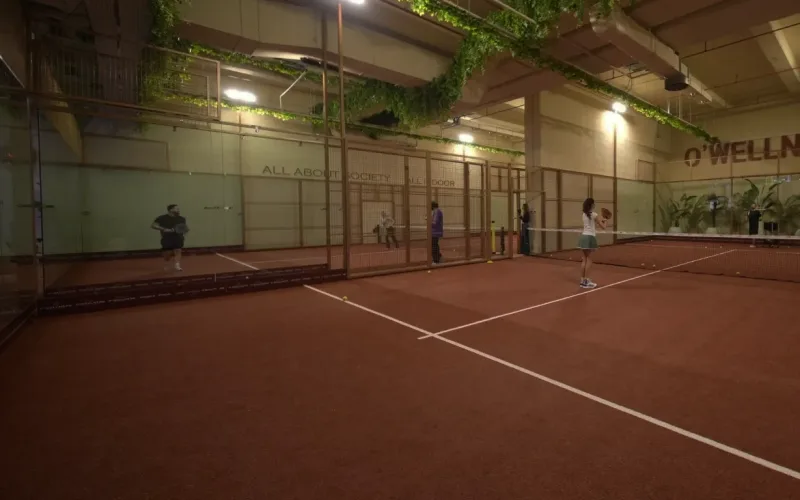
Serve technique improves with repetition and feedback. In the indoor pickleball courts and and in our padel lessons, held at O’Padel Beytepe, instructors review your serve stance, foot position and the moment of contact one by one. This helps you progress much faster than practising on your own.
Ankara’s covered, climate-controlled courts let you develop your serve technique consistently, without external factors such as wind or cold weather. This makes a big difference, especially when learning a delicate technique like the serve.
Serve variety: keeping your opponent guessing
Serving constantly to the same area at the same speed makes your opponent's return easier. Adding variety by changing serve depth and direction (backhand-forehand) makes it harder for your opponent to find a rhythm. Advanced players use serve variety as one of the earliest sources of advantage in a rally.
Positioning after the serve
Starting to move towards the net right after the serve (serve-and-approach) lets you gain the net advantage early in the rally. Instead of serving and waiting where you are, moving a few steps forward the moment the ball reaches the other side puts you in a better position for the next third shot drop or dink rally.
How a wind-free environment helps serve consistency
On outdoor courts, wind can change the ball's trajectory unexpectedly during the serve, which creates confusion especially with a newly learned technique. On indoor courts this variable disappears, so the result of every serve you hit depends largely on your own technique. This consistency makes it easier to objectively assess your progress in serve development.
Building a pre-serve routine
Most professional players follow a fixed routine before every serve: bouncing the ball a few times, taking a deep breath, picking out the target with their eyes. This routine lets you hit a consistent serve even in nervous moments. Building your own routine and repeating it every session is a simple but effective way to improve serve reliability in the long run.
Analysing serve mistakes with video
A simple serve video recorded on your phone can reveal mistakes the eye does not notice, such as rising above wrist level at contact or slightly breaking the service line. Watching this video together with a coach makes technical corrections far more concrete and quick.
Some lesson formats in Beytepe use this kind of video feedback; for players moving up to intermediate level in particular, reviewing small but effective mistakes in serve technique makes a big difference.
The serve and the flow of the match
A reliable serve is not only the start of the rally but also a factor that sets the overall tempo and confidence level of the match. A serve that keeps failing shakes a player's confidence, while a consistent serve has a positive effect on the rest of the rally. That is why time devoted to serve practice contributes disproportionately to overall match performance.
Timeline for improving your serve
Most new players have a serve that is correct by the rules but inconsistent in their first few sessions. After four or five sessions the serve usually becomes more consistent. Around eight to ten sessions, players reach a level where they can deliberately vary serve direction and depth. Although this timeline varies from person to person, it clearly shows the role of regular practice in serve development.
The coach's role in developing serve technique
Although practising on your own is useful, the small details a coach notices from an outside perspective (wrist angle, foot position, hit timing) are often things you cannot notice yourself. So for those who want to seriously improve their serve technique, taking a few lessons with a coach noticeably speeds up progress.
The most effective number of serve repetitions
Twenty to thirty serve repetitions in a session is considered a number that is effective enough to reinforce muscle memory without causing fatigue. Making this a routine by setting aside a few minutes at the start of every session makes the improvement in your serve quality much more noticeable over time.
Measuring your serve practice
Measuring your progress while developing your serve technique boosts your motivation. For example, you can track your own consistency by counting how many serves in a row you land in a specific target zone. In intermediate lessons, instructors in Beytepe try to improve players' serve reliability with simple measurement exercises like this. Over time, reaching a 70-80 percent success rate can be considered a sign of solid serve technique.
Measuring your serve practice
Measuring your progress while developing your serve technique boosts your motivation. For example, you can track your own consistency by counting how many serves in a row you land in a specific target zone. In intermediate lessons, instructors in Beytepe try to improve players' serve reliability with simple measurement exercises like this.
Serve quality with the right paddle
Another factor affecting serve quality is the paddle you use. A lighter paddle gives more control during the serve, while a heavy paddle can add extra power. For detailed information on choosing a paddle, see our paddle selection guide .
If you would like to join our beginner workshops in Beytepe to improve your serve and practise on the court, contact page or reach us on our WhatsApp line, and you can plan a session without a membership.
Frequently Asked Questions
The serve is hit from below waist level, towards the diagonal box. Both feet must be behind the service line and must not leave the ground.
The drop serve involves releasing the ball, letting it bounce once and then hitting it. It is easier in terms of timing than the classic underhand serve.
If the ball touches the net and lands in the opposite service box, it counts as a 'let' and the serve is replayed.
A rule violation counts as a service fault and the point goes to the opposing team.
In the starter workshops at O'Padel Beytepe, you can work on your serving stance and technique with an instructor.




 Padel Courts
