

Choosing the right pickleball paddle means striking a balance between weight, surface material, grip size and core structure that suits your playing style. A light, control-oriented paddle usually gives beginners a better start, while experienced players choose between power and control according to their own preferences.
In this guide we explain the key elements that make up a paddle one by one, clarify what each type of player needs, and describe how you can try rental paddles in Beytepe.
Paddle weight: power or control?
Paddles are generally classified as light (190-210 grams), medium (210-230 grams) and heavy (over 230 grams). Light paddles make wrist movement easier, reduce arm fatigue in long rallies and offer better control on delicate shots at the net (dinks). Heavy paddles add more power to the stroke but can increase the load on the wrist and elbow.
A medium-weight paddle is generally recommended for beginners because it offers a reasonable balance between control and power. Over time, as your playing style becomes clearer (are you a net player or a baseline hitter?), you can adjust the weight accordingly.
Surface material
Paddle surfaces are generally made from three materials: fibreglass (composite), carbon fibre and graphite. Fibreglass surfaces add more “pop” and spin to the ball, while carbon fibre surfaces offer more consistent control and durability. Graphite paddles tend to be light and are preferred for net play that requires fast hand movements.
For beginners, a carbon fibre surface is a good choice because it gives a consistent hitting feel. As you move to an advanced level, you can consider the extra spin advantage that fibreglass surfaces offer.
Core structure
The honeycomb core inside the paddle is generally made from polymer, aluminium or Nomex. Polymer cores are the most common choice and offer a quiet sound, a soft feel and good control. Nomex cores are harder and louder and generate more power, but control is slightly reduced. Aluminium cores stand out for their lightness.
Core thickness also matters: thick cores (around 16 mm) provide more control and a soft touch, while thin cores (around 13 mm) offer more power and “pop”.
Grip size and hold
Grip circumference generally ranges between 4 and 4.5 inches. A thin grip suits small hands, and a thick grip suits large hands or those who prefer two-handed strokes. The wrong grip size can cause wrist and elbow pain over long playing times; so, if possible, trying different grip sizes is the most reliable way to make the right choice.
If you want to increase grip thickness, you can also fine-tune it by wrapping extra grip tape; this is a practical way to find the right feel before buying a paddle.
Paddle length and face area
Standard paddles are about 39-43 cm long. Long paddles give more reach, while wide-faced (shorter) paddles offer a bigger sweet spot and make it easier to hit the ball. For beginners, a wide-faced paddle of standard length is usually the most balanced option.
Paddle recommendations by level
| Level | Recommended weight | Recommended surface | Priority |
|---|---|---|---|
| Beginner | Medium (210-220 g) | Carbon fibre | Control and a large sweet spot |
| Intermediate | Medium-heavy | Fibreglass or carbon | Balance: power + control |
| Advanced | According to playing style | Personal preference | Spin and power optimisation |
The advantage of trying paddles in Beytepe
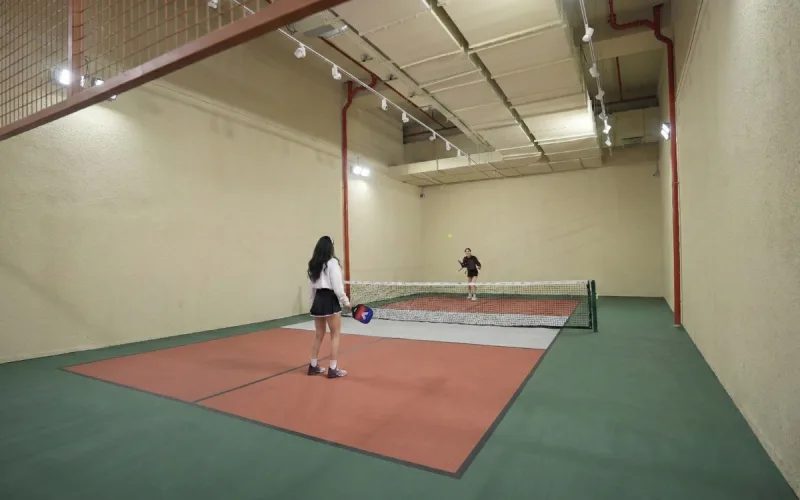
Trying different models before buying your own paddle is the most reliable way to make the right decision. At O’Padel Beytepe, the indoor pickleball courts, just like the On our padel courts, there is the option to rent paddles, so before buying you can try several different weights and surface types and work out the profile that best suits your own playing style.
Players who join our beginner workshops usually clarify their own preferences by trying different rental paddles over a few sessions. This both prevents unnecessary spending and helps you progress faster with the right equipment.
Matching your paddle to serve and dink techniques
The features of the paddle you choose also affect your playing techniques. For example, if you spend a lot of time at the net and use the dink technique often, a light, control-oriented paddle makes your job easier. If you focus on powerful serves, as we explained in our serve techniques article, a slightly heavier paddle can add extra power.
If you would like more information about court dimensions and the general equipment list, see our court dimensions guide .
Paddle care and lifespan
A few simple habits are enough to extend your paddle's life: not leaving it in extremely hot or humid environments (for example the boot of a car), wiping the surface with a dry cloth after each use and replacing the grip tape as it wears. Micro-cracks in the surface lower performance over time, so checking regularly is worthwhile.
An average paddle performs well for one to two years with regular use; when clear wear on the surface or a “dead” hitting feel begins, it is time to replace it.
USAPA/USA Pickleball approved paddles
If you are thinking of entering official tournaments, it is important to check whether your paddle is on the approved model list. Entering an official match with an unapproved paddle can be grounds for disqualification. This is not required for social and recreational play, but it is useful to keep it in mind from the start if you plan to enter tournaments later.
Personalising your paddle to your playing style
As your playing style becomes clearer over time (an aggressive net player, a patient dink master, or someone who hits hard from the baseline), you can fine-tune your paddle choice accordingly. For example, players who spend a lot of time at the net generally prefer lighter, wider-faced paddles, while players who like to hit hard from the baseline lean towards slightly heavier models with a firmer core.
Final checklist before buying a paddle
- Weight: does it suit your playing style, and does it tire your arm?
- Surface material: is your priority control or spin?
- Grip size: does your hand wrap around it comfortably?
- Core thickness: do you want a soft feel or hard power?
- Official tournament approval: are you thinking of entering tournaments later?
Deciding by going through these five points greatly reduces the chance of regretting your purchase.
Common paddle selection mistakes
A mistake beginners often make is buying a paddle they saw on social media or that a friend recommended without thinking about their own hand size and playing style. Another common mistake is assuming the most expensive model is automatically the best choice; yet the right paddle is more about suitability to your playing style than price. Deciding without trying rental paddles is another frequent mistake.
The most practical way to avoid these mistakes is to try at least two or three different paddles in a real match environment. Specifications on paper only tell you so much; the real decision becomes clear when you hold the paddle and hit the ball.
Paddle care accessories
A few extra accessories can help keep your paddle performing: a protective cover (especially against knocks while carrying it), spare overgrips and a moisture-absorbing cloth. These small accessories extend your paddle's life while keeping its performance consistent. For players who travel often or play at different facilities in particular, choosing a hard case prevents micro-cracks that can form on the paddle surface.
Is buying a second-hand paddle sensible?
For beginners on a tight budget, a second-hand paddle may look appealing, but micro-cracks in the surface or ageing in the core are not always visible to the eye. So when buying a second-hand paddle, it is important to at least try a few strokes and check whether it feels “dead”. The safest route for beginners is to try the facility's rental paddles and buy a new model once you have decided.
Price range and budget planning
Paddle prices vary over a wide range depending on materials and brand quality. For beginners, a mid-range paddle offers a reasonable balance between performance and cost. As you start playing often and your preferences become clear, moving up to a higher-end model is a sensible step. For information on current rental and equipment options, you can reach us on our WhatsApp line.
Next step: finding your own paddle
Choosing a paddle is a personal process; there is no perfect model that suits everyone, but there is a profile that suits you. By joining our or by trying several different paddles on our courts in Beytepe, forming your own preference will improve both your performance and your enjoyment of the game in the long run. By booking a session through our WhatsApp line you can try our rental paddles and make the right decision before buying your own.
Frequently Asked Questions
A medium-weight paddle (around 210-220 grams) is generally recommended for beginners because it offers a good balance between control and power.
Fibreglass surfaces provide more spin and pop, while carbon fibre surfaces offer more consistent control. For beginners, carbon fibre is usually the easier option to adapt to.
A grip in the 4-4.5 inch range is chosen according to hand size. If you are unsure, you can start with a thin grip and thicken it with grip tape if necessary.
Yes, paddles can be rented at O'Padel Beytepe; you can try different models before buying your own paddle.
Core material and thickness determine the firmness, sound and control feel of the stroke. Polymer cores provide a soft and controlled feel.


 Padel Courts
