
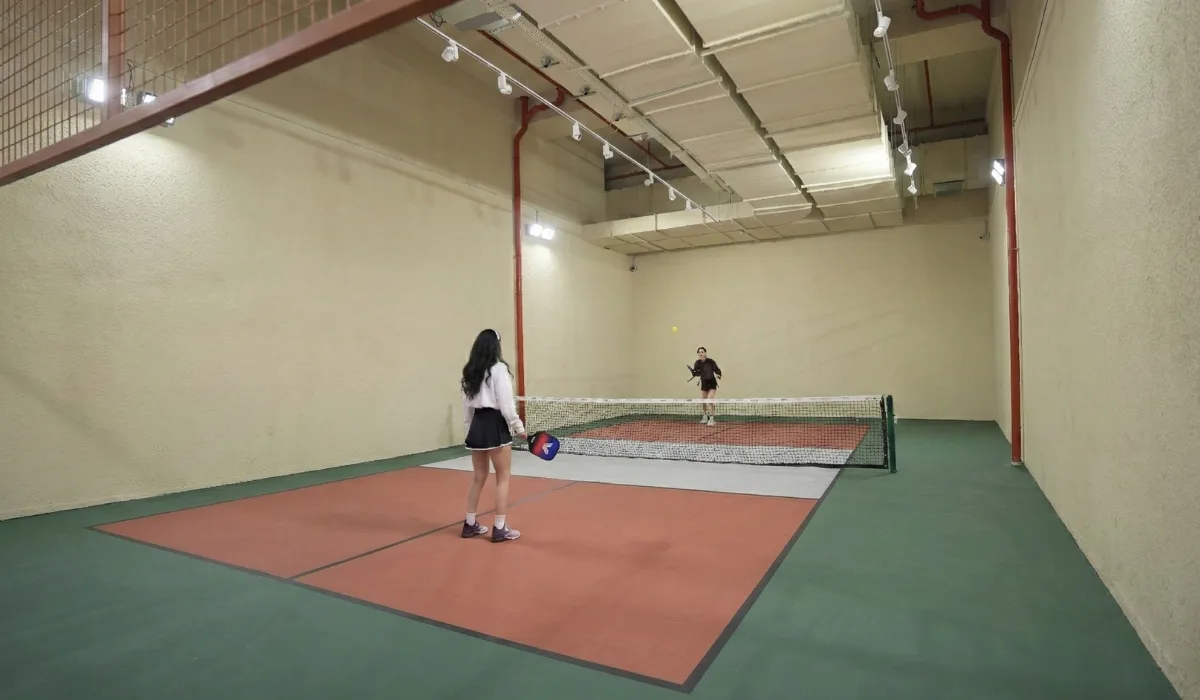
The pickleball dinkis a soft, low-speed shot played from near the net toward the opposing team's kitchen area. Its aim is not to hit the ball hard but to place it at an angle or height difficult enough to force the opponent into an error. This game of patience is one of the most distinctive and most strategic moments that set pickleball apart from other racket sports.
In this article we explain what the dink is, why it's so important, how to apply the correct technique and how you can develop this skill on the courts in Beytepe.
What is the dink and why is it so important?
Under the kitchen rule, you can't volley near the net; this forces players to hit the ball softly after it has bounced. This soft, controlled shot is called the "dink". When both teams come to the net, a long dink rally usually begins; in this rally the side that loses patience and makes the first mistake loses the point.
Most dink rally winners are not those who hit hard but those who stay patient the longest and make the fewest errors. That's why developing the dink technique is one of the most critical steps in moving up to intermediate and advanced level in pickleball.
How do you apply the right dink technique?
Stance and balance
When dinking, the knees should be slightly bent, weight forward and the paddle held at chest height. Arm movement should be minimal; the shot should come largely not from the wrist and forearm but from a slight movement of the shoulder and trunk. This prevents putting more power than necessary on the ball.
Contact point
The ball should be hit on a trajectory high enough to clear the net but low enough that the opponent can't easily attack it. The ideal dink can be described as a ball that clears the net by a few centimetres and drops into the opposing kitchen area.
Use of angles
Because straight dinks are easy to predict, using angled cross-court dinks makes the opponent move more and increases the chance of an error. Angled dinks directed at the opponent's weaker side (usually the backhand) give an advantage in the battle of the kitchen.
Common mistakes in the battle of the kitchen
- Dinking too high and giving the opponent a chance to attack
- Losing patience and moving to an early "attack" shot
- Losing foot position and committing a kitchen violation
- Always hitting to the same angle and becoming predictable
- Trying to add too much power with the wrist
Most of these mistakes come from a lack of patience. It's normal for a dink rally to go on; the real skill is not losing concentration even in a rally lasting ten to fifteen shots.
When should you leave the dink and attack?
When the opponent sends a high ball or loses balance, that is the right moment to attack (usually with an "attack" shot or a smash). But continuing to dink patiently until this chance comes is often what forces the opponent to make that mistake. Experienced players see the dink rally as a test of patience and don't rush the decision.
Comparing the dink with technical shots in padel
Padel has a similar "patience" logic; but there the game is prolonged by using rebounds off the glass wall. In pickleball, since there is no wall, patience is achieved entirely through control and positioning at the net. If you want to see the strategic differences between the two sports in more detail, pickleball vs padel article .
Developing your dink technique in Beytepe
The dink isn't a technique you can practise alone; it requires regular repetition with a partner or instructor. At O’Padel Beytepe's indoor pickleball courts and and in our padel lessons, the beginner workshops and social match hours offer an ideal environment for experiencing dink rallies at real match tempo.
Dink exercises done under an instructor's supervision let you quickly internalize the right stance and contact point. Thanks to Ankara's indoor, climate-controlled courts, you can keep up this practice without interruption all year round.
The difference between a cross-court dink and a straight dink
A cross-court dink gives slightly more reaction time because the ball travels a longer distance and is generally considered safer. A straight dink requires a faster reaction because the distance is short, but it can challenge the opponent with a surprise angle. Good players use both in balance, making it harder for the opponent to predict.
Mental resilience in a dink rally
A dink rally is as much a mental contest as a physical one. Although the urge to lose patience and try a risky shot in a ten- to fifteen-shot rally is a natural reflex, resisting this urge is usually the defining trait of the winning side. Breath control and practising staying calm on court are among the most effective ways to develop this mental resilience.
Eye tracking during the dink
One of the common traits of successful players in dink rallies is that they watch not the ball but the opponent's paddle movement. The opponent's paddle angle and body position give an early clue about the direction and power of the next shot. Developing this visual tracking shortens your reaction time and keeps you a step ahead in a dink rally.
Breathing and rhythm control in the dink
Keeping your breathing regular in a long dink rally prevents your muscles from tensing unnecessarily and helps you keep your concentration. Taking a short, controlled breath before each shot prepares you for the next one both physically and mentally. This simple technique is effective in preventing impatience, especially during long rallies.
How do you notice progress in your dink technique?
As your dink skill develops, one of the first signs you'll notice is that rallies naturally get longer, because both you and your opponent start making fewer mistakes. The second sign is that you feel less panic at the net and choose your shots more deliberately. The third sign is that you notice the opponent's weak side and can deliberately direct to it. These three signs of progress show that the dink technique has now become reflex.
A player who has reached this stage goes into matches confident in the net battle, because they know that the moment where most points are won or lost is this game of patience at the kitchen.
The link between the dink and overall match strategy
Developing the dink technique doesn't just win you net rallies, it also strengthens your overall match strategy. A good dink player can gain an edge even against players relying on powerful shots by patiently wearing the opponent down and forcing errors. That's why many coaches recommend new players focus on the dink technique first rather than hard shots.
The dink technique's contribution to tournament performance
A common pattern observed in social tournaments in Beytepe is that most players who go on to the later rounds have a strong dink game. Players who produce eye-catching points with hard shots are sometimes knocked out in the early rounds, while players who dink patiently and consistently can progress all the way to the final. This observation shows that the dink is not just a technical detail but a decisive factor in tournament success.
Comparing the dink technique with the padel bandeja
Just as the bandeja in padel aims to keep control at the net, the dink in pickleball serves a similar function with soft shots. The key difference is that the bandeja is a defensive shot played out of the air, whereas the dink is a shot that waits for the ball to bounce. Players who have tried both sports notice that the two techniques share the "control through patience" philosophy.
Simple exercises for dink practice
- Standing at the net with a partner and trying to keep up a 20-shot rally with dinks only
- Increasing precision by repeatedly dinking to a specific corner
- Gaining variety by trying dink combinations with different angles (cross-court and straight)
- Trying to shorten your reaction time by focusing your eyes not on the ball but on the opponent's paddle
These exercises are done regularly under an instructor's supervision in the beginner and intermediate lessons in Beytepe and in a short time noticeably increase players' confidence at the net.
Simple exercises for dink practice
- Standing at the net with a partner and trying to keep up a 20-shot rally with dinks only
- Increasing precision by repeatedly dinking to a specific corner
- Gaining variety by trying dink combinations with different angles (cross-court and straight)
These exercises are done regularly under an instructor's supervision in the beginner and intermediate lessons in Beytepe.
Making the dink part of your game
Mastering the dink technique takes time but it is one of the skills that makes the biggest difference in pickleball. If you want to refresh the basics of the serve and general rules, see our pickleball rules guide; if you want to improve your serve technique, see our serve article .
If you want to learn to stay patient at the kitchen, you can join one of the social match hours in Beytepe and practise dinking with players of different levels. Via our contact page or our WhatsApp line you can reach us and plan your next session.
Frequently Asked Questions
The dink is a soft, low-speed shot played at the net after the ball has bounced. Its aim is to force the opponent into an error.
Rallies can get long because both sides try not to make mistakes. The winner is usually the most patient player who makes the fewest errors.
At a minimal level. The shot should come largely from a slight movement of the shoulder and trunk, with no excessive power added from the wrist.
By repeating regularly with a partner or joining beginner workshops with an instructor, you can quickly improve your dink technique.
Yes, the workshops and social match sessions held on the pickleball courts at O'Padel Beytepe are suitable for dink practice.


 Padel Courts
