

Kids’ padel usually starts from the age of 7, but the truth is that it is not age that shows a child is ready, but the child’s interest in the ball, the racket and the rules. With the right guidance, almost any child aged 6-16 can enjoy padel; what matters is a court size suited to the level, a light racket and a patient teaching method.
The reason padel is such a suitable sport for children is simple: the court is small, the rules are less complex than tennis, and thanks to the glass walls the ball stays in play, letting the child have fun with long rallies. In this article we explain step by step what age to start, how to teach it and how this process works at Beytepe.
At what age should children start padel?
The generally accepted approach is an introduction through “mini padel” games at age 5-6, and a move to structured lessons from age 7. This age is when a child’s hand-eye coordination, sense of balance and ability to follow simple instructions are sufficiently developed.
At younger ages (4-5), making contact with a padel racket does no harm, but at this stage the real goal is not to teach the sport but to build the habit of hitting the ball, running and playing. In the 7-16 age range, technical development speeds up; that is why most academy programmes are designed around this range.
Differences in approach by age group
- Ages 6-8: Gamified basic movements, small rackets, soft balls, short lessons suited to short attention spans.
- Ages 9-12: Reinforcing basic strokes such as the serve, forehand and backhand through regular repetition; simple tactical concepts.
- Ages 13-16: Full-capacity training on an adult-size court, competitive match experience, tournament preparation for those who want it.
Padel’s contribution to children’s motor development
Padel is considered one of the sports that contribute to children’s overall motor skill development because it combines running, turning, crouching and hitting movements in a single game. The small size of the court requires the child to change direction and react often; this is beneficial for agility and balance.
Also, because padel is a doubles sport, the child learns early on to communicate, trust their partner and act towards a shared goal. This social dimension is one of the main motivations behind most parents steering their children towards padel.
How is it taught? The mini padel method
The most common and effective method for teaching padel to children is the “mini padel” approach: only the part of the court close to the net is used, hitting is practised from a short distance with light balls, and the court size is gradually increased according to the child’s height. This method lets the child get the ball over the net from day one and experience a sense of success early.
In technical teaching, the order usually goes like this: first the racket grip and balanced stance, then forehand and backhand strokes, then a simple serve, and finally padel-specific elements such as using the glass. Unlike with adults, when working with children the number of repetitions is kept high but each repetition is gamified; plain technical explanation quickly makes a child lose interest.
Equipment: small racket, light ball
Padel rackets made for children are shorter and lighter than adult rackets; this reduces the load on the wrist and forearm. Balls are also usually lower in pressure, so the bounce speed is slower and the child can follow the ball more easily. In lessons at Beytepe these items are provided by the club, so families do not have to buy a racket or balls at first.
How does the kids’ padel academy work at Beytepe?
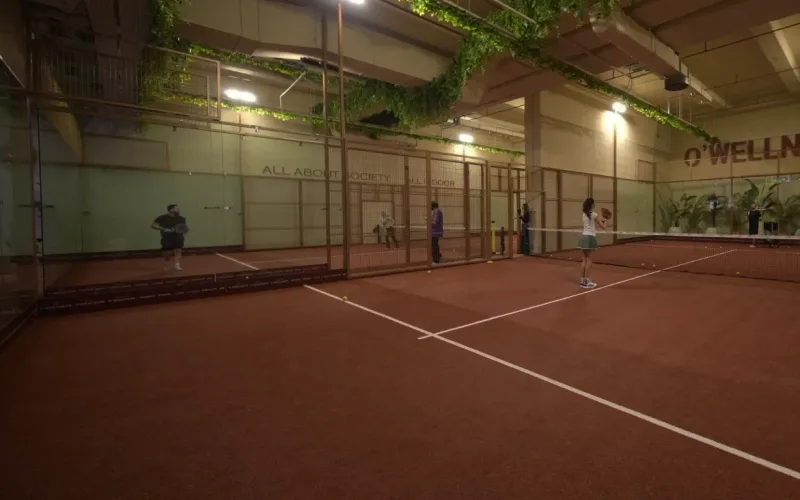
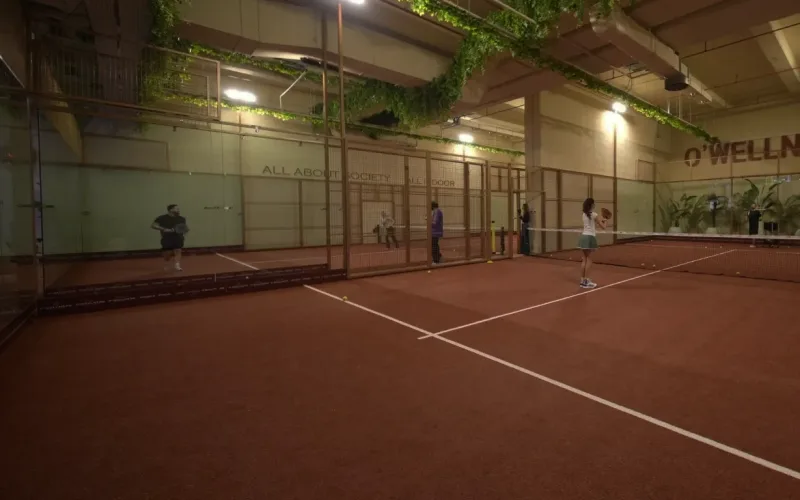
Our padel lessons we run a kids’ academy programme specifically for the 7-16 age range. Groups are divided by age and level, lessons are built on regular weekly repetition, and each child’s progress is tracked individually over time. In Ankara’s climate, which can be cold in winter and hot at midday in summer, our indoor, climate-controlled courts let children train without interruption all year round.
Thanks to our proximity to the Hacettepe Beytepe Campus and the surrounding neighbourhoods, we offer a programme that is easy to reach after school hours. If you want to plan a trial lesson where your child will hold a racket for the first time, the process is sorted out within a few minutes over WhatsApp.
Preparing for the first lesson
Before sending your child to their first padel lesson, comfortable sportswear, trainers and plenty of water are enough. Since the racket and balls are provided by the club, you do not need to make any extra investment. If you are curious how the first lesson goes, you can take a look at first padel lesson preparation guide ; most of the advice there applies to children too.
Practical tips for parents
- Do not expect results right after the first few lessons; motor skill development takes time.
- Support your child with a focus on the process, not the result; asking “did you have fun?” rather than “did you win?” is healthier.
- Regular attendance is more effective than occasional long sessions; one fixed day a week is ideal.
- Taking part with siblings or friends boosts motivation, because padel is a doubles sport anyway.
From kids’ padel to the youth and tournament pathway
For children who reach a certain level in the academy process, the university cup and youth category tournaments competitive settings like these can be a next step. This transition is not compulsory; many families aim only for their child to move regularly and socialise, and this is a perfectly reasonable approach.
Over time your child’s interest may shift to technical details; at this point it is normal for them to start wondering about shots such as the bandeja or the serve. In line with this curiosity, our serve technique article or our bandeja guide can also be useful for advanced children.
Balancing padel with the school schedule
Setting aside regular time for padel among your child’s school, homework and other social activities is a real challenge most families face. The solution is usually to set a fixed day and time each week; that way padel becomes a natural part of the child’s routine rather than a random activity. Lessons held after school can also be a good option for children who want to burn off energy before homework.
Even during exam periods, reducing the frequency rather than dropping the sport altogether helps the child keep both physical and mental balance. It is generally accepted that regular movement supports concentration; so it is healthier to see padel not as an “extra burden” but as a balancing element.
Padel for siblings and groups of friends
Because padel is played in teams of two, it is a natural sport for siblings or close friends to take part in together. This both boosts motivation and creates a shared space the child can keep up outside the court. In the kids’ groups at Beytepe, siblings of the same age and level joining lessons together is a commonly preferred arrangement.
Joining with groups of friends makes the first weeks go smoothly, especially for children just starting out; seeing a familiar face eases adaptation to a new sports environment.
The role of the coach in kids’ padel
Unlike adult lessons, the coach’s role in children’s lessons is not just to teach technique but also to keep interest alive. A good kids’ coach gamifies repetitions, rewards small successes immediately and lets the child progress at their own pace. This approach lets the child see the sport as an enjoyable activity rather than an obligation.
Our coaches at Beytepe use age-specific pedagogical methods in kids’ groups, aiming to keep both technical development and the enjoyment of the sport together. For children who progress technically over time, different game formats is also a natural part of the programme.
Safety and injury prevention
The risk of injury in children can be reduced significantly with the right technique and suitable equipment. Wearing the wrist strap, not skipping warm-up movements and avoiding overload are the basic safety principles in kids’ padel. Playing on indoor courts also removes the extra risks created by outdoor conditions (extreme heat, cold, slipperiness); this is one of the reasons Beytepe’s indoor courts offer a particularly safe environment for children.
Nutrition and sleep: the invisible supporters of the young athlete
For children who play padel regularly, performance and development are closely linked not just to work on court but also to nutrition and sleep patterns. A light, energising meal before training and protein and fluids after training support the child’s recovery. Enough sleep is critical, especially for children of growing age, for consolidating motor skill development.
Parents do not need to go overboard on this; a balanced meal pattern and regular sleep hours are often enough. The club’s lounge area healthy snacks on offer can be a practical option after training.
How do you track your child’s progress?
Progress in kids’ padel may not be as quick and linear as in adults; in some weeks there is clear improvement while other weeks stand still. This is normal. Regular feedback from coaches helps both parent and child form realistic expectations. In the academy programme at Beytepe, periodic small assessments let you see concretely which areas your child is improving in.
Competition or fun: finding the right balance
Some children are naturally competitive while others just want to play for fun. Both are perfectly valid approaches and a good academy programme should respect this difference. The kids’ groups at Beytepe stay open to a competitive path for children who want it, while also offering a pressure-free environment for those who just want to move and socialise.
The enrolment process for the kids’ academy at Beytepe
When you want to enrol your child in the academy programme, the process is quite simple: via our WhatsApp line you share your child’s age and any previous sports experience, our team suggests a suitable group and time slot, and then you begin with a trial lesson. This trial lesson is an important opportunity both to see whether the child likes the environment and for the family to assess how to fit the programme into the daily routine.
Another topic families often ask about during enrolment is the number of children in the group and the coach-to-student ratio. Working with small groups speeds up development because it ensures each child gets individual feedback.
Your child’s first tournament experience
For children who reach a certain technical level, the first tournament experience is a step that is both exciting and educational. Reminding the child that the aim in this first experience is not to win but to apply what they have learned in a competitive setting reduces pressure and creates an enjoyable memory. Most families remember their child’s first tournament as an unforgettable milestone.
How should you behave as a parent on the sidelines?
Avoiding being overly directive while watching your child is important for them to learn to make their own decisions. Trusting the coach’s instructions and not shouting technical corrections from the sideline helps the child build a healthy relationship with both the coach and their own game.
One last note
Your child’s padel journey can become an enjoyable and sustainable habit with the right starting age and the right guidance; being patient and judging the process by the process itself is the most important key.
If you would like to start our kids’ academy programme at Beytepe with a trial lesson for your child, we can plan suitable times together via our WhatsApp line.
Frequently Asked Questions
Structured lessons usually start at age 7, but it is also possible to be introduced through mini padel games at age 5-6.
Not needed in the first lessons; in the Beytepe children’s academy programme, an age-appropriate racket and balls are provided by the club.
No, padel is a beginner-friendly sport in this respect and lessons are designed for children starting from scratch.
One regular lesson a week is more effective than frequent irregular ones; the frequency can be increased later on.
Yes, kids’ groups are generally mixed; the split is made by age and level.


 Padel Courts
