
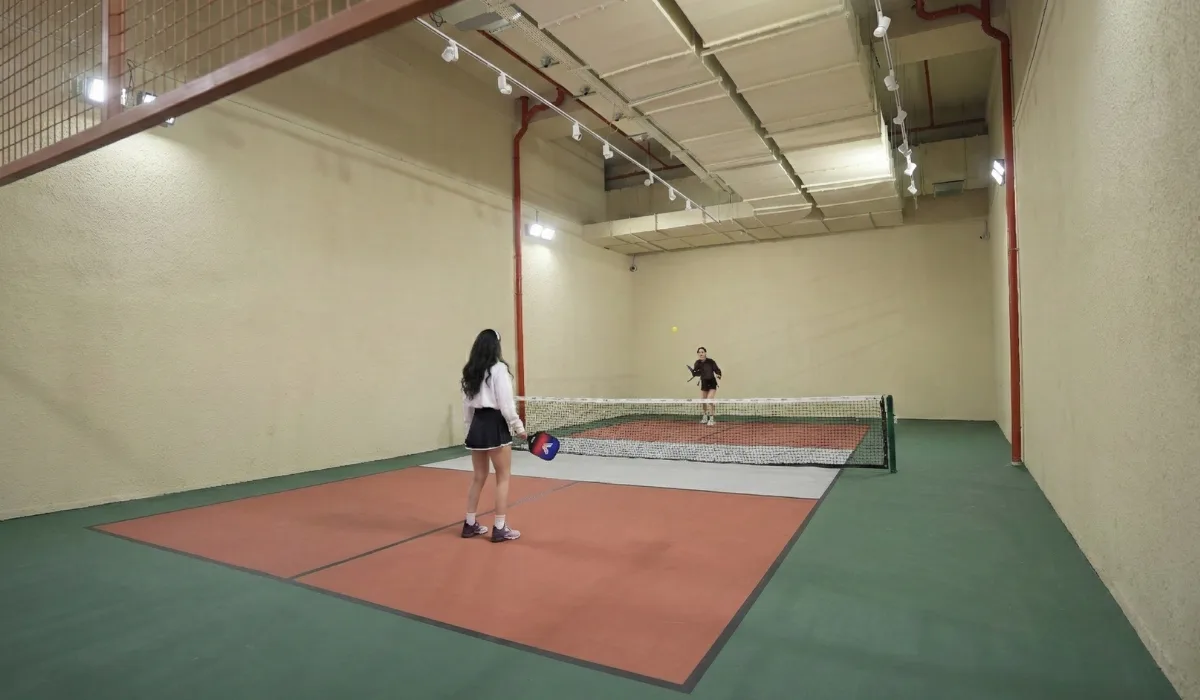
Padel learning plan, in short, is a structured roadmap that helps someone learning the game from scratch progress with weekly goals, repeatable drills and concrete progress checks. A four-week plan offers a solid start, from the basic grip and forehand-backhand to volleys, using the glass and your first social match. You won’t have “mastered” the game by the end, but you will be a player who feels comfortable on court, can sustain a rally and is ready to play matches.
In this article, as the O’Padel Beytepe coaching team, we share the framework we often use with beginners. The plan is built on the assumption of about two to three sessions a week: one lesson, one practice session and, if possible, one social game. You can adapt it to your own schedule and pace; what matters is to keep the order and the logic of repetition.
Summary
- Week 1: Grip, ready position, forehand and backhand with controlled rallies.
- Week 2: Serve, return of serve and volleys at the net.
- Week 3: Using the back glass and side glass, introduction to the lob.
- Week 4: Introduction to the bandeja, positioning and your first social match.
- 2–3 sessions per week; each session includes a warm-up, 2–3 drills and a short game.
Before You Start: Basic Preparation
Getting the most out of a four-week program starts with a few simple preparations. First, the right equipment: a control-oriented racket suited to beginners and shoes with soles suitable for padel courts. For choosing a racket, see padel rackets for beginners, and for shoes, see choosing padel shoes articles. In the first weeks, you can ask O’Padel Beytepe via WhatsApp about trying a racket at the club; that is a perfectly reasonable option.
Second, knowing the basic rules makes things easier. For your first lesson, it's enough to know that the serve is underhand, that the ball can hit the ground first and then the glass, and that scoring is similar to tennis. For details, our what is padel and how to play guide is a good starting point.
Third, create a schedule. Deciding up front which days of the week you'll be on court makes the plan more sustainable. Reservation options such as a fixed weekly slot make this easier; you can find the options on our book a court page. Finally, if you have any health issues or joint problems, or haven't exercised in a long time, we recommend that you consult your doctor before starting a new physical program.
Session structure: the same framework every practice
We recommend building every session in the plan on the same framework. This repeated structure frees your mind from the question of “what should I do” and lets you focus your energy on learning.
- Warm-up (about 10 minutes): Light jogging, side steps, hip and shoulder mobility, then short volleys with mini-padel. Our recommendations: pre-padel warm-up .
- Technique block: Two or three drills focused on the week's main technique.
- Application block: Repeating the technique you've learned while moving and in game-like situations.
- Game block: Short-scored games or free rallies; testing what you've learned under pressure.
- Cool-down: A few minutes of stretching and breathing; details: post-padel cool-down and stretching .
We also recommend jotting down two or three sentences at the end of each session: What did you do well today, what did you struggle with, and what will you focus on next session? This small habit is one of the most powerful tools for seeing your progress at the end of four weeks.
Week 1: Grip, Ready Position and Controlled Rallies
The goal for the first week is simple but critical: hitting the ball with the right grip, from a balanced position, in a controlled way. Power is definitely not a priority at this stage. Sending the ball safely to the other side with a repeatable motion lays the foundation for the weeks ahead.
This week's focus
- Grip: The Continental grip; a shared grip for the forehand, backhand and volley. Details: padel racket grip .
- Ready position: Knees slightly bent, weight on the balls of your feet, racket out in front at chest height.
- Forehand and backhand: Short backswing, meeting the ball in front of your body, controlled follow-through.
The drill list
- Forehand with hand-fed balls: The coach or partner bounces and feeds the ball, and you send it crosscourt from mid-court. 3 sets × 10 reps.
- Backhand with hand-fed balls: The same drill on the backhand side. 3 sets × 10 reps.
- Mini rally from the service line: Two players rally at a slow pace from behind the service line. Goal: an uninterrupted 10-shot rally.
- Target zone: Hit forehands and backhands at a target placed in the far corner of the opposite court; note how many times you hit it.
At the end of the week, ask yourself: Can I sustain a 10-shot rally at a controlled pace? If your answer is “mostly yes,” you're ready for week two. For forehand and backhand details, our articles padel forehand technique and padel backhand technique are useful supplementary resources.
Week 2: Serve, Return and Volleys at the Net
In week two, we focus on two key moments of the game: starting the point and controlling the point at the net. In padel, the net is where most points are won or lost. That's why volley technique is one of the most valuable skills for beginners to learn.
This week's focus
- Serve: Hit the ball below waist height and send it confidently into the crosscourt service box. For the rules, see padel serve rules.
- Return of serve: Send the ball deep and to your opponent's feet; avoid rushed shots.
- Volley: A short, blocking motion; racket head forward, wrist firm.
The drill list
- Serve series: 20 serves into each service box; note your successful serve rate.
- Serve + return: Your partner serves, and you return crosscourt and deep. 3 sets × 8 reps.
- Volley wall: At the net, forehand and backhand volleys off balls fed by the coach. First stationary, then stepping to the side.
- Volley vs. baseline rally: One player volleys at the net, the other rallies from the back. 2 minutes each, then switch roles.
Goal for the end of the week: getting most of your serves into the box and hitting controlled volleys off slow balls at the net. For more on volleys, see padel volley technique article.
To follow the plan you need regular court time. On our indoor courts at Beytepe, secure your four weeks with a fixed weekly slot or lesson + court options; just write on WhatsApp (+90 536 908 08 00).
Week 3: Using the Glass and Introduction to the Lob
The glass is what most clearly sets padel apart from other racket sports. In week three, we learn to read and play balls coming off the glass. At first, balls rebounding off the glass can be confusing, but with the right timing and patience they quickly become a natural part of your game.
This week's focus
- Back glass: Wait for the ball to come off the glass, turn sideways to the glass and meet the ball in front of your body.
- Side glass: Read the angle on corner balls and bring the ball back to the middle of the court.
- Lob: A high, deep ball to push your opponent back from the net.
The drill list
- Back glass feeding: The coach sends the ball into the back glass; you wait for the rebound and return it crosscourt with a forehand. 3 sets × 8 reps.
- Back glass on the backhand side: The same drill on the backhand side.
- Corner balls: Back glass + side glass combination; the goal is simply to keep the ball in play.
- Lob after the glass: Return the ball coming off the glass with a high, deep lob.
Our in-depth article on the glass, using the walls in padel , and our article on lob technique, padel lob technique are this week's best companions. Goal for the end of this week: keeping most slow balls coming off the back glass in play.
Week 4: Introduction to the Bandeja, Positioning and Your First Match
In the final week, we put the pieces together. You'll be introduced to the bandeja to hold your position at the net against your opponent's lob, learn how to move on court with your partner, and play your first social match at the end of the week.
This week's focus
- Bandeja basics: Turn sideways, racket high, send the ball deep with control. Placement, not power. Details: how to hit a padel bandeja .
- Positioning: Move forward and back together with your partner; try to stay level with each other.
- Match flow: Scoring, changing ends and basic court etiquette.
The drill list
- Bandeja feeding: The coach hits a medium-height lob; you turn sideways and send it crosscourt with a bandeja. 3 sets × 8 reps.
- Lob + retreat: A lob comes while you're at the net; you hit a bandeja and return to the net.
- Two-on-two positioning game: Points played at a slow pace only, focusing on positioning and communication.
- Short match: A one- or two-set social match; focus on applying what you've learned rather than the score.
For practical tips for your first match, we recommend reading our article preparing for your first padel match . Communication on court is also an important part of this week; our article partner communication in padel offers short, actionable tips.
Weekly Progress Checklist
The table below is designed for assessing yourself at the end of each week. You don't have to meet every criterion; if you meet most of them, you can move on to the next week. If there's an area you're struggling with, repeating that week's drills for another week is completely normal.
| Week | Main theme | End-of-week check-in question |
|---|---|---|
| 1 | Grip, ready position, forehand/backhand | Can I sustain a 10-shot rally at a controlled pace? |
| 2 | Serve, return, volley | Do most of my serves land in the box, and can I volley slow balls? |
| 3 | Back and side glass, lob | Can I keep slow balls coming off the back glass in play? |
| 4 | Bandeja, positioning, match | Can I complete a social match while positioning myself with my partner? |
One of the most common beginner mistakes is jumping to the next week's topic before the current one has fully sunk in. If you're wondering how to avoid mistakes, our article the most common beginner mistakes in padel will help. For a general time frame, see how long to learn padel article.
After 4 Weeks: The Next Step
Once you complete the four weeks, you're a player who knows the basic techniques and can play matches. Further progress comes from a combination of regular play and targeted lessons. Our recommendation: keep up a weekly lesson rhythm while gaining match experience in social formats.
- Social matches: Wednesday and Saturday Americanos are ideal for playing without having to find a partner. What is Americano article explains the format.
- Community: Newcomers Night, held on the first Thursday of every month, is a great opportunity to meet new players. Details: community on our page.
- Level assessment: Finding out where you stand on our 1.0–7.0 level system lets you play in the right groups.
- Conditioning: As your playing frequency increases, off-court strength and mobility work become more important. For the facilities in the O’Wellness Beytepe complex, recovery & wellness page.
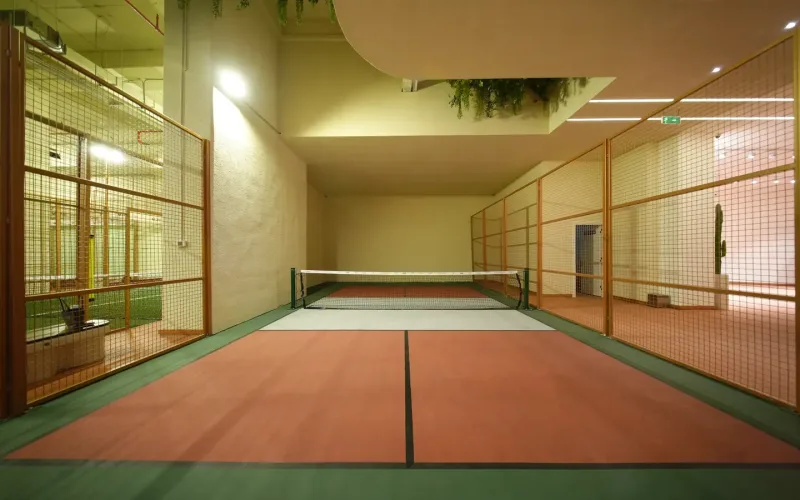
All our lesson options are on our padel lessons page. You can find our court features on padel courts page.
Result
A four-week padel learning plan turns random court hours into a goal-driven development process: a clear route from grip and rallying to volleys, from the glass to the bandeja and on to your first social match. Thanks to our indoor, climate-controlled courts at O’Padel Beytepe in the O’Wellness Beytepe complex in Çankaya, you can follow your plan regardless of the weather, from Ankara’s snowy winters to its hot summers; you can easily reach your weekly sessions from Çayyolu, Ümitköy, Konutkent or Bilkent. As the O’Padel Beytepe coaching team, we are with you for these four weeks; to take the first step, just book a lesson or a court hour.
Frequently Asked Questions
Four weeks is a realistic period to get to know the basic techniques and reach a level where you can play social matches. Mastering the game, however, takes longer-term, regular practice.
This plan assumes about two to three sessions per week: one lesson, one practice session and, if possible, one social game. You can still progress with fewer sessions; it will just take longer.
Most drills are more effective with a partner or coach. If you don't have a partner, lesson + court packages and community events are a good solution.
Repeating that week's drills for another week is completely normal. The goal of the plan isn't to keep up with the calendar, but to build a solid foundation.



 Padel Courts
