
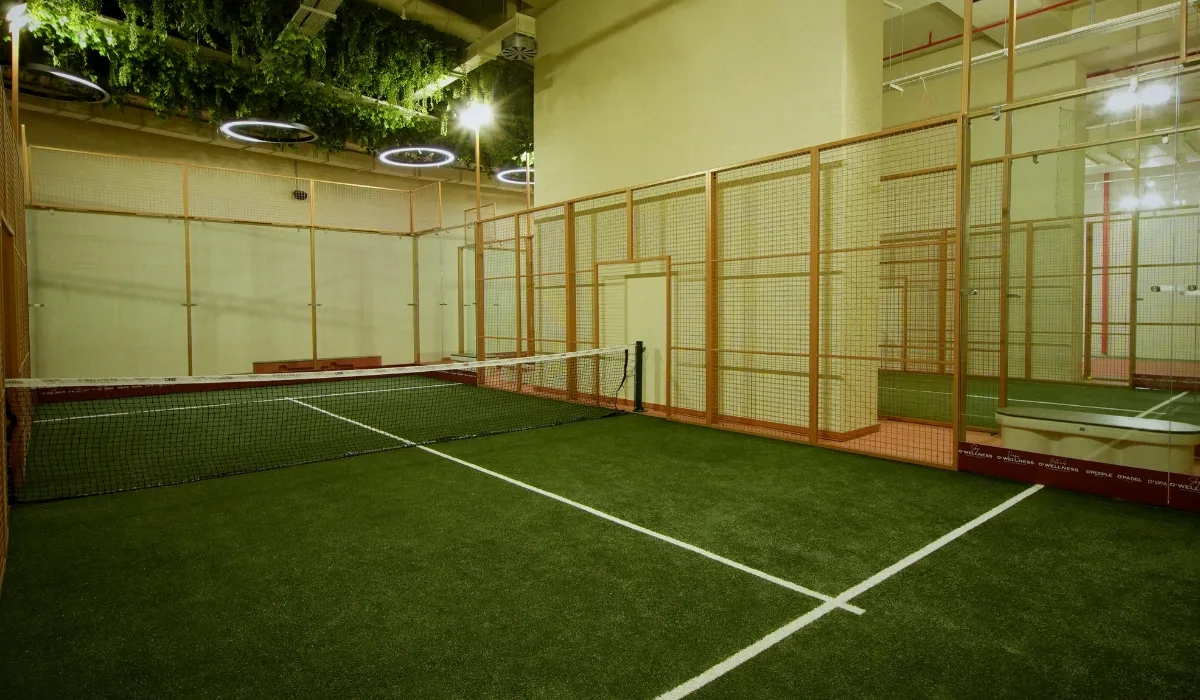
How long does it take to learn padel? Here is the short, defensible answer: most people rally in their first session, play an enjoyable match with a good grasp of the rules after 3-4 sessions, and with regular play and lessons reach a level where they can comfortably take part in club tournaments (about 2.5-3.0) within 3-6 months. Advanced skills like the bandeja, wall play and tactical depth take a year or more. Padel is one of the easiest racket sports to start and one of the longest to master.
In this article we turn the learning process into a level-by-level timeline: what you can do at each stage, what you can’t do yet, and which factors shorten or lengthen the time. The figures are realistic ranges based on padel coaches’ experience with players on court; they are not exact durations but sound expectations.
Summary
- First rally: first session. First match by the rules: 3-4 sessions.
- Club tournament level (2.5-3.0): 3-6 months with regular play.
- Intermediate-advanced level (4.0): usually 1-2 years of regular lessons and matches.
- The fastest formula for improvement: 1 lesson + 1-2 matches a week + a short warm-up/conditioning routine.
- A tennis or squash background speeds up the start, but requires relearning some reflexes.
Why Is Padel So Quick to Learn?
Padel's learning curve is noticeably gentler than that of other racket sports, and there are structural reasons for this. The court is 20 × 10 meters, about a third of a tennis court; split among four people, running distances become very short. The ball has lower pressure than a tennis ball, so it comes more slowly and leaves time to react. The racket is short with a solid face; feeling where the ball meets the racket is easier than with a strung tennis racket.
But the real difference is the walls. In tennis, a ball you miss ends the point; in padel, a ball that gets past you bounces off the glass and comes back to you. This “second chance” mechanism lets new players keep the rally going, so learning progresses through playing rather than through making mistakes. To learn the padel basics from scratch, see What Is Padel and How Do You Play? our guide.
Level-by-Level Learning Timeline
Padel players are rated on a scale from 1.0 to 7.0; 1.0 means you have never played and 7.0 means professional. The timeline below shows realistic ranges for an average adult who plays once or twice a week and takes lessons.
| Level | Typical duration | What can you do? | What can't you do yet? |
|---|---|---|---|
| 1.0-1.5 | First 1-4 sessions | Rallying, underhand serve, applying the basic rules | Using the wall deliberately, volley control |
| 2.0-2.5 | 1-3 months | Playing balls off the glass, basic volley, lob | Bandeja, holding the net position |
| 3.0-3.5 | 3-9 months | Bandeja, net control, coordinating with your partner, tournament play | Víbora, double glass, tempo management |
| 4.0-4.5 | 1-2 years | Tactical reading, smash variations, using the side glass and double glass | Consistency in changing the game plan based on the opponent |
| 5.0+ | 3+ years | Semi-pro play, full shot repertoire | At this level the question is not “what” but “how consistently” |
1.0-1.5: First sessions
The first 15 minutes of your first session go into understanding how the ball comes off the glass; then the rallies begin. By the third or fourth session the rules click, the serve becomes automatic and match play becomes possible. The only goal at this stage is staying in the point; the score is completely secondary. To prepare for your first match, read Preparing for Your First Padel Match you can read our article.
2.0-2.5: Making peace with the wall
The most important transformation happens between the first and third month: you stop chasing the ball that gets past you and instead turn sideways and wait for it to come off the glass. Basic volleys and lobs enter your repertoire. Joining Americano tournaments at this stage speeds up learning, because playing with different partners and opponents sharpens your game reading.
3.0-3.5: Becoming a padel player
From the third month on you start working on padel’s signature shot, the bandeja, and you hold the net position deliberately. Communication with your partner (who takes it, who covers) becomes natural. This is the level where you can play comfortably in competitive formats such as the 8-week level league and the monthly club tournament. Most regular players reach this zone in 6-9 months; those who play three times a week and take lessons get there sooner.
4.0 and beyond: Tactical depth
4.0 is the level where the game is built more on decisions than on shots: when to lob, when to play a chiquita, which ball to smash. You read the side glass and double glass, and the víbora enters your repertoire. Reaching this point usually takes 1-2 years of regular lessons and matches. Beyond that it is a matter of consistency and fitness; for technical details, see Padel Shot Techniques Guide our article guides you.
6 Factors That Speed Up Learning
It is common to see a two-level gap between two players over the same period. What creates the gap is talent as much as these habits:
- Taking lessons. Padel’s most critical skills (reading the wall, the bandeja, positioning) are not picked up on their own; they are learned through coaching. Players who only play matches usually get stuck at 2.5; those who take lessons break through this wall much faster.
- Frequency. Someone who plays once a week improves; someone who plays two or three times a week improves much faster. In skill learning, retention increases when the gap between repetitions is short.
- Playing with different partners. Always playing with the same four people is comfortable but slow. Americano and Mexicano formats expose you to different playing styles every session.
- An opponent close to your level. An opponent who is too strong doesn’t teach you, they crush you; one who is too weak doesn’t help you improve. That is exactly what the level system is for.
- A fitness foundation. A tired player can’t learn technique. A short warm-up routine and one strength/mobility session per week directly support your progress.
- Video and feedback. Watching your own shots lets you see what your coach is telling you; awareness of a mistake is half of fixing it.
At O’Padel Beytepe's padel lessons combine most of these factors in one program: level assessment, private or group lessons, lesson + court packages, and natural match opportunities through community events. For a structured start, you can also check out our padel in 4 weeks plan.
Mistakes That Slow Down Learning
Some players stay in the 2.0-2.5 band despite playing for months. The reason is usually one of these three habits:
- Focusing on power. In padel, a hard-hit ball usually comes off the glass and hands your opponent an easy ball. Without control, power is useless.
- Not moving up to the net. A player who feels safe at the back of the court can spend years without realizing that most points are won at the net.
- Repeating mistakes. Playing matches without taking lessons reinforces the wrong grip or wrong positioning; fixing them later takes much longer.
For the full list of these mistakes and how to fix them, see 15 Beginner Mistakes in Padel article.
Plateaus are normal
Every player goes through a plateau, usually around 2.5 and 3.5, when they feel they haven’t improved for weeks. This is not a standstill but a reorganization phase: visible progress slows while the brain automates new movement patterns. The most reliable way to break through a plateau is to add variety: playing with different partners, focusing on a single shot with your coach, or working only on net play for a few weeks. Interpreting a plateau as “I have no talent” is one of the most common reasons people quit padel; yet most players jump half a level all at once when they come out of it.
To measure progress, look at behavior rather than the score: how often you wait for the ball that gets past you, how many points you finish at the net, how many of your lobs actually push your opponent back. These three indicators are a far more reliable measure of improvement than the number of sets you win.
If you want to find out your level and build a realistic development plan, we do a level assessment in your first lesson on our courts in the O’Wellness Beytepe complex. A single-session booking is enough; no membership needed, WhatsApp: +90 536 908 08 00.
How Does Your Background Affect the Timeline?
Not everyone starts from the same place. Sports background and age noticeably change the learning timeline.
Tennis or squash background
Racket feel and hand-eye coordination come ready-made; these players usually start around 2.0-2.5 and reach 3.0 within a few months. However, tennis players have to break the reflex of hitting hard and chasing the ball, while squash players have to break the habit of wrist-heavy strokes and hitting the ball directly into the wall. For details, check out our 12 Differences Between Padel and Tennis and Padel or Squash? articles.
Never having played a racket sport
Surprisingly, this group is also considered to have an advantage: there are no bad habits to break, and fundamentals like the continental grip settle in correctly from day one. The start is a few sessions slower, but the road to 3.0 is usually less bumpy.
Age
Thanks to short sprints and a slow ball, padel can be learned at any age. Children learn through play and pick up technique quickly; for players over 40, the mental learning speed is the same, while physical recovery takes a bit longer. In this group, leaving at least one rest day between two weekly sessions and never skipping the warm-up keeps progress sustainable. For a joint-friendly start, our padel over 40 article is ready for you.
A Realistic Weekly Plan
You don’t need a complicated program to speed up learning. The plan below suits most adults for the first 3-6 months:
- One weekday evening (60 min): Group lesson. Technical fundamentals, wall work, positioning drills.
- One weekend morning (90 min): Americano or social match. Trying out what you’ve learned with different partners.
- 10 min before every session: Dynamic warm-up. 5 min of stretching after every session.
- Optional, once a week: Short strength and mobility session; core, hips and shoulders.
Make the plan sustainable: a fixed slot on the same day and time keeps the session on your calendar even during a busy week. That is exactly why fixed weekly slots and lesson + court packages exist; they eliminate decision fatigue and turn learning into a habit. Don’t punish yourself in weeks when you miss sessions; just get back into the rhythm the following week.
At this pace most players reach 2.5 within three months and around 3.0 in six months. We explain tournament formats and the level league structure on our tournaments and leagues page; if you’re starting on your own, community events are the quickest way to find a partner.
Result
The question of learning padel is answered not with a single number but with a timeline: a rally in the first session, a match in a few sessions, a tournament in a few months, mastery in a few years. What determines the time is routine more than talent: lessons, frequency and opponents at the right level. In Beytepe, the O’Padel Beytepe courts in the O’Wellness Beytepe complex offer the pieces needed to build this routine in one place: level assessment, individual and group lessons, Americano nights and O’Spa Beytepe for post-match recovery. Whether after work from Eskişehir Yolu or on a weekend morning from Çayyolu, if you can spare two hours a week, in six months you won’t recognise your level today.
Frequently Asked Questions
At least two sessions a week are recommended for visible progress: one lesson and one match. Someone who plays once a week also improves, but skill retention is lower and reaching the same level takes roughly twice as long.
Up to a basic level, yes; the rules and rallying can be learned just by playing. But critical skills such as the bandeja, reading the wall and net positioning don’t develop on their own. Players who don’t take lessons usually get stuck around 2.5 for a long time.
The 1.0-7.0 scale common at international clubs is used. At O’Padel Beytepe, your level is set in your first lesson through the coach’s observation; Americano, level league and tournament results also update your level over time.
In practice, at no age. Short sprints and a slow ball make padel learnable even at 60 and beyond. What changes with age is not learning speed but the recovery time between sessions.
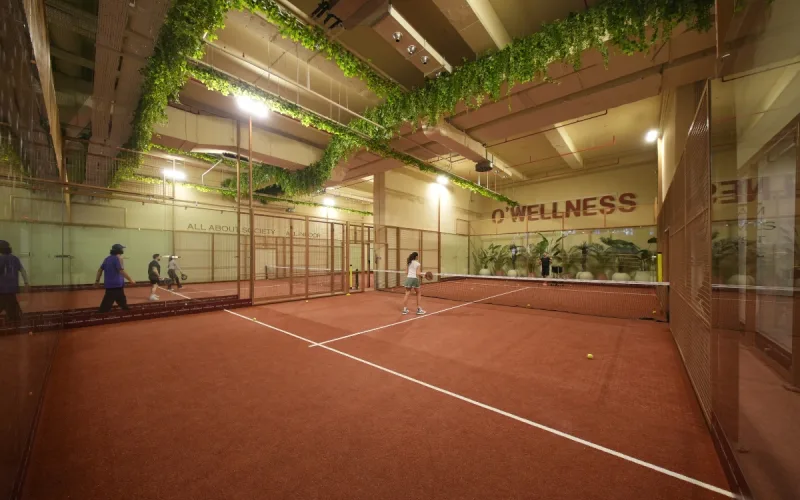


 Padel Courts
