
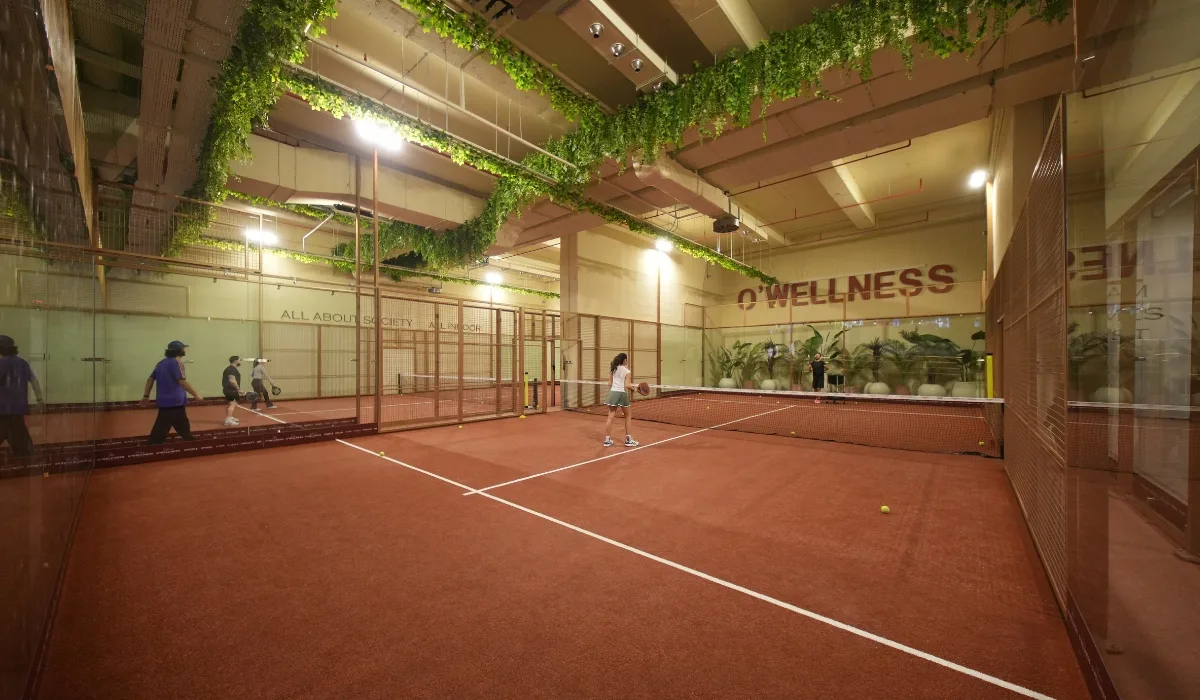
The level gap in padel is almost unavoidable, especially in social matches, Americano evenings and newly formed pairs. One of you may have played for years, the other may have picked up a racket two months ago. In such a pair the match often makes two mistakes: the stronger player tries to take every ball and gets tired, while the weaker player feels pressure and makes more errors. Yet the right plan can turn two people of different levels into a strong team. Community members who play in matchups at O'Padel Beytepe often observe how this works. In this article we describe how a strong player and a developing player can build a working setup together.
Mindset first: being a team
The most critical step is to see the match as the game of one team rather than two separate individuals. The stronger player's aim is not to show their own performance but to make the team win points. The weaker player must also see themselves not as a burden but as a part of the plan. This difference in mindset changes both communication and attitude.
Support your partner's development during the match as well. A sincere encouraging phrase after a mistake clearly raises confidence on the next ball. Conversely, a scolding tone or sighs can cause an already tense player to freeze completely.
Role sharing and court structure
One of the approaches that works best in pairs with a level gap is for the stronger player to cover more space. But this does not mean wiping the weaker player off the court. The stronger player owns the middle, takes difficult balls off the glass and handles hard attacks; the weaker player works on solid and simple balls.
- Leave the side the weaker player finds easy (for example the area where their forehand falls) to them and let the stronger player cover the difficult zone.
- Set a clear rule in advance for middle balls: a simple phrase like "middle is mine" reduces tension.
- Let the player who can serve confidently take the serve and start the first ball under control.
- Play lob-heavy in defence and leave the job of going on the attack to the stronger player.
This setup should be flexible rather than permanent. If the weaker player gains confidence as the match goes on, allow them to take more space. The aim is not to restrict but to raise step by step.
Against the opponent's weak-spot tactic
Opponents notice a level gap quickly and start targeting the weaker player. This is neither against the rules nor unfair; it is a natural part of padel. But knowing this lets you be prepared. The weaker player playing mainly with high, controlled, defensive-oriented balls reduces the opponent's advantage.
The stronger player must also use net position well to disrupt this targeting. Stepping in on cross-court balls, closing the middle and spreading the pressure on the weaker partner spoils the opponents' plan. Also pushing them back with a lob into the area they are targeting puts the tempo back under your control.
The stronger player's responsibilities
The stronger player's biggest task is managing the tempo. When the opponent wants to play fast they can break the rhythm by hitting higher and slower balls; when the weaker partner is not ready they can deliberately extend a point. Running a game plan that reduces the team's error count is far more valuable than trying to win every ball.
The stronger player can also give information visually to the partner. They show the open space with their own position, make room for the partner by stepping back and manage the game without shouting unnecessarily. Such subtleties are the most valuable part of experience and let the weaker player learn quickly.
The developing player's responsibilities
The developing player should not stay passive either. Knowing their own strong shots, aiming to be consistent and preferring safe options over risky shots on difficult balls is a direct contribution to the team. For example, a high lob or a controlled cross-court shot lets the team breathe.
Alongside this, do not hesitate to ask questions. Before the match, simple questions like "Will you take the middle?" or "On which balls should I lob?" clarify the team's structure. Being brave in communication is also the fastest path to technical development.
Communication: what to say and what not to say
Communication within the match should be short, clear and positive. Short phrases like "you take it", "mine", "long", "short" are enough. Giving long technical explanations during the match increases cognitive load and tenses the player. Leaving technical feedback until after the match is both a more effective and a kinder approach.
A balance is also needed for post-match feedback. Say first what went well, then give one or at most two points for improvement. This way the weaker player feels supported and also has a concrete target.
In-match adjustments
Being able to make in-match adjustments is very important for pairs with a level gap. After the first set, talk about what worked: on which shots is the weaker player comfortable and in which zone do they struggle? Which target did the opponents concentrate on? These three questions provide a concrete plan for the second set and can change the flow of the match.
A short, calm assessment is far more productive than panic and blame talk between points. When you lose tempo, take a breath, set a simple goal, for example "let's keep the next five balls in", and focus on the game. Simple goals are often more effective than complex plans.
Finally, be realistic about results. A pair with a level gap will sometimes lose, and there is nothing to be ashamed of in that. What matters is learning something from each match and preparing better for the next. As the gap between you closes over time, the partnership you build will be stronger both on and off court.
Playing with different partners in matchmaking events also speeds up these skills. Each new partner demands a different communication style and game structure. This variety develops both your adaptability and your game intelligence. After a few weeks you will see how much easier it becomes to find a common language with a partner in the first five minutes.
Seeing it as an opportunity for growth
A level gap, when managed correctly, is an opportunity for both sides. The weaker player gets the chance to closely see the stronger player's position, timing and decision-making. The stronger player develops patience, communication and game management, which makes their own game more mature.
Join matchmaking events at O'Padel Beytepe and play with players of different levels; this contributes to both the community and your development. In your next match, have a short planning chat with your partner and use the gap as a strength rather than an obstacle. See you on court.


 Padel Courts
