

Training by age group in padelstarts with understanding why applying the same programme to everyone doesn't work. The recovery capacity of a player in their twenties differs from that of a player in their forties; similarly, the priority areas of work change. In this article we cover how to adapt padel training for different age groups, recovery management and the priority areas of each period. The article offers general training information; for a programme suited to your health status, we recommend consulting a doctor and a coach.
Three Key Factors That Change with Age
- Recovery speed: With age, the rest needed between sessions tends to lengthen.
- Muscle mass and strength: From your 30s onward, without regular strength work a gradual decline (sarcopenia) occurs.
- Tissue flexibility and joint mobility: These tend to decline without regular mobility work.
Important note: these changes don't mean an inevitable decline but a process that needs to be managed. A 45-year-old player who does regular strength and mobility work can be in better physical condition than a 30-year-old who does none.
Your 20s
Advantages
- Fast recovery; playing on consecutive days is easier to tolerate.
- Able to handle high training volume.
- Fast motor learning; new techniques stick quickly.
- Good response to plyometric and explosive work.
Priorities
- Technical foundation: Patterns established at this age are carried for many years. The right grip, the right bandeja mechanics, the right approach to the wall.
- Building volume tolerance: 4-5 matches a week may be sustainable.
- Strength base: Learning the basic lifts (squat, deadlift, row) with correct technique.
- Tactical knowledge: Reading the game and decision-making; they develop with experience.
Common mistakes
- Not caring about recovery; fast recovery at a young age masks bad habits.
- Skipping the warm-up.
- Seeing strength work as unnecessary.
- Neglecting preventive shoulder and wrist work; the effects show years later.
- Irregular sleep.
Sample weekly programme
- 3-4 matches or lessons.
- 2-3 strength sessions (high volume).
- 1-2 conditioning/plyometric sessions.
- 8-10 minutes of mobility daily.
- 1 full rest day.
Your 30s
Situation
In this period, work and family responsibilities generally increase and training time shrinks. Physical capacity is still high, but recovery management begins to gain importance.
Priorities
- Maintaining strength work: In this period, strength training is no longer optional but necessary.
- Mobility: The effects of desk work accumulate; hip flexor tightness and thoracic stiffness become common.
- Efficiency: Lots of results in little time; effective 45-minute sessions.
- Preventive work: Targeted programmes for the shoulder, wrist and groin.
- Warm-up discipline: No longer a step you can skip.
Common mistakes
- Cramming everything into a single long weekly session; this increases the risk of injury.
- Trying to sustain your 20s volume with the same recovery.
- Dropping strength work completely.
- Ignoring sleep debt.
- Not taking small aches seriously.
Sample weekly programme
- 2-3 matches or lessons.
- 2 strength sessions (45-50 minutes, efficient).
- 1 conditioning session (interval).
- 10 minutes of mobility daily.
- 1-2 rest days.
Your 40s
Situation
Recovery time lengthens markedly. Without regular strength work, muscle mass loss accelerates. On the other hand, tactical knowledge and game reading are generally at their best; this partly compensates for physical capacity.
Priorities
- Strength training: It becomes the highest-priority component. Maintaining muscle mass is critical for both performance and health.
- Recovery: Sleep, nutrition and rest days are at the centre of the plan.
- Warm-up: It should be extended to 12-15 minutes. Moving laterally with cold muscles is riskier at this age.
- Mobility: Daily routine; hip, shoulder, thoracic.
- Balance and proprioception: Supports safety in changes of direction.
- Tactical advantage: Closing the physical gap with game intelligence and positional knowledge.
Adaptations
- Avoid playing matches on consecutive days; leave a day in between.
- Apply plyometric work gradually and in a controlled way.
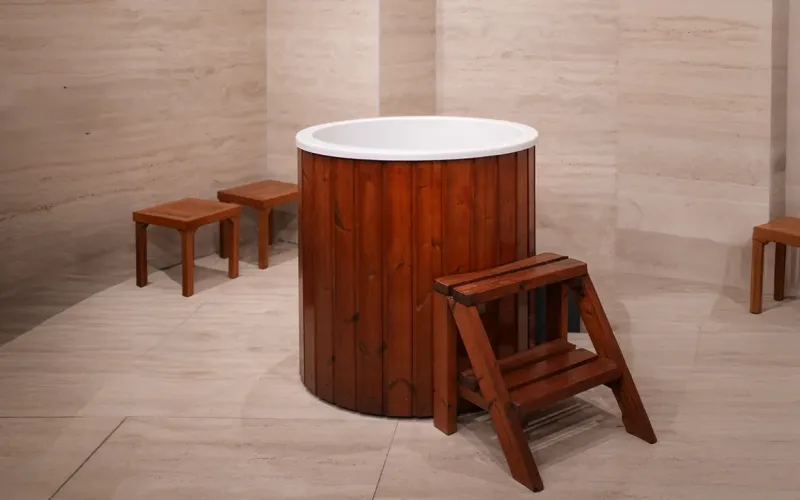
- Take your post-match recovery routine seriously (options such as the sauna at O’Spa Beytepe, stretching, sleep).
- Build shoulder and knee preventive work into your weekly programme.
- When choosing a racket, favour wrist- and elbow-friendly options (round shape, balanced balance point).
Sample weekly programme
- 2-3 matches (not on consecutive days).
- 2 strength sessions (quality, moderate volume).
- 1 conditioning session (low-impact; swimming or cycling are good options).
- 10-12 minutes of mobility daily.
- 2 rest or active-rest days.
50 and Over
Priorities
- Strength training: The most important component for muscle mass and bone health. 2-3 sessions a week.
- Balance work: To reduce the risk of falls and to move safely on court.
- Joint-friendly approach: Controlling the intensity of play on court.
- Warm-up: 15 minutes; can't be neglected.
- Recovery: At least one day between matches.
- Health check: Regular medical check-ups; especially for cardiovascular health.
Game adaptations
- Playing with players of a similar age and level; matching tempo increases comfort.
- Managing match length: one set instead of two, or a short format.
- Cutting back smash volume and emphasising bandeja and control play.
- Using positional and tactical advantage; standing in the right place instead of running.
- Special attention to hydration and heat management.
Note: for players aged 50 and over, a regular health assessment is especially important before starting intensive activity. A doctor's opinion should be sought on cardiovascular health, blood pressure and joint condition.
Five Principles That Don't Change at Any Age
- 1. The warm-up is non-negotiable. Its length grows with age, but it is never skipped at any age.
- 2. Strength training is necessary. Volume and intensity change; the necessity doesn't.
- 3. Sleep is the most powerful recovery tool.
- 4. Gradual load increases. An increase of more than 10-15 percent a week is risky at any age.
- 5. Pain is a signal. Recurring pain needs a specialist assessment.
Advantages That Develop with Age
It is wrong to think that ageing brings only disadvantages in padel.
- Tactical reading: It improves markedly with experience; reading the opponent's intention in advance compensates for physical speed.
- Positional knowledge: Standing in the right place is more efficient than running fast.
- Error management: Experienced players take fewer unnecessary risks.
- Mental resilience: Composure under pressure generally improves with age.
- Partner communication: Doubles skills require experience.
- Shot selection: Playing the right ball at the right time is worth more than power.
Age-Category Tournaments
Many padel organisations hold age-category tournaments (+35, +45, +55). These formats:
- Offer the chance to compete at a similar physical capacity.
- Increase enjoyment of the game and competitive motivation.
- Reduce injury risk; the tempo is better matched.
- Make it easier to build a community.
Result
Adapting training by age in padel is not about reducing capacity but about focusing on the right priorities. In your 20s, technical foundation and volume tolerance; in your 30s, efficiency and mobility; in your 40s, strength training and recovery; at 50 and over, strength and balance come to the fore. There are five principles that don't change at any age: warm-up, strength work, sleep, gradual loading and taking pain signals seriously. Skills that develop with experience, such as tactical reading and positional knowledge, close the physical gap significantly; in this respect, padel is a sport you can play for a very long time.
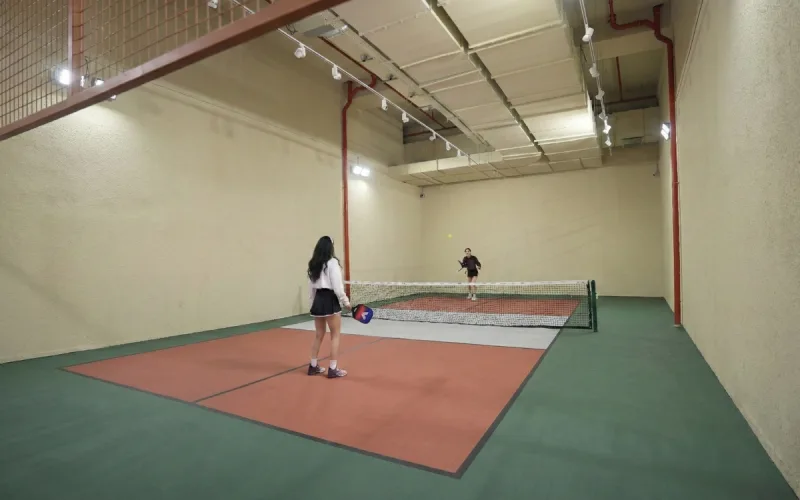
Whatever age group you are in, you can work with O’Padel Beytepe's certified coaches on our indoor, climate-controlled courts in Çankaya to make a start in Ankara that suits your own level and pace. Membership is not required; for lessons, court bookings and current information on post-match recovery at O’Spa Beytepe, you can message +90 536 908 08 00 on WhatsApp. Let's build the programme that suits you in Beytepe together.



 Padel Courts
