

Pickleball for seniors is one of the most suitable racket sports to start safely over 60: the court is small, the ball is slow, the serve is underhand and the social structure of the game offers a natural antidote to loneliness. With the right shoes, a short warm-up and listening to your own pace, it supports both heart health and balance without straining the joints.
It's no coincidence that a significant share of pickleball players in the US are over 55. Below we explain why this sport is so loved in later life, what kinds of benefits can scientifically be expected, what to watch out for and what kind of starting path you can follow for 60+ players in Beytepe.
Why is pickleball an ideal sport for 60+?
Pickleball can be thought of as a mix of tennis, badminton and table tennis. But what makes it special for later life is that it largely smooths out the demanding aspects of these sports.
- Small court: A pickleball court is 6.10 × 13.41 metres; that is, about a third of a tennis court. The running distance is short and the ball is closer to you.
- Slow ball: The perforated plastic ball doesn't speed up as much as a tennis ball because of air resistance. Your reaction time is longer, which both eases learning and lowers injury risk.
- Underhand serve: The serve is hit from below the waist with an underhand stroke. There's no need to raise the shoulder overhead; this is a big relief for those with shoulder problems.
- Light equipment: Paddles are generally between 200–240 grams. The load on the wrist and elbow is less than with a tennis racket.
- Doubles play: Pickleball is mostly played in fours. You cover half the court and your partner covers the other half.
The kitchen rule should be added to these. The no-volley zone on both sides of the net steers the game toward soft, controlled shots (dinks) rather than hard smashes. It rewards brains over power and placement over speed. Experience and patience are the advantages that come with age.
The health benefits of pickleball for seniors
The World Health Organization recommends that adults over 65 do at least 150 minutes of moderate-intensity aerobic activity a week and balance and strength work on several days a week. Pickleball is one of the rare activities that can meet more than one of these recommendations at once.
Heart and circulation
For most players, doubles pickleball is a moderate-intensity activity. Rallies are short but frequent; this raises and lowers the pulse in a way similar to interval training. It is generally accepted that cardiorespiratory capacity, blood pressure and blood lipids are positively affected in middle-aged and older players who play regularly.
Balance and a reduced risk of falls
In later life, falls are a serious health problem. The constant small side steps, weight transfers and reaches for the ball in pickleball keep the balance system active. They work the muscles around the ankle and hip. That this kind of dynamic balance task reduces fall risk is a result frequently seen in exercise programmes with older people.
Hand-eye coordination and mental alertness
Judging the direction of the ball, communicating with your partner, keeping score and planning the next shot keep the brain constantly engaged. Racket sports are known to have positive effects on reaction time and attention. Moreover, in the traditional scoring system, calling the score with three numbers (for example "4-2-1") is a small mental exercise in itself.
Social connection and mood
With retirement, your social circle can shrink. Pickleball, on the other hand, is social by nature: matches are short, partners change often and there is always conversation at the side of the court. Considering the negative effects of loneliness on both mood and physical health, joining the same group a few times a week is as valuable as the medicine itself.
Before you start: a safety checklist
Pickleball is a safe sport for seniors, but "low impact" doesn't mean no risk. Before starting, review these points:
- Doctor's approval: If you have conditions such as cardiovascular disease, uncontrolled blood pressure, osteoporosis or a knee or hip replacement, talk to your doctor before starting a new sport.
- The right shoes: Running shoes are designed for forward movement. In pickleball there is a lot of lateral movement; a court shoe with strong lateral support and a non-marking sole is your first defence against ankle sprains.
- Running backwards: The most common cause of falls in older players is running backwards for a lob. Never run backwards with your back to where you're heading; turn your body sideways and retreat with side steps or crossover steps. Letting go of a lob you can't reach is always smarter.
- Warm-up: Playing with cold muscles increases calf and Achilles tendon strains. An 8–10 minute warm-up is essential.
- Eye protection: Although the ball isn't hard, a shot coming from close range at the net can hit the eye. Sports glasses are worth considering.
- Fluids: The sense of thirst decreases with age. In Ankara's dry air, even indoors, drink a few sips of water between matches.
For more detailed information on the most common injuries in pickleball and how to prevent them, see our pickleball injuries and prevention guide for more.
A 10-minute warm-up for 60+ players
The aim of the warm-up is to raise body temperature, prepare the joints for movement and put the nervous system into "game mode". You can do the following routine at the side of the court:
| Duration | Movement | Purpose |
|---|---|---|
| 2 min | Brisk walk around the court, swinging the arms | Gently raise the pulse |
| 1 min | Ankle circles and rising onto the toes | Ankle and calf preparation |
| 1 min | Side steps (4 steps each way) | Lateral movement and hip muscles |
| 1 min | Arm circles forward and backward | Shoulder joint |
| 1 min | Wrist circles, opening and closing the fingers | Grip and around the elbow |
| 1 min | Supported half squats (holding the net or a wall) | Knee and hip |
| 3 min | Slow dink with a partner at the kitchen line | Tempo and getting used to the ball |
For a more detailed example, you can also take a look at the 12-minute warm-up routine we've prepared for padel players; most of the movements suit pickleball exactly.
Smart play strategies in later life
The beauty of pickleball is that you can make up for physical limitations with tactics. In many clubs you can see 70-year-old players beating opponents in their 30s in dink rallies. Here are the secrets:
- Settle at the kitchen line: Most of the game is won at the net. After the return, walk up to the kitchen line and stay there. This reduces the distance you have to run.
- Be patient in the dink: Drop the ball softly into the opposing kitchen and wait for the opponent to make a mistake. In pickleball most points come not from winning shots but from opponent errors.
- Use the middle: A ball played between the two opponents both creates confusion over who should take it and gives no angle. "The middle is the solution" is an old rule of pickleball.
- Talk to your partner: Short calls like "mine", "yours" and "leave it" prevent collisions and unnecessary running.
- Use the lob selectively: You can lob, but when the opponent lobs you, letting your partner take it rather than running backwards is sometimes the safest way.
The dink technique is the shot that determines your level in pickleball. For details, our article on the dink technique and the battle of the kitchen is recommended reading.
Why an indoor court for 60+ in Ankara?
For older players, an indoor court is more than a matter of comfort; it is a matter of safety. In Ankara winters, icy ground, cold air and early-darkening evenings make outdoor sport risky. In the cold, muscles and tendons get stiffer and injury risk rises. In summer, playing in the midday sun brings the risk of fluid loss and heatstroke.
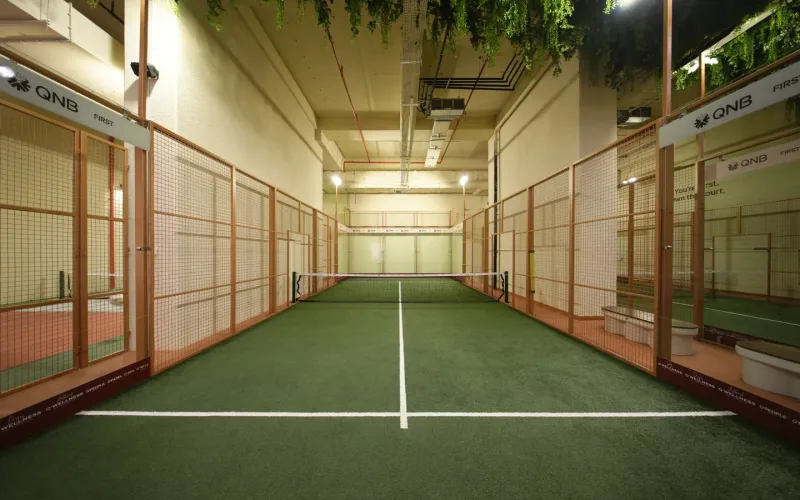
When playing on Beytepe's The indoor pickleball courts are climate-controlled, well lit and have a flat, non-slip surface. Visibility is comfortable, the ball is consistent and the schedule isn't disrupted whatever the weather. Being open from 07:00 in the morning is ideal especially for retirees who like early mornings. At off-peak times the courts are quieter and prices more affordable.
Post-match recovery: sauna, massage and conversation
As you get older, recovery time lengthens. Doing a short cool-down walk and light stretching after the match reduces next-day muscle soreness. At O’Spa Beytepe in the same complex there are sauna, steam room and sports massage options. Warm-to-hot treatments can help relieve muscle tension.
One caution: for those with cardiovascular disease or blood pressure problems, sudden temperature changes such as the sauna and especially a cold plunge are not recommended without a doctor's approval. If you're considering contrast therapy, talk to your doctor first.
Perhaps the most enjoyable part of recovery is the lounge with a court view— the chat over a tea or coffee there. For many 60+ groups, this is pickleball's real reward too: a circle of friends who meet at the same time every week and care about each other.
A starting path for 60+ players in Beytepe
Starting a new sport later in life takes courage. That's why breaking the process into small steps works:
- Week 1: Join a beginner workshop. The rules, serve and dink basics are taught; paddles are rented at the facility.
- Weeks 2–4: Twice a week, 60-minute sessions. Adjust playing time to your own energy; don't hesitate to sit down in between.
- Week 5 onwards: Join the social match hours and form a group with players of similar level and age. If you like, make a fixed weekly court booking at the same time.
If you'd like to come with a group of friends, a four-person court booking is the most practical way. Playing with your children or grandchildren is also possible; our family pickleball guide will give you ideas on this. If you're undecided between pickleball and padel, you can take a look at the article comparing the two sports ; for a start in later life, pickleball generally offers a gentler entry.
Medical approval and adapting to your health condition
Not everyone over 60 has the same physical capacity; that's why you need to consider your current health condition before starting pickleball.
- Those with heart or blood pressure conditions: It's important to get exercise approval from your doctor and keep the tempo low in the first sessions.
- Those with joint replacements: A more controlled playing style that reduces sudden changes of direction and a gradual start suited to the rehabilitation process is recommended.
- Those with balance problems: In the first sessions, starting in doubles in a position with less court responsibility and widening your movement area once you've built confidence is a good approach.
These adaptations don't make pickleball any less fun; on the contrary, the right start makes the sport sustainable in the long run. In the beginner workshops in Beytepe, individual differences like these can be discussed with the coach beforehand.
Playing with grandchildren and across generations
One of the best-loved things about pickleball is that different age groups can play comfortably on the same court. Because the court is small, a young grandchild's physical advantage is not as decisive as in tennis or padel; a grandmother or grandfather can stay effective in the game with the right positioning and dink shots. This makes pickleball not just an individual exercise but a way of spending shared time within the family.
Short summary
Pickleball is an easy-to-learn, joint-friendly sport that supports heart health, balance and social life all at once for people over 60. It can be played safely with a few simple rules such as the right shoes, a good warm-up and not running backwards. The indoor courts in Beytepe also let you play without disrupting your routine even in Ankara's harsh winter. For a first step, you can book a beginner workshop on our WhatsApp line or contact page send us your questions.
Frequently Asked Questions
Because the court is small, the ball is slow and the serve is underhand, pickleball is a sport suited to later life. Even so, if you have a chronic condition, you should consult your doctor before starting, wear suitable shoes and not skip the warm-up.
Yes. Most beginners can rally in their first session. With a short beginner workshop and a few weeks of regular play, you reach a level where you can join social matches.
The most common risk is losing balance and falling while running backwards for a lob. Never run backwards facing away; retreat with side steps or leave the ball to your partner.
Two to three 60-minute sessions a week both help meet health recommendations and leave enough recovery time.
For healthy individuals, short sauna sessions can help muscle relaxation. Those with cardiovascular or blood pressure problems must consult a doctor before sauna and cold water treatments.



 Padel Courts
