
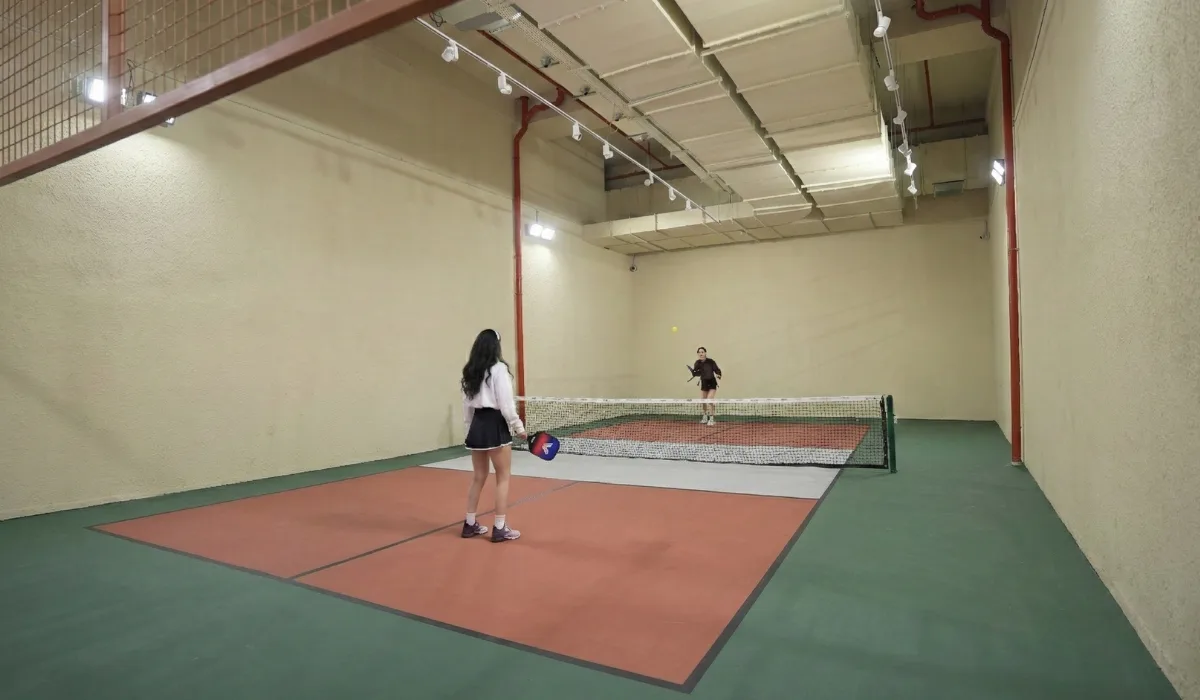
Muscle soreness (DOMS – Delayed Onset Muscle Soreness) is a natural response that usually appears 24-72 hours after exercise as a result of muscles being exposed to unaccustomed movement patterns. In people new to padel it is often seen around the legs, hips and shoulders; it passes by itself within a few days, and with the right approach the process can be eased.
In this article you will find the cause of DOMS, when you should worry, and how to manage muscle soreness in the first weeks of starting padel in Beytepe.
DOMS and motivation: Getting through the first weeks
Muscle soreness in the first weeks can dent some new players’ motivation to keep playing. But knowing that this pain is temporary and that the body adapts quickly helps you get through the process more easily.
The coaches in Beytepe talk openly with new players about this process and explain in advance the level of muscle soreness to expect in the first weeks; this reduces surprise and helps keep motivation up.
Does DOMS come back in experienced players?
DOMS is not unique to beginners; even an experienced player can get similar muscle soreness when returning to the court after a long break, trying a new technique, or going through an unusually intense tournament week. The body reacts this way to every new load level it is not used to.
For this reason, it is important not to see DOMS only as a “beginner problem”; regular players should also expect this process when their load changes and be prepared accordingly.
Why is DOMS so common among padel beginners?
Although padel resembles other racket sports such as tennis or squash, it has its own movement patterns; sudden stops to follow rebounds off the glass, crouches to reach low balls and shots that require upper-body rotation bring into play muscle groups rarely used in daily life.
For this reason, even someone who has exercised regularly before may feel marked muscle soreness in the first sessions of starting padel. This is a natural part of the body getting used to a new movement language.
What is DOMS and why does it happen?
DOMS comes from microscopic-level strains in muscle fibres caused by working the muscles in an unaccustomed direction or intensity. This does not mean the muscle is damaged; on the contrary, it is part of the muscle’s adaptation process, and over time the muscle becomes more resilient.
The lateral movements, sudden stops and repeated hitting movements common in padel strain muscle groups little used in daily life (especially the hip adductors, calves and rotator cuff muscles). This is why DOMS is quite common in the first few sessions.
Which muscle groups are affected most?
The areas where DOMS is most often reported in padel are the hip adductors (inner thigh), calf muscles, the hip and glute area, and the shoulder and rotator cuff muscles. Lateral movements strain the inner thigh and hip area, jumps strain the calves, and repeated shots strain the area around the shoulder.
Each of these areas is worked at angles not often used in daily life; so feeling marked soreness in these muscles after the first sessions is quite normal and fades over time.
When does DOMS start and how long does it last?
The pain usually starts to be felt 12-24 hours after exercise, peaks between 24 and 72 hours, and mostly passes by itself within 3-5 days. So it is not surprising to feel more intense soreness not the day after your first padel session but the day after that.
Because the body adapts over time, as you keep playing regularly, DOMS becomes milder after sessions of the same intensity. This is a widely accepted physiological adaptation known as the “repeated bout effect”.
The importance of warming up during DOMS
For players who will keep playing on court even with muscle soreness, a good warm-up is more important than ever. Going into a sudden movement with a cold, tight muscle both lowers performance and can raise the risk of a real injury.
A 10-minute warm-up with dynamic stretching movements (leg swings, hip openers, shoulder rotations) is more effective than static stretching for preparing a muscle with DOMS for play. In lessons in Beytepe, coaches apply this kind of warm-up as standard at the start of the session.
Telling DOMS apart from injury
It is important to tell DOMS apart from a real injury (such as a muscle tear or sprain). The table below summarises the key differences:
| Feature | DOMS | Possible injury |
|---|---|---|
| Beginner | After 12-24 hours | Usually immediate |
| Type of pain | Diffuse, dull | Sharp, localised |
| Swelling/bruising | Rare | Common |
| Effect of movement | Eases as you warm up | May get worse with movement |
| Duration | Passes within 3-5 days | May persist, treatment may be needed |
If there is sudden, sharp pain or marked swelling, it is important not to treat it as DOMS and to consult a health professional. For more comprehensive information on this, see our return-from-injury guide .
Hydration and electrolyte balance during DOMS
Replacing the fluids and electrolytes lost during an intense session is another factor that supports the muscle repair process. Especially in a hot environment or after an intense match, drinking only water may not be enough; drinks containing sodium and potassium can restore this balance faster.
Because inadequate hydration can increase muscle cramps and the general feeling of fatigue, it can also multiply the discomfort that comes with DOMS. So regular water intake during and after the session matters not just for performance but for recovery.
What can be done to ease DOMS?
- Light movement: Instead of staying completely inactive, low-intensity activities like walking support blood circulation.
- Stretching: Gentle, static stretches can reduce muscle tension.
- Heat and humidity: A hot shower, sauna or steam room can help relax muscle tension.
- Adequate water and protein intake: Supports the muscle repair process.
- Sleep: Most muscle repair takes place during deep sleep.
Some athletes find self-massage with a foam roller useful; although scientific evidence is limited, it is often reported to give a feeling of relief.
How should you plan training in the first weeks?
When you are starting padel, rather than doing intense sessions on two days in a row, putting at least one day of rest or light activity between sessions keeps DOMS severity manageable. As the body adapts over time, you can increase this frequency.
In the beginner-level lessons in Beytepe, coaches plan to raise new players’ load gradually; this keeps DOMS from getting out of hand.
DOMS and strategies for keeping motivation
When you feel soreness in the first weeks, rather than giving up completely, continuing by reducing session frequency or intensity is usually a more sustainable approach. For example, starting with one full and one short session instead of two full sessions a week gives the body time to adapt.
This approach keeps the process sustainable both physically and mentally. Setting small goals also helps keep motivation up; an achievable goal like “this month I will play regularly twice and feel a bit more comfortable each time” makes it easier to get through the difficulty of the first weeks. Noticing over time that this soreness is easing provides strong positive reinforcement for continuing the sport. The coaches in Beytepe give players both technical and motivational support during this early period, helping the process go more enjoyably. This support helps new players get through the difficulty of the first weeks and turn the sport into a long-term habit.
First-week programme: A sample approach
| Day | Activity | Purpose |
|---|---|---|
| Day 1 | First padel lesson / session | Getting to know the basic movements |
| Day 2 | Rest or a light walk | Giving time for muscle repair |
| Day 3 | Light stretching, mobility | Easing stiffness |
| Day 4 | Second session (shorter) | Gradual adaptation |
A gradual approach like this keeps DOMS from getting out of hand in the first weeks while also protecting motivation for padel; starting too intensely and being so sore you cannot move for a few days is one of the reasons many new players quit the sport.
The role of nutrition in DOMS
Protein intake has a critical place in the muscle repair process; adequate protein consumption after exercise supports the renewal of muscle tissue. Foods containing omega-3 (such as fish and walnuts) are thought to have a mild anti-inflammatory effect, but they do not eliminate DOMS completely, they only support the process.
Water consumption is another factor that should not be overlooked. Insufficient fluid intake can negatively affect the speed of muscle tissue repair and contribute to pain lasting longer.
Reviewing your sleep routine during DOMS
In the first weeks muscle soreness can sometimes affect sleep quality too; lying in uncomfortable positions in particular can increase pain. During this period, using a supportive pillow or adjusting your sleeping position supports both sleep quality and recovery.
Since quality sleep is when muscle repair takes place most efficiently, giving your sleep routine a bit more importance than usual during DOMS is a useful approach.
Do equipment and technique affect DOMS severity?
Using a padel racket of the right size and weight prevents unnecessary strain on the muscles around the shoulder and elbow in particular. It is generally recommended that beginners choose a lighter and well-balanced racket; this both makes learning technique easier and reduces muscle fatigue.
Technically correct shot form is also important. For example, a shot technique that draws power from trunk rotation rather than the wrist can reduce the load on the shoulder and elbow and change the areas where DOMS concentrates. In one-to-one or group lessons coaches work on these technical details especially with beginners.
How to manage DOMS with recovery facilities in Beytepe
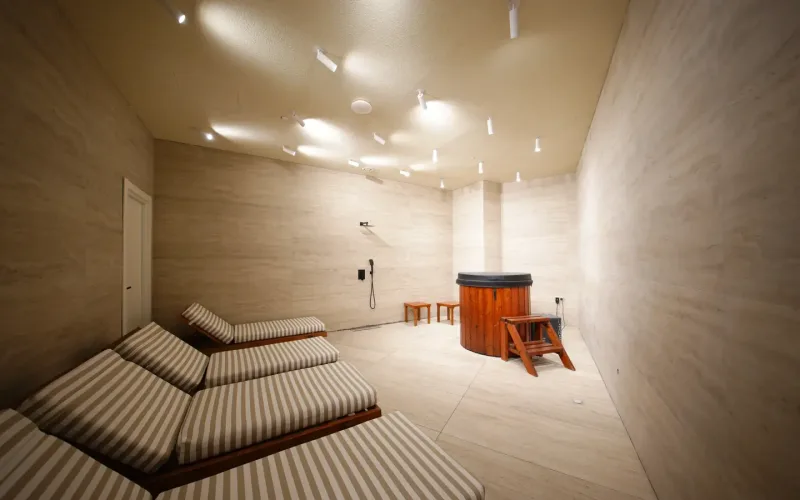
When you feel muscle soreness in the first weeks, your court session right afterwards the sauna or steam room at O’Spa Beytepe can support muscle relaxation. For contrast therapy enthusiasts, you can also consider the cold plunge option; for details, see our cryotherapy vs cold plunge comparison .
If you want to support your rest days with light movement instead of leaving them empty, you can check out active recovery day guide . If you also want to add flexibility work to your routine, our padel and yoga article will be useful.
DOMS is a temporary and normal process that everyone new to padel goes through; its severity decreases within a few weeks as the body adapts. To take a trial lesson in Beytepe and build a programme suited to your own pace, you can message us on our WhatsApp line.
DOMS differences by age and fitness level
The severity of DOMS and recovery time vary from person to person; age, general physical activity level and previous sports background are the main factors affecting this difference. Even someone who exercises regularly can get DOMS when moving to padel because of the new movement patterns, but recovery is usually faster.
For people moving to padel from a long-sedentary lifestyle, DOMS may be felt more markedly in the first weeks. In this case, raising training intensity more gradually and being patient is the key to making the sport sustainable. The trial lesson, option in Beytepe is designed exactly to let you make this transition safely.
Frequently Asked Questions
It usually peaks between 24 and 72 hours and passes by itself within 3-5 days. Its severity can vary from person to person and with the intensity of the training.
Playing at a light pace with mild DOMS generally causes no problem and can even relieve it by increasing circulation. However, if the pain is severe, resting is more appropriate.
Although it is hard to prevent completely, its severity can be reduced with gradual loading, warm-up and stretching. The body adapts as you play regularly, and DOMS eases over time.
DOMS is a diffuse, dull pain that starts after 12-24 hours. Sudden, sharp, localised pain or swelling may be a sign of an injury and needs to be assessed.
Beginner-level group and one-to-one lessons at O'Padel Beytepe are planned around the principle of gradual loading. By taking a trial lesson you can make a start suited to your own level.


 Padel Courts
