

Premier Padel is the tournament tour where professional padel is organized at the international level: it works as a series of tournaments held in different countries throughout the year, weighted by category, in which players earn points toward the world rankings. In short, it is padel's version of the tennis tour model — major tournaments, mid-tier events and lower-level feeder tournaments are linked together by a ranking system.
This guide explains the tour's structure and logic; it does not provide current schedules, rankings or results. That's because in professional padel, category names, calendars and rankings can change from season to season, so they should always be verified with the official source. Our focus is different: showing you, as a club player, which patterns to look for when watching professional padel and what you can bring into your own game.
Summary
- Premier Padel is the professional tour that links tournaments held in different countries throughout the year through a ranking system.
- Tournaments are divided into categories: the biggest events award the most ranking points, lower-tier events award fewer.
- Women and men compete in separate draws; category names and the calendar may change by season.
- Entry to the main draw is through either ranking or qualifying rounds; wild cards are also used.
- For a club player, the real value of the tour isn't the results but the chance to watch recurring tactical patterns.
How Is Professional Padel Organized?
Professional padel is built on a two-layer structure. On one side are the national team tournaments and the official rules authority under the international federation (FIP); on the other is the professional tour where players compete individually. Premier Padel represents this second layer — individual tour competition.
The tour runs on ranking points. The finish recorded at each tournament earns a set number of points depending on its category; a player's point total over a given period makes up their tour ranking. That ranking in turn determines draw position at upcoming tournaments, whether they are seeded and whether they get direct entry into the main draw.
This cycle works on the same logic as club-level systems. In the level leagues at O’Padel Beytepe, promotion-relegation and the points and averages calculation carry the same idea, scale aside: making performance measurable and setting up matchups accordingly. Our article on how rankings rise explains this logic at club level.
Women's and men's categories compete in separate draws, and each has its own ranking. Because players in professional padel compete as pairs rather than alone, results are shared even though rankings are individual: changing partners is a strategic decision that directly affects a player's season. This holds true at the club level too; our partner selection guide tackles the same question on an amateur scale.
Tournament Categories and Weightings
On the professional tours, not all tournaments are equal. Major events feature larger draws, longer formats and more points; lower-tier events are the entry point for players trying to move up. The table below outlines the category logic in broad strokes — since names and figures can change by season, we present it at a conceptual level.
| Tier | Draw size | Ranking weight | Who plays |
|---|---|---|---|
| Top tier (major event) | Large | Highest | Upper section of the rankings |
| Upper-mid tier | Medium-large | High | Upper and mid rankings |
| Mid tier | Medium | Medium | Mid rankings, qualifiers |
| Lower tier / feeder tournaments | Smaller | Low | Pairs trying to move up |
The practical result of this structure is this: in professional padel, a season is not about a single tournament but the sum of tournament choices. Deciding which tournaments to enter, which weeks to rest and how to manage injury risk is the invisible part of the pro game. We cover the same set of decisions at the club level in our season planning article.
Players move between tiers by collecting points in lower-tier tournaments and climbing the rankings. That is why the road to going pro runs not through one big tournament but through months of consistent results. We explain why consistency is more about habits than technique in our article on the habits of tournament winners.
Draw, Qualifying and Main Draw
The week at a professional tournament usually follows this sequence:
- Pre-qualifying / qualifying. Pairs whose ranking isn't high enough for the main draw play several rounds to earn entry.
- Main draw early rounds. Seeded pairs usually start from an advantageous position; play continues in knockout format.
- Quarterfinals and semifinals. At this stage match quality rises, sets get longer and physical endurance becomes decisive.
- Final. The closing match, decided in a single match.
A wild card is when the organizers give a pair a main-draw spot outside of the rankings; it's usually used for players from the host country or those returning from injury. The qualifying/main-draw split also shows up in club tournaments: knockout rounds after a group stage are a small-scale version of the same idea. For a comparison of formats, see our tournament formats guide .
The rules framework for professional matches is no different from club matches; the same FIP rules apply. For the full rules on scoring, serving and the glass, see our padel rules guide is the key resource.
The only way to try the patterns you see in professional matches is to repeat them on court. Book a suitable time on our indoor courts in Beytepe and rehearse the bandeja-and-net setup.
What Should You Watch for in Professional Padel?
Watching pro matches directly improves your game when you do it to spot patterns, not just to learn the score. Looking at five things is enough.
- How many seconds do they stay at the net? Pro pairs spend most of each point at the net line and don't give it up easily.
- How do they play the high ball? The answer is almost always a bandeja or víbora; the flat smash is far rarer than you'd expect.
- When do they use the glass? Waiting for the ball to come off the back glass and playing the rebound is always more productive than panicking and hitting early.
- How do they communicate? A couple of words after almost every point. There's no such thing as a silent pair.
- How do they finish the point? Usually not with one spectacular shot, but at the end of a three- or four-shot build-up.
These five items are the highest-return lessons a club player can take from professional padel. For the technical side, check out bandeja, wall play and net position articles. If you want to take notes while watching and compare them with video of your own match, our video analysis guide offers a method.
How Does the Pro Match Format Differ from a Club Match?
Although the rules framework is the same, the conditions of a professional match are different. Matches are played best of three sets, there's a referee, ball change intervals are fixed and there's an audience. In club matches, players keep score themselves, disputed balls are replayed and formats are usually shortened to fit the time slot.
The second difference is the warm-up and break structure. In a pro match, breaks and changeovers are governed by the rules; in a club tournament, breaks can flex around the organizer's schedule. The rules on timing are covered in our breaks and changeovers article for more.
The third difference is the ball itself. At professional tournaments, approved balls are replaced at set intervals; a new ball is faster and bounces higher, which immediately affects tactical choices. In club matches, when the same ball is used for a long time it slows down and rallies get longer. For the technical side of this difference, see our padel ball selection guide .
The combined effect of these three differences: the speed you see in a pro match won't be replicated one-to-one on a club court. What transfers isn't the speed but the decision-making logic.
A View from Türkiye: The Path from Amateur to Competitive
The pro tour isn't a direct continuation of club padel; in between are levels such as licensing, federation tournaments and national rankings. In Türkiye, a player who wants to step into competitive padel usually progresses through club tournaments, then regional and national tournaments. For details of the structure, see our article on padel organization in Türkiye .
The first step on this path is always the club. Americanos, Mexicano evenings, the level league and club tournaments on the O’Padel Beytepe calendar (WhatsApp for the current schedule) form exactly this step. The 1.0–7.0 level system clarifies where you are and what the next step is; level assessment process and the level rating guide makes this concrete.
Preparation also changes for players heading toward competition. Once you move from a weekly fun match to a tournament calendar, conditioning, recovery and partner chemistry become things you need to plan. The two-week tournament prep plan and 8-week conditioning program lays the groundwork for this transition.
There's a simple trick that makes watching more productive: instead of watching an entire match, pick a single set and focus on just one pair. When you watch that pair's left-side player for 15 minutes, you notice how they approach the ball, which balls they let go and how they switch positions with their partner. Trying to watch the whole court makes these details invisible.
Aspects of the Pro Game That Don't Carry Over to Club Padel
There are limits to imitating professional padel, and knowing them saves time. Pro players train for hours a day, work with physiotherapy and performance teams, and play with the same partner all year. It isn't realistic for a club player with two or three sessions a week to replicate the same patterns one-to-one.
The practical approach is to select rather than imitate: take only two elements from the pro game that will pay off right away at your level. For most 3.0–4.0 players, these are holding the net line and playing the high ball with a bandeja. Smash variations and overly aggressive returns only make sense once the fundamentals are in place; our advanced technique article explains when to make that transition.
Another difference is equipment. The rackets pro players use are usually hard-core, power-oriented models that demand advanced technique. Using the same racket at a 3.0 level reduces control and increases elbow load. For the right choice, our racket selection guide and our racket stiffness article helps you find the right range for your level.
The third difference is rhythm. A professional player plans the season; a club player plans the week. That is why, at the club level, the biggest gains come from playing regularly. Two consistent sessions a week produce more improvement than one intense week a month; we cover load balance in our training load management article.
Conclusion: Living the Professional Logic at Club Scale in Beytepe
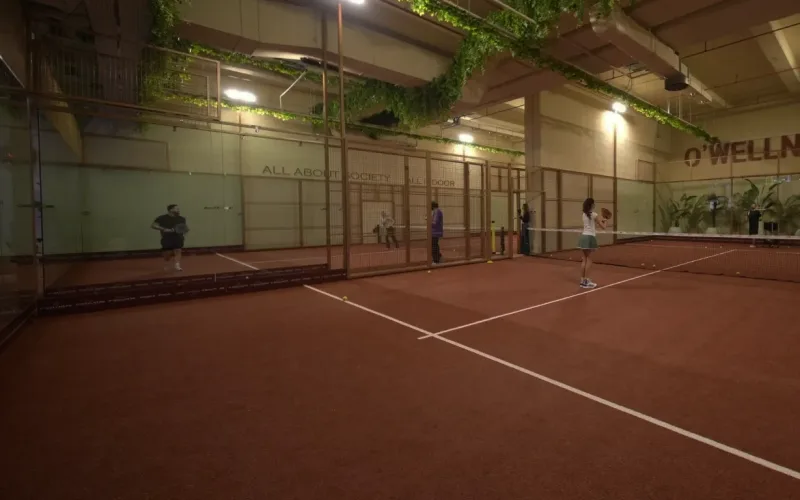
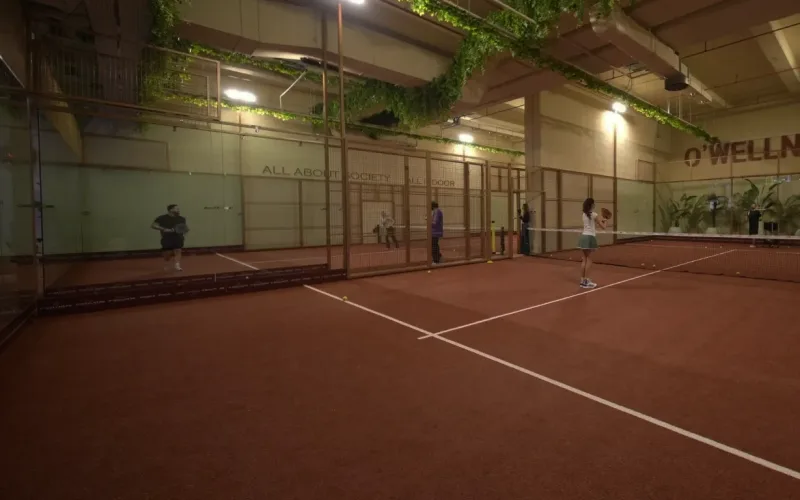
Understanding Premier Padel means seeing how professional padel is built on a tournament circuit and a ranking system, and the same logic works at club scale too. At O’Padel Beytepe, the Americanos, Mexicanos, level league and club tournaments you play on the indoor, FIP-standard courts inside the O’Wellness Beytepe complex are a scaled-down model of the professional structure: a measurable level, a regular calendar and a path to move up. Entering this cycle in Ankara, in Beytepe, gives you a place to try out in your own game what you see while watching professional matches; membership isn’t required, and for bookings, WhatsApp: +90 536 908 08 00.
Frequently Asked Questions
FIP is the international padel federation; it is responsible for the rules and national-team-level competitions. Premier Padel is the professional tournament tour where players compete individually. The two have different roles, and professional matches are played under the FIP rules framework.
Players collect points based on the category of the tournaments they enter and how far they go; the total points over a given period make up the ranking. Since category weightings and the calculation period can change by season, current rules should be verified with the official source.
Yes, as long as you watch the patterns, not the results. Time spent at the net line, playing high balls with a bandeja, waiting for the glass rebound and constant partner communication are behaviors that transfer directly to any level.
The bandeja lets you send the ball deep in a controlled way without giving up your net position. A flat smash carries a higher risk of error and can pull the player back, breaking up the pair's net setup.
The path usually starts with club tournaments: you gain experience in social formats like Americano and Mexicano, then move on to the level league and club tournaments. For federation-level tournaments, licensing and national organization rules come into play.



 Padel Courts
